Manafonistas

on life, music etc beyond mainstream

You are currently browsing the blog archives for the month August 2015.

Archives: August 2015

2015 24 Aug.

Daily sounds all around

| Filed under: Blog | RSS 2.0 | TB | Tags:  | 2 Comments


Im Weltkunstzimmer in Duesseldorf gibt es eine spannende Ausstellung zu Spuren akustischer Welten. Kuenstler haben sich auf den Weg gemacht und mit grossem Aufwand Klaenge, Toene, Sounds, Whispers eingefangen.

Sehr weit ist einer gefahren, um das EISFLUESTERN in Jakutien aufzunehmen. Bei Nebel und 54 Grad minus fangen die Ohren an zu schallen. Man hoert die Luft knistern. Was fuer eine fast unheimliche Soundinstallation.

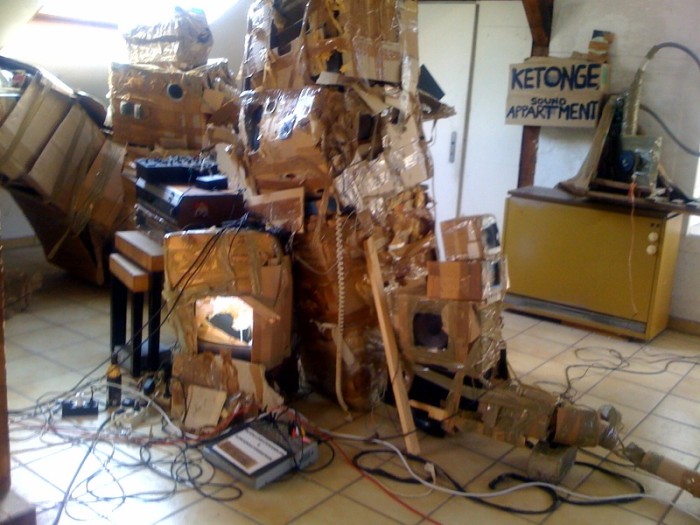
Ihre unterschiedlichsten Fieldtrips haben die Kuenstler jeweils in ihre Kunst eingebaut. Da steht ein Plattenspieler und ein rechter Winkel im grossen leeren Raum und es ist nur der Sound, der die beiden Dinge zusammenhaelt. In einem Soundappartment steht eine Arbeit von einem Kuenstler, der den ganzen Raum klanglich regelrecht zusammengepappt hat. Eine wirklich humorvolle Installation. Dieser Kuenstler hat bei Oswald Wiener, Georg Herold, Johannes Fritsch, Clarance Barlow, Paulo Alvares und David Larcher studiert. Warum bei so vielen? Weil ihn das Studium der Kunst, Musik, Psychologie zum Klangbildhauer und freien Komponisten hat werden lassen. Er nennt sich KETONGE.

Hier zeigen Schueler von Juergen Klauke/Koeln, meinem Lieblingsfotograf, was sie bei ihm gelernt haben.

Der Klang der Dinge ist beeindruckend, die Klangkuenstler von hoechstem Koennen.


Ich empfehle diese Ausstellung sehr. Mal wieder Avantgarde in Duesseldorf.

Mehr unter www.WELTKUNSTZIMMER.de



Gnadenloses Meer. Die Welle, die ihn auf die schwarze Klippe warf. Die Hilfeschreie. Der Todesstrand. Der Soundtrack von Burnt Friedman. Code Red. Der leichtsinnige Michael. Der schlafmützige Baywatcher. Das Fest des Lebens. Boom. Dass Sex und Tod stets eng beieinanderliegen, diesen blödsinnigen Seelentratsch konnte Michael Engelbrecht an diesem heissen Nachmittag widerlegen. Er sah, als Gischt auf Gischt ihm das Bewusstsein zu rauben drohte, weder Seejungfrauen noch kosmisches Licht, schon gar nicht einen Dia-Vortrag des vergehenden Lebens ratzfatz an sich vorüberziehen: als ihn eine Welle Richtung Ufer riss, nistete sich ein Ohrwurm in ihm ein, „Dandy“ von den Kinks. Einmal hat er den Song gar auf einer Karaokeparty zum Besten gegeben, und damit die Gunst einer spanischen Juristin gewonnen, aber das ist eine andere Geschichte. Die viel mit Sex und nichts mit dem Tod zu tun hatte. A long fucking night. A fucking long fucking night. Those were the days. This is my leg. The future is now.

2015 23 Aug.

transição (3)

| Filed under: Blog | RSS 2.0 | TB | Comments off


glow
 
 
©FoBo_

2015 23 Aug.

transição (1, 2)

| Filed under: Blog | RSS 2.0 | TB | Comments off


blue in green


kind of blue
 
 
©FoBo_

2015 22 Aug.

Pattern Man, 2015

| Filed under: Blog | RSS 2.0 | TB | 5 Comments

„Please excuse me if I reverse many months now, to sitting in a Cafe Nero in West London before heading in to see Brian Eno at his studio. I was scribbling a head mash in my notebook, not for anything but after head-bending weeks trying to fit my life choices into the seemingly unforgiving boxes of ‚future‘, ‚family‘, ‚housing‘, ‚wage‘ etc. I had always chosen this cafe before sessions with Brian, it had a first floor window to watch the street below from and usually I came to it after a longish journey, the rhythm of which had allowed thoughts to form as they do on long journeys, the greatest time to stare and let the subconscious tumble around a little.

I sat there to have a quick coffee and gather myself, as much out of habit as anything. I scribbled a super-quick page in my notebook,


Pattern Man

you’re really freaking out

shot in your snout

baby smell and all that

dog at your trousers

body cracks when you fill the tubes

with fumes now

humans look wood cracked now

six of ten on street pinocchio

looking down at phones now

birthday clocks in our pockets

pouting like trout now

how will the numbers fall

for the walkabout


It was due to be a meet up for lunch and a catch up. It had been months. As ever though he had something cooking, some haywire jazz piano improvisation process. Again as ever, it made me share my latest or most relevant notebook scrawl, and within minutes of walking in and saying hello I had mic in hand and we were making a piece. Just a couple of hours, if that, and off we went.

The patter of these words stuck with me. They didn’t make it into my collection, though I thought of them often and the title reflected how often the instinct to control raised its thorny head in my work — and way beyond that tiny microcosm.“


R i c k   H o l l a n d

„When most lists of the Top 25 Jazz Albums of All Time are compiled, Winelight is nowhere to be seen. It likely wouldn’t make the top 100 for the truly hardcore fan who likes their music with a rougher edge than smooth jazz provides. No way does it knock a Kind of Blue, A Love Supreme, Time Out or Blue Trane off the list, but when the list includes the 25 most influential jazz albums, Winelight belongs in there as much as Head Hunters or Breezin‘ for taking jazz into a brand new direction even if everybody wasn’t happy with where it went.“ (Jeff Winbush, allaboutjazz, on WINELIGHT)

Ich ärgerte mich, dass ich mein Aufnahmegerät nicht dabei hatte. Die Wolken enthüllten ein seltsames Farbenspiel, der Wind frischte auf, Regen ging in Bindfäden nieder. Ich hätte gerne die Geräusche aufgenommen, zumal aus dem Hintergrund, durch das Mauerwerk einer alten Kirche hindurch, ein Chor erschall. Ich stand am Rande eines wilden Gartens, als Manfred Eicher dazukam. Ich sagte zu ihm: „Höre dir diese Kulisse an, es klingt, als würden die Stimmen tief aus der Erde kommen.“ Wir erlebten dann, wie eine sonderbare Stille Einzug hielt, der Himmel violette Farben annahm, selbst der Chor schien den Atem anzuhalten. Ich blickte auf ein freies Feld, und plötzlich schlug ein Blitz ins hohe Gras, und setzte etliche Quadratmeter in hoch aufschiessende Flammen. Es dauerte, bis ich mein Handy gefunden hatte, und die Feuerwehr anrief. Mich wunderte, dass die 112 funktionierte, denn ich war in einem anderen Land. Noch immer merkte ich nicht, dass ich träumte, es waren  bereits in der Ferne Alarmsirenen zu hören. Relativ schnell hatte sich das Feuer beruhigt und bewegte sich nicht mehr auf den Produzenten und mich zu. „Manfred, ich gebe ja nicht ständig Laut, aber das wollte ich dir seit Tagen mailen: diese Produktion mit Tigrans Pianospiel und dem armenischen Chor ist unfasslich gut. Chormusik ist nun gar nicht mein Ding, aber das Teil setzt meine Abwehr ausser Kraft.“

2015 21 Aug.

What would you play?

| Filed under: Blog | RSS 2.0 | TB | 7 Comments

Imagine you were a musician being invited to work out and compile a program of – let´s say – fourteen cover titles, mainstream or far beyond that, corresponding to your personal biography. It´s more than just performing them, in addition giving a short presentation of each song: artist, composer, historical context, theoretical structure of that piece of music, … You are free to play the entire song or just a fragment of it – those „Fine Lines“ (John Martyn). Guitar professor Kurt Rosenwinkels recommendation to play standards – because each one has an aspect that one can learn and earn from – could also apply to many modern pop- and folksongs and their manifold hybrid crossings. You may tell a little story of your relationship to the song you´re going to play. You may sing, play your instrument like guitar or piano, you may dance, for a very few songs you may choose your favorite company like (haha!) Thomas Morgan on Bass, Brian Eno playing additional keyboards and Sebastian Rochford on drums.

 
Here is a possible list of mine (work in progress for a project …):
 

  1. James Taylor: „Let It All Fall Down“
  2. David Sylvian: „The Boy With The Gun“
  3. Milton Nascimento: „Don Quixote“
  4. Talking Heads/Peter Gabriel: „Listening Wind“
  5. The Eagles: „Hotel California“
  6. Joni Mitchell: „A Strange Boy“
  7. Steely Dan: „Peg“
  8. Walter Becker: „Upside Looking Down“
  9. Rebekka Bakken: „Everything Can Change“
  10. Robben Ford: „Peace Of Mind“
  11. Eric Clapton: „Layla“
  12. Pat Metheny: „So May It Secretly Begin“
  13. Rikkie Lee Jones: „Ugly Man“
  14. Bob Dylan/Sarah Jarosz: „Ring Them Bells“


1) Human Arts Ensemble: Under The Sun / 2) Sam Rivers Trio: Live w/ Steve McCall & Cecil McBee (Impulse) / 3) Anthony Braxton & Derek Bailey (Emanem) / 4) Dave Liebman: Lookout Farm (ECM) / 5) Charles Lloyd: Sombrero Sam (?) oder Live (?) – Mann mit Hut auf Cover / 6) Oregon: Live (Vanguard, the original quartet, ca. 1977?) / 7) Andrew Hill: Live in Montreux (?) (Freedom/ Arista) / 8) Association P.C. (mit oder ohne Toto Blanke, MPS) / 9) Paul Desmond (eine Lieblingsplatte von Anthony Braxton, mit ein oder zwei Mitgliedern des MJQ, Titel enthält evtl. das Wort „Clouds“, die Platte das Stück „You Go To My Head“, lang vergriffen, jap. Label?, unfassbares Schweben) / 10) John Surman: Morning Glory (pre-ECM days) / 11) Cecil Taylor: Live in Montreux (Antibes?) (Arista/Freedom) / 12) Cecil McBee: Mutima

A few written words of saxophonist Darius Jones on BURNING AMBULANCE about his new album LA BÉBE DE BRIGITTE with Mitch Mitchell, Sean Conly, Pascal Niggenkemper,
Ches Smith and Emilie Lesbros
 

„Much of the hatred and ugliness in the world comes from everyone trying to create a unison when they should be striving to create a harmony.“

Read more … and listen
 
 
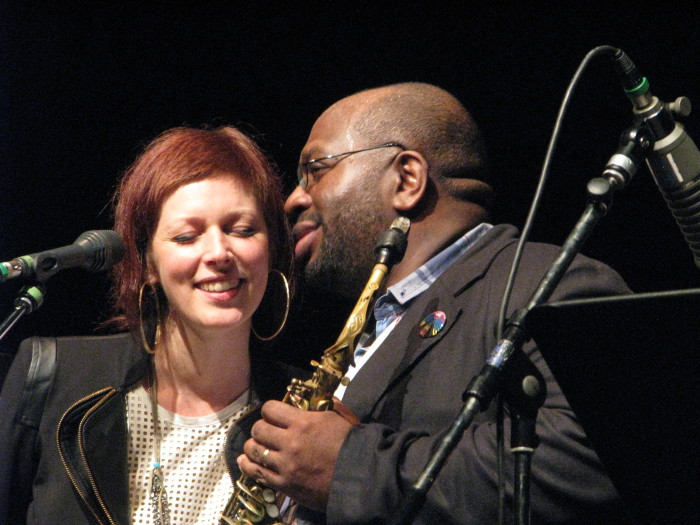
Ich habe Darius erstmals vor vier Jahren in Lissabon getroffen, wo er mit seiner Gruppe LITTLE WOMAN auftrat, ein einschneidendes Erlebnis. Ebenso wie ein langes, intensives Gespräch. Darius Jones geht ins Innere der menschlichen Stimme und macht deren Kraft jenseits der Worte, über und unter den Worten, erlebbar.


Emilie Lesbros, Darius Jones, Pascal Niggenkemper (November 2014, Strasbourg, Jazzdor)


©FoBo_


Manafonistas | Impressum | Kontakt | Datenschutz