Manafonistas

on life, music etc beyond mainstream

You are currently browsing the blog archives for the tag ‘Brian Eno’.

Archives: Brian Eno

2014 28 Mai

High Life

| Filed under: Blog | RSS 2.0 | TB | Tags: , | 2 Comments


Let’s end the day with a bang! The second album from Brian Eno and Karl Hyde will be out on June 27th. And I’m quite sure I’ve listened to the growing of one or two of the tracks during the legendary „concert for one“ :)! The big question is: will I get an advance copy for my next „Klanghorizonte“ show at the Deutschlandfunk on June 21st, starting one hour after midnight and running for three hours in a row …!?  And, yes, the title of the album is  „High Life“. 


„When Someday World was finished I felt like we were still on a roll and I wasn’t ready to stop working and get into ‚promotional mode‘ for that record,“ Brian Eno explains. „So I suggested we immediately start on another album, a different one, where we extended some of the ideas we’d started, and attempted some of the ideas we hadn’t.“

„I wanted to work with a stripped down set of equipment,“ Karl Hyde says of the record. „For this album I was very keen for Brian to live process my guitar playing so that we would be effecting one another’s performance, bouncing off each other, inspiring new combinations of polyrhythms.“

Excerpts from an email Brian sent me on May 1st:

Our new record is almost finished…we’re in the last two days. It’s been a great experience and I can’t wait to see what people think of this music.

Thank you SO MUCH for the YMG’s. I don’t know how I didn’t know about them before now. Problem with being a working musician is that you don’t get much chance to listen to music! if you’re an artist or a writer you can have the radio on all the time…which is why artists and writers know more about music than anybody else.


YMG is the abbreviation of  „Young Marble Giants“ , an ascetic masterpiece (imo) Brian had totally missed when it had been released at the beginning of the 80’s (at that time he was  living in New York, the Talking Heads, David Byrne, Jon Hassell, and some Future Ambient classics (On Land, Apollo) were part of that life that also lead to early video experiments, first encounters with Daniel Lanois (will Warp / All Saints reissue Roger Eno’s Voices and Michael Brook’s buried treasure Hybrid?) Productions  also included the New York No-Wave-scene and  zither maestro Laraaji. The forthcoming album High Life with some Steve Reich and Fela Kuti-connections seems to revitalize some of the wild vibes of that era, too. (m.e.)

This is the link:
 
专访Ambient创始人Brian Eno 和Underworld主唱Karl …
 

The Manafonistas are so grateful that Wicki has done this amazing job!  It’s a slightly condensed version, but contains all essential parts of the original interview posted here on May 1st. There might be some minor adjustements in the design. Here you see how it starts …

 
Eno 博士和Hyde先生的奇妙探险 – Michael Engelbrecht 专访Ambient音乐创始人以及Underworld乐队主唱
(翻译:Wicki 爱尔福克)

Brain Eno 和Karl Hyde带着一丝神奇和野性创造那些让人不安、却又优美的歌曲。Brain 清楚如何在陈旧老路上找寻出口,对他俩来说迷路是心灵的需要。他们正行走于英国古老土地的边缘,身边便是另一个蓝色的世界。“the satellites sing songs / The days run into one / I need the sound of cars / To drown the quiet sun“

这是张越陈越香的专辑。相互独立的情感在此共存,有些歌曲歌词灰暗但它温暖的曲调又拥抱着你。歌曲涵盖了很多生存的议题,死亡、童年、爱、失去的机会,这是对世界的一种奇怪创造也是致我们有限生命的摇篮曲。

整张专辑的音乐饱含扭曲与转折,毫不平庸,让人惊喜。因为它丰富多样,在不经意处隐藏光芒,因为它高品质的伴唱,快乐的曲调还有融合在一起的生涩与甜蜜,这一切成就了让人欲罢不能的体验。

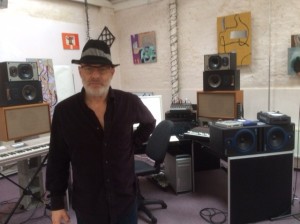
When I entered Brian Eno’s studio in West London on a sunny, early April morning, he was just working on an idea in his head (a special sound maybe, a rhythm, a melodic shape?). I was quiet for a moment so that he could make a mental note. – You look a bit Moroccan, I then said to him. I’ve never seen Brian Eno with a white beard before. He really was in the Moroccan hills a short time ago. What I didn’t know was that he bought a hat there – in that country that was once a “hippie dream world” deep in the last century, but which turned to hell for too many young people. I have known Brian since 1989, and when I’m in London, there are casual meetings once in a while. This time Brian and Karl would play a „concert for one“, happily for me, two days later. When I left the studio, with a copy of SOMEDAY WORLD, I saw Brian setting a pulsating electronic rhythm in motion. Always fun to hear a glimpse of a possible future. Hope he was able to – nearly seamlessly, return to the idea he had in his mind – meaning the completely different place he had been some minutes before!


On Feb. 28th Karl Hyde wrote down three sentences, entitled IN A TROPICAL COCOON: „Old man wheeled in a chair through the Aroma of exotic streets wearing a distant expression. The stories he has written slip away, will be forgotten. They lie behind him in a trail of ghost memories, in the market on Pagoda street.“ An accidental observation, a dream sequence? Who knows? Karl Hyde has the knack of getting lost in special moments and sceneries of modern life, focussed on things that might otherwise disappear before you really see them. Brian Eno is his companion in creating disturbing, beautiful songs with a sense of wonder and wilderness in SOMEDAY WORLD. Brian (also fond of notebooks and diaries) knows how to look for exit signs on old, well-trodden paths. Getting lost is a heartfelt need. For both of them. Between the blurred edges of England’s old soil and another blue world „The satellites sing songs / The days run into one / I need the sound of cars / To drown the quiet sun“.


Michael Engelbrecht: In the 70’s one of your four so-called song albums of that decade contained the word „world“, „Another Green World“, a work full of exotic landscapes. In 2005, „Another Day On Earth“suggested a return to the real life on this planet, and your new collaboration with Karl Hyde, „Someday World“ again seems to cover existential issues. I just have to look at the cover, a strange, kind of psychedelic picture.
 
Brian Eno: I think it’s an optimistic choice. It’s the idea of a world that might actually turn out to be okay in the end. To everybody’s surprise, it might be a good world, there’s still a chance. In fact the record started out with quite a different mood. It ended up somewhere much more positive and joyful than really the place it began. I mean we weren’t miserable when we started, but there was a sort of slightly angry energy, as we started working together, but, because we were enjoying the process so much, the record actually came out with a lot of that joy in it …
 
Michael: … that is often undermined with rather dark undercurrents, in the lyrics, for example.
 
Brian: One of the things I like about the result is that two different sets of emotions are stuck together, and they can actually coexist. I always like things when I think, when I feel they are emotinally complicated. I don’t really like emotionally simple art (laughs).
 
Michael: When moments of anger or despair are mixed with euphoria, you can call it „hysteric“ in the field of Clinical Psychology. Here the songs all get a second or even third bottom. They seem to be alive and well, despite some of the more or less hidden shades of disturbance and sadness.


Brian: Yes, you’re quite right. You asked about the cover of the album, that’s very much the picture of the cover as well. It’s a picture of a bit of a railway line actually, and it’s a very industrial, not attractive landscape in a way. It looks like a vision of a place you wouldn’t want to live. But in fact by making that kind of false world behind it, it suddenly suggests that it might be a kind of utopia. And I think in the song „A Man Wakes Up“ the same thing happens: the guy suddenly realizes that he’s very happy, he’s very fulfilled. I have this experience sometimes when I remember times in the past, and I think, ah, that was a great time, I was really happy then … If I go and look at my diaries or my notebooks, I’m always complaining (laughs). So these times when actually I was really enjoying it, I thought that things weren’t so good, you know, my perception of the time was, this is a difficult time, my perception in retrospect is – that was a great time. Nearly all the times have been great, actually …
 
Michael: Nevertheless, missed opportunities seem to be one recurring topic of „Someday World“, for example in the song „Witness“. We can hear this frenetic singing: „Did you ever loose your faith for a day / Seeing everything slip away? / Did you ever take a bribe? / Or a ride, a ride, a ride along a road / You’d taken all your life / Only to find it didn’t go to the place you thought it would arrive.“ Apart from that it seems to be a love song where someone is missed in the early hours after midnight …
 
Brian: I don’t think it’s about a romantic relationship, or at least it shouldn’t only be about that. It could be about that as well. It’s about a relationship. It could be friends, or lovers, we don’t know. The song doesn’t tell you, and I think it shouldn’t really tell you which one it is. What is exciting to me about that song, there’s a sort of yearning feeling to it … somebody wanting something so badly that they can’t see that it’s already there (laughs). Maybe that’s the feeling I get from it.
 
Michael: Karl and you have both shared the writing of the lyrics. Nevertheless certain motives do appear or reappear during the nine songs. Stars and cars particularly. In „Daddy’s Car“, a dreamy evening atmosphere of playing children and the speed of a car on a highway are set against the tremendous speed of the North Star. Did you plan certain leitmotivs?
 
Brian: (laughs) Cars and stars, that had been another nice title. But, no, I’ve just noticed it now you say it. But it’s certainly Karl’s subject matter. The kind of things he likes to write about. Ordinary things, things that you see in your life, people you hear on buses, a lot of the text comes from him listening to people having conversations in buses or shopping centers, and he just writes down what they’re saying. He got hundreds of those books. He just takes lines and fits them together, and sometimes I add something in or write some parts as well.


Part 2/4
 
Part 3/4
 
Part 4/4
 

Ein Tag nach der Rückkehr. In der Dusche Timber Timbre gehört, hypermelodische Songs von einem, der irgendwo zwischen den Tindersticks und Leonard Cohen zur ganzen eigenen Langsamkeit findet, melodisches Füllhorn inclusive. „Hot Dreams“. Später das Interview-, Ton- und Bildmaterial gesichtet. „Dishoom“ zum Beispiel, nahe Leicester Square.


A swish Bombay brasserie in the style of the old post-colonial ‚Irani cafés‘ of Bombay, Dishoom is filled with retro design features: whirring ceiling fans, low-level lighting and walls adorned with vintage Indian magazine advertising.

Manche Situationen waren dazu angetan, die klassische Klartraumübung zu machen: „Träum ich, oder wach ich“? Ein solcher Realitätscheck war zwingend erforderlich, als Brian Eno und Karl Hyde im Studio improvisierten, und sich einmal, dank Brians beeindruckend programmierter Drums und Karls Hydes Gitarrenspiel, ein Trance-Groove entwickelte. – Das klang, erzählte ich dem Duo, wie ein Stück, das Embryo nur zu gerne 1973 gespielt hätten! 

The look of Dishoom is certainly distinctive, but the effect can be so slick when compared to the real thing that the venue can feel rather soulless and corporate. This doesn’t stop the design-conscious and Indophile thronging here through the day, from breakfast (for sausage nan rolls with chilli jam) to dinner (for the stir-fries and tandoori grills).


The main attraction though is the menu, loosely styled on Irani café food with birianis, bhel (crunchy puffed rice with tangy tamarind chutney) and even pau bhaji (toasted white bread rolls with a spicy vegetable stew as a filling). Our black dal was exemplary, and the lamb biriani suitably moist. One of the best Indian restaurants I’ve ever been in!

Janek Schaefers grosse Nachtmusik, die CD „Lay-By Lullaby“ (am 12. April in den Klanghorizonten) brachte ich Brian mit. Janek sei einst einer seiner Schüler gewesen, erzählte er zum Nachmittagstee, und Janek habe einmal die Idee gehabt, ein Paket zu versenden: er habe ein Mikrofon und einen Rekorder darin verstaut, für genug Batterieladung gesorgt, und beides im Päckchen fixiert. Sodann seien alle Geräusche aufgezeichnet worden, die auf dieser Paketreise, sozusagen von einem „blinden, aber nicht tauben Passagier“ zu hören waren: Fabrikhallensounds, Dialoge zwischen Postboten und Kunden, Stadt, Land, Fluss, Lagerhallenstille, etc. Janek machte daraus eine Sound-Installation.

I particuarly like the endlessly refilled house chai (Indian-style tea), but the other drinks are interesting too – excellent lassi concoctions, even a soft  drink called Limca in glass bottles imported from Mumbai.


Karl Hyde erzählte mir, wie er bei den Aufnahmen zu „Someday World“ wieder Lust am Gitarrenspiel gefunden habe. Weil nämlich die Gitarren in Brians Studio alle auf sehr ungewöhnliche und witzige Weise gestimmt gewesen seien. Da sei man gar nicht auf die eigenen alten „patterns“ hereingefallen. Und gegen Schluss der Aufnahmen sei es einer Entdeckung, einem Abenteuer, gleichgekommen, dann wieder mal mit vertrauten „tunings“ zu spielen. Auf alten Gitarren.

2014 4 Apr.

Brian Enos marokkanischer Hut

| Filed under: Blog | RSS 2.0 | TB | Tags:  | Comments off


Everything you need to know about Brian’s hat, and the forthcoming Eno / Hyde album „Someday World“ (release date in Germany, May, 2, in England and elsewhere, May, 5), can be found here, on the first day of May. And the days following up to the official release of the album. Some songs of the album will be played in my night edition of „Klanghorizonte“ on April 26th, along with some excerpts of our highly informal, unofficial and private talk. 

2014 4 Apr.

Brian Eno und Karl Hyde

| Filed under: Blog | RSS 2.0 | TB | Tags: , | Comments off


2014 2 Apr.

„He’s off to a distant galaxy“ (part 2)

| Filed under: Blog | RSS 2.0 | TB | Tags:  | Comments off


No, this man is not off to another galaxy, maybe he’s off to a „someday world“. In fact, when I entered his studio, he was just working on an idea in his head (a special sound maybe, a rhythmic, a melodic shape?).  I was quiet for a moment so that he could make a mental note. – You look a bit Moroccan, I then said to him. I’ve never seen Brian Eno with a white beard. He really was in the Moroccan hills a short time ago, as I knew from one of his latest e-mails. What I didn’t know was that he bought a hat in that country that was once a „hippie dream world“ deep in the last century, that turned to hell for too many young people. You can see this hat in the photo. The coloured version will be posted here (amongst some other surprises) on May 1. I have known Brian since 1989, and when I’m in London, there are casual meetings once in a while. So, nothing was planned, no promotion activity set up by Warp Records. But, well, when chance meets opportunity, why not have a little conversation about a record that (I promise!) will blow some people’s minds. When I left the studio, with some nice little things in my bag, I saw him returning to his place and setting a pulsating electronic rhythm in motion. Always fun to hear a glimpse of a possible future. Hope he could nearly seamlessly return to the idea he had in his mind meaning the completely different place he had been some minutes before!


Frank Nikol müsste eigentlich ein alter Bekannter sein, aber er ist mir nie begegnet. Dabei hört er die „Klanghorizonte“ seit 20 Jahren (kann das sein?) und hat dabei musikalische Favoriten wie The Necks und Federico Mompou entdeckt. Ich habe Frank vor wenigen Tagen entdeckt, und war gleich hin und weg von den „Ein-Bild-Geschichten“ seines Blogs. Diesen Ex-Surrealisten haben wir nun in unserem Blogroll aufgenommen, jeder landet mit einem Klick in Franks Welt. Ein Doppel-Klick, und das perfekte Liebespaar erstrahlt in vollem Cinemascope! Die Zeichnungen für sein Projekt „Als wir noch Surrealisten waren“ haben gewiss viel mit seiner medialen Sozialisation zu tun. O-Ton Nikol: „Der Einfluss von unzähligen Filmen, von Literatur, Theorie, Geschichte und Popkultur trifft auf die Lust an der Zweckentfremdung, d.h. die Lust daran, die Dinge neu zu erzählen, oder genauer: anders. Die Zeichnungen entstehen nach den Vorlagen alter Filmstills. Verbunden mit neuen, assoziativ entstandenen Texten werden sie zu Ein-Bild-Geschichten, die, mal mit, mal ohne Pointe, vielleicht auch davon erzählen, daß alles auch ganz anders (gewesen) sein könnte.“ Solch ein freies Spiel der Möglichkeiten haben die Surrealisten ja einst eröffnet, und dabei allerlei herrliche Konfusionen gestiftet. Und wer da nicht „Skandal, Skandal!“ rief, der konnte aus der Routine eingefahrener Gewohnheiten ausbrechen – voller Lust aufs Unbekannte, wo immer auch hin!

These are your orders –
Seems like it’s do it or die
So please read them closely
When you’ve read them be sure that you eat them up –
They’re specially flavoured
With Burgundy, Tizer and Rye
Twelve sheets of foolscap: don’t ask me why.
We hit the jungle
Just as it starts to monsoon:
Our maps showed no rainfall
All the boys were depressed by this circumstance
„Trust in the weather“ said less agricultural men
Who gives birth to more farmhands, don’t ask me why.

Fifteen was chosen because he was dumb,
Seven because he was blind:
I got the job because I was so mean,
While somehow appearing so kind.
Drifting about through the cauliflower trees
With a cauliflower ear for the birds,
The squadron assembled what senses they had
And this is the sound that they heard…

Back at headquarters,
Khaki decisions are made
File under „Futile“:
That should give you its main point of reference
It’s all so confusing, what with pythons and then deadly flies
But to them, it’s a picnic
Don’t ask me why.

Thirteen was chosen because of his luck,
Eleven because of his feet:
One got signed up for exceptional pluck,
Another because he was mute.
Roaming about through the gelatine swamps
With a gelatine eye on the stripes,
The squadron assembled what senses they had
And this is the sound that they heard…

Back in Blighty, there was you
There were milkmen every morning
But these endless shiny trees, never used to be that way.
Back in Blighty, there was you,
There were milkmen every morning
But these endless shiny trees,
Never used to be that way.

2013 15 Okt.

„Jazz from another planet“ – Brian Eno on Fela Kuti

| Filed under: Blog | RSS 2.0 | TB | Tags:  | Comments off


Manafonistas | Impressum | Kontakt | Datenschutz