Am Wochenende war ich in einem meiner ungewöhnlichsten Konzertbesuche. WILCO, mit dabei einer der weltbesten Gitarrenspieler. Ob es mit ihm zusammenhängt, weiss ich nicht, jedenfalls machte mich das ständige Austauschen der Gitarren sehr neugierig. Zuerst versuchte ich, den jeweiligen Gitarren einen Namen zu geben, Fender, E Gitarre … Dann ging ich vor zur Bühne, um den unterschiedlichen Sound besser heraushören zu können. Mehrmals schallten mir Misstöne entgegen, mir war nicht klar, ob diese mit eingebaut waren oder just happened. Auch die Rhythmen verführten mich zu dem Gedanken, dass es doch phänomenal sei, wenn die Band zu den Texten den allerbesten Sound rausloopten. Und dann hatte das Fragen ein Ende und das Staunen begann. Der Song begann sehr ruhig, fast zart – plötzlich ein donnernder Rockbeat für 2 Minuten auf 4 Gitarren, dann wieder dieser eingängige Blues. Mir wurde klar, dass hier eine Band am Sound arbeitet, dass Neues ausprobiert wird, dass um jeden Ton gerungen wird. Das alleine war die Show schon wert. Ich hätte gerne gewusst, wie viele Gitarren sie dabei hatten und wie genau der Soundcheck vorgenommen wurde. Zu Beginn des Konzertes hatte der Sänger gesagt, er könne sich in dieser Messehalle auch vorstellen, einen Vortrag über seine Musik zu halten. Auch das wäre sicher interessant gewesen.
Archives: Dienstag, 1. November 2016
2016 1 Nov.
Der Gitarrensoundcheck
Lajla Nizinski | Filed under: Blog | RSS 2.0 | TB | Tags: Jeff Tweedy, Nels Cline, Wilco | 5 Comments
2016 1 Nov.
NO DREAMS IN HARBOR COUNTRY, OR: THE HENRY MANCINI MISTAKE (an interview with Kurt Wagner, Lambchop)
Michael Engelbrecht | Filed under: Blog | RSS 2.0 | TB | Tags: FLOTUS, interview, Kurt Wagner, Lambchop | 4 Comments

When I had a first glance on Kurt Wagner’s telling essay on the making of FLOTUS, the word „Mancini“ popped up, and I immediately thought of Henry Mancini, the composer of unforgettable soundtracks. After having channelled Frankie „Boy“ Sinatra into ghost town territory, after having composed a new soundtrack for a German silent movie from the 20’s, after some Curtis Mayfield falsetto highs on NIXON – why should the man who, similar to Robert Wyatt, has always been able to give well-known sources a personal touch, not get away with some Henry Mancini mood? I was wrong, Mary Mancini is the name of his wife. A politician. Democratic party. And she plays her part in the album, that’s for sure.
To be honest, I would very much prefer to get lost in a Scottish whiskey bar instead of following the ups and downs of a long-time marriage by reading canonical middle class novels by Updike or Ford (to make a long list short) that were quite obsessed with midlife-crisis-drama and long-term relationship-matters.
But there are exceptions. BLOOD ON THE TRACKS (to name a prize-winning writer), or one of the long Neil Young-songs on PSYCHEDELIC PILL – or Lambchop’s FLOTUS: though there are a few songs here (you could ad hoc call love songs), a lot of the tracks carry you away from any kind of conceptual exloration of the modus vivendi of people who know one another for half a lifetime. And the love songs, by the way, are brilliant.
FLOTUS Is a multi-layered beast, on par with Lambchop masterpieces like IS A WOMAN or DAMAGED (you, dear reader, might have other ones in mind). But here he is, Mr. Kurt Wagner, playing with „auto-tune“, doing „the two-step-hustle“, spending some time in Spain, just a few days before the release of one of the great song albums of 2016. Album of the month in MOJO, album of the month in UNCUT (December issues). So, take your time, and do yourself a favour, read – and listen!
Michael Engelbrecht: Where are you just now, Kurt, any hip-hop to be heard in the neighborhood?
Kurt Wagner: I’m in Castelion, Spain, on my off day which happens to be a bank holiday in Spain. Last night was Halloween. Not much hip-hop in this town this morning but it has yet to wake up.
Michael: To open this album with IN CARE OF 856309, is a courageous decision. A slow burner, the vocals quite deep in the mix (sometimes the deep range of your voice placed close to the bass). Words become sounds, and the listener is not forced to do semantics in the first place. An „ambient song“, kind of.
Kurt: Making this the first track on FLOTUS seemed to be the only logical place for this track to go. For this particular record I think it introduces the vocal distortions in a confident way, almost relentlessly. The flow of the words and the almost ultra wordy prose makes the case for a certain amount of drift by the listener much in the same way great dense hip hop words work. But also Dylan.
Michael: Additionally, you cannot always distinguish exactly between the real voice and the manipulated one.
Kurt: It is true that the vocal processing does balance between the more natural voice and the processed. My hope is by the end of the experience you have either accepted the notion, or turned the track off. It gives you the space to decide.
Michael: Speaking of „Auto-Tune“. What is it that attracts you here, from besides of paying attention to your hip-hopping neigbourhood, and the distorted sound of their ghettoblasters?
Kurt: In my case, this machine enables me to to go beyond my limitations as an artist. It can suggest and infer possibilities, it can open up ideas by virtue of its design. And it happens in real time as the source is presented, it’s like a performance enhance for but the mind and the mouth.
Michael: I have big fun when reading the lyrics of JFK (“ … We must build a culture of understanding / just shy of the radio: I’m a pharmacist … „) – and simultaneously listening to the song. What has been the inspiration to a song that may have some sad undercurrents. But then, yep, the dancing groove of the second part, me oh my …
Kurt: When I was helping my parents move a few years back I was cleaning out their basement and I came across a drawing I made when I must have been 6 or so. It was a picture of JFK at a desk in the oval office with the presidential flag behind him. (the same flag that’s on the FLOTUS record cover). It now sits in my office and I see it everyday and i move it from place to place not knowing really what to do with it. I even made a crude wooden frame for it back then and signed it on the back. I must have been quite proud of it I suppose. I do remember that when I was very young we went to see the eternal flame at JFKs grave in Washington DC and that I am told I broke away from my parents and slipped under the rope that protected the area and made a break for the grave and flame. A U.S. Marine guard had to run me down and return me to my parents. The song was written while looking at and contemplating the drawing.
Michael: You often used your small orchestra as a kind of paintbox carefully chosing musical colours, so that it resulted in a kind of chamber folk, maybe with the exception of NIXON. Now starting these songs alone with some new electronic devices allowed you to build up songs from scratch, with no prefigurations by favoured or well-trusted guitar lines. But it still sounds intimate and colourful. Even when a „club feel“ enters. And the long last, most „groovy“, most electronic track of the album sounds so much more contemplative than switching on fireworks-mode.
Kurt: With the help of technology I’ve been freed up to realize a song idea in a fuller more complete and complex way. But that said it still needs the human touch to be a Lambchop record or performance. It is that intimacy that Lambchop has with the listener that is one of the cool things about this record. I feel it’s still there in the sound and the songs.
Michael: I know that many of your songs start with everyday observations. So, looking at a song like OLD MASTERS, what (the hell) has inspired it? A good example that you don’t need to have the faintest idea of anything to love a song.
Kurt: Stay hungry, my friend.
Michael: I have been listening to the whole album just about six, seven times now, and I’m very sure that this whole thing is a damned tricky beast. You are never trapped in a formula, e v e r y song has a different and distinct atmosphere. I think you like downplaying this sophisticated element by presenting yourself as a man of certain age looking at the younger generation for doing a bit of trial-and-error stuff.
Kurt: I’ve indeed been convinced that in order to move forward through a creative life one has to look to younger generations to see where things are heading. Most but not all people my age tend to settle into a place that is more about the past than the future. Partly because the future for my generation is pretty fucked in a broad sense. So let the children play so to speak and interact with their sounds and ideas. I am in no way a complete idea but rather one that is in need of learning and refining the ideas that are out there and the ones yet to be thought of.
Michael: Some lyrics seem to refer to dream activities, at least daydream activities (the scene in the laundry, the special imagery of HARBOR COUNTRY.
Kurt: Sorry, no dreams in Harbor Country.
Michael: THE WRITER is witty, funny, thoughtful, dark, everything. Shades of a self portrait? Or some musings on polarities?
Kurt: It’s a bit of both really, I was playing with the folk form of style and verse and placing it in an electro setting with horns.
Michael: Your favourite TV-series of the last years?
Kurt: „Last Week With John Oliver“, the best comedy show on current events in the USA right now. No one else comes close.
2016 1 Nov.
50.237315°N 11.72254°E – Take Five
Hans-Dieter Klinger | Filed under: Blog | RSS 2.0 | TB | Tags: Walter Bachauer | 15 Comments
Die Firma Radio Schramm gibt es noch. Sie war schon immer die Nummer 1 am Ort. Jetzt hat sie so gut wie keinen Konkurrenten mehr in der Stadt – dafür andere, mächtigere. In den 50er und 60er Jahren versorgte sie Jukeboxen vieler Kneipen in weitem Umkreis mit populärer Musik, mit Jan & Kjeld, Hang Down Your Head Tom Dooley, Jørgen Ingmann, I Want to Hold Your Hand …

Das ist die Fassade des alten Ladengeschäftes. Durch die Türe links neben dem Schaufenster trat man ein in den Verkaufsraum. Als Schüler war ich selten dort. Meinen ersten Plattenspieler (Philips Cortina) bekam ich zur Konfirmation geschenkt. Es gab bei Schramm eine gewisse Auswahl an Schallplatten, aber die wenigen, die mich interessierten, waren mir zu teuer. Ich mochte nur Klassische Musik, jedoch kosteten LPs der Marken Deutsche Grammophon Gesellschaft, Electrola etc. um die 24,– DM. Ich trat dem Ring der Musikfreunde, Köln bei. Vier Käufe pro Jahr waren Pflicht. Das reichte mir vorerst, und die ‘Schallplatte des Monats’ war wirklich preiswert!
Dennoch hätte ich 1961 beinahe die erste Jazzplatte meines Lebens bei Radio Schramm gekauft. Meine Cousine hörte im Bayerischen Rundfunk regelmäßig die ‚Schlager der Woche‘. Eine Zeit lang hielt sich ein wunderschönes Stück im Chart, das mir sofort ans Herz gewachsen ist. Ich fragte nach bei Schramm:
– Ham Sie Take Five?
– Naa, des ham mer net.
Schade.
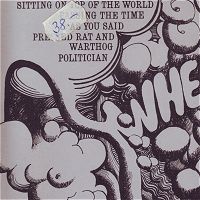
Über die Jahre habe ich insgesamt 5 Platten bei Radio Schramm gekauft: die zwei abgebildeten Doppel-Alben, die sich noch immer in meiner Sammlung befinden, und eine LP mit Orchesterwerken von Maurice Ravel, dirigiert von André Cluytens.

2016 1 Nov.
Brian Eno: The Ship – a review and a story
Manafonistas | Filed under: Blog | RSS 2.0 | TB | Tags: Brian Eno, review, The Ship | Comments off
PROLOGUE
A late summer’s night in the distant future. If there is still life, there will still be radio stations! In this case a rebuilt light tower on the lonesome crowded American West Coast, not far from San Diego. In her popular show „Off-Centre Adventures Thru Sound“, DJ Mireia Moreorless – intelligent of expression, high of heel, intoxicatingly nonchalant of superiority – takes the listener on a stroll through British music history between 1975 and 2020.
In the space of five hours, she plays a lot of classics. A short look at her playlist reveals, amongst other gems:
Talk Talk’s „Laughing Stock“
Scott Walker’s „Bish Bosch“
John Cale’s „Music For A New Society“
PJ Harvey’s „Let England Shake“
Robert Wyatt’s „Cuckooland“
Gavin Bryars‘ „The Sinking of the Titanic“
Portishead’s „Third“
Brian Eno’s „The Ship“
National Jazz Trio of Scotland: Standards, Vol. IV
The Ship got its airplay in the middle of the night, people called that record still „spooky“ in 2135, especially „Fickle Sun (i)“. It was the first record she’d ever heard by Brian Eno; her grandfather played it one night, on a soundfile with Gustav Mahler on it. As well as The Dead Kennedys, Squarepusher, Nick Drake, John Lennon, Hamish Imlach, Ivor Cutler, Fugazi, Arvo Pärt, and some East India Youth tracks from his Mojo „album of the year 2020“.
SETTING OF THE SCENE
Ah … yes – the opening scene of „The Ship“. Gently does it. Nothing much happens, an oceanic view, „Music for Dead Harbours“, no humans involved, no figures in the landscape. Not yet. Things slowly unfold after minutes – the here and now will maintain the ineluctible quality of the long, faraway gone throughout.
Life – what’s left of it – slowly awakens. The Ship drifts further off, with Brian Eno’s deep voice, hitting the low C, announcing what’s going on, delivering a Sisyphus / Lazarus job giving its best to stand the test of stoicism. This is the rise and the fall and the wash and the fade. The ebb and the flow. Sooner or later other voices will gather around within earshot – via the ether, megahertz radio chatter: ghost voices, disembodied intonations reassuring themselves they are alive. Kicking.
All continuity fractures: a postmodern parody of a Greek choir. A crack-up, a falling apart, in comes „Fickle Sun (i)“, another poorly dimmed world …
„and so the dismal work is done‘
‚the empty eyes, the end begun‘
‚there’s no-one rowing anymore …
… abandoned far from any shore.“

The tone changes from the first moment on „Fickle Sun (i). A tour-de-force without parallel among Eno’s works. These 17 minutes observe everything turn to dust and rubble. If it isn’t an unconscious channeling, Eno’s full-bodied singing during the opening passage suggests some serious source studies of sea shanties and maritime tavern songs from Northumbria down to East Anglia. Songs from similarly desperate, earthier times.
Eno’s voice with all its treatments is a real treat. Here the passionately executed lines have their own colour and discrete shade and shape – at one point like distant cousins of The Unthanks – specialists in contemporary versions of ancient country and sea folk with its perennial cycles of love, hate and disaster.
Ahh, sea songs.
– Worse things happen at sea, Vladimir.
– That is true. But you do know where we are, Estragon, don’t you? Yes?
– No, I mean, well, … not really. Where are we?
– On the ocean, Estragon. Floating on the ocean. Can’t you hear the waves lapping lustily? Nor hear the seagulls squawk-squawking violent regret that no sardines shall be srown into ze sea?
– Yes, Vladimir. Well actually, no. I thought the racket was just louts! But the floor is rolling, and, well, we are standing on what looks like a fo’c’sle.
– Right.
– Right …
– Do you remember the Gospels?
– I remember the maps of the Holy Land.
A WIDESCREEN VOID
The sea is a recurring theme in Eno’s oeuvre: full of yearning in ‚Julie and I‘, rich in humour in ‚Backwater‘, vast and immense in ‚Dunwich Beach, Autumn 1960‘. Languid, faintly heartbroken, green and luminous in ‚Becalmed‘. The element of surrender has always been the common thread, but until now this topic hasn’t been realised with such bleakness. A starless, bible-black frieze. A widescreen void.
This work suggests the everyday darkness of wartime. And the liminal space where every last breath is a long slowmotion leap onwards toward permanent relief from pain and trauma. And in this liminal space the cup is not broken but is so near to broken that neither ‚broken‘ nor ‚unbroken‘ fully applies. A juncture where language for now, has stopped working, its semantic flow interrupted.
Out of nowhere, in this album of constant losses and sudden appearances, an electric guitar suddenly howls painfully before decaying, at length, into oblivion. This old instrument is an unexpected guest here (especially with its history and associations. Goosebumps and shock value guaranteed. Christian Fennesz couldn’t have done it better here. Nor Edgard Varèse).
Then, into this overwhelming symphonic microcosmos comes the Scott Walker moment – fifty or more more hot shots of brass, da Daa DAAA. Highly effective in its apparent simplicity (and, yes, phonetic approximations are ridiculous when you’re trying to describe the way your breath is being taken away here). Think of it as an Ernst Jandl anti-war poem: ta Taaa TAAA. Again&again&again&AGAIN. Crescendo time. Shoot me to the end of night.
After this (the track’s climax – in fact the climax of the whole album) the song turns into a highly sensual study of decay, or, more precisely, a mourning: ‚All the boys are going down / Falling over to the ground‘. If a textbook ever covers the parallels between the works of Gustav Mahler and contemporary music between 1970 and 2020, then ‚Fickle Sun (i)‘ will have an entire chapter devoted to it.
ILLUSION OF CONTROL
Not that we know anything of Eno having a thing for the Austrian composer, but the point’s simple – while the likes of Wagner liked to pour on emotionalism and actorly heroics, Mahler lets all the pathos trickle away, the icebergs of grand musical gestures are always being melted down to the textures of wastelands – lost illusions of control.
So does Eno in the closing moments here. Single vocal lines linger. Mumblings of the dying (‚ … when I was a young soldier … ‚). But no-one’s seeing light on the other side, or angels pulsating in the corners of the frame. There’s something in the absence of dancing photons in the peripheral vision. Probably best not try to describe in detail what goes on in the final passage, where the echo chamber of voices takes over – cos it could easily sound like a lysergic acid-submerged moment out of a Philip K. Dick-novel.
Over the waterfall. That’s a simple way of putting it.
THE WEB HAD DIED YESTERDAY
„Fickle Sun (ii)“ is a Speaker’s Corner surrounded by a sea of turmoil, disturbance, entropy, weird beauty and unrelenting loss. After two long compositions dealing with the cost of hubris and the solitude of dying, when this track appears it’s like an aftershock. All quiet, but the ground still shakes, and the album’s central topics bounce around like semantic UFOs in the mind’s sky: „… The hour is thin / Trafalgar Square is calm / Birds and cold black dark / The final famine of a wicked sun …“
Spoken by actor Peter Serafinowicz in a voice that defies drama and distance, and accompanied by a delicate, minimal piano figure that knows where to hold breath, the piece sets the listener’s mind afloat and wondering – with all its verses, quotes and lines derived from the „Markov Chain Generator“: „And the web that died yesterday / I was a hard copy version / I turned my eyes directly to hate“
Using a mix of computer-generated chance operations and last refinements of a human being, this „man-machine“ is the perfect link between what came before, and what will come after. It’s a clearing of thoughts without leading those thoughts in a certain direction. Sharp and short as this track appears, it creates a properly surreal mental space: „Tired of what the world has yet brought forth / With the women wavin‘ at war“.
ROLLING ON THE GROUND
The whole beast is a contemporary lamento of the highest order and ends with a jukebox-song you possibly can’t resist to get lost in. Sounds strange? It does. Brian Eno often looks for a resolution, a passage of release, on the final tracks of his works and has done so since HERE COME THE WARM JETS and TAKING TIGER MOUNTAIN (BY STRATEGY).
Not being a rule he hasn’t broken from time to time (think of ANOTHER DAY’S ON EARTH’s frightening finale „Bonebomb“, a favourite track of David Bowie), Eno offers a state of momentary bliss with his version of the old Velvet Underground-track „I’m Set Free“. Bleak existenzialism of the original turns into a gospel-tinged, future „evergreen“, with swelling strings and singing of the stone melting kind.
After the long and immersive journey this masterpiece (yes, that it is!) has been inviting you to before (a hell of a ride, executed with passion, stoicism and sadness in equal parts, sonically adventurous throughout), one probably is easy prey for this hymn on its way to rock bottom or heaven’s saving grace, until the very last, dying note – not overhearing the undercurrent of melancolia:
„ … Now I’m set free /
I’m set free /
I’m set free to find a new illusion … „

EPILOGUE
The Feint Gunpowder Blue
The feint gunpowder blue of early morning light reflects in her pupils as DJ Mireia Moreorless breathes in deeply and exhales. She’s closing her marathon of British old time avant-greats with Robert Wyatt’s ‚Sea Song‘ and a twisted tale about a big wave by Ivor Cutler. These nights at the lighthouse radio station are her preferred mode of time travel – but now, under a postmodern California sky, she’s just happy to see her cyborg lover Kasumi waiting at the entrance area in a carmesin red Austin Mini Hydrogen. A soft kiss, and Kasumi lets herself smile broadly at the vision in the passenger seat.
Au Pont de Neuilly
Let’s pause for a short while here, since you may possibly want a bit more about Mireia. If she’s a type, she’s the woman you sometimes see on the Paris Metro. She doesn’t see you. She’s probably on her way to Pont de Neuilly via an interchange to Line 1. Idiots stare at her. But you don’t, and don’t need to, because her nonchalant superiority shoots like moonbeams in a billion directions, and those moonbeams even in peripheral vision are in themselves a cosmic blessing.
Time Itself Could Escape
The secret is simple – she never realised the world’s pedestal for her. Her dad was watchmaker who invented a tourbillon that could counter the effects of gravity so well that time itself could escape its strictures within the space-time continuum. Her mum was a nurse. To her, being a DJ is a humble occupation.
Bullets of Adulation
People fire bullets of adulation her way, all the time. And every single time, they miss. But one day, soon, she will meet her match. And life will move haltingly in the light, for a second, while in another hemisphere stars will fall across the sky in 1000s at random, speeding along brief vectors from their origin in a question mark to their destinies in dust and the nothingness that is nowhere and is endless.
Night Flights Over Los Angeles
She first met Kasumi in a supermarket in Carmel, sometime during a week-long early autumn surfing trip. It didn’t take long to register. They have so many interests in common – leftfield music, jukebox culture, exotic car travels, French cuisine, tantric sex, helicopter night flights over Los Angeles, ghosts, rivers, standing stones, Bakerloo Line moquette, Highland castles, Curly, Larry, Moe, Shemp, lucid dreams, tea, clouds, rain.
Slowcommotion Wilderness
The night’s programme of music has been immersive but there’s no suggestion of fatigue. Mireia’s senses are still in fifth gear. At home, in their tiny beach house, they make love to one another, today in their „slowcommotion wilderness“ mode that doesn’t involve much movement. Afterwards, Mireia falls asleep almost immediately, and when she wakes up four hours later, she remembers a dream with a wooden jukebox and her grandfaher telling her about when there had been a jukebox revival in the early 21st century.
Coq au Vin
She opens her eyes, and sees Kasumi preparing coq au vin for the evening. After a short swim in the ocean, she moves through the living room and puts a vinyl record on their record player, an ancient „VPI Prime Forward iii“ designed by machines in Japan and manufactured by other machines in New Jersey in 2055. She puts on one of her evergreen albums from the era of last night’s journeys through old Britannia, Brian Eno’s „Oblique Collection of Antique Jukebox Adventures“, a big seller in 2019.
Irony of Fate
That guy who once coined the term ambient music, had his biggest commercial success (irony of fate) with a collection of heartwrenching, nevertheless strange versions of classic and bizarre pop songs. Eno once had an a capella group (just for the fun of singing), and one of the rules was never to publish any of the things they were doing in the comfortable space of his studio. But then, he gave it a second thought.
Django Rheinhardt
Who covers their covers in glory? Johnny Cash has done it (and brilliantly so in his last years), Bryan Ferry has done it, Patti Smith has done it, Cat Power has done it, Willie Nelson has done it. Kasumi won’t. She improvises lyrics to crackly bakelite Django Rheinhardt favourites like „Minor Swing“ and „The World Is Waiting For The Sunrise“, but only sings them unaccompanied, in the shower.
Eno listed songs he liked very much, and focussed on those where he was confident enough to add another unknown layer. And of course the final choice had to suit his way of (very British) singing with slim vocals, and no big paint brush.
801
Mireia looked on the tracklist while the first song was playing: a dark earcandy version of Ray Davies‘ „Rainy Day In June“ followed by a new version of The Beatles‘ „Tomorrow Never Knows“, Eno himself had once sung on Phil Manzanera’s „801 Live“. A really special collection, including two Everly Brothers classics, The New Vaudeville Band’s „Winchester Cathedral“, Scott Walker’s „It’s Raining Today“, Tom Waits‘ spoken-word piece „What’s He Building“, and The Doors‘ „People Are Strange“.
Denouement
When the Doors song finally appeared, Kasumi appeared. She put her arms around Mireia, and they both sang along with Eno’s singing:
„People are strange when you’re a stranger
Faces look ugly when you’re alone
Women seem wicked when you’re unwanted
Streets are uneven, when you’re down
When you’re strange, faces come out of the rain
When you’re strange, no-one remembers your name“
– written by Michael Engelbrecht and Ian McCartney
„Wow! Michael, this is the most brilliant review I’ve ever had. Thank you so much. I shall treasure this (- and of course send it to everybody! – I’ve already sent it to Peter Serafinowicz). It’s not only a great review in the normal sense, but it’s a ‘great’ review as in a great piece of writing. Fantastic idea, to write as though looking back from the future. Funny you should mention Ernst Jandl. He was a key figure in my life: I saw him at the Poetry Olympics in London in June 1965 – a barrel-chested, red-faced, stocky presence, unusual amongst all those slightly effete Americans like Allen Ginsberg and Lawrence Ferlinghetti. What he did that evening is the only thing I clearly remember – the rest of it has sort of merged together into a sort of general stew of 60’s beat poetry. Please give my regards and thanks to Ian. Brian“ (Eno’s reponse after the first of posting of the text, a week before its release. In November, everybody can experience „The Ship“ as an installation in Hamburg.)