Manafonistas

on life, music etc beyond mainstream

You are currently browsing the blog archives for the day Montag, 25. April 2016.

Archives: Montag, 25. April 2016


Ich habe mich fuer einige Tage ins belgische Hinterland begeben, um diesen literarischen Wackerstein zu lesen. FROHBURG von Guntram Vesper, 1000 Seiten. Um es vorwegzunehmen, ich habe das Buch bewaeltigt. Mit gewissen Techniken ist es auch gar nicht schwer.

Auf keinen Fall darf man diese Familiengeschichte mit dem Atlas auf den Knien lesen. Guntram Vesper hat einen genauen kartografischen Blick, man nimmt ihm die Oertlichkeiten unbesehen ab.

Auf keinen Fall sollte man sich all die vielen Namen merken. Guntram, sein Bruder, sein Vater, der Arzt ist und seine schoene Mutter. Das sind die Hauptpersonen, die ihm am wichtigsten sind, zu denen er immer wieder zurueckkehrt, die ihm ein Daseinskorsett geben, das er nicht gerne verlaesst. Um diese Personen webt er historische und alltaegliche Begebenheiten ein, die in manchmal dreifach ueberlagerten Erzaehlebenen mit seitenweisen Abweichungen dem Leser hohe Aufmerksamkeit abverlangen.

Auf keinen Fall Anstoss nehmen bei den original saechsischen Einlagen, am besten nur wundern angesichts der fremden Schreibweise: „Naeschoerr“ = Neger …

Was mir in meiner DDR Zeit immer besonders gefallen hat, waren die erzaehlstarken Personen, die ich ueberall angetroffen habe. Guntram Vesper ist ein vorzeigbares Prachtstueck dieser Art. Er ist sehr wortstark, meist findet er fuer ein Nomen zwei, drei Synonyme. Er vermag, eine Situation kurz anzureissen, weicht dann weitschweifig, aber nie langweilig ab, erzeugt dadurch eine Spannung, der Leser fragt sich, ja was war denn nun mit den ausgestochenen Augen der beiden Frauen und dann erzaehlt er landvermesserisch genau den Hergang der Tat. Immer sitzen dann decameronemaessig mehrere zusammen und erzaehlen oder hoeren nur geduldig zu, einmal nennt er solche Zusammenkuenfte, die „Bratheringabende“.

Guntram Vesper ist ein Geschichtensammler, wahrscheinlich schon ein Leben lang. Seine Freude an der Weitergabe ist ihm grossartig gelungen.


Ich sitze mittlerweile wieder in einem Café in der Stadt: garcon, un café, une cigarette et un journal. Je suis en train de me preparer pour le nouveau livre.
2016 25 Apr.

Five minutes of jukebox happiness

| Filed under: Blog | RSS 2.0 | TB | Comments off

I cannot say how much I’ve been sucked in by those first two chapters of Sarah Bakewell’s book „At the Existenzialist Cafe“. In fact I like the balance of her storytelling and telling thoughts – I do now have seriously to consider drinking something bizarre as an apricot cocktail. The other thing I’m really keen on at the moment is strolling (with my eyes and ears) through the appartment of Harry Bosch (from the TV-series „Bosch“). Panaroma windows upfront, looking down from Hollywood’s hillside: a one million lights view, a decent record player, a valve tube amplifier, and a big collection of old jazz records. The Clint Eastwood-connection of cops and their love for jazz. Apricot cocktails don’t fit here, existenzialism does. When I was a teenager, 18, I drove with my first car (a white VW 1303) to the Netherlands, to Scheveningen, with two girls. They were both intellectuals, so there were three intellectuals. They loved books with unhappy women getting wild, and I loved books with cool detectives like Marlowe, Spade or Hammer. The threesome we had was rather underwhelming, somehow sad for everyone: they were thinking too much while fucking, and I was dreaming too much of the ones I really wanted to fuck/love. Even the lesbian moments were sobering, at least worth watching. A day later I was alone, one long afternoon, and I read a book, in my little room on a rainy day, Charles Bukowski’s „Notes of A Dirty Old Man“, drinking one glass of Cointreau, and some more. This was the closest I ever came to apricot cocktails. They must cost a fortune in Paris. I still know that I was quite drunk when I left the house to look for pommes frites. When I stood at the window of a rather ugly store, eating fat potatoes, looking through the rain, and to the sea, I heard Paul and Linda McCartney singing that famous song about their dog. Call it pure, uninhibited joy.

1) Dadawah: Peace and Love

2) Bob Marley and the Wailers: Catch A Fire

3) Congos: Heart of the Congos

4) Lee Perry: Super Ape

5) Cedric Im Brook: The King of Saba

6) Burning Spear: Marcus Garvey & Garvey’s Ghost

7) Linton Kwesi Johnson: Bass Culture

8) Mabrak: Drum Talk

9) Culture: Two Seventh Clash

10) Bim Sherman: Across The Red Sea

11) Count Ossie and The Mystic Revelation of Rastafari: Tales of Mozambique

12) Rhythm & Sound w/ Tikiman: Showcase

13) The Abyssinians: Satta Massagana

14) Bob Marley: Exodus

15) Joe Higgs: Life of Contradiction

16) Bobby Kalphat: Zion Hill

17) Jimmy Cliff: The Harder They Come 

18) V.A.: Trojan Nyabhingi Box Set

19) V.A.: 100 % Dynamite (Studio One) 

20) Peter Tosh: Mama Africa (or Equal Rights) 


One of the masterpieces of the roots era, no album better defines its time and place than Two Sevens Clash, which encompasses both the religious fervor of its day and the rich sounds of contemporary Jamaica. Avowed Rastafarians, Culture had formed in 1976, and cut two singles before beginning work on their debut album with producers the Mighty Two (aka Joe Gibbs and Errol Thompson). Their second single, „Two Sevens Clash,“ would title the album and provide its focal point.

The song swept across the island like a wildfire, its power fed by the apocalyptic fever that held the island in its clutches throughout late 1976 and into 1977. (Rastafarians believed the apocalypse would begin when the two sevens clashed, with July 7, 1977, when the four sevens clashed, the most fearsome date of concern.)

However, the song itself was fearless, celebrating the impending apocalypse, while simultaneously reminding listeners of a series of prophesies by Marcus Garvey and twinning them to the island’s current state. For those of true faith, the end of the world did not spell doom, but release from the misery of life into the eternal and heavenly arms of Jah.

Thus, Clash is filled with a sense of joy mixed with deep spirituality, and a belief that historical injustice was soon to be righted. The music, provided by the Revolutionaries, perfectly complements the lyrics‘ ultimate optimism, and is quite distinct from most dread albums of the period.

Although definitely rootsy, Culture had a lighter sound than most of their contemporaries. Not for them the radical anger of Black Uhuru, the fire of Burning Spear (although Hill’s singsong delivery was obviously influenced by Winston Rodney), nor even the hymnal devotion of the Abyssinians. In fact, Clash is one of the most eclectic albums of the day, a wondrous blend of styles and sounds.

Often the vocal trio works in a totally different style from the band, as on „Calling Rasta Far I,“ where the close harmonies, dread-based but African-tinged, entwine around a straight reggae backing. Several of the songs are rocksteady-esque with a rootsy rhythm, most notably the infectious „See Them Come“; others are performed in a rockers style, with „I’m Alone in the Wilderness“ an exquisite blend of guitar and vocal harmonies.

One of the best tracks, „Get Ready to Ride the Lion to Zion,“ is a superb hybrid of roots, rocksteady, and burbling electro wizardry; its roaring lion (created who knows how) is a brilliant piece of musical theater.

„Natty Dread Take Over“ twines together roots rhythms, close harmonies, and big-band swing, while even funk and hints of calypso put in appearances elsewhere on the album. Inevitably, the roots genre was defined by its minor-key melodies, filled with a sense of melancholy, and emphasized by most groups‘ lyrics.

But for a brief moment, roots possibilities were endless. Sadly, no other group followed Culture’s lead, and even the trio itself did not take advantage of it, especially after parting ways with Gibbs. When Culture re-emerged in the mid-’80s, they swiftly moved into a reggae lite/world music mode a world apart from where they started. Thus, Clash remains forever in a class all its own.


  • written by Jo-Ann Green for allmusic (and what an excellent review this is, you feel that all these descriptions come from inside, she doesn’t even need poetry! And, me oh my,  this is a fantastic record. Was für Brian Eno Gospel ist, ist für mich  Reggae. I surrender. -m.e.) 

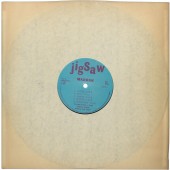
Leroy Mattis’ first drum was a plastic butter container. ‘My mother wouldn’t buy me a drum because back then the situation in Jamaica was very tense… In 1960 Jamaica was still an English colony, and the drum is a roots instrument.’ Tommy McCook was living two doors down; during the first years of The Skatalites, Mattis would practise there. In 1970 he was National Junior Drumming Champion, with Count Ossie winning overall; four years later his ensemble battled in the Senior finals with the drummers of the Light Of Saba.


„Our group was initially called Genesis, it was a 7-piece drum group, but I changed the name to Mabrak, which means Thunder in Amharic. We knew that we were coming with a heavy sound.“


image


Experiments in percussion, in the middle of the night at Harry J’s. Funky versions of rhythms like Curly Locks and Too Late To Turn Back Now, led by talking drums. Blaxploitation is in the air… the Staples… even a blast of Barry White. Beautifully mixed by King Tubby, who couldn’t believe his ears.

Originally released in 1976, in paper inners only. Smartly sleeved in quintessential Dug Out style this time around — with an insert, including a recent interview with Mabrak.

Some of you might hear from Mabrak for the first time now. Be careful: once tuned in, it might easily turn into addictive listening.  The talking drum as a lead instrument was a kind of „deeply rootded novelty sound“ – the ascetic outfit of the band must have been a dream come true for King Tubby’s mixing desk. Or is this whole story just made up? Fooling you into a short chapter of the  long history of great unmade albums?

In terms of smoked-out midnight vibes, Drum Talk is about as close as you’ll come to the deeply cherished reissue of the Dadawah album in Dug Out’s catalogue but, it’s also more danceable, if your body knows enough twists for skanking such minimalism!


(most parts based on the Honest Jon’s Reggae Department, „Dug Out“)

Michael: I discovered this album very late. And when it was reissued, I read a lot about this man’s history. He really was a very influential figure in reggae’s history …


Angus Taylor (BBC): Yes. Joe Higgs’ name is inextricably linked to that of Bob Marley. It was Higgs who taught the teenaged Wailers to sing and harmonise at his Trench Town home and was the first in a series of surrogate father figures who helped create and refine the Bob we know today. But Joe was also a respected singer and composer in his own right. He’d been present at key moments in the development of ska (as part of the duo Higgs and Wilson), rocksteady (with Lyn Tait) and reggae (touring and recording with Jimmy Cliff) before releasing Life Of Contradiction in 1975.


Michael: I heared that the European management withdrew the release of the album, it’s far away from being classical, groovy reggae for a mass market … 


Angus: It’s an outsider’s album from a complete insider. Recorded three years earlier but held back due to the all-too-familiar rights issues, Contradiction saw him teamed with the formidable and versatile Now Generation band. The result was a highly conceptual, deeply personal record by one of reggae’s true masters that deserves to cross over into popular music’s wider canon. Of the three Wailers, Higgs’ deep, rich voice sounds closest to that of Peter Tosh, but is a more mournful, weary instrument, the sound of one who has suffered great hardships with a shrug and a smile. From the battle-worn but hopeful Come On Home, to the poignant There’s A Reward, through to the clattering hand-drums and sad solo trombone of bonus instru-dub Freedom Journey, each song draws on universal themes of love, redemption and pain, while each note played by the band shadows Joe’s every ambiguous mood.


Michael: The music is low-key in every possible way. Everything is understated here, even the sound and the origin. Joe  Higgs really cared for his vision of that music coming from the poorest neighbourhoods, from the ghetto, and without big hymns. It’s music  with a „braveheart“ attitude – you really don’t get it in the first place that it’s a real reggae record :) 


Angus: The level of songwriting and the breadth of influences on display will impress the casual or non- reggae fan. Glimpses of Dylan and the Band, Simon and Garfunkel, Cat Stevens and Otis Redding bubble to the surface in this melting pot of jazz, country, roots, rock and soul. Unjustly ignored on first release, Life Of Contradiction is a work of astonishing depths and bruised, aching humanity. Give this album some time and you’ll get your just reward.


Manafonistas | Impressum | Kontakt | Datenschutz