Manafonistas

on life, music etc beyond mainstream

You are currently browsing the blog archives for the day Sonntag, 27. Juni 2021.

Archives: Sonntag, 27. Juni 2021

2021 27 Juni

Leviathan

| Filed under: Blog | RSS 2.0 | TB | Tags: , | Comments off

Leviathan, der „sich windende“, der Unüberwindliche, der Ungeheuerliche betritt wieder den Plan. Der mythische Riesenwal, das archaische Urwesen. Dieses Mal in Form einer Kollaboration von The Grid und Robert Fripp, die auf altes Material von Anfang der 90er Jahre zurückgreift, als sie in gemeinsamen Sessions offenbar Unmengen an Material produzierten, was immer nur stückchenweise das Ohr der Hörer erreichte. The Grid (Richard Norris & Dave Ball) berichten


‘Robert (Fripp) turned up with a truck load of amps and effects, two great big stacks including delay units with a 76 second delay and played and played and played.’


Jetzt sind die vielen Bänder mit schier endlos weiten Frippertronics und Guitar-Soundscapes neu überarbeitet und mit subtilster elektronischer Musik angereichert worden, die einer ungewöhnlichen Dynamik folgt. Das Album beginnt extrem ruhig mit Empire, einem wunderbar subtilen Ambientstück, dann Milkwood, das ätherisch schwebend sich verdichtet. Langsam dann kommt ein leises Pulsieren in Pulse Detected und Loom dazu, um sich dann in der zweiten Hälfte dieses Meisterwerkes mit Leviathan rhythmisch immer weiter zu verdichten, zieht über After The Rain an zu Fire Tower, das sich auch mit den weiteren Stücken Zhora und Sympathico in einen feinsten futuristischen Slow-Tribal-Techno entfaltet, dem man das Alter des Ausgangsmaterials nicht ansatzweise anhört. So entsteht ein Mahlstrom einer Musik, die langsam und kompromisslos sich aus den Tiefen emporwindet und einen unabweisbaren Sog entwickelt. Ein Monolith, ein wahrlich raumergreifendes Statement, ein Leviathan!



2021 27 Juni

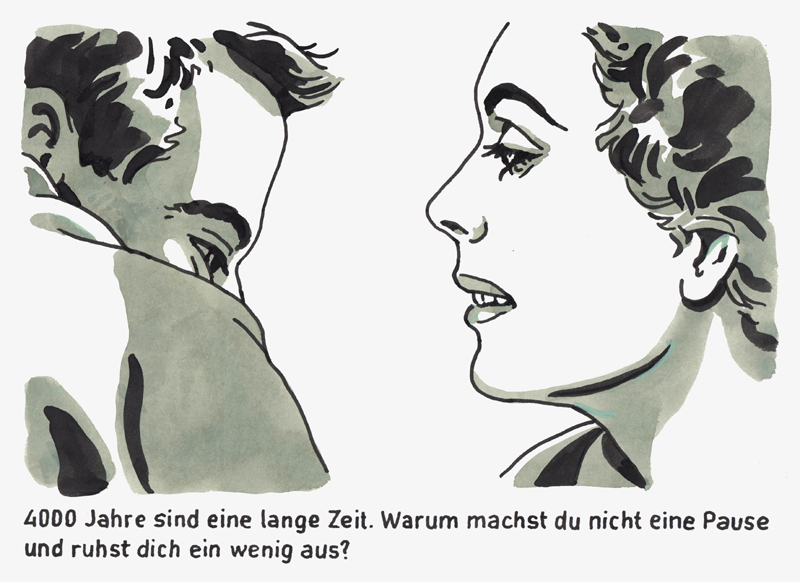
4000 Jahre

| Filed under: Blog | RSS 2.0 | TB | Tags: , | Comments off


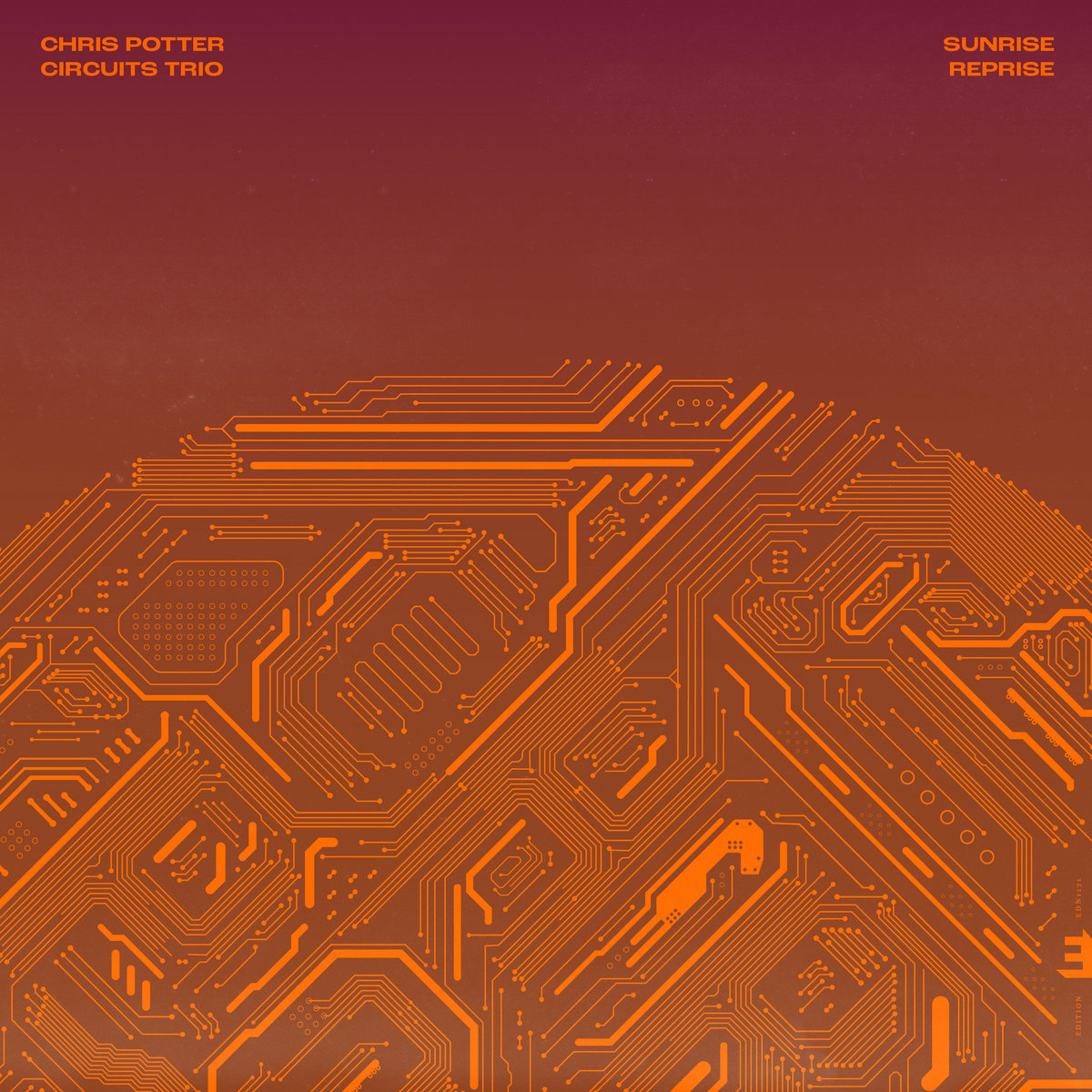
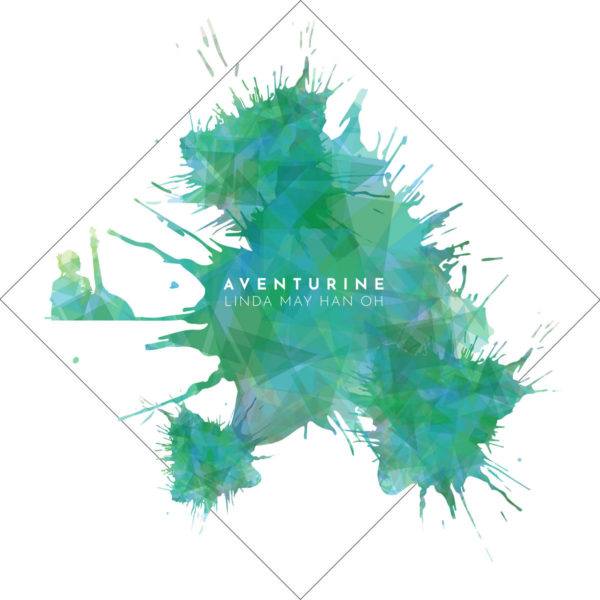
Wenn der Postmann dreimal klingelt und niemand öffnet: hat sich da womöglich wieder ein Genießer jüngst zu Tode amüsiert? Allen Unkenrufe zum Trotz und auch gegen jede Sündentheorie: die durch Digitalisierung möglich gemachten Streaming-Angebote können auf kreative Weise neue Perspektiven eröffnen. Reizvoll auch, wenn der Algorithmus ins Spiel kommt und Lieder oder Alben in den Fokus des Interesses rückt, als sei es zufällig angetriebenes Strandgut. So werden wohl all jene, die sich diesem Angebot langfristig verweigern, dereinst das Schicksal teilen mit jenen Bedenkenträgern, die auch Elektrizität und Telefon, Computer und Pferdekutschen, die Eisenbahn oder den Kühlschrank als Teufelswerk abtaten. Unsereinem dämmert es jetzt langsam, welche grosse Vielfalt zur Verfügung steht: Vergleiche mit dem Schlaraffenland sind angebracht. Eingebettet in das allabendliche Ritual konzentrierten Albumhörens, das dem Postulat untersteht, Neuland zu entdecken und dem ureigenen Interesse auf die Schliche zu kommen, das sich nicht manipulieren lässt, wanderte man jüngst am akustischen Strand entlang. Hier half, was schon beim Fernsehgucken auffiel: sobald die Aufmerksamkeit abschweifte, schaltete man das Gerät ab oder drückte auf Pause und machte sich einen Tee. Vor allem in der Landschaft sogenannter Edelserien einfach so drüberhuschen, als sei es Hintergrundmusik im Supermarkt, dafür ist dann Vieles doch zu schade. Auch der Klischee-Detektor funktioniert: Ermüdungen, dem leisen Aufklingen einer Grippe ähnlich, werden strikt umgangen. Andersrum aber das Gegenteil: Brennglasschärfe statt Kaffeesatz, Kraftjazz statt molligem Matt. Ein zeitgemäss transparentes Klangbild, sparsam mit Hall, ist wünschenswert. In diesem Sinne hörte man Musik vom Portico Quartet, von den Bassisten Dave Holland und Linda May Han Oh mit Vergnügen. Auch der russische Trompeter Alex Sipiagin konnte begeistern mit seinen hervorragenden Begleitungen, zu denen neben Holland Saxofonist Chris Potter ebenso gehört wie der Schlagzeuger Eric Harland, ferner die Pianisten John Escreet und Gonzalo Rubalcaba. Mehrstimmige Bläserpower am Rande eines Bigbandsounds, „Hallo wach!“ ist die Devise. Überhaupt dieser Potter, den weiss man immer mehr zu schätzen: kraftvoll vitales, präzises Spiel, mit ultracoolen Phrasierungen. Dass der mit Steely Dan kooperierte, verwundert nicht.


• Spirit: not only in the forest but in the carwash, too. Exotic culture forms highlight pop culture forms and vice-versa …

“…and the end of all our exploring will be to arrive where we started and know the place for the first time.”—T.S. Eliot

• Expanding sonic menu made possible by continuing inquiry into what’s the baby and what’s the bathwater, i.e., relationship of surface features (recognizable to most) to structural sophistication (recognizable by few).

“…to change our way of reading (listening), to be attuned simultaneously to flashing surfaces and structural intricacies … both televisual and poetic, and to alter consciousness toward a future mode of perception.”—Mark Edmundson

• Spontaneous combustion of rap, hip-hop as urban folkloric forms. “Folkloric” in the sense that it arises out of sentiments and materials at hand.

• Compare African tribal style: dance, poetic storytelling (in-jokes, ironic boasting mixed with traditional wisdom), local instruments. Hip-hop style: same, except that local instruments are not skin and wood but samplers and turntables and drum machines with TV tempos.

• Funny idea: that parts of CITY are like “classical” hip-hop … What rappers might tune into as an exotic extension of their vocabulary.

• Desire to reinvent, redefine possibilities of Fourth World … To poke air holes in the enclosing bubble of the inevitable banalization and orthodoxy of the “World Music” idea.

• Nigerian writer Ben Okri’s “Brave New Africa” images: City of Red Dust… bizarre ailments… conmen selling Power Drug … A continent dreamed up by Bosch and Borges.

• The polyglot L.A. of the near future in Ridley Scott’s Blade Runner.

• Jean Baudrillard: America as “the primitive society of the future.”

• Italo Calvino’s Invisible Cities: A poetic fantasy conjugation (past, present, future) of “city”. “And from the mixture of those two cities a third emerged, which might be called San Francisco … and which might blossom as capital of the Pacific a millennium hence, after the long siege of three hundred years that would lead the races of the yellow and the black and the red to fuse with the surviving descendants of the whites in an empire more vast than the Great Khan’s.”

• Fellini’s “Reggiolo”: a custom designed film town …It could be Bombay, Beirut, Brasilia.”

• Surrealists’ idea: “Odd things meet in full light.” (Or: ordinary things in odd light?) “Surrealist music”.

• Rushdie’s image of a tropicalized London: “… institution of a national siesta… vivid and expansive patterns of behaviour among the populace, higher-quality popular music, new birds in the trees… improved street life, outrageously colored flowers (magenta, vermilion, neon green), spider monkeys in the oaks… hotwater bottles banished forever, replaced in the foetid nights by the making of slow and odorous love… friends dropping in on one another without making appointments, closure of old folks’ homes, emphasis on the extended family …”


jon hassell


2021 27 Juni

Jon Hassell: „Miracle Steps“ (1986)

| Filed under: Blog | RSS 2.0 | TB | Comments off

„Der krasseste und unmittelbarste Titel von Jon Hassells  „Power Spot“ war für mich ‚Miracle Steps‘. Was ist das für ein Lied? Auch wenn mir die Liner Notes sagen, dass dieser Track eine bearbeitete Trompete und Trommeln enthält, sehe ich nicht, dass diese Objekte diese Geräusche erzeugen. Ich höre eine Mischung aus Lemuren, Elefanten und Zugpfeifen, die neben den Ästen der Bäume, die auf die Erde fallen, zirpen.“ (Katie Gately)


From an old blog entry 2013: The summer of 1990 was tropical – in London. No rain, no fog, no shades of grey under a clear blue sky. We lived in the Pearl Hotel on West Cromwell Road. The photographer was a woman. We liked the special atmosphere in that old hotel with its sweet raga sounds flooding the entrance area. I thought Harold Budd’s masterpiece „The Pearl“ would be the icing on the cake. Breakfast was terrible, making love was fine. I even remember the two Indian restaurants between Earl‘s Court and South Kensington. Within seven days we met writer Peter Ackroyd (boring talk), the late master of the Penguin Cafe Orchestra, Simon Jeffes (such a kind encounter), and trumpet player Jon Hassell (nearly a lecture with windows to another world). We talked about his musical life, the ups and downs of his career, key moments, his time in Cologne with Stockhausen, his time in New York (and Hamilton, Ontario) with Brian Eno, and his then new album „City: Works of Fiction“. The album soundtracked my life in that week, unforgettable. By the way, the Pearl Hotel doesn’t exist any more. (Aftermath 2021: so many great albums. Before and after 1990. Life‘s company. Lifers.)


2021 27 Juni

Jon Hassell 1937-2021

| Filed under: Blog | RSS 2.0 | TB | Tags:  | 6 Comments


One time I had the opportunity to see him on stage, here at the Fabrik in Hamburg.

Thank you for the music.


Manafonistas | Impressum | Kontakt | Datenschutz