Manafonistas

on life, music etc beyond mainstream

You are currently browsing the blog archives for the day Freitag, 11. Mai 2018.

Archives: Freitag, 11. Mai 2018


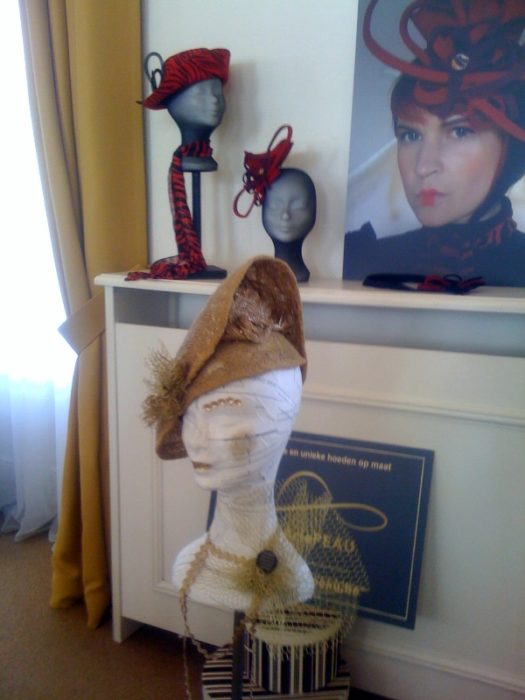
Es ist eher ein singuläres Erlebnis, einer monologisierenden Person geteilte Aufmerksamkeit zu schenken. Gestern begegnete ich einer Hutmacherin, die ich ausgesprochen unterhaltsam fand. Mir ist nicht klar, ob sie mich wirklich wahrnahm. Ob die Katze je Montaigne’s Streicheleien erfühlte, oder ob es beim „Streichen“ blieb, wissen wir auch nicht. Da ich auch meinerseits nicht auf ihren Vortrag oder ihre Geschichte reagierte, kann auch ich nicht sicher sein.


Eigentlich bin ich Musikerin, Gitarrenspielerin, genauer Gibson Playerin. Ich habe seit Jahren eine Les Paul im Keller. Ich kann sie schlecht in meiner Wohnung aushalten, es macht mich traurig, dass ich sie nicht mehr spielen kann. Ich stand jahrelang auf der Bühne. Sie wog immer schwerer, meine Schultern hielten den „Pott“, wie Les Paul selbst sie treffend nannte, immer weniger aus. Das Vollholzbrett drohte mir das Schlüsselbein wie ein Hühnerbein zu zerquetschen. Ich überlegte kurz, mir eine schlankere E Gitarre zu kaufen, eine Fender Strat etwa – nein, einmal Gibson, immer Gibson. Was habe ich mich die Tage aufgeregt, als Gibson Insolvenz anmeldete. Nicht die Information, dass jetzt keine Qualitätsgitarren mehr gebaut würden, das stimmt ja so gar nicht, ärgerte mich, sondern dass in der Presse das ungesunde Wachstum, verursacht durch falsche Investitionen, mit der Qualität der Gitarre verwechselt wurde. Mit Kopfhörern und Lautsprechern und dem ganzen Konsumentenelektronikkram kann doch nicht die Gibson Qualität geopfert werden. Lieber hole ich persönlich die rote Gibson „ES330“ aus dem Sarg von Chuck Berry, als dass ich das zulasse. Schließlich war die „ES-150“ die erste an Strom angeschlossene Gitarre. Schließlich spielt mein Lieblingsmusiker Ray Davies auf einer „SG“. Die Gibson ist nicht tot zu kriegen, die wird immer gebaut werden. Und wenn sie demnächst eine Gibson mit einem schlankeren Griffbrett vorstellen, versuche ich meinen „Pott“ gegen eine leichtgewichtigere einzutauschen. Obwohl die Schulter nicht mehr mitmacht, deswegen bin ich ja Hutmacherin geworden. Sehen Sie mal dieses rote Modell hier vorne, das hat den Sound, den George Harrison aus seiner Gibson gezaubert hat.

Wenn der Tempo mit dem Jukebox-Man kommt … – wenn ich jetzt hier davon erzählen würde, dass ich beinahe Schläge bezogen habe, nur weil ich eine bestimmte Platte in einer Jukebox drücken wollte, man würde mir nicht glauben. Allerdings, die Geschichte habe ich erlebt. Anyway, vielleicht glaubt man ja Michael Scholl, er schrieb folgenden Gastbeitrag:


Don’t Cry for Me Argentina

Wie man sich durch die Juke-Box selbst gefährden kann


Ort: Ardossan, Schottland, in einer Kneipe mit Spätlizenz

Zeit: Frühjahr 1982 an einem Abend nach 23.00 Uhr


Niemand wird glauben, dass es gefährlich sein kann, einen Song an einer Juke-Box auszuwählen.

Im Schuljahr 1981/1982 lebte ich in Schottland und unterrichtete Deutsch als Foreign Assistant Teacher an der Ardrossan Academy. Aber eigentlich war ich noch Student und eher am Ausgehen als am Unterrichten interessiert. Mit dem Sohn meiner Vermieterin und dessen Freunden gingen wir oft abends Bier trinken. Unsere Stammkneipe schloss immer um 23.00 Uhr und es gab nur eine Kneipe in der kleinen Ortschaft, die eine Spätlizenz hatte. Man kann sich vorstellen, welche Leute in welchem Zustand dort nach 23.00 Uhr dort verkehrten. Und natürlich auch wir und im selben Zustand.

In diesem Zustand mag man Musik, die ans Herz geht. Also wählte ich an der Juke-Box dieser Kneipe, nachdem wir uns alle ein weiteres Bier bestellt hatten, den Song „Don’t cry for me Argentina“ aus dem Musical „Evita“ von Andrew Lloyd Webber. Ja, betrunken hat man nicht den besten Geschmack

Unmittelbar nachdem der Song angefangen hatte, zog der Barkeeper den Stecker und die Juke-Box war stumm. Natürlich – angesichts des Zustandes, in dem ich mich befand – ging ich sofort zur Bar und beschwerte mich, was ich besser unterlassen hätte. Ich sah mich plötzlich einer Front bedrohlich aussehender, betrunkener Schotten gegenüber, die mir verständlich machten, dass dieser Song nicht gespielt werde und ich mich besser zurückhalten solle, wenn ich mir weiteren Ärger ersparen wolle.

Wie kam das alles, was war an diesem Lied so schlimm? War es für schottische Ohren eine musikalische Zumutung, die sie nicht ertragen konnten, weil kein Dudelsack dabei war? Nein – es war Falkland-Krieg und solche Musik war schlicht non grata.

Letztendlich ist alles gut gegangen und ich konnte die Kneipe unversehrt verlassen. Was habe ich aus der Situation gelernt? Wenn der Barkeeper die Macht über die Juke-Box ausübt, dann sollte man das hinnehmen. Und die Schotten sind den Engländern mehr verbunden als sie zugeben.


Michael Scholl


Michael Engelbrecht: For someone with such an approach to music, let‘s call it „minimal input, maximum effect“, you must feel a certain soulmateship with the one record of YOUNG MARBLE GIANTS: COLOSSAL YOUTH. Not only because of the kind of voices you prefer …


Bill Wells: It’s funny, a number of people have mentioned that record in comparison with what I do and I can understand why, but it’s an album that I wasn’t aware of at all when it was released, so was therefore not an influence. (I was probably too busy listening to „Gaucho“). I do however really like Alison Statton’s voice, though actually (rather ironically I suppose) I prefer her work with Weekend.


Michael: I bet you have a pile of Robert Wyatt albums. I know Robert from heartfelt encounters and interviews for a very long time, lost a bit contact since he retired. Now he, too, sometimes has a special way of using jazz vibes in a very British setting. Can you tell me about your „stories“ with Robert‘s music? 


Bill: Yes, for sure. I had a dream that the first six chords of „O Caroline“ were the same as the first six chords as „Streets Of London“. That was the first time I realised I had more musical ability when I was asleep. I did manage to ask him, R.W. I mean, (and indirectly via Douglas T. Stewart) about his version of Little Child, a cover which always fascinated me as he imitates, in a sort of really over the top way, both a child and an adult and I’m not sure how he pulls it off but for me it totally works and, well, I can’t remember the exact answer but he did say something to the effect of it being about the most daring thing he’d ever attempted.


Michael: Your new album, Standards Vol. IV, has a musical narrative, from the „almost nothing“ of the first notes till the crescendo in the „showdown area“. Do you remember the time of production, did it all fell into place, or was it more a subconscious process? … 


Bill: Well, since you both noticed and asked, I wrote / arranged all the material and recorded most of it as I was heading for a nervous breakdown, then became suicidal and consequently ended up in psychiatric hospital for over a month, that was September 2016. I finished the recording in 2017.


Michael: Oh, sorry for that. Ahem … you very carefully chose the moments for Ab‘s viola coming into the foreground … it only happens a few times, and always has this nearly overwhelming quality (your sense for understatement easily undermines the passion involved). And Kate‘s voice: wow! When looking at the responses to the „trio music“, all these „standard albums“, people speak of lightness, nursery rhymes, easy listening, charming pleasures, but rarely rock bottom comes into sight. That there is a darkness hidden of considerable depth. Is there a special source of inspiration for such dark matters delivered with an innocent smile, so to speak? 


Bill: No idea.
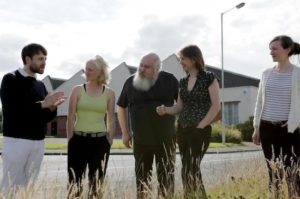


Michael: Okeydokey … now, hope you are in a good mood for this …


Bill: … I’ve certainly felt worse.


Michael: Can you name some of your all time favourite records for the infamous desert island …


Bill: Well I could but my choices are pretty definite and they’re also mainly ones that are well – known eg The White Album, Innervisions, Kind Of Blue, Hunky Dory so, with that in mind …


  • Van Dyke Parks – Moonlighting (Van is indeed the man. One great thing about this live recording is that you also hear the spoken intros which are eloquent and witty, as is the music, which is refreshingly out of step with anything else currently going on then or now in contemporary music. Much though I love Brian Wilson’s voice I do prefer the version here of „Orange Crate Art“. I love that quote of his about making pop music that isn’t very popular.)
  • Chris McGregor’s Brotherhood of Breath – Live at Willisau … First track – greatest riff of all time, plus ….. icing on the riff cake … an Evan Parker solo! … thinking of food and drink … Gary McFarland – Butterscotch Rum. Jazz arranger that understood pop.
  • Jens Lekman – Life Will See You Now …. One of the best records of last year and one of his best ever.
  • Yumbo – Onibi  …  Shout out to Saya, Ueno, Tori, Reiko, Namio, Shugo, Otomo, Satomi, Takuji, Satoko, Tetsuya, and Nika.
  • Marvin Gaye – Here My Dear … Best break up album ever.
  • Peter Blegvad – Just Woke Up … Best wake up album ever.
  • Wayne Shorter – Native Dancer … Best Milton Nascimento album ever.
  • Carla Bley – Everything, but just to mention one, Fleur Carnivore which has a beautiful harmonica solo (by Karen Mantler) 
  • Kevin Ayers – Whatevershebringwesing … thinking of great solos, Mike Oldfield on the title track.
  • Mick Softley – Any Mother Doesn’t Grumble … Proof that the good stuff doesn’t always rise to the top.
  • Donald Fagen – all four solo albums.
  • Tyondai Braxton – Central Market … Seamless sonic mix.
  • Tot Taylor – The Girl With Everything … Not an album so I’m taking a slight liberty here …. nevertheless as perfect a pop single as was ever recorded.
 

2018 11 Mai

Wildnis

| Filed under: Blog | RSS 2.0 | TB | 2 Comments

Irgendwo am Missouri, in der Nähe des Yellow Stone. Es ist die Zeit vor dem Wintereinbruch. Die Gruppe der Jäger hat viel mehr Felle erbeutet als erwartet. Aber es kommt anders. In der ersten Hälfte des 19. Jahrhunderts sind die wichtigsten Utensilien fürs Überleben eine Wasserflasche und ein Stein, um Feuer zu machen. Der Himmel ist immer weit und die Zeichnungen der Wolken. Die Halme am Abend im Gegenlicht. Der Nebel, wie er schwebt über der Steppe. Wege, die keine Wege sind. Zwei schmale Streifen der Schneelandschaft schimmern in der Pupille des gestohlenen Pferdes. You out there? When there´s a storm and you stand in front of a tree … if you look at its branches, you swear it will fall. But if you watch the trunk, you will see its stability. In diesem vom Western inspirierten Film aus dem Jahr 2015, The Revenant (Der Rückkehrer), ist die sonst so ausgeprägte temporeiche Handschrift von Alejandro González Iñárritu kaum wiederzuerkennen. Eine große Stärke ist die Innenwelt der Hauptfigur Huge Glass, die von Leonardo DiCaprio gespielt wird. Die eben erschossene Frau liegt am Boden. Ein kleiner Vogel schlüpft aus dem Ausschnitt ihres Kleides und fliegt davon.


Manafonistas | Impressum | Kontakt | Datenschutz