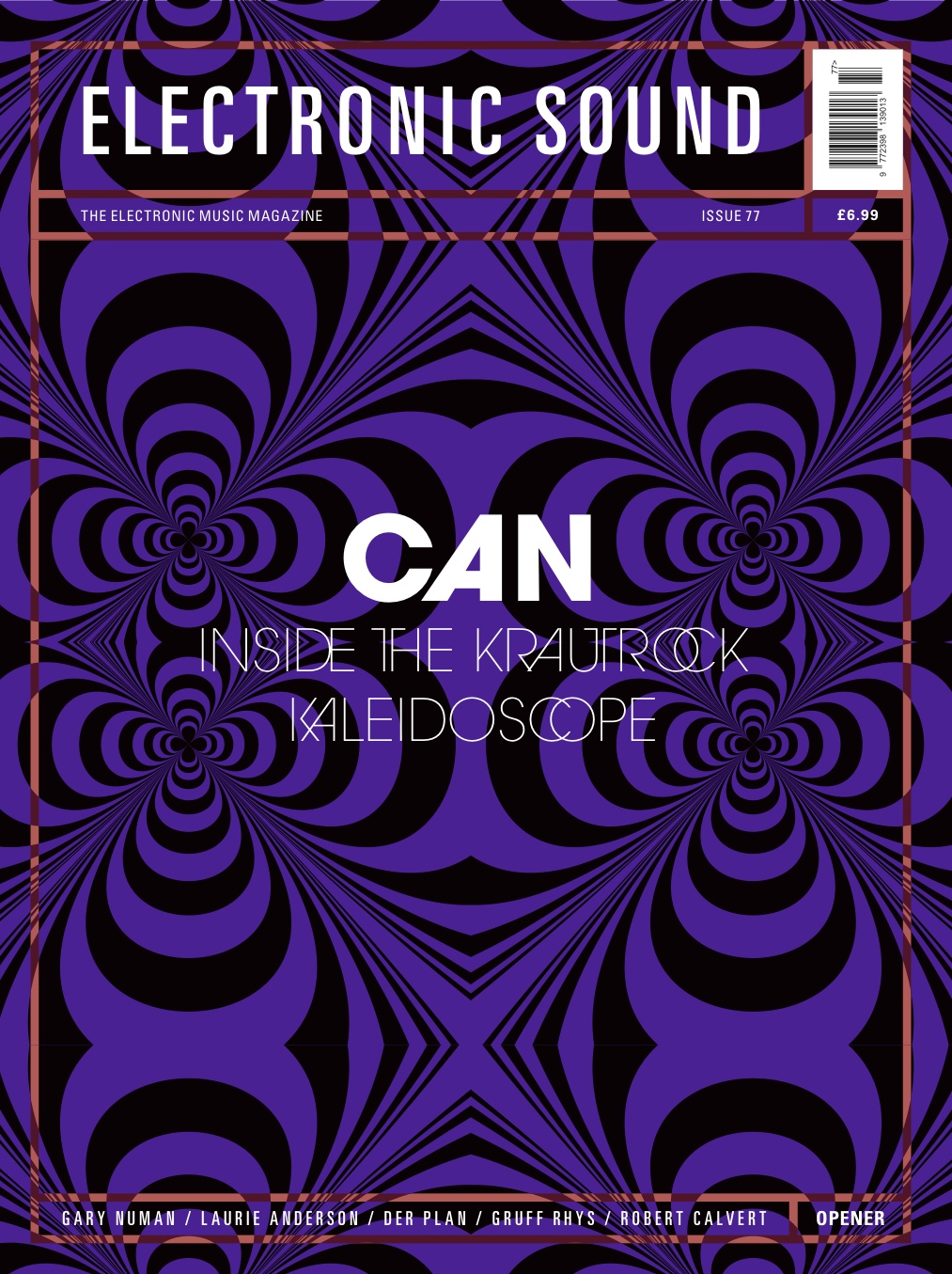
„Listening to „Live in Stuttgart 1975“ brought to mind something Can keyboardist and conductor Irmin Schmidt told this writer a decade ago in the studio at Les Rossignols, his rural nerve centre in south-east France. “What fascinates me for over 40 years are swarms of birds and of fishes,” he said. “These creatures being one dense thing and, all of a sudden, expanding and all these movements… I could watch them for hours if I had the chance. The concept of murmuration – of spontaneous order emerging from multiple autonomous minds, moving in beauteous random harmony – is as good a comparison as any when investigating the Can live experience.“
(Ian Harrison, Uncut, July 2021)
Archives: Samstag, 29. Mai 2021
2021 29 Mai
Trilogy completed: „Trees Speak“ from Tucson, Arizona
Michael Engelbrecht | Filed under: Blog | RSS 2.0 | TB | Tags: PostHuman, Soul Jazz Records, Trees Speak | Comments off
Das vierte Album von Trees Speak aus Arizona ist eine weitere aufregende Entwicklung in ihrer schnell wachsenden Diskographie,“ schreibt Martin Simpson in „AllMusic“, „und verpackt eine Fülle von Ideen in seinen 18 Tracks. Mit jeder weiteren Veröffentlichung hat die Gruppe ihren Fokus gestrafft, ihre ausschweifenderen Impulse zurückgedrängt und abendfüllende Reisen mit einem echten Sinn für Progression geschaffen. PostHuman ist ihr bisher filmischstes Werk, bei dem jeder Track einer eigenen Filmszene gleicht, die oft nahtlos ineinander übergeht, um die Kontinuität zu wahren.
In den Klanghorizonten am 19. Juni wird Musik aus allen drei Alben des Duos zu hören sein, die zwischen 2020 und 2021 bei Soul Jazz Records erschienen sind (ihr Debut kam auf einem kleinen italienischen Label raus) – „Ohms“. „Shadow Forms“, und nun „PostHuman“. Zudem beantworteten die Brüder Diaz ein paar meiner Fragen via Email. Hier ein kleiner Auszug. Und die Innenseite des Klappcovers der Vinyl-Version. An Jan Reetzes Buch („Times & Sounds – Germany’s Journey from Jazz and Pop to Krautrock and Beyond“) zeigten sie sich hochinteressiert, und die Leküre wird diesen (wie ich vermute) sehr jungen Klangforschern wohl noch manche Tür öffnen.

„We accidentally stumbled onto the nexus of Kraut-Rock. We believe they (the original makers of the Kraut sound) were experimenting with minimalism as well. It was very organic and unintentional that we crossed paths with the philosophy behind that style of expression. It was the most natural thing we could do at the time. Some of the names that kept coming up for us and still do to this day are Schoenberg, Stockhausen, and John Cage. They still influence us to this day.“