Manafonistas

on life, music etc beyond mainstream

You are currently browsing the blog archives for the day Freitag, 13. April 2018.

Archives: Freitag, 13. April 2018

In der letzten Woche war in der Süddeutschen-Zeitung eine Buchbesprechung von Thomas Steinfeld zu lesen. Es ging um ein Buch des Berliner Schriftstellers Friedrich Christian Delius. „Die Zukunft der Schönheit“. In diesem Buch wird von einer Begegnung mit Albert Ayler berichtet. Der Erzähler sei zu der Tagung der Gruppe 47 im Jahre 1966 nach Princeton eingeladen worden und anschließend wäre er nach New York gefahren und hätte dort in einen Jazzkeller in der Lower East Side Albert Ayler und seinen Free Jazz gehört …

Diese Rezension erinnerte mich an eine große schwarze Box, die seit vielen Jahren in meinem Plattenschrank steht und ständig vergeblich ruft, ich möge mich endlich mal wieder mit ihr beschäftigen. Nun, der Artikel hat mich dazu verführt, die Box aus dem Plattenschrank zu holen und abzustauben. 2004 hatte die englische Musikzeitschrift WIRE Albert Ayler Holy Ghost: Rare & Unreleased Recordings (1962-70) als Platte des Jahres ausgewählt (auf Platz 2 kam übrigens Sonic Youth: Sonic Nurse und auf Platz 3: Fennesz: Venice).


Ich dachte mir, okay, diese Box sollte in deinem Plattenschrank nicht fehlen und kaufte sie mir. Was für eine Überraschung: Man öffnet einen schön gestalteten schwarzen Kasten und erblickt zunächst ein in blaues Leinen gebundenes Buch, 208 Seiten, wunderschön gestaltet, bebildert, mit allen nur erdenklichen Informationen zu den neun CDs. Das hier abgebildete Foto des jungen Albert liegt ebenfalls in der Box, dann: eine gepresste Blüte, eine Notiz des Meisters auf Hotelbriefpapier geschrieben (Hotel Esplanaden / Kopenhagen), ein Werbeblatt des New Yorker Clubs “Slugs“ mit Hinweisen auf Konzerte im September und Oktober 1967, eine Schrift von Paul Haines: Ayler-Peacock-Murray- You And The Night And The Music, ein Auszug aus einem Heft The Cricket – Black Music in Evolution mit Aufsätzen zu Pharoah Sanders und Albert Ayler, eine CD, die sich in einer als Tonbandbox gestalteten Hülle befindet. Die CD enthält zwei Ayler-Titel: Tenderly und Leap Frog, aufgenommen am 14.September 1960. Ganz unten im schwarzen Kasten findet man dann endlich die neun CDs. Diese Musik zu hören, das erfordert schon Mut und Durchhalte-vermögen, wofür man dann letztlich aber belohnt wird: Free Jazz eben.


Folgende Musiker wirken auf den Aufnahmen mit: Albert Ayler (tenor saxophone), Herbert Katz (guitar), Teuvo Suojärvi (piano), Heikki Annala (bass), Martti Äijänen (drums), Cecil Taylor (piano), Jimmy Lyons (alto saxophone), Gary Peacock (bass), Sunny Murray (drums), Don Cherry (cornet),  Burton Greene (piano), Frank Smith (tenor saxophone), Steve Tintweiss (bass), Rashied Ali (drums), Don Ayler (trumpet), Michel Samson (violin), Mutawef Shaheed [Clyde Shy] (bass), Ronald Shannon Jackson (drums), Frank Wright (tenor saxophone), Bill Folwell (bass), Beaver Harris (drums), Milford Graves (drums), Pharoah Sanders (tenor saxophone), Chris Capers (trumpet), Dave Burrell (piano), Sirone (bass), Roger Blank (drums), Call Cobbs (piano, Rocksichord), Bernard Purdie (drums), Mary Parks (vocal, prob. tambourine), Vivian Bostic (vocal), Sam Rivers (tenor saxophone), Richard Johnson (piano), Richard Davis, Ibrahim Wahen (bass), Muhammad Ali (drums), Allen Blairman (drums) u.a. … Paul Bley fehlt in dieser erlauchten Liste, erstaunlich eigentlich.
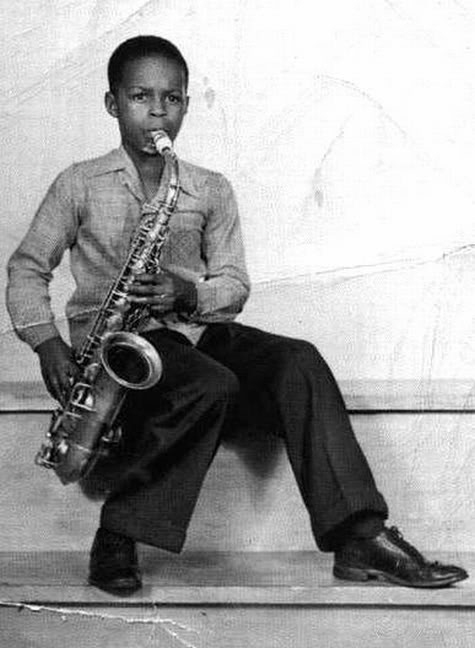


Übrigens Thomas Steinfeld behauptet in seinem Artikel, Albert Ayler sei im Herbst 1970 im Alter von nur 34 Jahren gestorben, vermutlich habe er sich auf der Fähre zur Freiheitsstatue in den East River geworfen. Auf der website https://www.ayler.co.uk/ ist über seinen Tod folgendes zu lesen:


„Following his death, at the age of 34, there was the usual outpouring of conspiracy theories: that there was a bullethole in the back of his head; that he was tied to a jukebox; that the F.B.I. had killed him as part of their policy of assassinating all prominent Black figures; that the Black Power movement had killed him because he wouldn’t support the cause; that the Mafia had tied him to the jukebox because he refused to make any more rock`n`roll records for Impulse. But the simplest explanation is that it was suicide. Guilt over the treatment of his brother, and Don’s subsequent illness, the fact that his attempt to popularize his music had not only failed, but alienated the critics and fans who had supported him in the past, the cancellation of the Impulse contract, all could have combined to tip him over the edge. Albert Ayler was buried in Highland Park Cemetery, Beachwood, Cuyahoga County, Ohio on 4th December, 1970. The funeral was paid for by the US army (a benefit which every former serviceman is entitled to), and through some oversight, Albert Ayler’s gravestone implies that he died in Vietnam.“


HOLY GHOST rare & unissued recordings (1962 – 70) 9 CD Spirit Box

P.S. Cecil Taylor starb ab 5.April 2018. Er wurde 89 Jahre alt.


On an island like Amrum, in a remote forest area (you can always find quiet places in the biggest holiday resorts), it’s easy to complete your desert island collection. Some time ago, I found a Speakers Corner reissue of an album from the summer of love, and, to my own surprise, though not containing any of his great hits, it immediately turned to my favourite Donovan album. And I really own some of his lovingly eccentric deliveries of hope, peace and shangrilas. Helas! When the album came out, our folkie from the Scottish hinterland stopped drugs and turned to meditation. Someone who got similarly impressed by this album, „could almost smell the patchouli incense wafting from his flower-draped recording studio.“ He had a real band playing behind him, harpsicord, B3 organ, bongos, acoustic guitar, flutes – and strings carefully dosed. What really catches me, draws me in everytime, above everything else, is the nonchalance of his singing style, all heartfelt, smiling, with an unashamed sense of optimism. Fucking genius. He‘s „there“, in the moment, no cliche, and the songs are so painfully short, I always feel a shade of sadness when the fade-out is mercilessly ending an atmosphere. I would like so much immersing myself into endless jams of every single song and their stunning variety of moods of naivety, innocence and yearning. But, this way, they never wear out their beauty and make you think: in a life where we will all turn to dust and ashes in the end, with no god in sight, no bardo to be expected, no coming back ever, leaving the ones we love shattered in tears and pain: love is the first, and shortness the second essence of life.


2018 13 Apr.

Burt Bacharach

| Filed under: Blog | RSS 2.0 | TB | Tags:  | 2 Comments

I’m always careful with labels like „icon“, „living legend“ or „genius“. But if they don’t go with Burt Bacharach, with whom would they? Besides him, Antonio Carlos Jobim comes to mind, Duke Ellington, and well, Lennon/McCartney. You can put this guy easily next to Gershwin. Besides this, he was a longtime arranger and pianist for Marlene Dietrich, which alone is enough to make him a legend.

But mainly it is his elegant composing style that sticks in mind. The wide-ranging melodies, the complex arrangements which usually prefer the flugelhorn to the trumpet, the sometimes strange usage of chord progressions, rhythm changes, jazz chords or odd numbers of bars that pop music would hardly think about, and of course the lyrics by the congenial Hal David: all this is unmatched. I have no idea why people still try to downgrade this as „Lounge“ or „Easy Listening“ — it’s anything but easy.

A couple of years ago, Bacharach was announced to play Pittsburgh already, but the concert had to be canceled because he had to undergo a back surgery. This time it worked out. Next month, at May 12, he will turn 90. A small, fragile man, white-haired, hanging a bit contorted on his piano bench, sometimes popping a cough pill, and you always fear he might slide down to the floor. But he doesn’t, and his piano playing is still fine.

Bacharach, in his career, had 73 hits in the Billboard Hot 100. To play them all would have taken around four hours. The only possible compromize is to bundle many of them into medleys — anything but ideal because you permanently get hooked but aren’t served the full meal. But what can you do? The setlist, however, was pretty impressive:

  • What the World Needs Now is Love
  • Medley: Don’t Make Me Over / Walk on By / This Guy’s in Love with You / I Say a Little Prayer / Trains and Boats and Planes / Wishin‘ & Hopin‘ / (There’s) Always Something There to Remind Me
  • Do You Know the Way to San Jose
  • Anyone Who Had a Heart
  • This House is Empty Now
  • Falling Out of Love
  • Make It Easy on Yourself
  • On My Own
  • Be Aware
  • (They Long to Be) Close to You
  • Medley: The Look of Love (BB sang) / Arthur’s Theme / What’s New Pussycat / The World Is a Circle / April Fools / Raindrops Keep Fallin‘ on My Head (BB sang) / The Man Who Shot Liberty Valance / Making Love / Wives and Lovers (BB sang) / Alfie (BB sang) / A House is Not a Home (BB sang)
  • Encore: That’s What Friends Are For

It’s a little bit a pity that none of his instrumentals was played: Casino Royale, Come Touch the Sun, Nikki, Little French Boy, Once in a Blue Moon (yes, that’s written by Bacharach!) — there would have been many.

The vocal trio probably had the most unthankful job. Not only they need to master a huge pitch range, they have to deal with the fact that inevitably most people in the audience will compare them to the voices they remember from the hit version: Dionne Warwick, Aretha Franklin, B.J. Thomas, The Walker Brothers, Karen Carpenter, Stevie Wonder, Bobbie Gentry, Tom Jones, Dusty Springfield, Shirley Bassey, Cilla Black, Sandy Shaw, Helen Shapiro, The Drifters, Neil Diamond and so many more. Well, the three of them did it, and they did it well. All three had a solo: Josie James sang „Anyone Who Had a Heart“, Donna Taylor sang „On My Own“, John Pagano had a great performance of „This House is Empty Now“, co-written by Elvis Costello (from Bacharach’s and Costello’s Grammy-awarded album Painted from Memory).

A couple of songs were performed by the Master himself — which was a double-edged sword. Burt Bacharach has never been known to be a great singer anyway, but these days, at his age, his voice has turned into a raspy croaking more than anything else. This would be touching in one or two songs, like in „Alfie“, but singing whole suites — sometimes, I think, less would be more.

The whole concert was backed by the Pittsburgh Symphony Orchestra. Playing „back-up“ for an orchestra like this (I think it should be seen as part of the Top League now) might be a bit underchallenging, and so they played — let’s say: cultivated, but without much dedication. Probably it would have been a good idea to have them play Bacharach’s orchestral piece „For the Children“. But it didn’t happen. Unfortunately it was this orchestra that ended the evening with a sort of „sudden death“. The PSO was obviously hired to play exactly ninety minutes, and it did this to the minute. I’m sure the evening was planned to have the same big finale Bacharach’s concerts always use to have (see his Glastonbury appearence in 2015 or his wonderful concert recording from the Sydney Opera House 2008 [if you’re interested: get the 2-CD version!]). This finale would have been a thing of a few minutes, but no: The orchestra is strictly unionized, and while on the one hand I can understand this, I have to say on the other: Folks, you are artists, you are very well-paid musicians, and you owe something to your audience. If you want a nine-to-five job, get one at Giant Eagle.

Another drawback was the sound. I know it’s a hard job to balance a whole orchestra, a band with electric instruments, an acoustic grand piano and three singers, but seriously: It is possible. Tonight the sound was unbalanced, in parts too loud, and a couple of times the singers started singing into dead mics. This shouldn’t happen.

However: Thank you for the music. It was a great evening.


Manafonistas | Impressum | Kontakt | Datenschutz