Manafonistas

on life, music etc beyond mainstream

You are currently browsing the blog archives for the day Montag, 17. Oktober 2011.

Archives: Montag, 17. Oktober 2011

2011 17 Okt.

Gregor öffnet seinen Plattenschrank (3)

| Filed under: Blog | RSS 2.0 | TB | Comments off

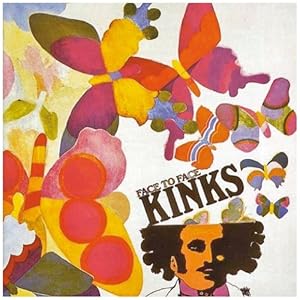
Am 18.07.2011 war in der Sendung Klanghorizonte mit Michael Engelbrecht eine selten gespielte Platte zu hören. Ich besitze diese Scheibe schon sehr lange, sie gehört zu den ersten Langspielplatten, die ich mir gekauft habe. Und wie viele Jahre steht diese wunderbare schwarze Schallplatte ungehört in meinem Plattenschrank … Im Oktober 1966 erschien „Face to Face“ von den Kinks. Michael spielte damals im Juli „Too Much On My Mind“ und ich lege mir „Rosy Won´t You Please Come Home“, sowie den „Session Man“ auf.
 

 https://www.youtube.com/watch?v=E2Mii2GOwMA

Und wenn wir schon bei den vortrefflichen Kinks sind … Im Sommer 1970 kam ich über einen Schüleraustausch nach London und Edinburgh, aus jeder Pub tönte es L O L A, ja und in meiner Lieblingskneipe, dem „Crasy Elephant“ spielte eine Band diesen Titel so gut nach, dass man meinen könnte, yeah, The Kinks!


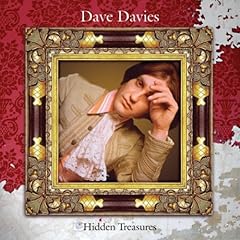
Übrigens erscheint am 31.10.2011 eine CD unter dem Namen Dave Davies das Album Hidden Treasures, das erste Stück dieser CD hatte es mir damals im Sommer 1967 besonders angetan „Susannah´s Still Alive“.


Wenn wir schon in den hinteren Bereichen des Plattenschranks einen Blick werfen, da steht auch meine allererste Schallplatte, ich kaufte sie als zehnjähriger für 4,75 DM in einem Radio- und Fernsehgeschäft in Hannover, es war „Speedy Gonzales“ von Pat Boone. 1962 erschien diese Platte, in diesem Jahr war sie hierzulande auch eine Nummer 1, aber ich hatte eben erst im Frühjahr 1963 das Geld für den Kauf beisammen. Stolz legte ich diese Scheibe auf meinen Perpetuum-Ebner Plattenspieler und lauschte der Musik über ein Blaupunkt Röhrenradio London H 4053. Was für ein Klang!

https://www.youtube.com/watch?v=iALGml0BQoI

Zum Schluss möchte ich an eine Gruppe erinnern, die wir alle eigentlich nur mit einem einzigen Titel kennen, es handelt sich um „Wooly Bully“, aus dem Jahr 1965, die Gruppe hieß Sam The Sham & The Pharaohs, dabei gibt es ganz andere durchaus hörenswerte Titel dieser Gruppe, zum Beispiel „Lil´Red Riding Hood“ aus dem Jahr 1966.
 

https://www.youtube.com/watch?v=MHF558u6Q_8

2011 17 Okt.

VCS3 (you remember?)

| Filed under: Blog | RSS 2.0 | TB | Tags:  | 2 Comments

Also in the Science Museum show is the very first synthesizer that I ever owned, another beast in its own right, and that’s the VCS3. The VCS3 was quite a difficult instrument to use, though at the time it was a fantastic thing to have for someone like me, who couldn’t actually play any conventional instruments. There were no rules for playing synthesizers, so nobody could tell me I couldn’t play one. Nobody else could play one either. It was an instrument you made up yourself… its role was waiting to be invented.
The VCS3 was a particularly good instrument for that, because unlike nearly all the synthesizers that followed, it didn’t dictate a particular path for the signal. Nearly all the synthesizers that followed went: oscillator into filter into envelope-shaper into effects. Everything was in that straight line. With the VCS3 you could feed things back into themselves, so you could take the output of a filter and feed it back into itself and this gave me some very unusual and quite unpalatable noises, which of course I liked. They sounded a lot better than me trying to play music anyway.
The VCS3 preceded, or maybe was even simultaneous with, the Moog. But what was interesting about it was that it wasn’t really a keyboard instrument. There was a keyboard with it, but it was impossible to get it in tune, so most of the people who used it abandoned the keyboard. That was a big step, because prior to that synthesizers had been thought of as electronic organs with a few stranger sounds.
Abandoning the keyboard took you into a new musical territory. I’m sure Peter Zinovieff, who invented the VCS3, would have been very pleased if he could have made a good keyboard. But the fact that he failed to was what made that instrument special, and what started the different forms of electronic music you hear everywhere now. It came out of an inadequacy of that particular instrument.

In den 70er Jahren verhieß dieser rein technologische Begriff – VCS3 – manch aufregendes Hörerlebnis, speziell, wenn Eno mit ihm hantierte. In diesem Ausschnitt eines Essays erinnert Eno an die Synthesizer-Ära, und wie Defizite und gravierende Mängel zu einem neuen Musikverständnis führten, das mehr mit Erfindung als mit Nachspiel zu tun hatte. Interessant: manche der tollen Kompositionen mit VCS3-Signatur wirken gleichermaßen wie aus alter Zeit und zeitlos.


Manafonistas | Impressum | Kontakt | Datenschutz