Interview with Kateryna Zavoloka, Ukranian sound artist, composer, performer, and visual artist, who is now based in Berlin. Living in Kyiv in 2006, Zavoloka founded the label Kvitnu with her partner Dmytro Fedorenko (aka Kotra) and designed and curated the visual appearance of the label’s releases, while also releasing her own music through the label. Cluster Lizard is a duo project with Dmytro Fedorenko.
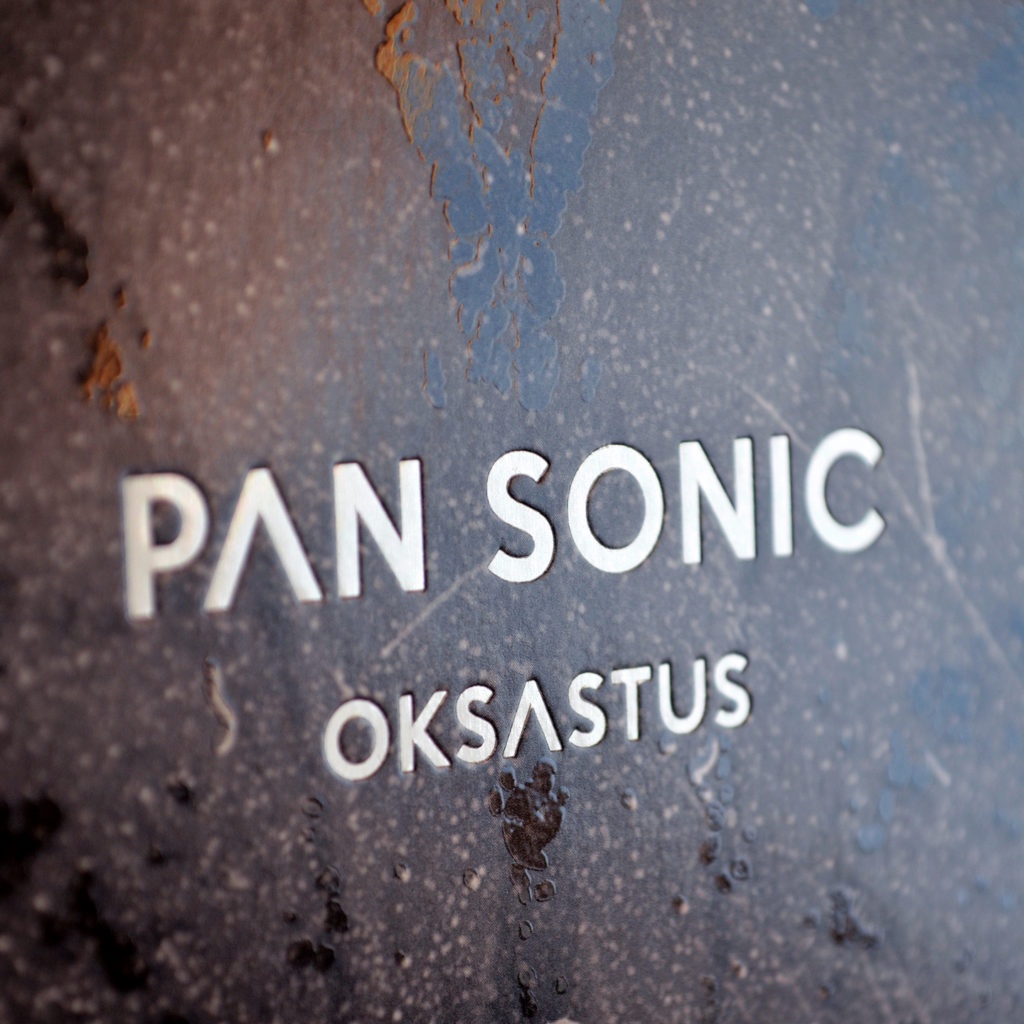
I mainly became really aware of Kvitnu and of your visual design work with the release of the Pan Sonic concert album Oksastus – Live In Ukraine. It was released in 2014, but Mika and Ilpo had already ended the Pan Sonic collaboration a few years prior, so for their fans – like myself – it was a great surprise and event to hear some new music from them (and the album had been recorded at the end of their collaborative years). Can you talk a bit about how you approached that album design? An impressive artwork, it’s just as unusual for Pan Sonic as it is mysterious, opening up a really strong atmospheric world, before one actually listens to the music on the album. It’s a peculiar combination of organic, abstract and artificial elements; the image on the front reminds me of a seed of some sort of grain, but also of an egg from the movie Alien. What’s the story behind it?
We invited Pan Sonic to play at the Kvitnu_live event in 2009 in Kyiv, and it was an amazing and very powerful concert. We recorded it properly and asked them if we could release it on Kvitnu, and five years after the concert we made the double LP. The first release was on 20th of February 2014, and it was the last days of the Maidan revolution in Kyiv, Ukraine, during the clashes of protesters with Berkut special forces, police troops, and that day the snipers shot protesters. Those were the most tragic days and a transformational period for Ukraine – and of course for us, and I will remember this day forever. Pan Sonic called the release Oksastus – the Finnish word for process of grafting or cultivating of plants. That is why I decided to use some plants in the design for the artwork, I wanted to make it abstract and organic. I found the slide films of different seeds made by my grandfather Oleg Kozlov, who was a biochemist, scientist and inventor. In the 1960s he made the “scanning microscope” that could make very sharp images of very small objects like insects or seeds. So I used his slides, transformed the images and added textures and special print techniques like UV-lacquering, bronze paint and foil to create a metallic effect. The vinyls me made in white for a contrast, and Dmytro then stamped each LP label with the Pan Sonic logo by hand. Real art work.


Can you talk about the relationship between your visual work as a designer or graphic artist and your work as a musician/composer? Having the mission and the chance to come up with designs for other artists’ musical worlds must be a bit of a challenge sometimes, I guess.
I always asked musicians if they wanted anything particular, and most of the time they answered that they trusted me. While I made artworks, I always listened to their music, kind of sinesthesia. Sometimes musicians would give me some image or photo and I would transform it, and we would add some special effects, like hot foil pressing or the glitter, metallic paint, embossing or silk-print. I’d the say musicians have been happy with my designs for them, as we always would listen carefully. But we never compromised our visions of Kvitnu.
You grew up in in Kyiv when Ukraine was still a Soviet Republic – so you experienced the changes from the 80s through the challenging years after 1991. Where did your path as a visual artist and musician start?
Yes, it was during the Soviet Union, and I hated it. I was a kid when the union collapsed and Ukrainians were very happy to have independence in 1991. It’s true that those were challenging years for us, but it was wonderful; finally, we we allowed to travel abroad, have private property or make business, listen to music in the end! From my childhood I was interested in visual art and music, my father and mother were painters and designers and I went to millions of different art workshops for kids and sang in a children’s choir. Somehow from my childhood I already knew that I would design artworks for other musicians.
Then at some point in time you moved to Vienna and later to Berlin, so in a way you are now in between here and there — also artistically?
Dmytro and I moved to Vienna because we wanted to study at the Academy of Fine Arts. A year after graduation we moved to Berlin. It was the most transformational period for me. I think it is very important for any person to have such an experience, and especially for any artist. Living in other countries shifts your perception of everything, removes clichés and patterns in your head, causes tectonic transformations in your consciousness; you start to question your reality more and more, and therefore make more right choices for yourself. This is so important for creativity when you have a more clear vision, of what you want, and what you would not accept anymore. This period made me more balanced and happier after all these stormy times, and this first year in Berlin was actually shiny fruitful in my art.
Usually it’s rather the other way round: People from stable Western countries like Germany say how transformational it has been for them to live in much more unstable and messy places for a while. In what way have Vienna or Berlin had such a transformative impetus for you?
Maybe it was not very clear: I meant that moving to any other country from your own home country and living there would shift the perception and would offer you different perspectives. We moved to Vienna in 2014 to study and we lived there for five years; and in the middle of 2019 we moved to Berlin – actually, not so long before all the lockdowns. I think when you live in your homeland you have some vision of some sort of spherical happiness in a vacuum about another countries, which is not true for sure. For us, living in Austria was not stable and not comfortable at all, as for immigrants with a non-EU passport it has been extremely tough.
Transformational experiences don’t come from the country itself, but rather from extreme situations, more like a shock therapy that wakes you up, like if you plunge yourself into boiling water and then have to pull yourself out of it. My album Promeni from 2018 is about that.
So what kind of things – in art – do you not want to accept anymore?
In general, I don’t want to accept compromises with myself, I would rather think and meditate a thousand times and ask myself intuitively: does that resonate with me? Does that what I really need? And after that make better and calm decisions.
You had already several years of experience, working as an artist, working with music, sound, visuals, as well as, through the label, with lots of different musicians and artist. What caused both of you to study at the Academy of Fine Arts in Vienna?
I wanted to learn more about video and motion graphics, Dmytro had math and economy educations and wanted to study at an art academy, that’s why we applied. Well, it was my second art education, as I also used to study at Kyiv State Institute of Decorative and Applied Art and Design before, where it was more academical and technical, whereas in Vienna it was more conceptual and ideological. For artists, it is important to be free thinkers, and free from any ideology templates installed in the head by educational institutes, and I am very glad that I don’t need to study anymore.
Earlier you worked with vocals on some releases – you even made a whole collaboration album with AGF, who is a well-versed vocal artist, and I also like your remix of Колискова Для Ворога (Lullaby For The Enemy) by Стасік (Stasik).
Стасік is a young Ukrainian singer, songwriter, and a veteran of the Russian-Ukrainian war. She doesn’t have many songs yet, but all of them are like the sharpest knife into the heart, very strong. When Lullaby for the enemy came out, I was so strongly impressed that I immediately wrote to her and suggested making a remix. Then we decided with my partner Dmytro to release these two remixes on Kvitnu as an exclusive EP.
On my new album Ornament I also worked with my voice, but it was kind of hidden, and I didn’t want to draw attention to it, but rather work with the voice like an expressive sound source, untraceable in the sonic fabric.

On the last few albums your music on the one hand seems to have become more reduced, compositionally – but on the other hand, sound-wise, also more “high-energy“. I often find a curious combination of smooth, or mellow elements in your music – while it is still very energetic, these more recent releases, too. Did living in Berlin have an influence on the new album?
I don’t think it’s influenced by Berlin, because the music came from the period of the album Syngonia, which was written around 2016. Just before that, I spent several years looking for the sound I needed. I even wanted to stop composing music, I was not satisfied and thought that I was tired. I think it’s a natural evolution, and it’s natural for an artist to have such peaks of negativity and positivity, and it’s really great to find a middle way and balance in creativity.
Right before Syngonia I was going through a difficult period. Syngonia and Promeni were the last two volumes of the series of “Purification by Four Elements: Air, Water, Earth, Fire” and I felt relieved when I finished them. Ornament was written in 2019–2020 and is a stand-alone album with a different concept, where ornament is the coding element for the unique algorithm that modulates an intention, path, state, and a space.
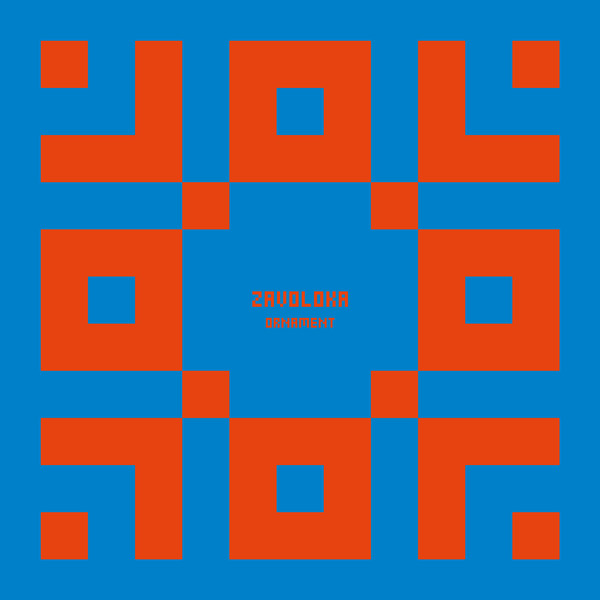
Since you commented on your art or process becoming clearer: The artwork of Ornament is probably your most reduced and minimalist cover – at the same time it also seems to be inspired by some sort of extreme contrast, it’s almost aggressive.
The artwork of Ornament is more minimalist because I wanted to make it like a colourful contrast of extreme states of consciousness, where balance is the key. As it is contrasting sonically.
The album is very contrasting in atmospheres and in sound, it is like travel.
And Prophecy, the 2018 Cluster Lizard album, was the last one you recorded in Vienna? What’s the main idea behind it? I notice the tracks are quite long (as are the track titles, which are quotes from poetry). What kind of prophecy does the album title refer to?
Prophecy is like a message of revelation. The tracks are as long as their poetic titles, we wanted to create narrative atmospheres, sonic trip.
So Kvitnu has been running since 2006 with around 70 releases. So what caused you to start another label, Prostir, in 2018?
Yes, we started Kvitnu in 2006 in Kyiv and made it for 14 years, until 2020. At first, it was only for Ukrainian experimental electronic music, but soon we received so many demos from around the world, so Kvitnu became international. We helped many musicians to release their music, it was truly an honour for us to discover wonderful artists and to help them from the heart. We have decided to close Kvitnu, because it was an art project, like an art movie with a good ending. We already heard several melancholic stories about other labels, and it was extremely important for us to make a positive finale at the highest peak of development. We became friends with our artists, we have a very grateful audience, and the release of Kotra & Zavoloka Silence became the final endless silent loop with the question written on the EP label: “What do you hear, how much you hear nothing?“
Prostir me and Dmytro started in 2018 for only our own music and arts with the second release by Cluster Lizard, Prophecy. So it was natural that I wanted to release my solo album Ornament there. We consider Prostir not only as a music label but also as an art space (“prostir” / “простір” means “space” in Ukrainian) for any other art forms and other dimensions we might imagine.
Which direction would you like to see your music moving towards?
Our plan is to release the new Cluster Lizard album, which will sound different from our previous albums. We already composed several tracks. Dmytro has played on his guitar and bass with various effect processors and pedals, so the new album will sound more bright and fresh. And after we finish the album, I want to compose for my solo work – I have some thoughts already.
How is your view on the situation among your friends in Ukraine today? Would you consider moving back sometime, or do you think the political situation is too dire — and you prefer to stay in Berlin?
We moved to Berlin for music. Now, of course, it’s a bit quiet everywhere, but I hope it will change soon. Somehow now I play more often in Ukraine than before and love to travel there. And I am very glad that so many very good events and professional promoters have appeared in recent years; it’s wonderful! As any Ukrainian has a cherry-blossom garden in their heart, whenever I will be bored here, I will move back.
Finally, which music has been the most evocative and inspiring for you in 2020?
For me, 2020 has been precious as the most productive and intense year in my own music and I believe for other artists too. I liked the new albums of my friends – Kotra’s Namir and Ujif_Notfound’s Neumatonic. Amazing new album by Liturgy, Origin of the Alimonies, Simon Posford‘s Flux & Contemplation – Portrait of an Artist in Isolation, and Extrawelt’s Little We Know and many others. Of older music, I opened for myself this year Japanese collective Geinoh Yamashirogumi and the last album by Jack White, Boarding House Reach, and Muslimgauze’s Salaam Alekum, Bastard are great.
I think we are currently in a time of beautiful transitions and transformations in music.
–
The conversation between Kateryna Zavoloka and IJ.Biermann, was conducted in Berlin, in December 2020.