Manafonistas

on life, music etc beyond mainstream

You are currently browsing the blog archives for the day Donnerstag, 28. Januar 2016.

Archives: Donnerstag, 28. Januar 2016

2016 28 Jan.

the return of the prodigal fun (1)

| Filed under: Blog | RSS 2.0 | TB | Comments off

Bei der Autofahrt nach Nürnberg zur Jam Session – sie findet im 14-Tage-Rhythmus statt – sind immer ein paar CDs eingepackt, Jazz natürlich! Klassik eignet sich nicht zum Anhören bei dem Brummen und Rauschen, und mein Freund am Steuer steht sowieso nicht auf Klassik.

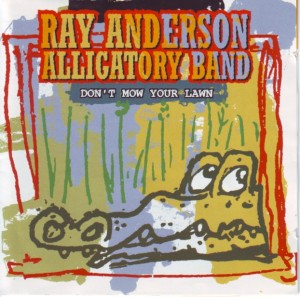
Wir fahren fahren fahren auf der Autobahn eine gute Stunde. Das ist eine willkommene Gelegenheit, die eigene CD-Sammlung wieder zu entdecken. Nicht wenige meiner Scheiben rotierten zuletzt vor Jahren oder Jahrzehnten im Player. Am letzten Montag habe ich einen wirklich guten Griff getan:


RayAndersonAlligator


Oh, wir haben gekreischt vor Vergnügen. So, jetzt läuft die Scheibe täglich zur Gemütsergötzung. Das Beste wird sein, ich lasse Ray Anderson und seine Rassel Band zu Wort kommen:


Dem gibt es nichts hinzuzufügen …

Naja, vielleicht dies: Rosato meint, dass da etwas New-Orleans-Spirit wirkt und webt …

2016 28 Jan.

East Side Gallery

| Filed under: Blog | RSS 2.0 | TB | Comments off

Der unbegradigte Fluss zieht durch die Stadt, wie ein Geschenk. Die Nacht ist raus aus den Bäumen. Sonne glitzert auf Schollen aus Eis, sie lassen sich tragen. Einen Teil der Mauer haben sie als Denkmal stehen gelassen. Graffitis wurden immer wieder übermalt, eine günstige Werbefläche, deshalb wurde die Mauer durch Grenzzäune abgesperrt, die genauso hoch wie die Mauer sind. Touristen pilgern dorthin, sie ziehen ihre Schals enger und erinnern sich oder stellen sich vielleicht vor, wie es einmal war, mit Grenzkontrollen, Zwangsumtausch und einer Klassenfahrt. Plötzlich stand ich im Osten der Stadt, des Landes, eines Kontinents. Ich war gerade 18 geworden, ich hatte ein paar Momente für mich allein, und alle Häuser waren grau und es gab keine Blumen. Ein diffuses Gefühl von Gefahr in einer engen düsteren Straße, die sich versteckte. Autoritäres Gehabe hatte ich immer gehasst, in einem Blick, einem Wort, einer Geste. Das Fotografieren des Grenzgebietes war verboten. Ich hatte ein Foto gemacht.

2016 28 Jan.

February, a pleasure!

| Filed under: Blog | RSS 2.0 | TB | Tags:  | 10 Comments

Sometimes it is the first light of a cold winter day, sun rays entering the sleeping room, sometimes it is a kiss in the morning, or the last picture of a dream. It may be the first sound of a record, or the first sentence of a thrilling novel. It may be the first time in your life you hear a beautiful record from the 70’s (and you’re asking yourself: why the fuck did it take so long?). Or it is a little philosophical essay full of fine observations that trigger unforeseen thoughts.

„As always“, says Norwegian pianist Jon Balke, „the more you explore and discover, the further you want to go, and things are not so simple anymore. It’s a very interesting process.“ On Feb. 12th, his new solo album Warp will be released, and according to the rules of probability, Gregs, Joey, Rosato and Michael will be listening to that work of excellence on the same weekend.

What begins as a gently exploratory solo piano album gradually acquires an almost hallucinatory aspect. Warp will surely receive great reviews in international music magazines, online and print. The mix of piano and carefully constructed sound images is a peculiar delight. What are the images about? Is it the infamous „cinematic“ element, or much more subliminal?

I digress: in February, you’ll be entering a time capsule here: a collection of antiques & curiosities, of old black and white movies, a late echo of the Rastafari movement in the hills of Jamaica, 50’s noir (an encounter with Richard Widmark), 60’s psychedelia with young Robert Wyatt, 70’s praise of birdsong (Bert Jansch). Further explorations of „minimal winter music“. Time for the unexpected.

2016 28 Jan.

Old Paris

| Filed under: Blog | RSS 2.0 | TB | 1 Comment

Jacques Rivette ist im Alter von 87 Jahren gestorben. Als Teenager waren die Filme von Claude Chabrol und Francois Truffaut guter Stoff: Chabrol liess die Fassaden des Bürgertums bröckeln, und Truffaut irrte mit Jean Pierre Leaud durch endlose Wirrungen des Eros. Früh in der Studentenzeit wurde aber Jacques Rivette mein ganz persönlcher „Held“ unter den Regisseuren der Nouvelle Vague. Er improvisierte mit seinen Darstellern in einem Paris fernab des kämpferischen Zeitgeists. Liebe, Verschwörung und andere Rätsel wurden zwar selten gelöst, doch stets in eine besondere Aura getaucht: die wunderbaren Hauptdarstellerinnen von „Celine und Julie fahren Boot“ bewegten sich voller Anmut, gleichzeitig im Stolperschritt, durch ihre Stadt: Alltag als Improvisation mit kleinen Geheimnissen. Die Waffe der Rivette’schen Figuren war die Phantasie. John Surman und Barre Phillips spielen in einem anderen Werk (Merry-Go-Round) ihre Filmmusik vor der laufenden Kamera, statt sie später zu laufenden Bildern zu erfinden. Zu den Schlangenlinien des Surman’schen Saxofons huschten die Protagonisten anders durchs Bild, die Musik empfahl ein leicht verändertes Gehen, das mitunter einem Tanz nahe kam. Schon damals war immer von diesem opus magnum zu hören, dass kein Normalsterblicher je zu Gesicht bekommen hatte. „Out 1 – Noli me tangere“ ist 13 Stunden lang. Ganz alter Stoff, jede Menge Verrückte, freies Theater, ein Hauch von Balzac nach dem Mai 68, und eine liebevoll-verrückte Hommage an die „Stadt der Liebe“, selten war ein Blick auf den Alltag und seine kleinen Mysterien so reich an Verzweigungen, so nah an permanenter Träumerei! Julio Cortazar sah sich einst im Quartier Latin jeden Rivette-Film an, der in den Kinos anlief. Und wie fühlte es sich an, sich damals an der Seine rumzutreiben? Man höre dazu Robert Wyatts Lied „Old Europe“. (me)

2016 28 Jan.

Zwei Tage zwischen Kiel und Regensburg

| Filed under: Blog | RSS 2.0 | TB | Comments off

Die Bäume wurden beschnitten, und Sancho hatte keinen Durchfall mehr. Gerne dachte er an seinen Hund. So lange auf den Autobahnen unterwegs mit den elend gleichförmigen Raststätten! Autobahntrance funktioniert nicht immer. Als Julio einst mit Carol die Autobahn bereiste, war der Verfall der Raststätten noch ein Abenteuer. Wenn er Hotels sucht, fährt er ins Hinterland, und studiert die Gardinen, die nie den Muff einer alten Zeit haben dürfen. Er weiss, wie er sich abends vor dem Einschlafen in andere Welten treiben lassen kann, aber diesmal ist es hart, das Buch, das er liest. Er fiebert mit Audie Palmer, eine grossartig gebrochene Figur, die durch amerikanische Alpträume geistert. Kann man soviel Unglück austanzen? Hätte er den Namen Kronach auf einem Schild gesehen, wäre er dorthin gefahren. An seiner Studentenzeitstadt Würzburg vorbeizufahren, ist schaurigschön: „ghost town“. Im Player sind sie alle versammelt, „The Ghosts of Highway 20“. Würde  Michael Hutter im „Zündfunk“ zu hören sein, wäre er ein Zeitreisender. So viele Namen, alle schlagen Funken. In Heidelberg hat er eine Jukebox verloren.

Ladies and gentlemen, dear readers, dear club of the Manafonistas! In one of his many bursts of formally specific creativity, Samuel Beckett explored the medium of radio from 1956 to 1963, creating five original works. He wrote, in a letter to Nancy Cunard, that a “gruesome idea” had come to him “in the dead of the other night”, an idea that became All That Fall.

He approached these scripts with as much precision as he did his plays, seeking through the printed word to communicate with the directors, actors and technicians who would bring the words to life, so that they might, through a mass medium, pass on this auditory hallucination to others. Yes, auditory hallucinations! We sometimes forget the magic of the everyday life.

There are two moments, at which I tend to picture Beckett with his ear pressed to the wireless. The first is at the outbreak of war in Europe in 1939, when I can imagine him in Paris, trying to get the news from the BBC. There is more biographical justification for the second occasion, during the broadcast of All That Fall in 1957, when it seems that bad weather across the Channel gave him only vague impressions of his play, with long passages of static.

This is a potent reminder of how challenging it has been in the past just to listen to the radio. The presence of any apparatus at all is easy to forget in the contemporary era, when “wireless” is more often used to refer to the internet, which we think of as the newer, stronger and younger mass medium.

It is also helpful to remember that “fidelity”, much discussed by Beckett scholars in relation to how closely one adheres to Beckett’s wishes for performance, has an additional, concrete meaning for the radio drama: can I hear it?

Now that we are beyond the era of crystal sets, vacuum tubes and ham enthusiasts, those who seek company have millions of hours and hundreds of languages to choose from, and they can take these sounds with them while walking, cycling, driving, cooking or cleaning. Countless identities, narratives and thoughts, compressed into tiny files, have passed fully into the control of the listener.

From its origin as a kind of miraculous, tenuous link to voices and bodies elsewhere, radio now forms only one part of the ubiquitous and continuous background noise that marks contemporary life.

It is within this auditory context that Pan Pan’s presentation of All That Fallon stage, at the Abbey Theatre in Dublin, in February 2016, after years of international touring, finds its form and its significance.

Listening is again turned into an active and sensory occasion, and a specific chamber for the experience is designed that marks it out as distinct from the bombardment of sound everywhere else in the world. It is a throwback both to an era when families tuned in together and, still further back, to the preradio era of the seanchaí and the filí, when the oral tradition made the event of a story more important than the physical object of the book. Good night, and good luck!


Samuel Beckett – All That Fall (1957)

Manafonistas | Impressum | Kontakt | Datenschutz