Manafonistas

on life, music etc beyond mainstream

You are currently browsing the blog archives for the day Freitag, 25. März 2022.

Archives: Freitag, 25. März 2022


Soeben erschien im C.H. Beck-Verlag ein fesselndes Buch über die berühmteste Garagenband Liverpools. Anthony Quinn bemerkte dazu im Guardian etwas, das jedem widerfährt, der diese Musik liebt und, so viel später, ein wenig schlauer, oder „still crazy after all these years“, über sie liest (und dieser Craig Brown versteht es, fabelhaft flüssig zu schreiben):


„Dies ist das seltsame Paradoxon der Beatles. Wenn man den Sound hört, den John, Paul, George und Ringo geschaffen haben, fühlt man sich immer noch in das „Glück und den Rausch“ versetzt, von dem ihr Produzent, der Gentleman George Martin, sprach. Über sie zu lesen, ist dagegen eine ziemlich melancholische Erfahrung, weil das Ende immer in Sicht zu sein scheint.“

Manche werden sich daran erinnern, dass ich das Buch in einer Radionacht in Köln kurz vorstellte, und es ist wahrlich nicht das klamaukige Buch, das sich manche vorstellen, wenn sie das Cover sehen. Besonders hervorzuheben ist beispielsweise, wie sich der Autor vielen Randfiguren widmet, und damit ungewohnte Perspektiven öffnet.

Zum Beispiel die traurige Gestalt des ehemaligen Polizeibeamten Eric Clague, der durch Zufall herausfindet, dass die Frau, die er Jahre zuvor versehentlich überfahren und getötet hatte, Julia Lennon, Johns Mutter, war. Selbst diese guten alten Zeiten waren, neben aller „never ending magic“, eben auch gut abgefüllt mit Drogen und Dramen, und sind doch so sehnsüchtig besetzt, mit dieser grandiosen Musik und unseren Erinnerungen, dass alle Zeitmaschinen in die Jahre 1963 bis 1970 Richtung Liverpool und London restlos ausgebucht wären.

Der schnellste Weg zurück: die „Esher Demos“. Wir sind im Wohnzimmer vom George Harrison. Mai 1968. Die Vier spielen, sie plaudern, und es klingt grossartig. Unglaublich, aber das alles war einmal unverrückbare, fast unvergängliche, Gegenwart. ENJOY THE TRIP!
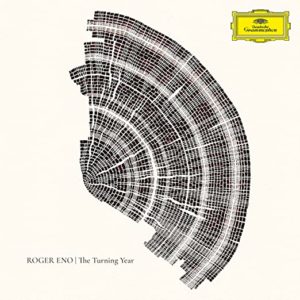
 

„On listening back to the finished album, I felt that it could be seen as a series of short stories or photographs of indiviudual scenes, each containing their own character. It was only after I‘d finalised the running order, that I realised just how much of a close relationship one piece has to another, and it was this realisation perhaps that led me to the album‘s title. I thought about how our years comprise of moments, days and changing months, of how we live our lives in facets, how we catch fleeting glimpses, how we walk through our lives. How we notice the turning year.“

(Roger Eno)


It happens that things and sounds which move at the edges, almost shadowily, have an equally profound influence on the centre of things as that which sparks in the burning glass of concentrated attention. In this way, „The Turning Year“ is a little masterpiece (to be released on April, 22, on vinyl, cd and dl).  I know most of Roger Eno’s albums since his first appearance on a milestone from  the „golden years of Ambient Music“ („Apollo“) quite well. Before the word „neo-classical“ became the „simplifier“ for introspective explorations between classically trained / self-taught composing  and contemporary sound-shifting, his first solo album „Voices“ (when will this gem be carefully reissued, along with Michael Brook’s „Hybrid“ – two treasures from Bob and Dan Lanois’ Grant Avenue Studios in Hamilton, Ontario) set the bar high for a music, that didn‘t grab for attention, but provided us armchair travellers with a peace of mind and a contemplative mood that (most of the time, in the years and works to come) found a delicate balance between harmonic figurations, melodic gestures and surprising „second sounds“ resp. „atmospheric values“ wrapped around them.

And when that happens, the trap of cheap saccharine trickery is a thousand miles away. This is damned serious music with a child-like sense of wonder.

And once inside this new music, with Roger’s hushed piano figures (how can softness be so thrilling?), the contributions of the string ensemble „Scoring Berlin“ – and Tibor Reman‘s clarinet on the title called „On The Horizon“, many listeners will be hungry not to miss a second, hungry for tiny details, distant echoes, the full experience of an always fragile now.

In contrast to the very different (kind of „nomadic“) life of brother Brian, Roger Eno decided from early on to not leave too often the landscapes of his „heimat“ in Suffolk / Norfolk – the geographics of East Anglia. And when the album starts with „A Place We Once Walked“, we can assume he’s trying to restore forgotten feelings and sights and things with the quiet power of sound. Think for yourself what’s going on when discovering (out of nowhere) a nearly forgotten walking path from the ole’ days, the kind of shiver running down the spine, the rush of pale memories. Roger Eno is masterfully catching such fleeting glimpses. And some of  these pastoral sceneries require a „double take“: traces of the uncanny, hidden behind many a shimmering surface. By the way, open the gatefold cover and you‘ll find an assembly of small photos enhancing all these sepia-tinged „East Anglia“-hinterland vibes.

I love to listen to this album on vinyl, and I‘ve done so for a while now (thanks to Martin G from DGG), but, to be honest, I‘ve had one little problem with the longplayer. More than once I looked at the circling vinyl trying to figure out, if there‘s still some running time left. I just wanted the music to stay just a little bit longer. In times like these, this music is medicine.


Manafonistas | Impressum | Kontakt | Datenschutz