Manafonistas

on life, music etc beyond mainstream

You are currently browsing the blog archives for the day Sonntag, 1. März 2015.

Archives: Sonntag, 1. März 2015


„They´re never far from us, you know.“

„Who?“ I asked.

„The dead. No more´n a breath. You let that last one go and you´re with them again.“


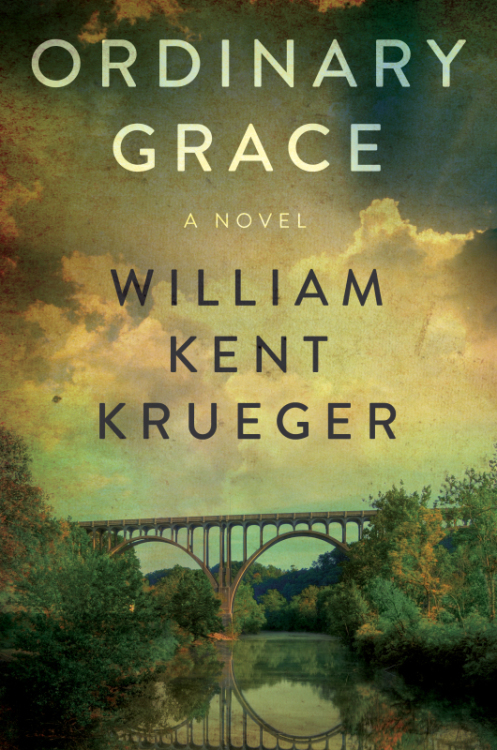
In the end the murder mystery is solved. But after „all the dying that summer“ it is no longer important who the culprit was. The epilogue connects the deaths of Frank´s childhood with the present, where Frank picks up his old and frail father on Memorial Day. They drive to the cementry of New Bremen where they meet Frank´s brother Jake who lost his stammering after saying the „ordinary grace“ at Ariel´s funeral feast. Together they visit the graves of all those who died in the summer of 1961 and of other family members including that of Ruth who died at 60 of breast cancer. The scene is perfect for reflecting what life is all about. And Ordinary Grace´s low key style leaves plenty of room for doing just that.

Bleeding Edge is not my friend, Ordinary Grace is. What I like about it is its matter-of-fact-narration and its unpretentiousness. Ordinary Grace´s beauty is its simplicity. What I also like is that its not a preachy book. Although Frank´s family is infused with Christianity Ordinary Grace does not promote Christianity as a solution for coping with loss and grieve. There is no easy solution, what life is all about we have to find out for ourselves. Christian values and beliefs may work for some, for others it´s music or Indian rituals.

 
von Thomas Schirmer
 
–
 
 
Es gibt das Wunder von Bern, es gibt Lourdes und es gibt Jake, my little hero und ab jetzt Wunderkind. His mother begged his father: „For God´s sake, Nathan, can´t you just this once, offer an ordinary grace?“ Eisiges, hilfloses Schweigen ueberfaellt die Trauergaeste, wer denkt da nicht an den „Wuergeengel“ von Bunuel. Then Jake gets up and does the blessing for the meal. From then on he doesn’t stutter anymore. Mit dieser dicht erzaehlten Szene gewinnt Krueger die anfaengliche Spannungsatmosphaere zurueck.

Das Buch hat mir zum ueberwiegenden Teil gut gefallen. Die Handlung ist sinnlich beschrieben. Einen heissen Sommer lang hangeln sich die katastrophalen Begebenheiten an dem sich seit 10000 Jahren alten, sich dahin schleppenden Minnesota River entlang. Ebenso tief eingegraben sind die Werte der amerikanischen Gesellschaft, besonders der glaeubigen, amerikanischen Familie. Ich wuerde das Buch nicht mit in den Truffaut´schen Buecherwald nehmen. Oskar Werner muesste mir helfen, einen Teil der Essais von Montaigne zu uebernehmen, die kaemen mit.

There is a very nice sideeffect in the book Ordinary Grace – vielleicht ist das auch fuer die Toyoten und Tempo Herren interessant. Ich mag Autos. Es war nach Mama auch mein zweites Wort. Ich habe mir all die Autos angesehen, die im Text erwaehnt sind. Hier ein paar Fotos dazu:


Triumph TR2


1955 – 1956 Chrysler New Yorker


1955 Cadillac Eldorado


1955 Ford Station Wagon


Lowell Seymour


(Drums fahren einen Packard clipper 1955, Engdahl faehrt einen Ford Deuce Coupe, Emil faehrt einen Cadillac und Chrysler, Karl einen Triumpf, Grosseltern einen Buick, Gus ein Indian chief Motorrad.)
 
 
von Lajla Nizinski
 
–


Wie erging es den Haupt- und Nebenpersonen inzwischen? Wie steuert der Roman seine Figuren zum Ende hin? Wie wird der Abschied sein – von den Lebenden und von den Toten? Deren Liste ist recht lang geworden; sie erscheint nächsten Sonntag auf dieser Seite. In den rororo-Thrillern die Seite 5 NICHT vorab zu lesen fiel mir immer schwer; ich hielt selten durch. Ich habe die Bücher trotzdem zu Ende gelesen – wie Kruegers Ordinary Grace auch. Hier also die Kurzfassung des Geschehens kurz vor Schluss.

 
Frank

kriegt Ärger mit dem Sheriff und – schlimmer noch – mit seinem Bruder wegen eines Graffitis mit ortographischer Schwäche: „Murdrer“.
 
Ruth

probt „Unforgetable“ für ihre Tochter Ariel.
 
Axel und Julia Brandt,

Karls Eltern, halten Distanz zur kleinbürgerlichen Pfarrersfamilie und beschäftigen ihren Anwalt.
 
Ariel

– so die Schwiegermutter Julia – „got herself (!) pregnant in order to force Karl into marriage“.
 
Karl

ist erst schwul, dann tot.
 
Nathan

„Ah, my father said.“
 
Mr.Baake

ist der Friseur und hält gefühlte Tausend Comics für seine wartenden Kunden bereit.
 
Gus

ist in Ginger French …!
 
Ginger French

hat Pferde, aber keinen Mann; das kann sich ja ändern.
 
Sheriff Doyle

the blabbermouth
 
Officer Blake

tut den Jungs und irgendwie auch Ariel einen Gefallen.
 
Jake

is afraid sometimes.
 
Warren Redstone

ist Indianer und deshalb immer noch verdächtig, bis Jake einen rehabilitierenden Traum hat, in dem Ariel Klavier spielt und Mr.Redstone tanzt.
 
Ancor Root Beer Soda

Getränk der Woche
 
 
von Wolfram Gekeler



Die Geschichte erreicht ihre dramatische Phase, wenn dem Helden im Rausch das Erlebnis eines reinen Idealismus widerfährt: „Alles, was er bisher getan, gedacht, gelernt und gefühlt hatte, beruhte auf einem einzigen, gewaltigen Irrtum. Gut, bös, falsch, richtig, schön, hässlich, ich, du, mein, dein: alles Werte einer Skala, die die große, letzte Wahrheit außer acht ließ: Es gibt keine Vergleichsgrößen. Weil es nichts gibt. Es existiert nur eine einzige Wirklichkeit: Urs Blank.“ Aus der Perspektive der Menschenwelt, in den Augen seines Freundes, des Psychotherapeuten Alfred Wenger, aber erscheint diese Bewusstseinsverfassung als Schrecken erregende und zugleich lächerliche Geistesverwirrung, als vollendete Inhumanität, die der Heilung bedarf. Die Anstrengung einer höchst ambivalenten Rettung des Allgemeinmenschlichen bewegt fortan die dramaturgisch meisterhaft gestaltete Handlung, deren Fort- und Ausgang nicht verraten werden darf. Nur so viel, dass sie sich zum Kriminalfall entwickelt, der Aufklärung im doppelten Sinne erfordert. Diese ist einer Figur von Dürrenmatt’scher Bonhomie aufgegeben, dem Landpolizisten Rolf Blaser.


Suters Roman ist ein philosophisch gegründetes Gedankenspiel um die Wirklichkeit des Unwirklichen und die Gleichzeitigkeit des Ungleichzeitigen und auch darüber, wie wenig es bedarf, um die menschlichen Konstruktionen und Vereinbarungen zusammenbrechen zu lassen. Vor allem aber ist er eine gründlich recherchierte, präzise, elegant und humorvoll geschriebene Geschichte, realistisch und phantastisch zugleich. Der Leser, der sich einmal auf „Die dunkle Seite des Mondes“ hat ziehen lassen, wird das Buch bis zum ebenso überraschenden wie stimmigen Finale nicht mehr aus der Hand legen wollen. Die geistige Gesundheit ist dabei nicht gefährdet. Vielmehr bietet Martin Suter mit raffiniert adaptierten klassischen Mitteln ein Optimum an Bewusstseinserweiterung, Suspense, und Leselust. (Friedhelm Apel, FAZ)

I was listening to Boris Blank’s recent record Electrified, which then led me to an interview Blank did with The Quietus last October, in which he tells what his favourite albums are. There were some good surprises in there, including a single by The Normal (which he regards as an album), Miles Davis‘ planet-shaking On The Corner and Pink Floyd’s Ummagumma.

The first two I am familiar with, but not Ummagumma. In the interview Blank says „the era with Syd Barrett, it’s beautiful music, but Ummagumma you can listen to today, it’s timeless. I have it on vinyl in my archives, although I have it loaded on my iPhone. It’s music that I take personally with me wherever I go.“

Intrigued, I give Ummagumma a go. But hey, I didn’t much like it – apart from Sysyphus (Part 3) and Grantchester Meadows. This listen then led me to check out Animals, which I’d never really heard before, although it does have probably the best cover of any record ever. Sad must be the fucker who ever got a train from London Victoria to someplace in Kent who didn’t look out the window and see Battersea Power Station and imagine a giant imaginary pig suspended in the air above it. So, Animals it is/was. Pigs 1, then Dogs.

Dogs starts off brilliantly – a soft guitar strum and hazy, opiated electronics. The singing is immense – there are a couple of cosmic vocal glissandi on this that wouldn’t be matched in popular music again until Bernard Sumner sang the word „anyone“ about four and a half minutes into Try All You Want (1991) and Kanye West sang the word „neon“ in Lift Off two decades later. The first Dogs cosmic glissando happens in the word „need“ at the end of the first line: „You gotta be crazy, you gotta have a real need“. Amazing, like many orchardsful of apples falling in space. The second one occurs in the word style at the first line of the second verse: „And after a while, you can work on points for style“.

At 17 minutes, Dogs is too long – the section between about 3 and 7 minutes in is too pomp/prog. The cosmic space-out section between about 8 and 12 minutes works much better. Whole careers were based on former, why not the latter?

Lyrically there’s a lot of bite in the way „Dogs“ attacks its target…

You gotta keep one eye looking over your shoulder.
You know it’s going to get harder
And harder, and harder as you get older.
And in the end you’ll pack up and fly down south,
Hide your head in the sand, just another sad old man,
All alone and dying of cancer.

… but is the target real or made of straw? Is Dogs muzzled by its own creeping existence-anxiety and fear of death? Either way, it’s an English classic.


2015 1 März

The Curse of Music

| Filed under: Blog | RSS 2.0 | TB | 1 Comment

The beautiful dirt you leave for me to find, is a paper trail
I follow, into the far north, working with brother Fred Gibson
on a songwriting master class with the youth of another town,
each one inspiring in their own right, pumped on enthusiasm
for the thing I love & how do I express the gratitude I feel
to be in the presence of their passion for music, going public
with their ideas, no matter how embarrassing, to see each one
overcome themselves reminds me of the kid I was, crushingly
self conscious, introverted, shy, unable to converse, couldn’t
meet anyone new without turning inside out. Music, was the only
route out’ve the dark hole, still is to this day & today,
listening to all these young dreams laid bare in company I was
lifted. Courage like that is an honour to witness, filled my
tank up, took me right back to the root of why I chose this road,
or did it choose me?, Lucky to be still here not only with loyal
friends of years, but welcomed into their circle of inspiration,
& new friends found along the road like Fred – today.
Wish you could’ve been there, heard their songs, every one of them
from the heart. Personal is the only way forward, no time to waste
on a life of imitation, sing what’s going on with you.
The more personal it is the more universal it becomes.
As we left this house, early in the rain, car loaded with studio
& more than a little trepidation, we both turned to one another,
bleary & spontaneously burst into grinning,

 
„I bloody love music“
 
Start the engine.
 
(Karl Hyde)


Manafonistas | Impressum | Kontakt | Datenschutz