Manafonistas

on life, music etc beyond mainstream

Author Archive:


Robert Forster‘s new album, „The Candle and The Flame“, took shape in quite strange ways, lingering around a dark time for his family, and it ended up in a collection of heartbreakers, power pieces, singalongs (nearly), lifers, growers, invocations, „deep sinkers“, „straight rollers“, and road meditations.


The most exciting thing for me (as someone who followed the Go-Betweens and their „in-between“ solo albums from the first longplayer onwards) is how easily Robert seems to wander and stroll through different periods of his life, from teenage angst and dreams, over the sophisticated folk pop of the salad days (all the spaces between rural hinterland, his romantic days in Regensburg, to 16, Lovers Lane), towards the ways of looking back, with a sharp eye and a decent quantum of sepia tinged sincerity.


There‘s a cinematic feeling all over the place on this beautiful album. It‘s hard to not stop in the tracks at certain moments that, a gift of these pieces, come back to you  again and again, enchanting as they are!


Once upon a time in the 70’s, a woman (photographer) I was on the edge of falling in love with (but never did) asked me to write poems inspired by her pictures, for an exhibition. It took place in the „Cafe Peter“ in Würzburg, in the basement. Bright walls, the photographer’s spacious landscape motifs – „Discreet Music“ and „The Plateaux of Mirror“ were the  only albums played there. Permanently. Quietly. Gentle does it. The woman who owned the café came to me days after the opening, and told me the music would be creating a little dizziness in her head, she felt a strange pull. And, frankly, in the long run she would probably lose her mind. We reduced the times of playing the background. Everything forced is lost anyway in the sounds of „Discreet Music“ – something came around the corner and disappeared behind the next one. It came back again. And again. And then disappeared. And came again. And disappeared. Dizziness may happen, of course. Soft confusion. Everlasting love to sensations on the verge of falling apart. Sarah for example, the photographer, a shadow from the past. I would have loved to sleep with her, but instead she taught me ten tricks for taking out an aggressor at a moment’s notice (in emergencies). Beautiful music, she said, and gave me that short kiss, three, four secs of timelessness, the type of „this happens only once“-kiss. I never forgot its taste.


(in dear memory of my teacher Dr. Egon Werlich)

2023 21 Jan.

Beglückend

| Filed under: Blog | RSS 2.0 | TB | Comments off

Endlich habe ich sie in Ruhe gehört, von vorne bis hinten, und die lyrics gelesen. Ich habe etliche Lieder im Auto mitgesungen, auf meinem Phone poppten sie Zeilen nach und nach auf, gross genug, um sie sich im Tempo eines Lidschlags zu eigen zu machen, und mitzusingen, mitzuhauchen, -flüstern, -schmettern – diese wunderbar verhuschte Stimme, die so viel mehr kann als nur präsent zu sein! Und die lyrics sind klasse. Immer ein Bein im Traum, eins in der Wirklichkeit. Horizonte wechseln sich ab mit Schnitt und Gegenschnitt, oder überlagern sich in einem einzigen Bild. Die Band wirkt selbst da klangbewusst und einfallsreich und leftfield, wo die Konventionen von straight und dirty und country und crooning nicht fern sind. Endlich ist das Album „physisch“ angekommen. Haptisch. Ein Sinn dazu. Und alle beieinander. Und ich mache die gelegentliche Karaoke im Toyota. Gut, dass die Duette mit Jeff Tweedy nur ich höre. Frauen würden sich in mich verlieben (ein Witz, oder nicht?!) Sie kommt so gut. Wilcos Neue. Cruel Country. Ist das ein fantastisches Doppelalbum! Noch viel besser als jene flüchtigen ersten Eindrücke, aus der Zeit, als das Album nur als Datenstrom erhältlich war. Beglückend selbst in der Dunkelheit: „From the vault inside the mountain / All the coins from every fountain / And from the sun that ‚round us rolled / Cars and streets everything gold / Lightening dashed, tossed and torn / I, at last, took demon form. All I’ve loved / I’ve loved alone.“ In der Nacht träumte ich, ich hätte Jeff in Hoboken getroffen in einem Diner. Daraus wird wohl ein langes Rock‘n‘Roll-Gedicht. (Der Tagesrest: ich las einen wundervollen Artikel gestern in Uncut über Yo La Tengo. Die leben in Hoboken, und „This Stupid World“ heisst ihr neues Album.) 


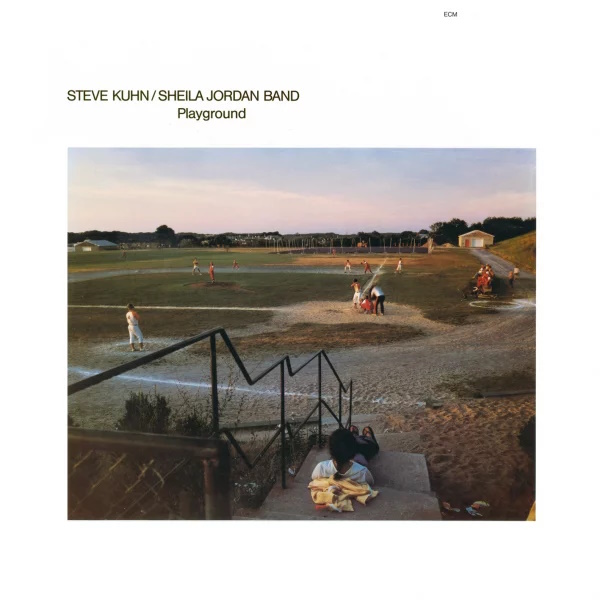
Two covers, and one record I love. (Click on them, enlarge!) After the Big Three left their marks with solo piano albums that hammered one milestone after the other into the road of instant classics, Paul Bley, Keith Jarrett, and Chick Corea, two gentlemen followed on their tracks, Richard Beirach and Steve Kuhn. I remember that „Ecstasy“ delivered an enchanting atmosphere from the first encounter onwards. Mr. Kuhn knew the grand gestures of Russian masters like Tchaikowski and their sense of drama and upheaval, and self-vonsciously transported well-dosed elements of it into his elegant and deep performances. Along with a free floating romanticism. The gift of the moment. The album was filled with melodic seductiveness, yet never lost its sense for restraintment in the right moments. The cover paintings of Maya Weber in the 70‘s may have raised some eyebrows, but in the long run they remain a strangeley compelling company to the musics inside.

i think of „Playground“ as one of the few ECM albums of the first 15 years of the label I haven‘t owned or even heard. And I didn‘t look for some clever crash course in filling up holes lately. As far as I remember, Sheila Jordan isn‘t a singer that ever rang a bell. That doesn‘t mean anything, beware, I only like one album of Ella Fitzgerald. A certain kind of jazz singing simply doesn‘t kill me softly. But when by chance I stumbled on this cover, it  made me think: I love it so much, that I would normally have bought the album for that cover only, knowing you can‘t really go wrong with Mr. Kuhn (except one of his later works for ECM with piano and strings that was utterly boring). This cover photo is so inviting, it makes me look around – and sigh: I would love to have been there and change places with the woman in the foreground. Or sit beside her. Lovely. Just put on this record, and tell where its sends you!


„I will bring you through the night“ (Laura Nyro)  NEULAND: Flying Saucer Attack / Mike Cooper / Hilde Marie Holsen / Dino Saluzzi / Sokratis Sinopoulos / „Eine Olive des Nichts“ / Robert Forster / Codex // Moritz von Oswald Trio (w. Tony Allen) / Fennesz + Ozmotic / Monkey Plot / Brutter (w. Christian Wallumrod) / Radio Vietnam / Heitor Oliveros // NAHAUFNAHME: Terje Isungset // ZEITREISE: Arthur Russell / Brian Eno / Michael Mantler / Dieter Moebius / Lloyd McNeill / David Toop / Michael Head / Terry Riley // Art Lande / Jan Garbarek / Peter Rühmkorf / Steve Kuhn

It is not a good advice, to end a night with exstatic music, but „Ecstasy“ was running on the record-player that night, and it was a long piece taken from the solo piano album with the same name. Deeply romantic! I had brought along my original first pressing, and it was surely turning its rounds with some cracks. I cannot imagine who, by chance, listened to that beauriful soumd of  the Steinway in the early hours, but a handful of people (at least) must have fallen in trance, and the day before their  eyes will have  looked very different.

2023 20 Jan.

„the deepness of the discreet“

| Filed under: Blog | RSS 2.0 | TB | Comments off


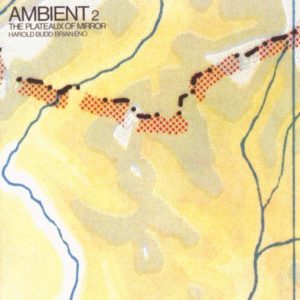
On that hot and sunny afternoon I met Brian Eno in Kilburn, in the year of „Neroli“, we at some point spoke about the two „ambient works“ he did with Harold Budd, and he explained how he worked on the sound of „The Plateaux Of Mirror“. All very technical, I responded, but, being a convinced agnostic by heart meeting an atheist by confession, I asked him about the deep impact this music often had, and for example, on me.

I hesitated to use the word but then dropped it: spiritual. Can agnostics attest music a spiritual, or, as I added, strangely otherworldly quality? He, the atheist, doesn‘t even think in these words. At least in that summer „Neroli“ was released, inspired by the experience of an orange garden. Already in early years, he spoke about his lust to put systems in motion and become an observer of the results. There is something about this that resembles a paradoxon. How can music go so deep when being regarded as „pure system music“ with not too much input from the creator, like „Discreet Music“? Or „Music for Airports“? Well, it can. But how?

At times, and quite often,  I have to say, Brian Eno stumbles, by chance and genius, into areas of sound that can have a variety of impacts on the listeners, and one of them being a profound, unsurpassable deepness. „The Plateaux Of Mirror“ or „Discreet Music“ or „Music For Airports“ contain and create, with all their surface shimmer and unspeakable magic, the same deepness as „A Love Supreme“ or Mahlers „6th Symphony“.

This is my experience. And Eno knows to leave (forever and a day) the landscapes he has once created. Would be much more easy to write about deepness when putting „On Land“ on the record player. No one doubts deepness when roaming through the wilderness. But when confronted with a tape loop running mistakenly half-speed!?  I can listen to „Discreet Music“ a thousand times without being bored. And I always feel it is moving as deep as deep can go.

The ungraspable, next paragraph: on another sunny afternoon, with (as I remember) Alan Bangs waiting slightly impatiently with his TV team for an interview, I came to speak with Laurie Anderson on „Music For Airports“, and how Bang On A Can delivered their version. She said something like this:


„Isn‘t it incredible that Brian‘s original, as a piece regarded „functional music“, has so much deep melancholia engraved in the four parts of the work, that a group of classical violinists and violas have to come to bring these deeply hidden emotions more to the surface – and even tears to the eyes? But this deepness was there, from the very start …“


The hushed notes on the piano, only these few notes, played by Robert Wyatt on „1/1“, the first part of „Music For Airports“ –  their return on loops, the sparse surroundings, the breath of machines in between, the hiss, the space near emptiness, and that road to silence not taken before, the hand at the machines rolling, the careful deleting of everything that has not to be, all that and much more is happening when nothing really happens.



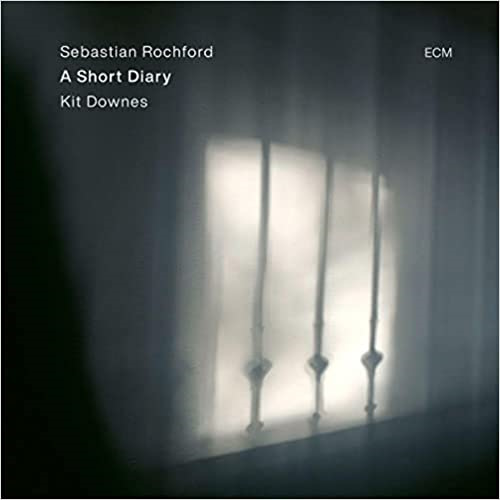
Die liedhaften, andeutungsweise hymnischen, Kompositionen diese aussergewöhnlichen Albums entstanden sehr kurz nach dem Tod des Vaters und Lyrikers Gerard Rochford, in heimischer Umgebung. Man kennt Rochford von seiner Gruppe Polar Bear (deren bestes Album in der Mohave-Wüste entstand), von den jungen, wilden Sons Of Kemet und dem ultramelodiösen Trio Libero. Hier nun
 wollte er den Sound  seiner Kindheit und Jugend einfangen – und Trost finden zugleich. Etwas wachrufen. 

Bei den fünf Stufen der Trauerarbeit ist die Akezptanz nach Kübler-Ross die abschliessende fünfte. In einer Besprechung des Albums bringt Oliver Coates die „sechste Stufe“ der Trauerarbeit ins Spiel, und zitiert diese „Ergänzung“ von David Kessler: „Meaning“. Rochford und Downes seien noch nicht ganz bereit, nach dem Sinn zu suchen, schreibt Coates. Stattdessen „sässen sie in trauter Zweisamkeit zusammen, an dem Ort, an dem die Abwesenheit am stärksten zu spüren ist.“ Als wären sie noch nicht bereit,  im Prozess der Überwindung der Krise neue Einsichten zu gewinnen, und dadurch ihr Leben reicher zu machen. Eine psxhologische Prozessbeschreibung einem Kunstwerk überzustülpen, ist oft genug ein wenig platt, und in diesem Fall darüberhinaus deplatziert.

Die „Bedeutung“ liegt doch gerade im  schöpferischen Akt des Erinnerns. Die Haus der Kindheit erhält seine Dämmerung, seine alten  Schwingungen gleichsam gespiegelt und verwandelt zurück. Mehr „meaning“ geht nicht. In diesem Sinne ist „A Short Diary“ eindringlich-elementare Musik, welche man zwei anderen aussergewöhnlichen „home recordings“ des Labels ECM an die Seite stellen kann, den Solo-Piano-Werken „At Home“ von Misha Alperin, und „The Melody At Night With You“ von Keith Jarrett. Alle drei Werke belegen eine von jedem Überschwang befreite Innerlichkeit.

P.S. – … und, a propos „meaning“ – „Bedeutung“, schreibt ein Mr. Harris die perfekte Ergänzung: „The tracks feel unhurried but concise enough not to be just drifting along, and as a meditation on memory / mortality it works at a high level in its efforts to convert sound into meaning.“


2023 19 Jan.

„Thunder“

| Filed under: Blog | RSS 2.0 | TB | Tags: , , | Comments off


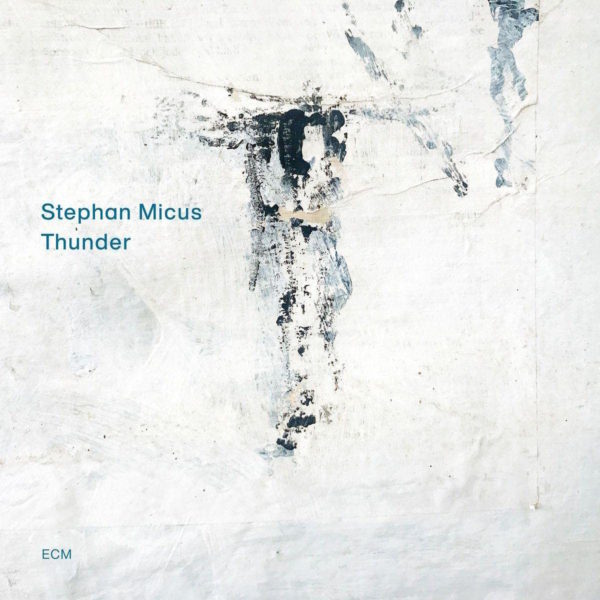
Zu meinen ganz frühen Stephan Micus-Platten zählt „Wings Over Water“. Und er spielt da, ernsthaft, neben allem anderen, auch auf einer Schar von Blumentöpfen. Das Album ist einer meiner Favoriten aus seiner Diskographie geblieben. Es beamt mich so schnell in meine Studentenjahre wie Brian Enos „Discreet Music“. Der Globetrotter war von früh an darauf aus, Instrumente aus nah und fern zu sammeln, und dann nach seinen Vorstellungen umzubauen. Er stand von Anfang an für eine Art von Mediationsmusik, die nichts mit dem Lifestylenirvana von 80 % der New Age-Klangteppiche zu tun hatte. Es gab natürlich auch im New Age sog. „Visionäre“ (denken wir an Laraaji), aber das war eine überschaubare Minderheit. Wer den Micus-Sound schätzt, darf stets aufs Neue gespannt sein, welchen Klangkörpern er beim nächsten Mal zu Leibe rücken wird. Einmal machte ich mit ihm ein langes Interview, das sicher noch in den Archiven des DLF schlummert, und was er mir da über heisse Tage und Nächte bei einem Instrumenenbauer in Delhi erzählte,  hatte schon einen Hauch von „Indiana Jones“ (rein atmosphärisch zumindest).

Morgen erscheint sein 25. Album, und hätte man mich im Blindversuch getestet, ich wäre beim ersten Stück kaum auf seinen Namen gekommen, und hätte eher auf einen nachwachsenden Seelenverwandten von Don Cherry getippt, so exotisch trompetenhaft geht es da im ersten Stück zu. Fast verwildert, und an „Jazz“ selbst im fernsten Sinne war bei Herrn Micus nie wirklich zu denken. Nicht die einziger Überraschung hier. Gleichsam über Nacht hat sich diese Hymne an die Götter des Donners zu meinen „Micus-Meilensteinen“ gesellt, neben „The Music of Stones“, „East Of The Night“, „Ocean“ (mhmm, oder „Darkness and Light, oder doch „Twilight Fields“?) – und sowieso „Wings Over Water“. (m.e.)


2023 19 Jan.

„Pasado en claro“

| Filed under: Blog | RSS 2.0 | TB | Tags:  | Comments off


Seit nahezu zwei Jahrzehnten arbeiten der schwedische Bassist Anders Jormin und die Sängerin, Violinistin und Cellistin Lena Willemark an eigenwilligen Verbindungen von Jazz und Folk. Auf dem Album „Tree Of Light“ von 2015 kam die in Süddeutschland lebende Karin Nakagawa dazu – ihr Spiel auf der 25-saitigen japanischen Koto öffnete der Musik weitere Räume. Erstmals dabei ist nun, auf der Cd „Pasado En Claro“, der Schlagzeuger Jon Fält, der auch in Bobo Stensons Trio an der Seite von Anders Jormin agiert. Hochspannung ist angesagt: immer wieder dringen Bass, Schlagwerk und Stimme in mal feinsinnige, mal raue, mal archaische Regionen vor. Es ist eine besondere Qualität dieses schwedisch-japanischen Quartetts, weit entfernte Zeiträume zusammen zu führen – die Quellen der auf „Pasado En Claro“ verarbeiteten Gedichte reichen von Octavio Paz, über ein uraltes China des elften Jahrhunderts, bis hin zu moderner skandinavischer Lyrik. Alle Texte werden in schwedischer Sprache gesungen, die emotionale Tiefenwirkung von Lena Willemarks Gesängen überwindet jede Sprachbarriere – hilfreich dennoch, dass die Texte auf Schwedisch, und in englischer Übersetzung, beiliegen. „Wo die Krankenhausblöcke schummrig leuchten / Und chinablaue Bildschirme in sterilen Investitionsobjekten flimmern / Nichts erscheint so verschmäht und tödlich, dass du es nicht sehen könntest / Von einem Küchentisch aus, unter einer blauen Lampe / Die aufstrebende Birke auf einem grünen Grünstreifen / Und eine Katze, die um die Ecke streicht.“ Was hat nun Jörgen Linds Gedicht mit Petrarca oder Octavio Paz gemein, ganz zu schweigen von fernöstlichen Texten? Nun, beharrlich spiegeln sich Innenwelten in Räumen der Natur, und immer wieder werden Spuren von unbeugsamem Lebenswillen ausfindig gemacht in unwirtlichen, abgelegenen Erdzonen. Gerade da wird der Tanz des Lebens geprobt, wo Stillstand und Erstarrung drohen. Wie etwa in dem von Lena Willemark geschriebenen und getexteten Song „The Woman Of The Long Ice“ …  „Ich bin die Frau des langen Eises / die tanzt (leicht wie ein Wirbelwind)“, heisst es da (…)

In einem Radiotext, noch dazu einem Magazin mit stetig wechselnden Themen ist die Wahl der Sprache wichtig. Der akademische, ernüchternde Stil ist so leblos wie eine vermeintlich profunde Erörterung ins Leere gehen kann. Du willst ins Boot holen, und nicht Bartel zeigen, wo man den Most holt. Darum ist es wichtig, in der Sprache sachlich u n d sinnlich zu sein, Dinge bildhaft zu suggerieren, und eine ansprechende Einfachheit und Klarheit nicht für angestrengte Tiefenschürferei zu opfern. Ein Text über „Pasado en claro“ oder Mette Henriettes „Drifting“ oder Sebastian Rochfords „A Short Diary“ (alle erscheinen morgen, am 20. Januar) sähe anders aus, wenn ich ihn für dass Feuilleton der ZEIT geschrieben hätte. Oder die SZ. Das hörende Verstehen verlangt anderes als das lesende Verstehen.


2023 18 Jan.

„Drifting“

| Filed under: Blog | RSS 2.0 | TB | Comments off

Die junge norwegische Tenorsaxofonistin Mette Henriette ignoriert auf sehr eigene, in ihrem Spielstil bestens erkennbare Art, den alten Wettstreit der Schulen zwischen freiem Jazz und lyrischen Klangidealen. Auf ihrem zweiten Album mit dem trefflichen Titel „Drifting“ finden sich Geräusch, Rausch, Abstraktion und Melodie in luftigen Räumen vereint. Johan Lindvall spielt Piano und Judith Hamann Cello. Es ist nicht die Art von Jazz, die einen mit dem ersten Ton einfängt und gleich zu Beginn ein paar unwiderstehlich-groovende Register zieht: es ist die Art von Jazz, die sich langsam in die Hörgänge schleicht, mit markanten, fremdartigen, oft hingehauchten Tönen und Texturen. Eine wundersam gespenstische Musik.


Manafonistas | Impressum | Kontakt | Datenschutz