Manafonistas

on life, music etc beyond mainstream

You are currently browsing the blog archives for the day Freitag, 1. Mai 2015.

Archives: Freitag, 1. Mai 2015


I stumbled on memories about this old album by chance when reading a traveler’s guide about Cape Cod. When the record was released decades ago, I first read about its forthcoming release in a magazine that printed the cover and listed the names of the musicians. Both did not only ring a bell, but bells and bells, a whole circus of bells.

Two reasons. One being that I knew the illustrator and painter whose stories were a springboard for the imagination of composer Michael Mantler. EDWARD GOREY. I had a big book from the Diogenes Verlag (now long out of print) with a lot of Gorey’s stories including „The Doubtful Guest“ and other tales that mixed echoes of Victorian ghost stories with whimsical existenzialism. It was the best picture book I ever owned, filled with desaster and death, premonitions of darkness, and the loss of all exit signs. Nevertheless humour was part of the game, too. Edward Gorey must have loved the novels of Samuel Beckett. He also was a famous book cover designer, specialised on horror novels, mystery and crime.

The other reason was the cast of musicians and voices who contributed to the album. Robert Wyatt was the singer, at his side his wife Alfreda Benge, Carla Bley, Norwegian guitar player Terje Rypdal, drummer Jack DeJohnette, Pink Floyd’s Nick Mason and bass player Steve Swallow. So I couldn’t wait to hear the album. As it happens quite often when your imagination runs wild, reality comes along with a short breath: on first listening I was disappointed, not by Robert’s singing, but by the dense textures of the compositions with the guitar very much in front of the mix. It seemed all a bit under pressure, the mood never seemed to change. Not much space in it, to be honest.

I think I first started getting deeper into this album (leaving its surface structures behind) when I lost it, a long time ago, and it has now been out of stock and trade for eternities. Yes, you can download it, but you will have to spend a fortune to get your hands on the physical object. Now, finally, in my memory, the prevailing zones of anxiety, imminent catastrophies and merciless tension make sense and apparently seem to transport the stories from their post-Victorian surroundings to a contemporary landscape of noirish colors and bleak electricity. In my memory, it has now  become a little masterpiece (well, I have no idea if a second real encounter would proove me right). This all happened because I read that there exists an Edward Gorey House Museum on 8, Strawberry Lane, in Yarmouth, Massachusetts. I’ve been there this morning. It was full of strange things (and two nice people with a lot of knowledge and good humour). I bought (among other things) a  book  titled „Floating Realities“.
Als zwischen 1975 und 1978 die zehn Platten von Enos Obscure Records erschienen, wurde eine Tür aufgestossen, welche die sogenannte Avantgarde in die  Popkultur transportierte.

Der Begriff  „progressive Rockmusik“ verlor bald an Ausstrahlung, weil das auf Dauer Progressive rasch allzu hochtrabend geriet. „Pink Floyd“, „Yes“, „Emerson Lake & Grusel-Palmer“ und zig andere packten die Tonspuren voll, bis der Arzt kam.  Oder im Bereich von Jazz-Rock und „Fusion“:  man denke  an die Gigantomanie diverser 70er-Jahre-Bands, die anfangs Klasse ablieferten, und soäter  ihren  eigenen Erfolgsrezepten auf den Leim gingen: Mahavishnu, Return To Forever, auch Weather Report in der Spätphase.

 In den Obscure Records öffneten sich ganz andere Klangfelder, denen alles Monströse abging; selbst Werke von John Cage waren mit dabei, einer der hellsten Geister des 20. Jahrhunderts, der jeder Selbstverliebtheit den Garaus machte. Bis auf wenige Ausnahmen produzierten Eno und ein kleiner britischer Kreis, zu klein, um einen Gentleman-Ckub zu öffneb, hochinteressante Klangstoffe, die auf diversen unterirdischen Wegen bis heute nachwirken.

Fragen Sie mal Mark Hollis von Talk Talk oder Tom Waits nach den Obscure Records! Und Enos jüngster Streich „The Ship“, verweist durchaus auf Gavin Bryars und „The Sinking of The Titanic“. Dieses 25-Minutenstück steht denn auch auf dem Reiseplan der nächsteh Klanghorizonte am dritten Samstag im Juni, in der Zeitreise.


The Sinking of the Titanic – Gavin Bryars – 1975 – Obscure no. 1  (*****)

Ensemble Pieces – Christopher Hobbs, John Adams, Gavin Bryars – 1975 – Obscure no. 2 (***)

Discreet Music – Brian Eno – 1975 – Obscure no. 3 (*****)

New and Rediscovered Musical Instruments – Max Eastley, David Toop – 1975 – Obscure no. 4 (****)

Voices and Instruments – Jan Steele, John Cage – 1976 – Obscure no. 5 (****) 

Decay Music – Michael Nyman – 1976 – Obscure no. 6 (*)

Music from the Penguin Café – Members of the Penguin Café Orchestra – 1976 – Obscure no. 7 `(*****)

Machine Music – John White, Gavin Bryars – 1978 – Obscure OBS-8  (***)

Irma – an opera by Tom Phillips, music by Gavin Bryars, libretto by Fred Orton – 1978 – Obscure OBS-9  (***)

The Pavilion of Dreams – Harold Budd – 1978 – Obscure OBS-10  (****)

2015 1 Mai

Eine volle Dröhnung für den Mai

| Filed under: Blog | RSS 2.0 | TB | Comments off


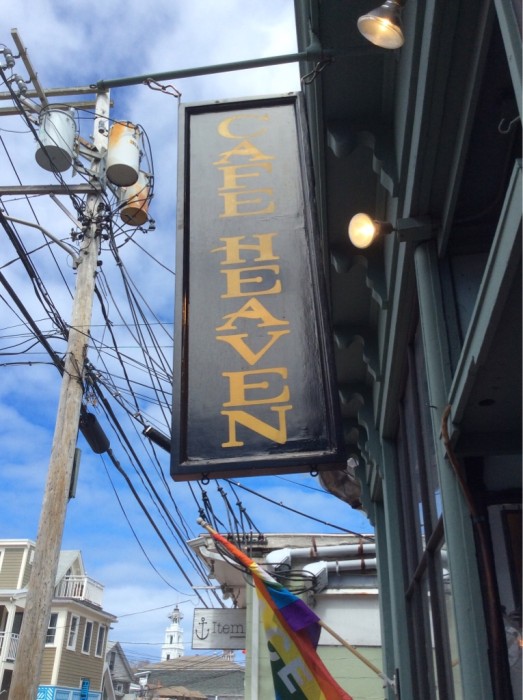
Provincetown, Massachusetts


Es ist eine Freude, einen unbekannten Autor zu lesen, der mit seinem Debut in der, gewiss Konventionen folgenden, im besten Fall immer auch Konventionen sprengenden, Welt der Thriller, keinen schlichten, abgezockten Abklatsch bewährter Erfolgsrezepte feilbietet oder im Fahrwasser der einschlägigen Bestsellerlistenbewohner rumdümpelt. Allen Eskens ist eine solche Entdeckung.

Marginale Erlebnisse in der Thrillerwelt (keine Werbung, kein grosser Wirbel, nur der Enthusiasmus einer kleinen Leserschar) können genauso an- und aufregend sein („in the maps of one’s own brain“) wie die Geburtsstunden (-jahre?) eines ganzen Musikgenres, die sich im Falle von „Jump Up“ noch anno 1960 am amerikanischen Boogie-Woogie und Rhythm ’n’ Blues abarbeiteten, um allmählich, mit ein paar Rhythmusverschiebungen – und seltsamem Trommelgetön aus den Wäldern hinter Kingston, Jamaica – hübsch stolpernde Gestalten aus Ska und Reggae anzunehmen, zur eigenen vollkommenen Verblüffung. Da konnte man gleich eine ganze Religion hinzudichten – der Reggae war nicht zuletzt, als er noch in den Kinderschuhen steckte, von besonderer Faszination.

Warum erwachsen werden, fragten sich die Musiker damals, und tollkühnten nur so um die Wette: mit beschädigten Gerätschaften, primitiven Echomaschinen, entstanden Klassiker, Unerhörtes zwischen Kindermelodika und schwarzen Dub-Löchern. Erwachsen wurde man dennoch, zum Teil, und irgendwann natürlich auch durchschaubar. Warum also, noch mal gefragt, erwachsen werden? Dieser Frage geht in ihrer „philosophischen Ermutigung“, Susan Neuman nach, mit Platon und Kant und einigen definitorischen Anstrengungen im Gepäck. Lajla nimmt die Spur ihrer Gedanken auf.

Über The Mountain Goats und ihren Ausflug in die Welt des Wrestling wurde schon alles mögliche geschrieben. Und gerne wird diese Platte unterschätzt, weil das Thema so abwegig und nischenhaft erscheint. Herzzerreissend auf den Punkt („to the bone“) wie die Short Stories von Raymond Carver, lässt John Darnielle alte Helden der Kindheit neu aufleben, und folgt ihnen in jede dunkle Stunde. Alles ist Schein, aber die Regeln eines ungebrochenen Stolzes herrschen. Jeder Teenager (und jeder Erwachsene) braucht ein paar gute Verrückte aus alter Zeit, ergreifende und lang haltbare Abenteuergeschichten. Auch eine Ermutigung im philosophischen Sinne.


Manafonistas | Impressum | Kontakt | Datenschutz