Since our view [here on this blog], when it comes to jazz albums, is (most of the time) predominantly focused on albums from our favorite label in Munich, I would, once again, like to draw some attention to the U.K. With a similarly unique visual and artistic style as well as at the same time a broad variety of contemporary (mostly) jazz albums (and the music on the “fringes“ of jazz), Dave Stapleton’s Edition Records have just celebrated their tenth anniversary this spring and have released a string of fascinating albums this summer.
Firstly, the work of tenor and soprano sax player Tim Garland would fit nicely into ECM’s releases (just take a look at the colourful cover image), but being an English musician (he was born in 1966 around London) and his latest project being inspired by the scenic, mountainous Lake District in North West England, he’s no doubt more at home on Edition. Weather Walker (droll title) features a whole orchestra, which Garland not only wrote for but also conducted, with Yuri Goloubev on double bass as well as Jason Rebello and Pablo Held on pianos. Like many Norwegian recordings, this grand, one-hour suite in 12 parts (on a side note, it somewhat reminds me of my favourite Abdullah Ibrahim album African Suite), bears a similarly strong connection to nature to Norwegian jazz composers’ works as well as that one by Ibrahim, and much of it is also based on folk music, specifically an English folk tune called The Snows They Melt The Soonest, “that can still cast a powerful spell“, as Garland puts it. There you have some obvious parallels to quite a lot of contemporary jazz from Norway. So it is not far fetched to adhere that – like some of Jan Garbarek’s works with orchestra – Weather Walker draws a fascinating line from European classical music to intimate chamber jazz. Garland’s approach, though, is a probably lighter and more elegant, while in parts also much more rhythmic one. He likes to use the orchestra in a percussive manner, which I find rather entertaining and would love to hear in a concert situation. Like the old Concerto Grosso, Garland says, Weather Walker sometimes works with an 8-piece within the large 35 piece string orchestra, to reach a lucent, sweeping sound. An album as warm and gentle as it is full of atmosphere – the cover image makes that clear it right away.
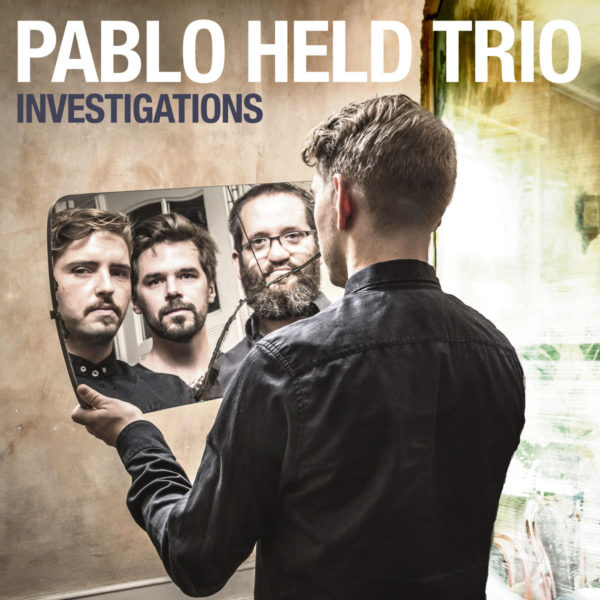
Around Edition’s 10th anniversary, Pianist Pablo Held has furthermore released his 10th album in his own name – with his trio again, their first on the British label, after the preceding 2016 album Lineage came out via Bavaria’s now defunct Pirouet Records and was rightly praised with top ratings and recommendations in German media. (The Berlin daily Tagesspiegel called them “Germany’s most democratic and most adventurous piano trio“, among other things.) Strangely enough, last year Pablo Held was part of not one, but at least two extensive features on young and promising German jazz musicians in major German magazines, though the trio has (in its still current form) been existent since 2005, has released 6 or 7 albums, one of which featured John Scofield, with Investigations being Held’s 1oth album overall, plus more than 25 album appearances as a sideman. Anyway, I really like that Held, who lives in Köln (or, Cologne, as the Besatzungsmächte still like to call it) with his family, calls Herbie Hancock his favourite musician. And when he replies with Miles Davis’ Filles De Killimanjaro, Federico Mompou’s Complete Piano Works, and Joni Mitchell’s Song to a Seagull to the question about his three favourite albums, one can get a sense of where his music might be heading towards.
Which is, well, somewhat misleading… And I am not sure how I feel about that. Would I prefer Held’s albums were more extravagant, like many by the daring Hancock? I am still somewhat undecided if I prefer Investigations over its predecessor, Lineage, but this new album does show an even more matured group, whose members appear highly at ease with each other – and a more intuitive selection of tracks that hardly ever follow a beaten path. This music is rhythmically and melodically complex while the performances remain impressively immediate and playful. And speaking of ECM, it is noteworthy, I think, that there is a quote by, of all people, Ralph Towner in the album’s booklet, saying: “The beautiful music of the Pablo Held Trio strikes me as an important example of the evolution of the piano trio in jazz. They embody the poetry and depth of this tradition, while extending the harmonic and rhythmic possibilities of the tradition. The music of this trio brings me joy knowing that this great art form continues to grow and flourish.” If it wasn’t for the rather silly, pastel coloured cover image, I think I’d be a huge fan of this album. [Side note: The pianist administers a website called Pablo Held Investigates, where he uploads conversations with other musicians, like John Scofield and Chris Potter.]

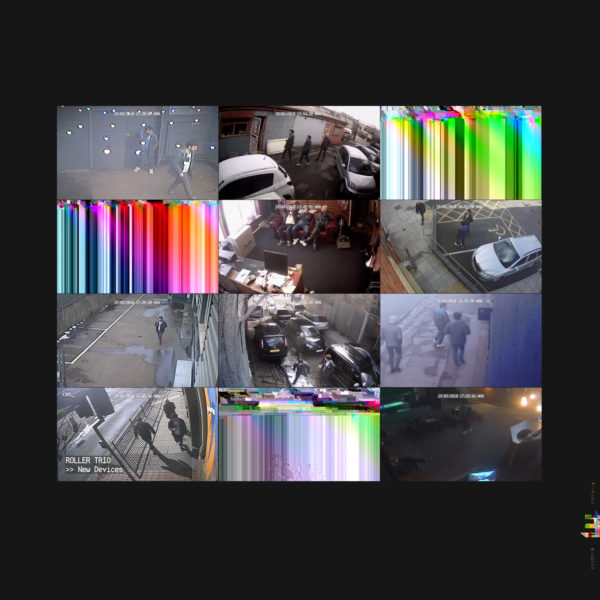
Another trio, which couldn’t be more different from the Pablo Held Trio’s modern approach, has also just released a new album on Edition, their third one, and first one with a new guitarist, and has captivated and surprised me a lot more right away. To be honest, I don’t remember having heard any of the Leeds based Roller Trio’s music before I put New Devices into my CD player, even though their debut album had been a Mercury Prize nominee in 2012… well, the Mercury Prize is obviously as big in Germany as it is on the British Islands. New Devices is definitely contemporary jazz, well, is it jazz?… never mind… taking shreds of the past and the present and merging it into a wholly unique kind of music. Some people will hear rock music in there, others heard hip hop, while electronica is surely a strong influence (all members are credited with programming and synths besides their respective principal instruments – saxophones, guitar, electric bass and drums). Also, it is possible to describe them as Terry Riley jamming with Tortoise, while a strong urban feel dominates most of the album (reportedly they included sounds sampled from the Leeds night life, seamlessly, I must say). This is a wild album, highly energetic – with some slower tracks as well – very organic tracks as a result of collective improvisation, definitely on of my favourite jazz-etc records of the year, and easily the best Edition release of 2018 (so far).
I also wanted to write about Tonadas by Julian Argüelles, but for some reason I can’t find the CD anywhere (always a bit annoying with those thin promo copies… they easily get lost), so I’ll have to do a follow-up. I can’t remember much about this album, as I have only listened to it before I went to Norway for the whole summer… Right now I am listening to Bloomer, the debut album by saxophone player Tom Barford, Kenny Wheeler Jazz Prize winner, about whom Evan Parker is quoted saying, “We are witnessing the birth of a new star in the jazz firmament.” I don’t know about that (yet), but the album plays vibrant and dynamic, with sax, piano, drums, bass and an impressive Billy Marrows on guitar. I haven’t heard the new Dinosaur album Wonder Trail (yet), mainly because I only received it as a download, and I never manage to work through all those downloads in my tons of folders I download throughout the year. But I am looking forward to listening to this album some day, as the quartet’s first CD, Together, As One, a couple of years ago, was truly intense and still deserves a strong recommendation. And, yes, the new Phronesis [another forward-thinking piano trio on Edition] album is terrific, as were several of their predecessors.
Finally, I’d like to draw some attention to the untitled album by the electrifying trio Enemy, which my fellow Nordische Music writer Stefan strongly recommended, saying:
Enemy is about continuing the history of the piano trio. For this [Petter Eldh] has teamed up with British pianist Kit Downes (who recently succeeded with a completely different kind of church organ project on ECM) and his fellow countryman James Maddren on drums, and they brilliantly prove that this story is far from over. Unlike Gogo Penguin, who seek (and find) renewal in this discipline by retreating into patterns and structures, Enemy succeeds more out of tradition. Because the riffs, which often underlie the pieces, could just as well originate in bebop. They are, however, staged astonishingly (poly-)rhythmically complex, tempos are constantly stretched and compressed, and one hears radical groove switching. […] Everything they present happens on the edge of what is technically possible, and yet they move (apparently) playfully and “tightly“ around all the cliffs. Luckily, all this is possible without being highbrow or elitist in any way; rather, the three garnish their playing with a good dose of humour […]