Manafonistas

on life, music etc beyond mainstream

edward-vesala(finland)-nan-madol-20140404145414


This work by the composer and percussionist Edvard Vesala appeared in the 70s with the coloured cover, decades later with a black and white photo (only on cd). I would have left the sun picture untouched, it had become one with the music for many listeners who acquired „Nan Madol“ at that time. „A sleeve of desire“. The first time I had heard it on the island of Langeoog,  during a  Michael Naura radio show.  In the meantime, this record, overflowing with melodies, free floating jazz and nature sound inspirations, has disappeared from daily life on the market. It’s what I call a buried treasure. Perhaps this very special sun will unexpectedly shine on you at a record fair. Then it is important not to hesitate. Also, the first cover reveals much more about the music than that of the new edition. So much more it is than a „postcard stereotype“. And where harps come into play, I’ve been thinking of Iro Haarla, Alice Coltrane, and the Marx Brothers anyway ever since. And I will never forget my encounter with Vesala in the hinterland of Unna, Westfalen, before a concert with his Sound & Fury ensemble. And I will never forget that I missed the concert of Jan Garbarek, Arild Andersen and Edvard Vesala, in the „Domicil“, Dortmund in 1972. I told him how much I loved that one album of the trio, „Triptykon“. „Best Garbarek album“, he said with a grimming smile. We‘re talking secret gems here.


Als wir in seiner Hütte ankamen, legte der Chef eine Playlist von Spotify auf, „The hottest sound from the Sahara“, oder so ähnlich der Titel, und aufgeräumte Wüstenklänge sorgten für eine Art Oase. Eisgekühlte Drinks, und Aufgetautes aus dem Sortiment von Coppenrath und Wiese. Zwei Jungs, neun Mädels, und Komoot zeichnete die Querfeldeinroute auf, so dass wir sie jederzeit nachradeln können. Über Stock, Stein, Wald, Täler, sanfte Anstiege, ein Volksfest der lokalen Feuerwehr, ein ausgebrannter PKW auf einem Kornfeld, und zwei glimpflich verlaufende Stürze. – Wenn das so eine lange Strecke ist für dich, Michael, sagte der Chef, dann ist es ja fast ein Roadmovie. Wir hatten noch Wochen zuvor über ein teilweise in Finnland spielendes Roadmovie gesprochen, da war der Protagonist ein Crack, was das Studium von Fahrplänen anging. Immer, wenn die Rede auf Finnland kommt, kommt mir über kurz oder lang Edward Vesalas schönste Platte in den Sinn, „Nan Madol“.


2023 17 Juni

Alle Seelen

von | Kategorie: Blog | | 4 Comments


Ein Karneval, ein Abschied aus Fleisch und Blut.
Hiessens auferstanden von den Toten.
Wyman-Elvis! Ruft unseren Gurrel,
Und zählt die Asche, wo er blutete:

Beim ersten ein karmesinroter Nebel,
beim zweiten die Schlaflosigkeit.
Beim dritten ein zerbrochenes Stelldichein,
beim vierten die Einsamkeit.

Schaurig in den Blättern der Liebsten.
Schlimm in den Tränen des Soldaten.
Als der Riddle Fluss trauert:
Wyman-Elvis verschwindet…

Nur in einem Fleischwulst
Hängengeblieben am Farn der Hirschzunge,
Und nur durch ihre eigene Gänsehaut
Weiß sie, dass er irgendwann zurückkehren wird


Wer die Stimme sehr  mag, findet natürlich leichter Zugang zu dem Album. Denn sperrig ist auch die Musik allemal, kaum weniger als die Texte. Öffnungen, Ausgänge, Fenster, macht jeder ausfindig, der sich auf diese „Dunkelkammermusik“ einlässt. Und hilfreich ist es, zuvor, vor dem ersten Hören, oder auch danach, alle Texte durch „deepl“ zu schicken, und dann Original und Übersetzung (oder nur die Übersetzungen) Text für Text auf sich wirken zu lassen. Gewiss funktioniert die Annäherung auch, wenn man der Musik unvorbereitet begegnet. Man schnappt Wort- und  Satzfetzen auf, alles bleibt bruchstückhaft, aber das sind die Texte ohnehin. Man kann „deep listening“ mit und ohne Textmeditation praktizieren. So oder so dringt man tiefer vor. Allein den Text oben zu lesen, schreckt ja fast ab. Aber es eine grosse Freude zu erleben, wie sich allmählich  die kleine grosse Welt dieses Albums mehr und mehr öffnet.


2023 17 Juni

Nothing much happens, and everything

von | Kategorie: Blog | | Comments off

Als Steve Tibbetts einmal diese kleine Geschichte las, schrieb er mir, dass er ziemlich ähnliche Stimmungen und Situationen erlebt habe, abends in Minneapolis, zu Beginn jenes verrückten Jahrzehnts, das manche für wilder halten als die Sechziger. Interconnectivity. Es fehlte nur noch eine Auflistung von Namen und Lokalitäten, wie es einmal die Go-Betweens anrichteten, auf „Darlinghurst Nights“, einem Stück ihres unfreiwilligen Farewell-Albums „Oceans Apart“. Einen zum Heulen schönen Song. Und zum Soundtrack jener Jahre zählte eben auch „In a Silent Way“, Brian Eno summte, nein, er pfiff einmal die Melodie (wenn es überhaupt eine  Melodie ist) von „Shhhh…Peaceful“, als er sich während eines Gesprächs an die ersten zwei Jahre in New York erinnerte. Wie er dieses Album mochte und es nachts öfter lief in seinem Loft, auf dem Dachgarten, mit dem Blick auf das Lichtermeer von Manahattan.

Ein Album, dessen Wirkungsstories subtil und gar nicht so subtil sind, und anno 2023 bis in eine Komposition des Ende September erscheinenden Albums „The Last Two Inches Of Sky“ von Jan Bang und Eivind Aarset hinein reichen. Oberflächlich gehört, könnte man es auch für ein recht harmloses „good feel“-Jazzalbum halten, aber wenn man sich  einmal in dieser Musik verliert, geht der „impact“ oft tief und tiefer. Glück, mein Glück, rück näher ein Stück. Wir können auch von Selbstauflösung reden (mit dem Mitteln der Improvisation), aber mein Name ist nicht Alan Watts, und ich gebe keine kleinen Zen-Weisheiten zum Besten.

Ein bisschen Kalifornien muss aber noch sein zum Schluss. Vor zwei Monaten gab es nahe des Strandes von Santa Monica eine Radionacht live aufgeführt, in einem alten Kino, mit  gutem Stereosound und feinem Plattenspieler. Der Moderator, Jayson Greene,  erzählte kleine Stories von Musikalben, die sich mal bewusst, mal unbewusst, mit Auflösen  Abtauchen und Verschwinden befassten, mit dem „Ich-Verlust“ in Kompositionen. Und wie sich das auf Erlebnis des Hörens auswirken kann. Zur Playlist zählten  – neben In A Silent Way – Passagen und Stücke aus Alben wie Discreet Music, Presque Rien, Life Of, Let The Power Fall, Blue (von Derek Jarman, nicht Jonis Album), Pink Moon – und ein Werk, zu dem Jayson anmerkte: „Arthur Russell machte keine akademischen Unterscheidungen und auch keine emotionalen – seine Tanzmusik ist von der gleichen unheimlichen Sehnsucht durchdrungen wie seine komponierten Werke. Alle seine Werke wiesen auf denselben leuchtenden Punkt in der Ferne – ein verschwommenes, glühendes Licht, das nur Russell zu sehen schien.“ Und dann waren zwei Tracks aus „Picture of Bunny Rabbit“ zu hören.


Hard to believe now, to listen to this inkling and insistently groovy suite, that it was once thought so controversial to jazz listeners. I‘m speaking of Miles Davis‘ 1969 masterpiece „In A Silent Way“, mapping out a new space by stripping away most of the things normally looked at as being essential. 
There‘s an overall airy feel to the two long pieces that feels weightier and lighter than its single ingrediences. It is a record that pushes the boundaries of studio possibilities, artist-producer relationships, and rock-jazz chasms. All fuelled by modal improvisation, an ambient flair of sounds flying by, and a fine sense of suspense in a zone where nothing much seemed to happen at all.

Some years ago, a guy called razorball sent me the 2002-Sacd-Sony-5:1-version of the album, and believe me, that surround experience is something to hold on, too. In my not so humble opinion, nothing, no dead quiet vinyl, no beautifully remastered cd, no stream with highest resolution data, can come close to the surround version of IASW. Nighttime and velvet candles: When i listened to this collector‘s item that costed me fifty bucks, a memory flooded my mind: Peter, Petra, Sylvia and I were sitting on a big couch and leather chairs in an Italian restaurant in Dortmund in 1971 or 1972, and we loved talking musics and books and movies and eating the best and largest pizzas in town and drinking cheap Italian wine. There were only two records running while we were there, Weather Report‘s „Sweetnighter“, and Miles‘ „In A Silent Way“. I remember the dimmed lights there.

Whatever we talked about, more than once we were nearly sumultaneously helding our breath, and just listened, listened, talked a while, and listened again. Peter was drumming on his legs, the girls were lovely, the corners dark, the sound warming. We were sweet sixteen, the background music turned to the foreground, and back again. As I said, nothing much happened, and everything (in a silent way).  

We all know the experience of futile attempts to catch something touching, moving and beautiful: it’s moving with each attempt to catch it or is gone at the same moment that we caught it. It’s a bit like catching your own shadow. This phenomenon plays a crucial role in art and music. To deal with it is a central challenge for the artist/musician AND the beholder, the audience too. It’s just the way of dealing with this tension, which is constitutive of great creation and intense experience of it …


READ MORE HIER


zum Gelde, ach ja


A  U  D  I  O   Money Money 


Jede(r) dürfte die Originalfassung – bewusst oder unbewusst – kennen!


2023 17 Juni

Wasser

von | Kategorie: Blog | | Comments off


Wasser allgegenwärtig hier bei mir und Sommer auch 


Früher habe ich die Berge vermisst, mit denen ich aufgewachsen bin. Jetzt fühl ich vollkommen eins mit dem allgegenwärtigen Wasser 


2023 16 Juni

„looping eastward“

von | Kategorie: Blog | Tags:  | | 3 Comments


a u d i o


2023 16 Juni

17 Beats, Juni 23, Teil I

von | Kategorie: Gute Musik | Tags:  | | 1 Comment

Und es geht weiter mit ein paar Siebzehnsilbern zu Musik, die mich in den letzten zwei Wochen erstmals oder wieder beeindruckt hat. Über einen modernen Klassiker, der gerade einen runden Geburtstag hätte feiern können, über brasilianisches virtuoses Gitarrenspiel zu einem portugiesischem Wiegenlied, einer frischen Sommerballade (danke, Michael), einer etwas düster-verträumten Betrachtung an der See, einem nun auch musikalisch umgesetzten Coming-Out sowie mehreren Stücken meiner ehemaligen Lieblingsband bzw. eines Mitglieds von ihr, es endet in ihrem Heimatort Hoboken mit einer anderen Band, die für unbeschwertes, naives Gitarrenspiel steht. Voilà!


Die Luft abdrehen
Auf dem letzten Loch pfeifend
Orgel, übernimm!

[György Ligeti – Volumina (Ende)]


Vom Meer weht es lau
Es kräuseln sich die Wellen
Copacabana

[Baden Powell – Canto de Ossanha]


Singe dieses Lied
bis der Morgenstern aufgeht
Schenke mir den Schlaf

[Cristina Branco – Canção de Embalar (José Afonso)]


Ein laues Lüftchen
Der Sommer kommt angeweht
Er wird sicher groß

[Sam Evian – Life Go Low]


Sie ist da. Im Traum.
Sand rieselt durch die Finger.
Möwen. Wellenspiel.

[King Krule – Seaforth]


Die Stimme gehaucht
Liebe kann nicht kitschig sein
Halt! Ohrwurmalarm!

[Romy – Loveher]


Rechts ranfahren,
den Wagen voll abbremsen,
um nicht zu crashen

[Tortoise feat. Georgia Hubley – Yonder Blue]


Sich treiben lassen
hinaus auf das weite Meer
mit der Flussströmung

[Yo La Tengo – Nutricia]


An jedem Abend
eines warmen Sommertags
Abschied vom Sommer

[Yo La Tengo – The Summer]


Ein dichter Teppich
gewebt aus Klampfenklängen
Bonsaiversion

[The Feelies – Turn Back Time]


Jan Bang & Eivind Aarset   (from Last Two Inches Of Sky)
Dudu Tassa and Jonny Greenwood  
Old And New Dreams (ECM)
Rickie Lee Jones: Pieces of Treasure
Dedalus Ensemble plays Eno
Josephine Foster: Domestic Sphere  (haunted house, 4‘41)
Matthew Herbert: The Horse (the horse remembers, 2‘57)
PJ Harvey: I Inside The Old Year Dying
Craven Faults: Standers


The last four tracks of this nine-tracks sequence seem close to perfect to my understanding. All four inhabit a special surrounding: old (ghosty) home, the territory of animals (running eternities), childhood in a village, a barely populated landscape. There‘s a down-to-earth (earthbound) connection between all of them. A classical ensemble playing Eno classics from the ambient field is at the centre (not striving for attention per se), thinking music, a place to rest. Wouldn’t Music For Airports be an ideal choice for nine compositions sending you places? The first four pieces may not convince on first sight, running order-wise. Well, not too tricky to link two „duos“ with their inherent modus operandi of crossing borders (in quite inventive ways)  – the two „jazz“ albums to follow cover strange corners with a similar intensity. No doubt, „mainstream“ turns into existenzial matters (RLJ), and nature‘s call on „Old And New Dreams“ is as deep as it is irresistible.   By the way, Manfred Eicher produced the „dream team“ in 1979, and the famous debut of  „the duchess of Coolsville“ was released when? In 1979.  I remember Werner Burkhard’s fine text on the album in Süddeutsche Zeitung back then, (I was reading it in old café in Würzburg). Other great albums of that year blocking my record-player: Drums and Wires by XTC, 154 by Wire, Fear of  Music by Talking Heads. Ursula Mayr and I were already talking films in those days.


Jan Bang‘s musical 1969 memories: „The boat woman song» by Czukay is just absolutely stunning. I belive it was created at night at Stockhausen’s studio In Cologne. I´ve traced down the original Vietnamese recording which in itself is a beautiful album. Other examples from that year that I particularly enjoy: Scott Walker «its raining today», Joni Mitchell «both sides now», Nick Drake «river man», Velvet Underground «sweet Jane», Crosby, Stills & Nash «you don’t have to cry», Hariprasad Chaurasia «raga bhoopaly», Mulatu Astatke «yeglie tezeta», Bridgeet St. Johns «autumn lullaby», White Noise «world without sound» and the incredible sound design and the laughing girl. The Temptations «cloud nine», Gal Costa «nay identificada» (especially the lovely ambiguous intro that was made by a classical contemporary composer that I forgot the name of)? Also worth mentioning from that year are Oz Brazoes «Carolina, Carol bela», Fairport Convention «who knows where the time goes», the Band «Whispering Pine», Marva Whitney «unwind yourself», Roberta Flack «first time I ever saw your face» and Jon’s friend Terry Riley and his beautiful Rainbow in curved air piece. Best from the summer heat at Punkt studios. Jan.


Hello, Jan, have a look at this playlist of Klanghorizonte in July. Finding the final sequence is always quite a challenge, as you may well know from your own experiences… the steps close to the end, before everything falls in place. The icing on the cream. I will send you the radio hour, but even now you might get an impression of a certain process in moods, polarities and (surprising) connections. Here are my three questions, the answers for each one should not be longer than two minutes. And, of course, I will return to this album when it‘s out, by the way… 1) Now, the title of the compositon you sent me (and the track itself, of course) apparently reference Miles Davis‘ „In A Silent Way“, respectively a piece from that classic. When did a certain affinity occur to you… or was it in the back of your mind (and Eivind’s) from start on… what‘s the thing you love on that „Hush/Hush“-mood of this piece? 2) what is general conceptual or „mood idea“ behind the whole album that will see the light of day at the end of September, and which has such a wonderful title? 3) With the appearance of Nona Hendryx on the album, you open up another horizon for the album, at least when thinking about her songs in older days. How did she connect to your album? Another new texture, or another digging in the past? Good to know, Nona will take the stage on this year’s Punkt Festval in Kristiansand. Take care, Michael!


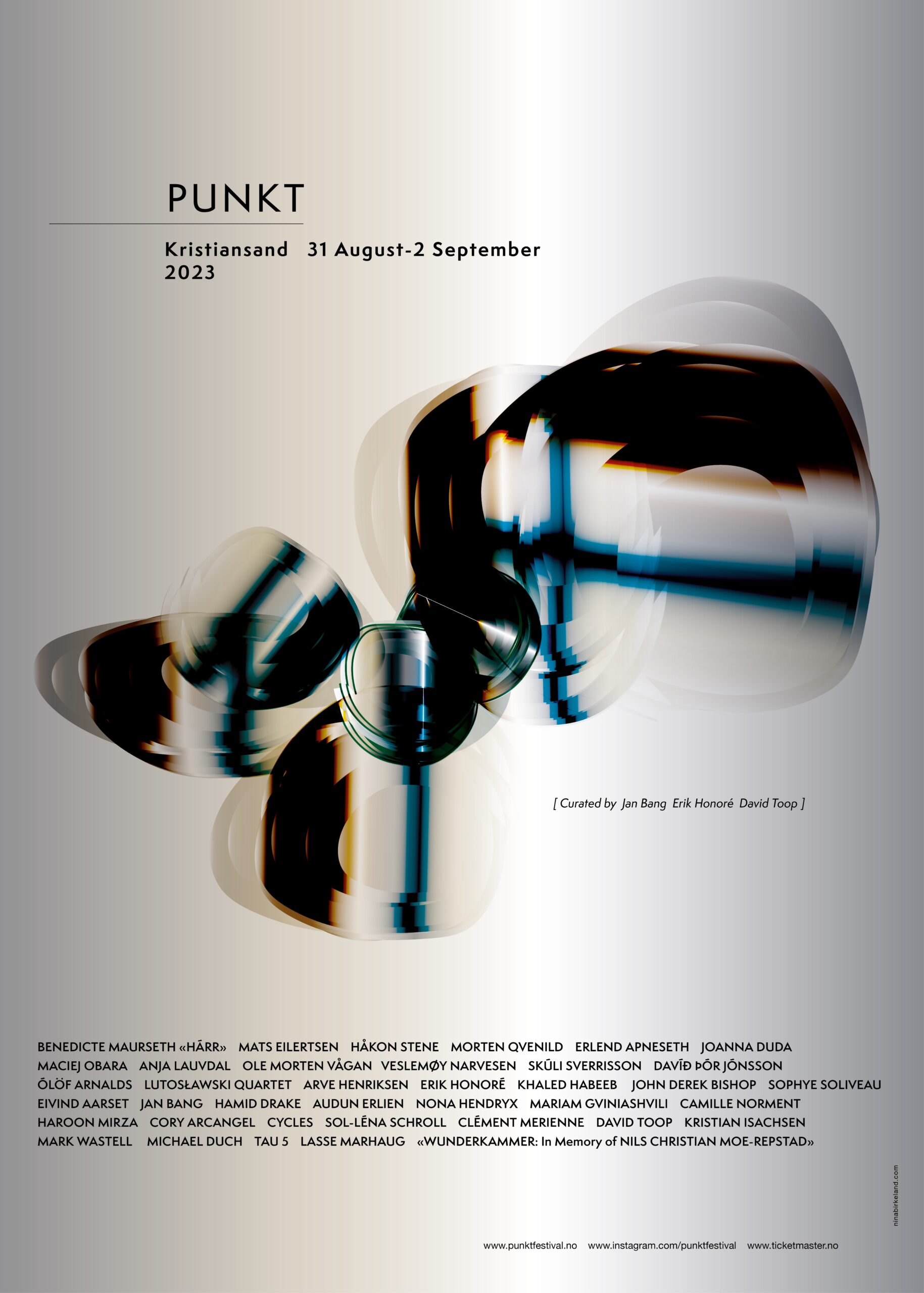
Click on the poster to see   
all the names in full glory –
then think about sailing north. 


Manafonistas | Impressum | Kontakt | Datenschutz