Manafonistas

on life, music etc beyond mainstream

Es ist verblüffend, an was du dich alles erinnern kannst, wenn dir ein Album aus alter Zeit begegnet. B & B Wojirsch gehörten zu den frühen Cover-Design-Gestaltern bei ECM, und schon damals berührte mich auf Anhieb die eher sachliche „Verpackung“ dieses Albums. Name und Titel ganz nach oben transportiert, und so viel silberner (Farb-)Raum darunter. Synästhesien sind mir ausserhalb von Träumen fremd, aber etwas Silbriges assoziiere ich mit dem virtuosen Vibraphon-Spiel des Herrn der vier Schlegel (seltsam genug) – eine Art Flirren, ein freies Flottieren, das durch den Raum schwebt und geistert.


Ich würde Manfred Eicher gerne mal fragen, was er noch von diesen zwei Märztagen des Jahres 1973 in den fernen Aengus-Studios in Massachusetts erinnert, denn mir scheint, so neu das Quartett auch war, so neu der Lebensraum von Gary Burton nach seinem Umzug nach Boston, so neu der Produzent an seiner Seite – alles, was du hier hörst, ist von frappierender Leichtigkeit.  Als hätte es nie grosse Fragen oder kleine Probleme gegeben – und „laissez-faire“ und „loslassen“ als einzige Devise!  Selbst da, wo das Quartett dicht und ereignisreich agiert, schafft sich enorme Luftigkeit Platz. Alles beginnt mit einem Stück aus der Feder von Chick Corea: „Open your eyes, you can fly“, und  dieser Titel ist Programm!

Da sind die Finessen des jungen Mick Goodrick, der den Fallen typischer Muster entkommt, mit jedem Solo eine kleine neue Welt kreiert. Abraham Laboriel ist ein „Teufelskerl“ am elektrischen Bass (und könnte mit dem Sound und seinen durchweg gruppendienlichen Soli allein die Titelgeschichte eines Bass-Magazins füllen). Und angesichts der Sprunghaftigkeit der Vita des famosen Drummers Harry Blazer überrascht die Kurzlebigkeit dieser Gruppe kaum. In einem Amalgam von Psychedelik, Jazzrock, Postbop, Traumstoff, Ohrwurmgefahr sowie reinen Atmosphären entsteht nichts weniger als perfekte Quartettmusik. Wer seinen Ohren nicht traut, beginnt die Reise einfach von Neuem.


Olaf: ob er kommt, hängt davon ab, ob ich 1-2 Pressekarten bekomme.

Ingo: weiss noch gar nicht, ob er da ist.     
Ich: bin vom 22. bis 25.10. vor Ort.
Martina und Jochen: „eigentlich“  interessiert.
Lajla: zu der Zeit sowieso in Berlin.    
Alex: arbeitet, hätte aber um 16.00 Uhr Zeit am Konzerttag.
Ursula: leider nicht.
Jo: wird sich erst im Frühherbst klären.

Die Anderen: noch ohne Rückmeldung.


Wenn es ideal läuft, bleibt eh nur maximal die Zeitspanne zwischen 14 und 18 Uhr. Alex würde später dazustossen, und die Konzertbesucher wohl zeitig aufbrechen. Das Treffen hätte also nicht die epische Länge von Münster oder Sylt, auch nicht das kompakte Programm von Leinfelden-Echterdingen. Dies ist nur ein Zwischenstand. Der hier auch nur kurz „verweilen“ wird. Aber natürlich könnten sich kleinere Gruppierungen hier und da einfinden in jenen herbstlichen Tagen.


Comme une parenthèse dans l’agitation du monde, un éloge de la lenteur tissé par deux Norvégiens, le violoniste Nils Okland et le claviériste Sigbjorn Apeland. Minimaliste et planant, un voyage beau et envoûtant.

Patrick Labesse, Le Monde


Hello, Sigbjørn, (…) No wonder, GLIMMER is placed at the centre in my radio show being the first of a number of albums dealing with landscapes, old roots and homes, the spaces of childhood etc.. Here my questions…  

1) it is maybe the quietest of all albums you have made with Nils Økland and his hardanger fiddle and violin, even more quiet than your other duo album LYSØEN. My sensation (which may be very wrong) is that you played even the old folk songs more slow, more adagio  than the old sources may sound or siggest. To kind of intensify the material, maybe! In a sequence of 15 tracks, and staying in this slow motion mode, even the tiniest changes of tempo or the suggestion of a rhythm, can have quite a dramatic impact while listening. So what (forget about my assumptions if they are wrong) was the overall idea of GLIMMER? And can you exemplify your approach on one composition (maybe with a little story about an original song)?

2) Knowing that some of the traditionals refer to regions of Norway in which you two grew up – (Nord-Rogaland and Sunnhordland (Haugalandet) – what was making this music on a personal level for you? Did certain memories of your early years became more vivid, was it emotionally a very deep experience when letting you kind of fall back into an early period of your life? I mean: to  get back into contact with a) the places of childhood and b) old songs that may be centuries old and still resonate from a time long gone – has certainly an impact on you… 

K
l
J
j
3) Some of the pieces relate to the paintings of respectively a film on the life of Lars Hertervig, a famous Notwegian landscape painter of the 19th century. What strikes you as extraoridinary in his paintings and how do you feel their connection to the music of GLIMMER, which by the way, seems a very fitting title for the album? 

4) Did your own compositions for GLIMMER kind of grew out of the research and the playing of the old material, as a kind of „echo space“ of the old songs? Can you speak about one of your compositions, a little story around it?

5) Last question: what makes for you the harmonium with all its wonderful imperfections an ideal partner for such time travels?

Thanks, kind regards, Michael Engelbrecht!

2023 21 Juni

Solstice (Last Two Inches Of Sky)

von | Kategorie: Blog | | 3 Comments

As I am just now finding out the most affordable travel options for my trip to Kristiansand for this year’s „Punkt Festival“, I am also working on some photos and videos for the new duo album Eivind Aarset and Jan Bang are going to present on the festival’s final night. The new album, „Last Two Inches Of Sky“, is quite a departure from their previous work, and the two invited a number of diverse international guests into the studio to contribute to this new album. And they are going to welcome most of these guests (and more) at Punkt this year. It is going to be an exceptionally rich three days for the festival with musicians from many different countries, generations, and musical backgrounds. So I am looking forward to travel to Kristiansand – by train and ferry again, this time taking along my bike as well – with one of my oldest friends, who I am sure will be invigorated by the music and by his first actual trip to Norway (even if it’s only the southermost tip of the multifarious country).

I met  with Eivind and Jan a few of weeks ago to take some photos and ask them about their new album; here’s a shortened and condensed version of our talk.


ijb: You did two duo records together before, as well as many other collaborations and concerts throughout the years. What was your starting point this time to reach these very different results? 


JB: We had done „Dream Logic“ that I produced, Eivind’s record on ECM. And after that, „Snow Catches on her Eyelashes“ came out as a duo record. We had been exploring different atmospheres on that album, mostly improvised, but also composed in the studio. This time we wanted to come from a different angle. We wanted to make something very rhythmical. I had just bought an album of new electronic music from Congo. And the very high tempos were something that both of us really enjoyed. So that was kind of the starting point. 


On your previous records, rhythm is never that much in the center of the music. So it was a different process this time? How did you work on these rhythms?


EA: Absolutely different. With „Dream Logic“, the starting point was finding new ways to use the guitar. Through the live gigs we found ways of playing together, which we developed further on „Snow Catches“. The starting point [on this new record] was like an experiment. Three or four pieces came out really quickly. But then we spent lots of time [on developing more music] afterwards. The inspiration came not only from African music, but our common work with Jon Hassell has also been an inspiration on this new album to go into a much more rhythmical direction, not necessarily in a metrical way, also parallel rhythms, sometimes different tempos at the same time.


From working with Jon Hassell what could you take up during the making of this record?


JB: Patterns. Jon was really focused on patterns, but in different tempos. He would have one pattern going in a certain way and another pattern going in another way, which is very close to nature. If you listen to birds singing [for example], you can hear that this is very much part of Jon’s idea – you have one bird singing, then another bird singing [something else] – a call and response thing, not in the jazz sense where you play something and mimic it, but a very natural way of using rhythm. That is basically what his his work with tape loops is based on. He worked closely with Terry Riley and LaMonte Young and of course Brian Eno. And the way that they developed this loop thing, coming out of minimalism, has proven very interesting for us.

EA: We didn’t have drummers on our previous duo albums. Now Adam Rudolph is playing percussion on most of the tracks, Anders Engen is playing drums. That also added a totally different vibe than before.

JB: Audun Erlien did some overdubs on bass, and we played some of the recordings live together in the studio. And we traveled to New York to record Nona Hendryx [former singer] of Labelle. And that has become a very fruitful collaboration. Then there is also Tim Elsenburg of Sweet Billy Pilgrim.

EA: And Gianluca Petrella from Italy playing trombone on one track.


When I was listening to the album, I instantly thought of „Remain in Light“, and Jon Hassell was also influential on Talking Heads‘ music back then. I don’t remember if he actually played on „Remain in Light“, but I think he was asked to?


EA: He played on at least one track.

JB: „Houses in Motion“.

EA: And Nona Hendryx is on „Remain in Light“ as well.

JB: Yes, Jon Hassell was very influential, both for Eno and for David Byrne. So they decided to do „My Life in the Bush of Ghosts“ together, which was very much based on Jon’s ideas. And then things happened, and for different reasons they decided to do it as a duo. But Jon’s ideas and philosophy is something that is part of both Eivind’s and my DNA. We come from that way of thinking and we really respect his philosophy. And I think he has brought so much to the table – as a musician, but also as a music philosopher, not in words necessarily, but with his actions in music. „Remain in Light“ is of course a result of that. Jon, David Byrne, and Brian Eno, they were hanging out for two or three years in New York around that time, exploring ideas. And at least Jon was presenting a lot of music to the others, sort of global music.

EA: Yeah. These three albums they made within one year – „Remain in Light“, „My Life in the Bush of Ghosts“ and „Possible Musics“ under Jon’s name, which was also with Brian Eno – all of those are really influential for me.

JB: And they use tape loops. The tape, depending on how big the loop was, would go out of the control room into the studio, and they would use forks, mic stands and whatever to hold these tapes in order to make the tape go round and round. And of course with tape, most of the time it’s not in sync. So you would create these types of rhythm that you could not necessarily count as one piece or one rhythm, but multiple rhythms or multiple tempos. These are some of the of the ideas from the starting point for this new record, „Last Two Inches of Sky“. There’s so still so much to explore. Things that are outside of these type of systems. It belongs more to our imagination, to our way of breathing and talking and walking and listening to things that surround us.


Hearing you play live yesterday, it’s fascinating to see and hear how much of the music you actually develop in the moment. I have a feeling that you are building on ideas that you have explored before, but then things come up there and then and it might end up very differently in every performance. Last night’s concert worked so impressively as a long piece, even though those are not actually pieces that you thought out before. 


JB: Right. That kind of being in the moment is is so important, for us both, not to to present an idea of something. You could present a composition, but then you could immediately leave that and go into a more open forum, a more open improvisation. And that happened a lot yesterday. The things that for the audience may have seemed composed were not pre-composed at all. They were composed in the moment. And that is also how we work in the studio. We compose in the moment through our improvisations. So the improvisation, to me at least, is composition. And being in that moment is something that has to do with preciseness to try to be as precise as possible and not to project our inner emotions towards the audience, because the music in itself is can be so powerful that you don’t really need that.


That type of freedom that you experience in improvisation, with the two of you playing together, trying to be in the moment and finding out what to do next, can be great in a concert. But how is it possible to achieve that same quality on a record in a process that involves a lot of people, even in different studios. You invite them individually, you do overdubs, or you travel to New York to record them. That’s more like putting many things together, like an assembly, isn’t it?


EA: The starting point might be very quick, but then we add stuff. That’s the difference. I don’t criticize myself when I’m playing [a concert]. When I’m improvising, I’m in the moment, not asking ‚is this good taste or bad taste?‘ But in the studio we have the possibility to decide, [if something]  ‚is maybe too far in that direction‘. And we add  different improvised layers and then make choices, also the choices of bringing in other people, like, ‚Let’s check out how this would work.‘

JB: In a way that’s a very natural way of working for us. It’s like the blood flow flowing through your body in a natural way. And if you capture something that is of some kind of value, at least to ourselves, the blood runs a little bit faster.

EA: Yeah.


Der neue Kultursenator Berlins, Joe Chialo (CDU), hat im Oktober 2022 in einem „Pioneer“-Podcast auf die Frage, welche Band die CDU wäre, geantwortet: „Rammstein!“
Nun gut, die Aussage ist schlecht gealtert, was aber meinte (und wusste?) Herr Chialo von Rammstein? Meint er die Texte von Lindemann und Merz? Meint er die Theatralik von Show und Parteitag? Oder gar …

Rätsel über Rätsel. Die CDU ist Rammstein – muss man auch erstmal drauf kommen …


2023 20 Juni

Floh des Tages

von | Kategorie: Blog | | 21 Comments


Gestern stiess ich per Zufall (unbewusste Wahl) auf ein Gespräch mit Hans-Peter Hempel, dessen im Reclam-Verlag erschienene Bücher über Yoga und Zen ich einst gerne las: es war wohl die Verbindung mit Gesellschaftskritik, denn der Autor war auch Professor für Politologie. Hempel, geboren 1934, sprach zunächst über seine Kindheit in Berlin – etwas ungeduldig spulte ich vor und sah plötzlich meine eigenen Gedanken gespiegelt: er wunderte sich, dass es so wenig Bücher über das Altwerden gäbe, klar, da sei der Essay von Jean Amery, doch der sei sehr gestelzt geschrieben (ich stimmte zu, wundere mich ja in aller Regelmässigkeit über so manchen gestelzten Jargon vergangener Epochen). Dann erinnerte Hempel an Heidegger, über den er ja ein Buch geschrieben hatte: der Tod sei ein Existential. Und angesichts dessen würde alles Vergangene noch einmal durchgekaut, Szenen vergangener Tage. Alte Bücher würden wieder gelesen, manches unvergänglich aktuell, anderes dagegen: was für’n Quatsch, mit dem man sich da einst beschäftigt hatte! Dass die Ehefrau im hohen Alter zur eigenen Mutter werden könne, die dafür sorge, dass man seine Medikamente richtig einnehme, stimmte ihn bedenklich. Heute nahm ich seine Reclam-Bücher aus dem Regal, mein Flow des Tages. Abends dann wohl erneut ein Julian-Lage-Konzert, im Breitbildformat auf grossem Schirm – und in High End, versteht sich: wir sehen uns!


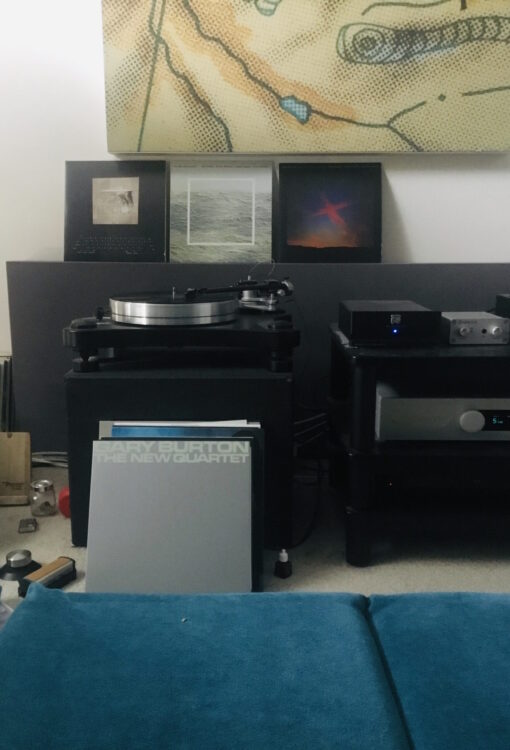
Ich habe mich dann im Vorfeld allerdings schon gefragt, wieso Manfred Eicher ausgerechnet dieses Album von Gary Burton ausgewählt hat, und nicht eines der anderen Alben des Vibraphonisten aus den wilden Siebzigern. Etwa „Crystal Silence“. Oder „Hotel Hello“. Oder (viele kennen es nicht) „Matchbook“. Oder oder. Alben, die also von der Duo-Konstellation betrachtet, formell gewagter waren. Chick kam die Idee eines Duos mit Gary eher abwegig vor und musste von Manfred überzeugt, vielleicht gar überredet werden. (Der kommerzielle Erfolg verwunderte alle!) Und da waren noch die Arbeiten mit Eberhard Weber in der Gruppe. Oder die Sache mit dem Streichensemble.

1973, im Jahr meines Abiturs, kaufte ich mir „The New Quartet“, und es war die erste ECM-Band überhaupt, die ich damals live sah, in einer grossen Aula in Unna. Wir sassen recht weit hinten, links von der Mitte, rechts neben mir Christoph Sondern, links das schönste Mädel von Dortmund-Körne, Ulrike Ullmann, sie duftete zauberhaft, ohne jedes Parfum. Sei es drum. In der Erinnerung hat sich „The New Quartet“ als sehr lebendiges und nicht unbedingt bahnbrechendes Werk eingerichtet, zu dem ich, ohne diese Neuausgabe, kaum je zurückgekehrt wäre. It has had its time, dachte ich mir. Beim Wiederhören erlebte ich nun eine dezente Überraschung, nicht leicht in Worte zu fassen.

Die Erinnerung trog zwar nicht, die acht Kompositionen sind und bleiben sehr lebendig und keineswegs bahnbrechend, aber, grosse Frage, wieso versenke ich mich nun wieder und wieder und wieder in die Musik? Um nicht allzu grossen Blödsinn zu erzählen, hätte auch ein einziger Durchlauf gereicht. Legt der Titel eine Spur? Ich telefonierte vor zwei Stunden mit Jo, und wir suchten gerade nach dem „Flow des Tages“, spielten diverse Ideen durch. Meinen Flow (ich nenne ihn mal spielerisch, und weil es ein besonderer Flow ist, FlowFlow) habe ich gefunden. Übrigens, die drei Platten oberhalb des Drehers, alles Fünf-Sterne-Platten! 


Das, was ihr im folgenden findet, ist ein Teil meines „Interviews“ mit dem Mann, der hinter dem fantastischen Album „Craven Standers“ steht. Eine weitere Passage daraus wird zu hören sein in meiner Ausgabe der „Klanghorizonte“ am 20. Juli im Deutschlandfunk, um 21.05 Uhr.

At the beginning of that radio hour, you will  hear a track from the forthcoming album from Jan Bang and Eivind Aarset.  Jan‘s background story will inspire you, amongst everything else, to give Miles Davis‘s „In A Silent Way“ another deep listen.


Jan Bang & Eivind Aarset  
  

Dudu Tassa & Jonny Greenwood
Old And New Dreams
Rickie Lee Jones
Nils Økland & Sigbjørn Apeland
Josephine Forster
Matthew Herbert
PJ Harvey
Craven Faults: Standers


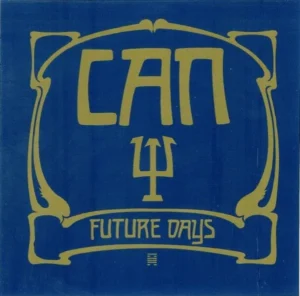
And, when at the end, the curtain falls with Craven Standers, Craven‘s words may lead to another look into your archive, for Can‘s „Future Days“. Holger Czukay once called the album “an electric symphony group performing a peaceful, though sometimes dramatic landscape painting”.


Michael Engelbrecht
: Hello, „Craven“! You’re a bit of an enigma. I don‘t mind if you just speak into an iPhone or ancient Neumann microphone to lift the fog of your anonymity (you would stay anonymous anyway, cause who would identify you here in Germany, except your are Brian Eno or John Foxx. So, think twice…) Sam Richards‘s review in UNCUT is utterly brilliant, by the way. When Brian worked on ON LAND (another album with an archaic vibe of nature), he felt Miles Davis‘s HE LOVED HIM MADLY as a hugely inspiring track (the mix, the space). Can you name an album or composition that you have a similar feeling for, a kind of soulmate work, even a blueprint for STANDERS, in regards to a certain aspect of the music? And tell a bit around that affinity? In addition, can you name five desert island pieces or tracks, or albums that you can listen to again and again, and tell what you find so fascinating about them?

Craven Faults: There is no single album or piece of music that could be seen as a blueprint for Standers. Each individual track on the album probably takes inspiration from several sources. I don’t really think about anyone else’s music when I am writing and recording, it’s only later in the process, or afterwards when the tracks are finished that the influences appear to me. My own music comes from listening to other music, I’m sure this is the same for every musician, what goes in will come out, and I have an eclectic store of inspirational music inside me. I also didn’t really think of the album as a whole when I was working on it, it’s a collection of disparate parts which slowly came together to form a single entity. There are always, with every release, tracks that are left behind and many unfinished pieces. Just as there was no single piece of work that inspired Standers, there was also no overall plan or vision for how I wanted it to sound. It developed as I went along.


1. Can – Future Days. Probably the single most influential track on all the music I have made over the years. The rhythm is key, the way drums, sounds and instruments interlock. The end section where the band play on top of a speeded up version of the track, the different tempos from 32nd beats to a single bass note every 4 bars. The way it fades in at the start, almost unfolding and opening up to release new sounds over several minutes, the slightly unclear audio quality, the edits, everything is perfect. Future Days is simply one of so many wonderful pieces by Can, who are, and have been since the 1980’s my favourite, most inspiring group of musicians.

2. Pink Floyd – Interstellar Overdrive. A piece I have listened to regularly since the 1970’s when I was quite young. Syd Barrett was one of my first musical heroes. I came to the music first, without knowing anything about his health problems and difficulties, and I think about Syd and his music often. Syd was also a great guitar player, Interstellar Overdrive appears random, free, but I think the more you listen, the more you begin to understand that it is creativity through controlled spontaneity, Syd knew what he was doing. Controlling the music but allowing it to guide you is part of my own methodology. (I feel as though this track is almost a blessing, that EMI could have said no ‘freak-out music’ on Piper At The Gates Of Dawn!).

3. The Beach Boys – Cabinessence. I could have chosen Surf’s Up, Cool Cool Water, Trader, All This Is That, The Lonely Sea, Let The Wind Blow, ’Til I Die, any number of songs… I have periodic Beach Boys obsessions, the current one has been continuing since last summer. A band I have almost infinite patience for, I even enjoy the songs I don’t like (I realise that makes no sense!) It started for me with the Smile sessions, bootleg tapes acquired in the 1980’s. Cabinessence is representative of a large body of work, the structures, edited sections, constructions. Brian Wilson’s description of ‘feels’, song ideas, unfinished sections of songs, works in progress. It’s this idea of ‘feels’ that I personally identify with. (I also love Surfin’ USA, Little Deuce Coupe etc too)

4. International Harvester – Skordetider. I could have chosen almost anything from Parson Sound through to Trad Gras och Stenar, also anything from Arbete och Fritid or Archimedes Badkar etc? Discovering the late 1960’s/early 1970’s Swedish underground, ‘Progg Movement’ has been a revelation. This track – an outtake from Sov Gott Rose Marie LP 1968 – builds slowly and gradually over 25 minutes, guitars, bass, cello, drums etc playing simple cyclical patterns. The basic recording technique, 2 microphones in a room whilst the band play live. The drums, so simple and so perfectly placed. The drummer – Thomas ‘Mera’ Gartz (1944-2012), multi-instrumentalist, brought beauty to most everything he did.

5. Terry Riley – Poppy Nogood.  Another one I have listened to regularly since the late 1970’s, it still fascinates. Another long piece (whichever version, they’re all good) which seemingly changes very little but in fact is constantly moving and altering. A perfect symbiosis of musician, instruments and technology – the tape recorder. The tape recorder is simultaneously a simple device and also very complex. This track could be why I use tape recorders (I have a pair of Revox B77s amongst other things) for sound processing, echo effects that are not sync’d to the track tempo and generate new harmonics and rhythmical complexities. It is an experimental piece in which the final result is as important, or more important than the process. It is not simply an experiment which investigates the processes regardless of the outcome.


(If I were to add a 6th track it would be The Velvet Underground – Sister Ray, or maybe some late 60’s English folk-rock, or Indian classical music, or something from composer Charles Ives.)


Thank you so much, i hope this post arrives at your place in the wide, wide north of England. Michael. By the way, Trad Gras och Stenar is a favourite of mine from the Swedish Underground! 


Ist dieser Film „ein unheimliches Prosa-Gedicht über die Einsamkeit“? Ich habe ihn gestern in völliger Dunkelheit gesehen, auf grosser Leinwand, was dem Zugang und Erleben sicher nicht abträglich ist. Für Uschis psychoanalytisches Filmseminar wäre er wohl ein gefundenes Fressen. Safe Journey!

Peter Bradshaw vermerkt dazu, und das möge als Einstimmung genügen: „Der Film selbst fühlt sich an wie ein hartes, schrumpeliges, verwittertes Objekt, wie die, die man auf der Leinwand sieht. Lange Strecken vergehen völlig wortlos, mit Umgebungsgeräuschen von Meeresspritzern und Nahaufnahmen von Steinen oder Tassen oder dem Zifferblatt des alten Funkgeräts, mit dem der Kontakt zur Außenwelt aufrechterhalten wird. Enys Men ist in kräftigen, satten Farben gedreht und sieht aus, als wäre er in dem Jahr gedreht worden, in dem er spielt: 1973.“  (m.e.)


Ein Frau arbeitet isoliert auf einer einsamen Insel für den „Wildlife Trust“, beobachtet eine Blume beim Wachsen, führt darüber Protokoll, ist die meiste Zeit damit beschäftigt ihren widerspenstigen Generator zu starten, hört ihrem Transistorradio zu und liest abends im Bett „A Blueprint for Survival“. In ihrer Vereinsamung kommt es zu einer Lockerung der Realitätsschranke, zu beunruhigenden optischen und akustischen Wahrnehmungsphänomenen. Das ist soweit nicht neu, und viele Blüten des Horrorgenres oder der „Haunted-House-Filme“ arbeiten mit diesem Motiv; von inspiriert bis platt. Ein isolierter Mensch ist bestrebt eine objektlose Umwelt mit Objekten zu füllen, wie wir es aus Deprivationsexperimenten kennen: er betet, meditiert, denkt an seine Lieben und führt Gespräche mit ihnen, bei längerdauernder Isolierung entgleitet dieser Prozess der Steuerung, und die Innenwelt begegnet ihm im Aussen in freundlicher oder bedrohlicher Art. Eine Gelegenheit, die eigenen Gespenster zu begrüssen und sich neu kennenzulernen für die, die mutig genug sind und nicht alles im Aussen verortet wissen wollen wo es gut verstaut ist.

So weit, so gut!

Dieser Film ist nun aber – genau wie seine etwas rätselhaft bleibende Protagonistin – spröder und sperriger, die Umwelt und die Phänomene geheimnisvoller und nicht leicht deutbar, keine unerlösten Geister und Träger von bösen Geheimnissen, sondern eine Welt voller rätselhafter Zeichen und Hinweise ohne klaren Bezug zueinander, in der die Wissenschaftlerin herumirrt. Eine steinerne Skulptur auf dem Berg erinnert offenbar an verstorbene Kinder oder auch anderes.

Die Wissenschaftlerin selbst verhält sich desgleichen rätselhaft – nach jedem Gang zu ihren Blumen wirft sie einen weissen Stein in einen tiefen schwarzen Schacht und lauscht auf das Aufschlagen. In ihrem Protokoll steht lange Zeit „no change“, die Zeit scheint stillzustehen. Der Film bedient sich nicht eines platten Symbolismus, dessen Zeichen wir enträtseln könnten, sondern er belässt uns – und das ist seine Stärke – in einem Zustand der Sinn- und Zusammenhanglosigkeit.

Was bedeutet die oft eingesetzte Farbe Rot auf dem Hintergrund einer eher fahlen Natur? Warum ist der Anorak rot, der Generator, der Benzinkanister? Sie sorgen für Wärme, okay, aber warum dann die eingeblendeten roten Schnürsenkel? Was war mit den 7 Frauen, die herumgeistern? Dem Priester mit dem Baby, der für die Rettung eines Seemanns beten lässt? Man irrt umher, friert innerlich, und versteht nicht, ebenso wie die Frau auf der Leinwand.

Das Ganze erinnert an das Buch des Analytikers André Green über die „Tote Mutter“. Eine Mutter, die nicht tot ist sondern in einer schweren Depression verfangen, traumatisiert oder anderweitig in einer Situation, in der sie ihr Kind zwar versorgen, aber keinen emotionalen Rapport zu ihm herstellen, und seine Annäherungsversuche nicht beantworten kann. Diese Kinder erleben eine überwältigende Leere und Sinnlosigkeit, ein Auf-Sich-Zurückgeworfensein, nachdem sie sich vorher vergeblich damit erschöpft haben, die Mutter aufzumuntern und zu beleben.

Was macht es für einen Sinn, ein Bauklötzchen in den Raum zu werfen, wenn es niemand zurückbringt und ein fröhliches beziehungsstiftendes Spiel daraus entsteht oder ein beruhigendes Ritual? Und daraus Lebensfreude erwächst. Was macht das bei Kleinkindern so beliebte Gugu – dada – Spiel für einen Sinn, wenn niemand da ist, der die Angstspannung beim Verschwinden mitempfindet und die beidseitige Freude beim Wiedersehen?

Ein lebendiges Gefühlsleben kann nicht entstehen, stattdessen eine „Krypta im Ich“, eine Identifikation mit einer Mutter, die keine Lebendigkeit erträgt und weitergibt – es werden immer seltener Steine in den schwarzen Schacht geworfen und auf das Aufschlagen gelauscht, um sich zu vergewissern, dass er nicht grundlos sondern doch noch irgendwie endlich ist. Und die Zeit steht still in den immergleichen vergeblichen Abläufen. Ein junges Mädchen mit erstarrtem Gesicht stürzt sich vom Dach und erleidet eine schwere Verletzung, die Frau hat eine Narbe an derselben Stelle, zum erstenmal blitzt ein Zusammenhang auf.

Das Jemand-Erreichen-Können ist bei diesen Kindern ein zentrales Thema („Ich werf den Ball jetzt bis nach Afrika, dann schauen wir ob er zurückkommt!“ „Schau mal – die Schnur! Meinst Du, die reicht von hier bis zu mir nach Hause?“ ). Gerne wird auch etwas Eigenes in der Praxis zurückgelassen, ein Püppchen, das ich zwischenzeitlich versorgen muss, damit der Faden zwischen uns nicht reisst. Verbindung, Verbindung, diese Kinder hungern danach. Verbindung lässt einen die Welt und sich selbst kennenlernen und verstehen, lässt Lebensfreude entstehen. Die Statue auf dem Hügel bleibt versteinert und erstarrt, auch wenn sie zwischenzeitlich kurz verschwunden ist. Auch nicht zu enträtseln.

Die weissen Blumen, die die Protagonistin bewacht, strecken schliesslich doch ihre Fruchtstempel aus (rot!), bereit zum Kontakt, zu einer Befruchtung; aber schon legt sich wieder eine weisse Flechte wie Schimmel über die Blütenblätter. Wird sie sie töten? Haben sie umsonst die Arme ausgestreckt?

Im Haus ertönen die üblichen rhythmischen Geräusche, zum erstenmal schwingt sich die Frau ein, tritt im gleichen Rhythmus auf den Boden, eine Verbindung ist nun zum erstenmal hergestellt. Die toten Mädchen erscheinen und nehmen den Marschrhythmus auf.

Eine Blume bleibt frei von Schimmel – sie wird gepflückt und woanders untergebracht, die Wissenschaftlerin wirkt hoffnungsvoller und entspannter, die Lieder enthalten Versöhnungsmotive. Ein Priester singt ein Lied über einen Seemann in Not, würdigt aber das Baby in seinem Arm keines Blickes. Er scheint etwas anderes zu betrauern.

Die Natur erblüht (rot!), eine Nacktschnecke entrollt sich, streckt die Fühler aus und wittert die Welt. Die Statue leuchtet rötlich in der Abendsonne. Die Frau lächelt.

So kann der Subtext des Filmes gelesen werden als Reise in eine erstarrte ,zerstörte und von allem abgetrennte Innenwelt, die belebt werden muss damit der Mensch überleben kann.

Ein zehnjähriges Mädchen, das in einem solchen Zustand war, spielte am liebsten mit mir „Eismann“ (oder bo-frost): Der Eismann brachte die dringend benötigte Nahrung, grinste, aber sprach nicht. Oder Doktor: Sie behandelte als grinsender, sprachloser Arzt die Patientin – mein Püppchen – aber auf grobe und uneinfühlsame Weise und war zu keiner gefühlvolleren Handlung zu bewegen, wie sehr das Püppchen auch klagte. Oder sie liess sich einfach zu Boden fallen und spielte „tot“, und genoss in einer sadistischen Abwehr eigenen Leids meine verzweifelten Bemühungen, sie zu verlebendigen, das war unser von ihr eingefordertes Anfangsritual. Jetzt gings mal andersrum, der Spiess war gedreht. „A Blueprint of Survival. Seither weiss ich wie sich eine „tote Mutter“ anfühlt, es war eine für mich quälende Behandlung.

Das gibt nicht nur ein Seminar, das wird ein Wochenendworkshop. (U.M.)


2023 19 Juni

„Reite den schwarzen Mustang!“

von | Kategorie: Blog | Tags:  | | Comments off

„Es ist ein strenges, abweisendes Album, das einen klanglich ganz nah an Sehnen und Knochen heranführt und die industrielle Verarbeitung und Beschäftigung von Tieren nachahmt. Seine wilden konzeptionellen Sprünge machen mehr Spaß als die nackten Ergebnisse.“ Das schreibt Nick Hasted in „Jazzwise“, über Matthew Herberts Doppelalbum „The Horse“, und ich teile seinen Schlusssatz mit den Sprüngen und den Ergebnissen gar nicht. Und nichts weist mich ab. Mit seiner gewiss enormen stilistischen Vielfalt würde es bei mir allein nicht punkten, denn insbesondere der Ideenfluss, die Atmosphären, die field recordings, die Sounds und Grooves sorgen für eine durchweg spürbare Magie, ohne Durststrecken auf diesem langen Parcours von vier Schallplattenseiten. In der Musikkritik sind die Reaktionem überwiegend positiv, aber sehr überschaubar. Da landet etwas viel zu schnell in den vertrauten Schubladen – dabei gehört es in die langen Abende, zu den ganz privaten Hörabenteuern im guten alten Breitwandformaten! (Sound und Pressung exzellent, das Design der Vinylausgabe eine Klasse für sich. Leider hat das Interview für die Klanghorizonte nicht geklappt.)


Manafonistas | Impressum | Kontakt | Datenschutz