Manafonistas

on life, music etc beyond mainstream

You are currently browsing the blog archives for the day Donnerstag, 8. Februar 2018.

Archives: Donnerstag, 8. Februar 2018

2018 8 Feb.

Defining ambient

| Filed under: Blog | RSS 2.0 | TB | 2 Comments

How do you define ambient?

The closest I could ever get wasn’t really a definition, more a kind of description of one of its occasional attributes: that it’s not easy music to hum along to. There’s too much space in it, and the space is where the magic happens.

So, reading this ambient piece on factmag.com, a piece of the jigsaw puzzle fell into place:

The composer and the listener must recognise that total control can never be realised and the identity of the music is never wholly owned, but rather it is constantly becoming. Upon each re-visitation, in a different place, at a different time, through a different playback situation, the music evolves. It lives within the complexity of these relations and is primarily about, to use Eno’s initial provocation, “to accommodate many levels of listening attention without enforcing one in particular”.


Sometimes an artist just sneaks up on you. You know about him, listen to him on different recordings, and one day, you just realize just how special he/she is.

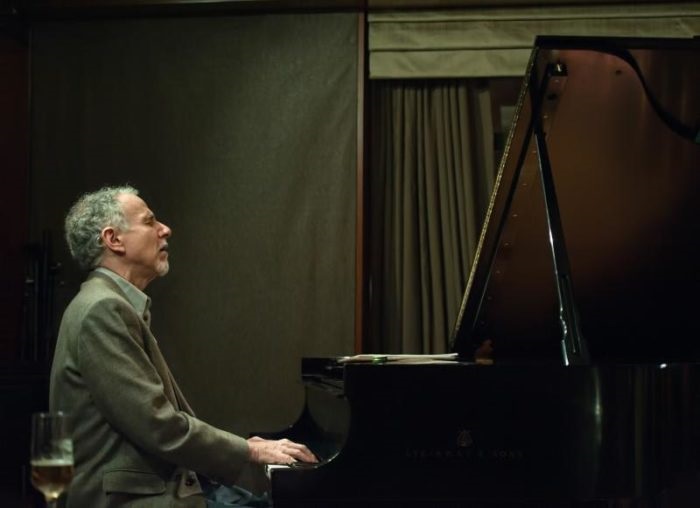
I first became aware of Marc Copland on Songs Without End, a 1994 duo album with Ralph Towner. Copland was the perfect partner for Towner’s evanescent guitar. It’s not always easy to find that balance between piano and guitar, two chordal instruments that share a lot of the same sonic space, but these two found more than balance – they found the creative flexibility to sound almost orchestral, not just avoiding stepping on one another’s toes, but finding a synergistic platform that goaded each of them on, a good example being their interpretation of “Nardis,” which ascends to greater heights with every chorus.

When I think of Copland’s playing, words like elegant, understated and lyrical come immediately to mind. Copland uses his head and thinks on his feet, yet never loses touch with his heart, making for an appealing listening experience that is at once both intellectually stimulating and emotionally compelling. Although he continued to record through the 90s and into the new century, I lost sight of him until he began recording on the ECM label with John Abercrombie. Abercrombie found the perfect foil in Marc Copland. The two seemed to have a telepathic connection, and Copland delved deeply into Abercrombie’s obtuse harmonies. He was on only 2 quartet albums with Abercrombie on ECM, 39 Steps and sadly, John’s very last album, the stunning Up and Coming (easily of the best albums of 2017.) Both are essential albums for any lover of contemporary jazz.

Copland is one of those pianists who is forever on the road to new discoveries. He never seems to go for the obvious thing; he is simply incapable of playing a lick. A supple and elastic player who can be surprisingly muscular at times, he is also one of the most melodic pianists on today’s scene. He is one among a shortlist of players who, over the years, have honed their unique voice in an overcrowded field of post-Evans sound-alikes.

After rediscovering Copland, I was dismayed that there were only two albums of him with John Abercrombie. Or so I thought – then I happily discovered there are earlier associations with Abercrombie that go all the way back to 1990. I recently spent an unnaturally warm winter afternoon cycling to Sebastopol, listening to Marc’s album Another Day (Pirouette-2008) which features Abercrombie, Drew Gress, Billy Hart, and it’s every bit as rewarding as either of the ECM quartet albums. (Incidentally, there’s also a duet album with Abercrombie, titled Speak to Me, which I am trying to get ahold of.)

I also discovered Alone, one of several solo titles on his Pirouet label. Nestled between reimagined standards such as „Soul Eyes“ and „I Should Care“, are completely reharmonized versions of three early Joni Mitchell tunes, „I don’t know Where I stand“, „Rainy Night House“ and „Michael from Mountains“. Not many jazz pianists are drawn to folk artists for inspiration, but here Copland finds a lot of play with. Above the subtly applied dissonance and metallic voicings, it’s all about melody. In her early days, Mitchell wrote beautiful melodies and Copland finds much to dig into. His originals, such as the mysterious „Night Whisperers“ and the evocative „Into Silence“, fall nicely between the cracks.

I discovered another gem on TIDAL, an album he made with the late Michael Brecker, entitled Marc Copland And … It’s a real find. Oddly enough, the aggressive post-bop sound that characterizes much of this recording is punctuated by three distinctly different versions of Paul Simon’s “Old Friends”. Each of his reharmonizations of one of Simon’s most heartfelt tunes is a little miracle.

Another association worth mentioning is the collaborative trio with Abercrombie and Kenny Wheeler. They made two excellent albums for the Challenge label, Brand New (1999) and That’s for Sure (2008.) It’s a treat hearing these masters laying down Wheeler and Abercrombie tunes in an intimate trio with no drums or bass. Both are well worth picking up, especially if you’re a rabid Wheeler fan, as I am.

Before closing, I must also mention the Gary Peacock Trio, whose album Tangents was one of 2017’s best trio releases. I saw them in concert last spring at SF Jazz ECM festival, sadly in a way, because the Abercrombie Quartet had originally been scheduled, but John was quite ill and had cancelled his west coast tour. It was an incredibly dynamic performance, and one of the highlights of my concert going adventures last year. It was my first time seeing Copland live – a powerful and moving experience. Copland manages to be both delicate and visceral, his flowing lines fly like magical arrows that always hit their target.

At times I hear a little Richie Beirach, other times I hear the late John Taylor, yet the more I listen to Marc Copland, the more I hear Marc Copland. I’ll be exploring his back catalog for many years to come.
 

[Footnote: there’s a new trio album called ECV, with guitarist Roddy Elias, Copland and bassist Adrian Veddady that I’ve been hearing good things about. John Kelman reviewed it recently on allaboutjazz. Will report back after I live with it a while.]
 

Damals hieß er noch Südwestfunk, der SWR, als Achim Hebgen mit gerade einmal 27Jahren in die Jazzredaktion des Senders eintrat, Joachim Ernst Berendt war sein Chef. Wie Berendt, war auch Hebgen nicht nur am Sender tätig, sondern bei zahlreichen Musikproduktionen beteiligt, bei MPS zum Beispiel. Die wunderbare Platte „Got The Blues“ von Don `Sugar Can´ Harris (mit Kriegel; Rypdal, Dauner, Whitehead und Robert Wyatt!!) wurde von ihm und Berendt gemeinsam produziert. Er arbeitete ferner bei den Berliner Jazztagen, dem Free Jazz Meeting Baden-Baden und den Donaueschinger Musiktagen mit.

Ich erinnere mich, 1978, in einer seiner Sendungen zum ersten Mal von Philip Catherine gehört zu haben, auch legte er gerne Gianluigi Trovesi auf, den ich durch seine Sendungen zu schätzen lernte. Übrigens, dessen Album „Round About A Midsummer’s Dream“, wurde im Jahre 2000 von Hebgen produziert.

Achim Hebgen liebte, wie Michael Engelbrecht, Sendungen mit weitem, sehr weitem Horizont, er erfand für den SWF die Sendungen RADIOPHON (noch heute im SWR zu hören) und MUSIC AVENUE.

Zwischen 1991 und 2002 leitete er dann die Jazzredaktion. Das waren schwierige Zeiten damals, denn SDR und SWF wurden 1991 zur Fusion ihrer beiden Kulturprogramme gezwungen, aus SDR 2 und SWF 2 wurde dann S2 Kultur. 1998 entstand dann ein neuer Großsender, der SWR.

Als 1990 klar war, dass dank intensiver Untersuchungen der amerikanischen Wirtschaftsberatungsfirma McKinsey, die beiden Kulturprogramme des Südens aus wirtschaftlichen Gründen zusammengelegt wurden, da verabschiedete sich Achim Hebgen tief enttäuscht von dieser kulturellen Entwicklung während einer seiner Sendungen sehr persönlich. Über 60% der Jazzsendungen seien dem Rotstift zum Opfer gefallen, zahlreiche Sendeplätze aus dem Bereich NEUE MUSIK ebenso, auch das Format MUSIC AVENUE. Während der letzten Sendung der MUSIC AVENUE beklagte Hebgen öffentlich diese Entwicklung und legte dann eine Platte auf, die diese Sendung für immer beenden sollte. Diese letzte Platte hatte es mir damals angetan. Überhaupt, der Gedanke, einmal eine letzte Platte, ein letztes Musikstück zu hören, welches Stück könnte das sein und wird es dann letztlich wohl sein?


Peter Rühmkorf schrieb am 13.12.1989 in sein Tagebuch: „Eigentlich schade, wie viele Bücher wie einmal unaufgeschlagen an der Grabeskante zurücklassen müssen …“. Recht hat er, ich bedaure das auch schon jetzt. Mir fällt allerdings noch ein anderer Gedanke dazu ein: „Wie viele Musikstücke müssen wir wohl ungehört an der Grabeskante zurücklassen?“

Zurück zu Achim Hebgens MUSIC AVENUE und zurück zu seiner letzten Schallplate in dieser Sendung. Er legte eine Schallplatte von John Surman auf: „Road to Saint Ives“ und wählte das Stück „Tintagel“, ein Stück, das seit vielen Jahren zu meinen liebsten zwanzig Stücken gehört (meine Lebenshitparade).

Achim Hebgen starb am 25. September 2012 in Freiburg, er wurde 69 Jahre alt.

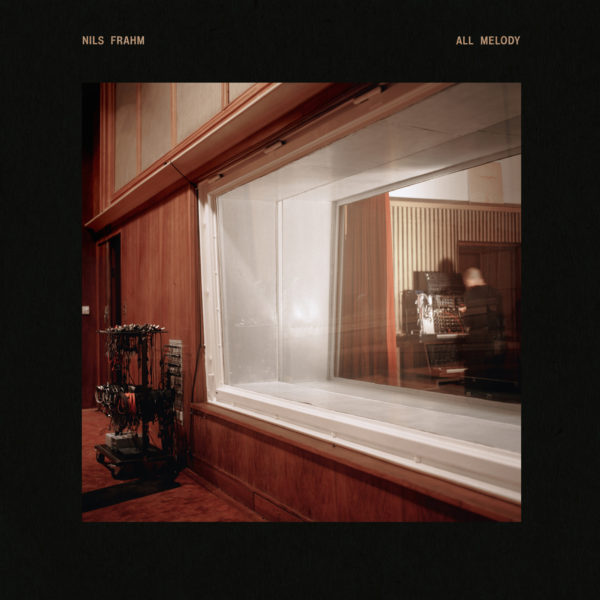
Ihm eingedenk höre ich jetzt „Tintagel“, lege zuvor aber noch eine ganz neue Scheibe auf, die ihm sicher sehr gefallen würde (aber freilich nicht alle Stücke, manche sind schrecklich, wie ich finde). Nils Frahm und „All Melody“, von dieser Platte werde ich „My Friend the Forest“ und „Harm Hymn“ hören.


Dear Gregor,


my German is not good enough to make it public, but I’ve been reading your column for quite some  time now (with a little help of a friend from Hamburg). You are really keen on vinyl, aren’t you!? I think it’s been well established at this point that vinyl is the enduring physical medium. Vinyl has already been at death’s door a couple of times in recent history, both when cassettes became the most popular format in the early ’80s and then again in the ’90s when the CD grew to dominate the market. We can debate why vinyl keeps surviving these onslaughts, is it actual vs perceived sound quality, the collectible nature, the intangible cool factor, but the fact remains, records simply will not go away. Even during those eras when it was being forced out to a large degree by newer formats, a hardcore collector market remained and was still actively buying and selling vinyl.

Having said that, I do think certain segments of the vinyl market are not sustainable. The idea that every release needs to come out in multi-color limited variants or a deluxe box set nearing the $100 price point just doesn’t seem to have enough demand for it to be a viable concept long term. As someone who buys some of these products, I can tell you that a large percentage of these titles end up being drastically discounted several months down the road when retailers need to purge dead inventory.

Once we get over the paradigm that every record is a potential collector’s item and get back to it merely being a preferred way to enjoy music, I think the talk of the “vinyl bubble” will cease and we can get back to just buying records for more utilitarian purposes as opposed to investing in them. So that’s what I think the future of vinyl really is, I can definitely envision a time when it’s the only physical format and everything else is just digital, or brain implant or whatever crazy technology is coming next. But there will always be people who want to hold an album in their hands, put it on a physical player and kick back with the liner notes and album art. Those folks will be listening to vinyl for a very long time.

As for record of last  year, the champ to beat in my mind is Father John Misty – Pure Comedy. The production is just immaculate, perfectly balancing strings, horns, vocals and even some electronic elements into a coherent and lush whole. And lyrically the guy is just going for it, a truly scathing critique of modern culture and his own role in it. I was a big fan of I Love You, Honeybear, but he really took it to another level with this one, at the risk of alienating a lot of people as well, which in my mind really paid off. Sure it’s kind of a downer, but as an artistic statement, it’s definitely an ambitiously brilliant work.


XO, J. Hicks


(and my kindest regards for all „Manafonistas“ around whatever that name means, seems to be a riddle, ha!)


Manafonistas | Impressum | Kontakt | Datenschutz