Als ich gestern das Gedicht von Amy Key las, seltsam berührt war, ein paar Worte nachschlug, und dann noch berührter war, stellte ich es in unseren Blog, und hatte kurz den Gedanken (allerdings exakt ausformuliert, nichts Flüchtiges), damit Martina mal wieder aus ihrem fernen Leben zu locken. Und, es ist gelungen. Obwohl es sicher Zufall war, und keine Telepathie. Allerdings hatten wir uns ja auch in Paris nur um ein paar Strassen und Tage verfehlt! Übrigens, Martina, die Zauberplatte von Tunng heisst Good Arrows, damals war Sam Genders noch dabei, und das gab dieser Gruppe die nötige Schärfe, die in den letzten Jahren etwas abgemildert wurde. Heute könnte der letzte Tag des Jahres mit 20 Grad Celsius werden. Mich nervt derzeit eine Bronchitis, Borussia Dortmund hat höchst unglücklich verloren, das Lazarett vergrössert sich, gegen Hannover und Arsenal steht ein Rumpfteam auf dem Platz. Da hilft nur gute Musik, und in der schon am kommenden Samstag stattfindenden Ausgabe der Klanghorizonte gibt es wieder einiges davon. Wenn Ed Dense, der Chefpromoter der unerhörten Klänge, heute in Berlin rasch zum Postkasten eilt, wird die Sendung ausklingen mit der neuen CD von Burkhard Stangl, und seiner vom Maler William Turner inspirierten Musik. Hat nicht jeder, der diesen Namen liest, sogleich ein Bild vor dem inneren Auge, ein stürmisches Meer, ungezügeltes Sonnenlicht, was immer … Stangl spielt übrigens auf Manafon mit. Gestern hat mich Joey überrascht mit seiner Begeisterung für Hasretim – Journey To Anatolia, die ich in den letzten Klanghorizonten spielte. Dann stehen ihm ja heisse Hannover’sche Nächte bevor, mit den neuen Silberlingen von Marc Sinan und Tim Berne :) Gregor ist ein beharrlicher Geist, und empfiehlt mir wärmstens, diesen langsamen (?) Satz der neu eingespielten Diabelli-Variationen zu hören, aber, nun ja, Beethoven (diesen Satz öffentlich zu posten, macht leicht angreifbar :)) gefällt mir lange nicht so gut wie Good Arrows von Tunng. Ich würde allemal lieber Tunngs Aufführung der „guten Pfeile“ lauschen (in alter Besetzung!), als irgendeiner Symphonie des Wieners. Mozart langweilt mich auch. „Diabelli“ hätte ich bis vor kurzem eher für eine Marzipan-Kreation aus einer Lübecker Konditorei gehalten. Allerdings werden jetzt nur Vollidioten die Nase rümpfen, und mir ein massives Defizit abendländischer Bildung auftischen. Denn es ist allemal aufregender, frei von alten Hierarchien, den eigenen Ohren zu folgen, und das strahlendste Gold lässt sich oft in den kleinen mäandernden Seitenarmen des Grossen Flusses finden, nicht in der Lehrbuchmeinung, und der verordneten Ergriffenheit. Ganz quälend wäre es für mich, einer noch so virtuosen Darbietung der Zauberflöte zu laschen, wenn aber Brian Enos Taking Tiger Mountain (By Strategy) erklingt, weiten sich die Wände, und ich fühle die Freude, lebendig zu sein, bis in die hinterste vibrierende Zelle meines Körpers. Das ist nun keine Kampfansage an alte Zöpfe. Einen William Turner hätte ich nämlich schon gerne in meinem Musikzimmer hängen. Aber Burkhard Stangls Gitarrenmusik wird da schon Abhilfe schaffen, woll? Oder sollte ich doch zum fraglos charmanten Kunsträuber mutieren – Sie wissen schon: Thomas Crowne ist nicht zu fassen! 71 days to go.
Archives: Oktober 2013
Schon seit Wochen läuft hier auf meinem CD-Spieler die von Michael empfohlene „Excavation“ von The Haxan Cloak: diese Musik ist von so einer angenehmen inneren Anspannung, ganz ohne Worte, – und alles löst sich auf im letzten Track, der Nummer 9, die Michael für seine Sendung ausgewählt hatte. Zwischendurch legte ich immer wieder „Kid A“ von Radiohead auf. Und dann erhielt ich neulich überraschend doch noch die „Absencen“ des Kammerflimmer Kollektiefs zurück, die ich jemandem vor einem Jahr geliehen hatte. Jetzt habe ich sie doppelt.
Vor ein paar Tagen trat „Tunng“ im Zoom in Frankfurt auf. Zum ersten Mal habe ich während eines Konzertes Fotos gemacht, in Manafonistas-Mission, aber doch mit schlechtem Gewissen, weil ich es als etwas übergriffig finde, jemanden bei der Ausübung von Kunst zu fotografieren. Das Konzert war großartig, die Stimmung innerhalb der Gruppe wirkt sehr positiv und angenehm.
Hier meine Auswahl der Bilder:

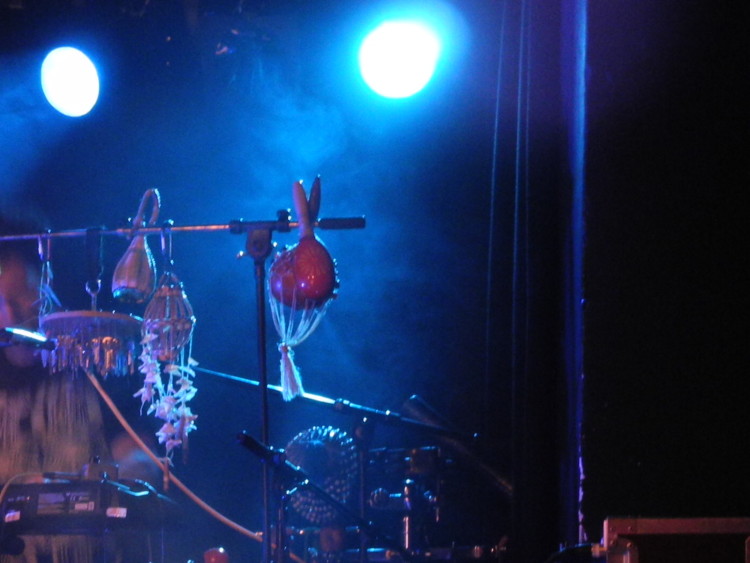


Vielleicht fehlte mir bei Tunng etwas Sperriges, Undurchdringliches, etwas, was in einem weiteren Bogen Spannung auf- und wieder abbaute. Dies bot die Vorgruppe: Pinkunoizu. Drei junge Männer betreten die Bühne, so beiläufig, als ob sie ihren Probenraum betreten würden. Sie bauen ihre Geräte auf, im Hintergrund blaues Licht. Weißer Rauch verbreitet sich vom Boden her auf der Bühne. Jeder ist mit seinen Geräten beschäftigt, erst holpert es eine Weile, und plötzlich entsteht etwas.
Auf der Website der Band kann man einiges hören, aber so gut wie auf der Bühne kommt es leider nicht rüber.
2013 6 Okt.
You normally don’t read poems? Hey, reading this one might change your daily routines…
Manafonistas | Filed under: Blog | RSS 2.0 | TB | 5 Comments
Here, For Your Amusement
Colourwise I’m more meadow than hedgerow
though I have wooden clothes pegs and underneath it all
I’m comfortable as a smock. Less wild than a meadow.
I expect you will wonder what this is all about – well it’s wrong,
like giving names to the eggs in the box.
Here is a picture of a horse very proud of itself.
Here is a drawing of a flower, from hundreds of years ago
– you will still find such flowers in the garden! There is something
you will want to understand in these pictures,
so you spend time with them. Perhaps that’s what it’s about.
I would like to be able to make a very nearly complete list,
of everything that matters to me, leaving nothing out.
Is that what it’s like to be afraid to die? Also
to have the most inquisitive eyes and see beauty beauty
beauty pick away at the wallowing mortar.
To know the composure of a closed clam.
(Sarah Jarosz, Alex Hargreaves and Nat Smith perform the title track of Sarah’s 3rd album from 2013 for an exclusive audience in her hometown of Wimberley, Texas. For those who wonder what instrument she’s playing, it’s an Octave-Mandolin built by Fletcher Brock …)
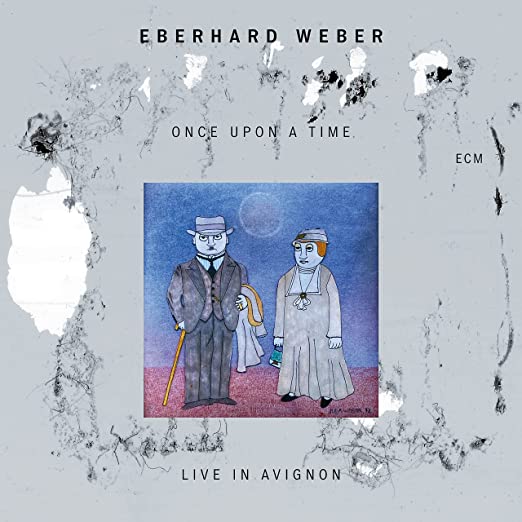
Am 16. Oktober in den Klanghorizonten, am 4. November wahrscheinlich in den JazzFacts, und am 5. November im Handel, ein Solokonzert von Eberhard Weber aus dem Jahre 1995.
2013 6 Okt.
Burkhard Stangl – Unfinished. For William Turner, painter.
Manafonistas | Filed under: Blog | RSS 2.0 | TB | Comments off
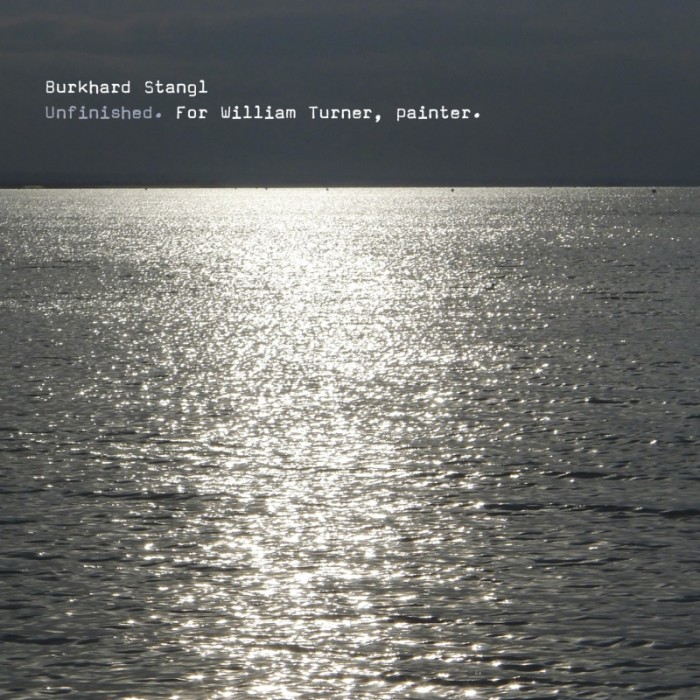
CD Touch TO:92
Release date: October 14
www.touchmusic.org.uk
stangl.klingt.org
„2003, London: the first time I visited Tate Britain, Tate Gallery, and the first time I saw and really experienced the paintings of JMW Turner (1775-1851). Overwhelmed, especially by his late and unfinished works I was stunned by the power of the stillness of his work. 25 years before that something similar; me, as a young man in Madrid; Prado, Goya paintings and etchings – for me an initiation which opened up the door to earlier art and its pioneers. Like Goya one generation before him, Turner is one of those artists whose language was becoming radicalized in the high age. (In the field of music he is the contemporary of Beethoven.) His later paintings transcend light, full of poetic imagination, exquisite liquid calm. Free pure painting – nothing as light, air and water. When I left the exhibition, it was clear to me that this visit was the starting point for my musical approach to his paintings. Over the years, it was a pleasent challenge to get closer and closer to the painter’s complex simplicity, transforming the enigmatic atmospheres of his late and unfinshed works into personal tempting musical soundscapes.“
Burkhard Stangl, September 2013
2013 5 Okt.
The Copycat Discussion (Eno vs. Sylvian)
Manafonistas | Filed under: Blog | RSS 2.0 | TB | Tags: Brian Eno, David Sylvian | Comments off
When I talked to Brian Eno in 1993 mentioning the name of David Sylvian I got a response that definitely showed no sign of amusement. Had Sylvian been stealing ideas and artists, a copycat in action? Sensitive matter! Facts: Brian played with Robert Fripp creating classics like NO PUSSYFOOTING or EVENING STAR (side one), later David invited Robert to play with him, for example, on GONE TO EARTH.
Brian collaborated with Jon Hassell creating some desert island discs (POSSIBLE MUSICS, DREAM THEORY IN MALAY), and then, well, David contacted Jon for some collaborative efforts that resulted in some decent work.
Though David’s ambient works were underrated in their era (PLIGHT AND PREMONITION), they never came close to the classics Brian Eno had produced in the 70s, and later on. DISCREET MUSIC, MUSIC FOR AIRPORTS, MUSIC FOR FILMS, ON LAND, APOLLO, THE SHUTOV ASSEMBLY … Holger Czukay crossed their ways, too. So sorry, Brian was, again, the first. This may produce raised eyebrows. Or is it only a question of age? And today? Brian Eno was always fond of spoken word pieces, and recently, well, both artists published (or contributed to) albums with spoken words. But a milestone of spoken word deliveries had been, without doubt, created by Eno & Byrne, a long time ago, MY LIFE IN THE BUSH OF GHOSTS.
Now, how to judge this? Both artists profit from collaborations, both artists released brillant song albums in the 70’s (Brian, ANOTHER GREEN WORLD, for example) and the 80’s (David, BRILLIANT TREES). I think there was inspiration in the air, and David transported areas of Brian’s music in his own territory. With good taste and a certain amount of cleverness. Was there a special competitive climate between artists in England? Sylvian had to get rid of the restrictions the early albums of Japan have shown. At least TIN DRUM offered some exits. And Eno was probably a role model for Sylvian in the way one could reconcile the avantgarde and the pop world without sacrificing visions. Eno was the one who opened the ambient landscapes, and Sylvian followed on his tracks.
Change of the scenery. Twentyfirst century. NINE HORSES in parts, and BLEMISH and MANAFON and MANAFON VARIATIONS for sure were fucking great albums by Mr. Sylvian. They rank among his best works ever. No Eno inflluence could be detected. And no ECM connection either. David had always loved to have ECM artists being part of his songs, from Kenny Wheeler to Steve Tibbetts. Even Terje Rypdal was asked. That has stopped, too. In recent times, and because of different reasons, David even stopped singing. His hard core fans are not amused. It is always a good sign when hard core fans are not amused. See Scott Walker. See Talk Talk. Nostalgia is a trap. And inspiration is fair enough, no copycats in action. Though Sylvian learned his Eno-lessons, no doubt about that. Brian, by the way, studied Steve Reich’s early works en detail, and drew exciting conclusions! (ME)
I always wondered why DS never mentioned Brian Eno in interviews, but …
From my point of view there is a fundamental difference, not only in the songwriting, but also in the experimental/ambient music of those two artists, that could in a way be compared to the difference between Ornette Coleman and John Coltrane: it’s a difference in spirit.
There are secular coolness, cheerful playfullness and easy-going humour in Enos music. David Sylvian however used electronics to point out a certain auratic/traumatic drama in “the difficulty of being” (J. Cocteau) and in personal, spiritual searching.
Does Eno like Sylvian’s songwriting? I do. (JS)
I don’t think that Eno likes Sylvian’s songwriting, especially the early solo-albums. On one side, we have the atheist Eno, on the other the „spiritual searcher“ Sylvian. (Though his masterpiece MANAFON was released in the aftermath of doubts and disbelief.) The lyrics of „classic Sylvian“ (Brilliant Trees, Gone to Earth, Secrets of the Beehive), too, belong to this category of artists searching for self-recognition and wisdom, a totally different approach. In fact, they have far less common ground than the line of artistic „soul mates“ they’ve invited to their albums might suggest.
And the singing? Two worlds, too. Here, on Eno’s part, the sharpness and dark wit, the undermining of wrong romanticism, and – simultaneously – again and again a yearning quality (listen to the song „SPINNING AWAY“). There, on Sylvian’s paths, a melodramatic attitude, a certain amount of pathos (never easy to handle), mythical sub-texts, religious metaphors. But, all of that changed since BLEMISH. So, maybe, Eno would possibly like this new late turn in Sylvian’s career. Because of the courage to attack the old formulas. (ME)
Blemish, then Manafon, Wandermüde (name is program) and actually the Kilowatt-Hour declare an intention to walk on that path between music and anti-music. Walking this fine line between the neither and the nor means: filtering or making music that includes a contra-pole, something different than music. There has to be an exit.
This is, how i interpretate Sylvians work in recent years: music as an antidot for outworn harmonies, sweet melodies and obsolete clishes. These are swan songs, it’s farewell-music – with a slight destructive touch. But something remains from the Brilliant Trees and Gone to Earth albums up to the present works: an atmosphere of subtil desire; romanticism, mystizism and (scuse me) … narcissism – even though in a homeopathic dose.
David Sylvian uses electronic effects to create more or less „mystic“ moods, as he ever did. To compare it with Eno again: one drives the screw in, the other one drives it out. Here stays the introverted and depressive subject: Orpheus with the blues. And on the other hand it is the objective, more relaxing sound: drifting through time & space … spinning away. (JS)
2013 5 Okt.
Gepflegter Verriss
Michael Engelbrecht | Filed under: Blog | RSS 2.0 | TB | Comments off
Die Musikkritik geht auf Verzückungskurs, ganz vorne Arne Wilanders grosspurige Hymne auf Paddy McAloons erstes Alterswerk im Rolling Stone. Der Name Prefab Spout scheint sämtliche Abwehrmechanismen ausser Kraft zu setzen, und Nostalgieattacken der hemmungslosen Art zu befeuern: man könnte heulen vor Freude, heisst es hier, und gerade in die Jahre gekommene, männliche Musikfreunde würden mit Taschentüchern nicht geizen. Nun mag es heroisch sein, wie Mr. McAlloon mit den Folgen zeitweilger Seh- und Hörbeeinträchtigungen der Meniere’schen Krankheit umgeht, und manche seiner neuen Songtexte sind durchaus gewitzt. Aber die von ihm allesamt selbst gespielten Instrumente sind von bemerkenswerter Blutarmut und Banalität. Ganz schlimm die abgenutzten Synthi-Sounds, die jedes Verfallsdatum gnadenlos überschritten haben, und durchaus nicht als ironische Brechung schöngeredet werden können. Ich gebe zu, mir war Prefab Sprouts Musik fast immer eine Spur zu betäubend, mit ihrem Moschus, ihrem Pomp. Dabei mag ich seine Stimme sehr, doch verweigere ich der hehren Zuckerbäckerei von CRIMSON / RED die Gefolgschaft. Das schönste Album, das der Mann aus Newcastle je aufahm, war, in dunkelsten Stunden, I TRAWL THE MEGAHERTZ. Darüber geriet ich dann unlängst auch mal in Schwärmen, mit Jan Bang in Kristiansand, zu vorgerückter Stunde, und da wir durchaus einen Sinn für Herzschmelz haben, landeten wir bei einem ganz bestimmten Lied von Barbra Streisand. Ach, ach, ach, intonierten wir im Einklang, liessen die Taschentücher aber stecken. 2 1/2 Sterne für CRIMSON / RED. Melden Sie Widerspruch an, geraten Sie in Wallung, aber sagen Sie nicht, ich hätte Sie nicht gewarnt.
2013 4 Okt.
Gregor öffnet seinen Plattenschrank (53)
Gregor Mundt | Filed under: Blog | RSS 2.0 | TB | 3 Comments
Neu im Plattenschrank
Wie bekannt, hat Michael in seinen vorletzten Klanghorizonten Mutiges gewagt, er spielte Musik nur aus einem musikalischem Werk, aus Dennis Johnsons NOVEMBER, eingespielt von R.Andrew Lee.

Am 27.09.13 schrieb Michael auf manafonistas.de über diese herausragende Platte, ich brauche dem nichts hinzuzufügen. Nach den von mir begeistert gehörten Klanghorizonten war jedenfalls mein erstes Ansinnen: diese Plattenbox musst du haben. Bestellt wurde sie von mir vor sechs Tagen, ich muss wohl noch eine Weile warten, das ist bei herausragenden, schwer zu beschaffenden Werken oft so! Eines habe ich mir allerdings schon jetzt vorgenommen: Auch ich werde versuchen NOVEMBER am Stück zu hören, wie Michael es in den Klanghorizonten erzählte, allerdings mit anderen Zutaten. M.E. erzählte seinen HörerInnen, dass ihm Sprudel und Donuts beim Hören des fast fünfstündigen Werkes gereicht hätten, ich denke, ich werde mir eine gute Flasche Le Vin Noir (Cuvée spéciale) rot 2004 (Cave de Donzac: Côtes du Brulhois Appelation d’Origine VDQS) gönnen, dazu vielleicht etwas Käse und etwas zu knabbern.

Es gibt Neues von András Schiff, er hat die Diabelli-Variationen von Ludwig van Beethoven eingespielt und damit nicht genug, er hat auch die absolut herausragende Sonate Nr.32 in c_Moll op.111 aufgenommen und zur Einstimmung in die Doppel-CD an den Beginn gestellt. Die Diabelli-Variationen bilden das Zentrum der Cds und den Schluss die Sechs Bagatellen op.128. Die Klaviersonate Nr.32 ist Beethovens letzte Sonate, das erste Manuskript wurde 1822 fertig. Die Sonate gilt häufig als ein Dokument des Abschieds, Beethoven starb 1827 in Wien. Über diese Sonate ist so viel geschrieben worden, dass ich eigentlich nur ein persönliches Wort dazu schreiben möchte. Die Klaviersonate Nr.32 gehört zum Grundbestand meines Plattenschranks, schon mit zwanzig Jahren besaß ich eine Aufnahme dieser Sonate, genial eingespielt von Daniel Barenboim, der sie im übrigen immer wieder gespielt hat, zuletzt 2005 in Berlin. Besonders der zweite Satz hat es mir angetan. Er war für mich in vielen Zeiten meines Lebens Trost und tatsächlich Hilfe. Das kann gute, wahrhaftige Musik ja in der Tat bewirken. Dieser zweite Satz der Klaviersonate Nr.32 sollte zwingend in den Klanghorizonten gesendet werden (17:20 Minuten), das wäre ein Highlight, Michael.

Vorgestern erreichte mich ein kleines Päckchen aus Norwegen. Was für eine Freude, die neue CD von Jan Bang in den Händen halten zu können. Nach Poppies from Kandahar und Uncommon Deities veröffentlichte Jan Bang nun Narrative from the subtropic. Michael stellte die Platte in den Klanghorizonten unlängst vor und Henning Bolte schrieb darüber auf allaboutjazz.com . Alle drei genannten CDs werden sicher in die Jahresliste 2013 eingehen und dort vordere Plätze einnehmen.
2013 4 Okt.
Unthinkable? Ideas selling like stuff
Manafonistas | Filed under: Blog | RSS 2.0 | TB | Comments off
They queued all night in the rain outside the Apple store in Covent Garden, fenced in by crush barriers like football crowds. It was the same at other Apple stores across the country, as the iPhone 5s was launched on a public carefully worked up to a froth of anticipation. A few days earlier, Grand Theft Auto V, released after a meticulous campaign of titillation including the statutory moral panic from the Daily Mail, exceeded its first week’s sales projections on the first day. The products may be among the best of their kind, but this kind of big-sales excitement needs a huge, sophisticated and elaborate marketing exercise to get it going, a whole backstory of endeavour – like the tale of the pursuit of perfection, of an obsession with design and function that for Apple was embodied in Steve Jobs. The team that developed GTA in Dundee lacked the black polo-necked sleekness of Jobs, so they brought in Max Clifford to promote stories about the game’s badness. Contrast with humble sales of philosophy books this week. And yet there was more to it than people queueing to pay £709 for a phone. This was the week when two Russians fell out over Kant and one shot the other, happily not in a life-threatening way. Google executives are at work on designing educational programmes as addictive as GTA. Ideas still provoke passion, technology is already getting in there. Only a matter of time then for queues round the block for the next philosophy release. It’ll be a lot cheaper than an iPhone. (The Guardian)
Dieser witzige Artikel aus dem Guardian wird einige Leser zum Schmunzeln bringen, zudem wird der Philosophen-Fraktion der Manafonistas Genüge getan, da wir nun allmonatlich ein Philosophie-Buch mit einer Besprechung vorstellen, in bester Gesellschaft des Albums, der Reissue, und des Thrillers des jeweiligen Monats. Und, nein, keine geisteswissenschaftliche Arroganz im Spiel, mein neues IPhone 5s wird in Kürze in der Post liegen. (me)