Manafonistas

on life, music etc beyond mainstream

You are currently browsing the blog archives for the category ‘Blog’.

Category: Blog

2012 6 März

Statt Nichts Hannover

| Filed under: Blog | RSS 2.0 | TB | Tags:  | 5 Comments

Es wäre ja mal an der Zeit, eine Lanze für seine Heimatstadt zu brechen (ja, ist er noch ganz frisch, frischverliebt zumindest nicht …) – „Leinen los!“ also für diesen Ort an der Leine, der soviele Berühmtheiten vom Stapel ließ: die Lena, die Scorpions, den Gerd und einen Schloßhund namens Wolf, der sich ´ne kleine Hütte vorfinanzierte. Aber seit Jahr und Tag wird diese Stadt von ausserhalb her denunziert als Dunkelort der Depression.

Wie kommt das bloß? Wo liegt der Grund begraben? Bestimmt nicht in der meist trostlosen Architektur (post war re-buildings) – die gibts auch anderswo und selbst in Rio de Janeiro (am Fluß des Januars) sind die Häuser häßlich. Nichts als Vorurteile also: pride and prejustice?

Vielleicht. Wer länger in Hannover weilt – und viele tun das nicht aus Schwermut, sondern purem Glück -, der weiß: hier lebt sich´s gut und komfortabel. Ein großer Vorteil nämlich ist die enorme Konformität: niemand fällt hier aus der Rolle – alles ist gemäßigt und normal. Nur laut ist es: die Lärmbelastung ist von allen deutschen Städten hier am höchsten. Merkwürdiger Widerspruch – denn optisch gleicht die Szenerie eher einem von de Chirico gemalten Augenblick ewiger Windstille.

Das ist für Fahrradfahrer vorteilhaft, denn wo kein Wind ist, da ist auch kein Gegenwind. Zum Bikerglück tragen auch die ebene Landschaft und ebenso expomäßig renovierte Wege und Erholungsflächen bei. Gehört man allerdings zu den trainierteren Naturen, muss man schon 30 Kilometer bis zum Deister fahren, um dann am Nienstedter Pass endlich den ersehnten Widerstand zu spüren: dort gehts, man glaubt es kaum, in Serpentinen steil bergauf … und hernach steil bergab.

Hannover ist eine Stadt der Kunst. Ein ungeheurer Satz wie dieser will begründet sein: längst vergessen ist zwar die Fachhochschule für Gestaltung – sie fiel den Sparzwängen zum Opfer (dafür wird das Herrenhäuser Schloss jetzt wieder aufgebaut). Aber besagte Flachland-Topografie sorgt dafür, das alles, was aus dieser Ödnis sich erhebt, sich gleich als Objekt hervortut. In abwechslungsreicheren Gefilden wäre das gar nicht möglich: allein die Natur sorgte für eine Konkurrenz zum Artifiziellen, die hier gänzlich fehlt.

So sind der Projekt(ions)- und der Gestaltungswille groß: denn wo nichts ist, muss etwas werden. „Warum ist denn überhaupt Etwas?“ – nach vielmehr Nichts sehnte sich doch schon der alte Leipniz, dem zu Ehren hier ein Tempel steht. Sein Wunsch blieb ungehört.

Denn was die Schöpfungsgeschichte uns verschweigt: am Siebten Tage, ausgerechnet, war Hannover an der Reihe. Es war gerade Sonntag und der Schöpfer sprach (im gleichen Dialekt wie Schröder): „Macht ihr mal fertig, Genossen, ich mach heute gar nix mehr!“ Und deshalb ist hier seit Genesis ewig Messe (what a mess!) und das Leben eine Baustelle. High Life für die Stadtbauplanung einer Hochkultur. Ist doch auch was – oder Nichts?

While bands are often associated with a particular location or place, it’s arguable that no act in pop music has ever shared so completely a symbiotic relationship with its landscape as Hood. Over the course of seven albums and eleven years, Hood’s music was in a state of almost constant evolution — from their early lo-fi years through to the IDM-inspired glitch-pop of their final two albums, via a brief spell as post-rock innovators — but their inspiration remained stable: the desolate and fractured environments of their Yorkshire home.

Richard and Chris Adams’ (the brothers who were the band’s only permanent members) childhood home was in Wetherby, an isolated northern satellite town roughly inbetween York and Leeds. Hood’s music is steeped in the post-industrial, post-Thatcherite atmosphere of northern England; in the region’s struggle to evolve into modernity; in the dichotomy between the rural, pastoral villages and farming communities which, by the 1980s and 1990s, were pressed up against the sprawling, multi-cultural metropolises that cities like Sheffield, Bradford, and Leeds were becoming. ‘Western Housing Concerns’, the first track from The Cycle of Days and Seasons, opens with the naturalistic ambience of a church organ, which is undercut with the repeating sound of mechanical machinery at work, as what sounds like a photocopier churning out copy, after copy, after copy. The discordant interplay between old and new functions as a microcosmic demonstration of the manifesto behind Hood’s work. Recollected — first released digitally last year to coincide with the tenth anniversary of Hood’s commercial and critical zenith, 2001′s Cold House, and now as a six-CD box set which brings together the band’s final four albums along with two compilations of EPs and rarities from the same period — presents the perfect opportunity to re-assess that work and its legacy.

In his essay that accompanies this collection, the critic David Hemingway makes a point of noting the season in which the Adams brothers formed the band. It’s an important detail. Although not detached nor distant, there is a coldness to Hood; winter finds its way into every crack of their music. Their songs often begin with an ambience, through which an isolated guitar note cuts like a crack in ice. The artwork for all these albums depicts the Yorkshire winter days where grey skies bleed into grey landscapes. The cover of the first album in this collection, Rustic Houses, Forlorn Valleys, shows a cloudy watercolour sunset, cut into by the silhouette of a house, and bisected by power-lines. Again we see the clash of nature with industrial modernity. Outside Closer‘s artwork, green and yellow flowers and cold white sky, and a rusted signpost reading “END OF ONE TRAIN WORKING”, is loaded with the same themes that Hood built a career out of exploring.

This isn’t just marginal detail. Hood’s music carries an intensely visual aesthetic; seeing, watching, and particularly darkness and light play a prominent recurring role in their lyrics. “You’re cast in ancient light”, a line Chris Adams sings on Cold House‘s ‘They Removed All Trace That Anything Had Ever Happened Here’, could be directed at the very music he is making, coming from a place so far removed from familiarity that it sounds like it has travelled across light years to get here. Richard Adams has since likened Cold House to “a particularly grainy postcard”, which would be a bizarre choice of imagery for almost another band, but seems perfectly fitting for Hood. It also brings us back to ‘Western Housing Concerns” photocopier. Hood’s production methods and the structure of their compositions (slowly laying one instrument atop another, slowly developing a few sparse sounds into something recognisable) frequently has the effect of simulacra, a copy of a copy of a copy, or a photograph exposed to sunlight for too long, something that demands attention and is more than simple reproduction of a source. To return to the artwork once more, Cold House‘s cover image is a reproduction of a blurry photograph taken of a low-res Super 8 recording projected onto Chris Adams’ basement wall. The “ancient light” that remains from the original hillside still spills through, but it is transformed and disfigured. The methods of composition Hood were deeply involved in by this point — looping samples, distorted drum machines, cut-up vocals and lyrics from cLOUDDEAD’s Yoni Wolf and Adam Drucker, the meanings of which Chris Adams confesses to not really understanding — are the logical musical conclusions of the visual imagery that fascinated them. Behind each sound lies another, each one closer to the original, which always remains inaccessible.

Throughout their career, Hood’s albums seemed to come in pairs. The early duo of Cabled Linear Traction and Silent ’88 are not included in Recollected as they were pre-Domino releases, and while their omission is a shame from a historical perspective, musically it’s debatable how much we’re missing. Certainly, it is their tetralogy of albums for Domino that present us with Hood’s most lasting legacy.

On the two earliest albums here, 1998′s Rustic Houses, Forlorn Valleys and 1999′s The Cycle of Days and Seasons, Hood don’t make a habit of riffs, nor even generally of playing a whole chord. Their guitars slowly build, one note on top of the other, pursuing their end, as Goethe advised, “without haste, but without rest”. The percussion is gentle but relentless, with the effect of rain beating against a window. That most of the tracks on Rustic Houses circle around the eight minute mark helps Hood build up their sonic landscapes, when their tracks do reach a crescendo, it is with a sense of interruption of the calm, like a violent storm, delivering a palpable sense of release and of breaking tension. Hood’s Yorkshire, with its bleak and unforgiving winters, is as accurately evoked as Dickens’ London or Joyce’s Dublin.

Though the post-rock tag followed the band for the rest of their career, it was already more or less redundant by the time of Seasons, which reinvented post-rock while it was still in the process of being invented. Seasons retained much of the stylistic and aesthetic tendencies of its predecessor, but eschewed the lengthy, meandering tracks in favour of more focused distillations of the same themes; and took a more experimental approach to composition. The album’s standout moment is the largely wordless ‘In Iron Light’ (there’s that word again), a dub-influenced ambient composition, which uses Chris Adams’ vocals as much as part of the texture of the song as a means to communicate his lyrics. It is the track which most clearly preempts Hood’s final pair of albums.

2001′s Cold House is the album this set was released to commemorate, and is generally the band’s most well-regarded. There are no doubts that a trajectory tracing Hood’s creative experiments would see its apex here. The Adams brothers were introduced to hip-hop duo cLOUDDEAD, who contributed directly to three tracks, and whose influence was felt far wider, as Hood began to interrogate their own influences and philosophy more deeply than ever.  “Sometimes the sunset doesn’t want to be photographed”, sings cLOUDDEAD’s Yoni Wolf on ‘Branches Bare’. Sometimes, nature resists modernity. Traditional instruments rub dissonantly against warped samples and somehow, despite being the album which most foregrounds modern recording techniques, Cold House is the album which sounds most alien, most ancient, like a document from a secret history. At once, Hood sound at their most comfortable and at their most restless. The Yorkshire that they built the preceding albums around was never the most inviting place, but nevertheless the Adams found some solace there. On Cold House, it is a positively hostile environment. On the album’s centrepiece, ‘The Winter Hits Hard’, Chris Adams sings in desperation that “this year has been so hard”. “You can feel the winter approach”, he says, as reverberating cymbal crashes sound like repeated physical attacks. Next, on one of the album’s more upbeat moments, ‘I Can’t Find My Brittle Youth’, he recalls “How you hated days that end so soon/Cause it makes your life slip away”. The dark days of northern winters have ceased to offer any comfort at all, and the song breaks down in spasmodic sampled percussion, echoing the failing consciousness of the protagonist.

Cold  House is probably Hood’s most distinctive and complete artistic statement, but for all the originality and inventiveness it holds, I have never been able to resist the pull of Hood’s final album to date, the haunting and wonderful Outside Closer. Lacking in its predecessor’s relentless intensity, Outside Closer makes clear its intentions from the opening of its first track proper, the string-drenched ‘The Negatives’. “Go to the furthest place from you house/Make sure you’re broke/And watch the birds fly ’round”, is the advice it offers. For the first time, Hood seem willing to believe that there are seasons other than winter; that a ray of light is more than just a break in the clouds; that not everything in Yorkshire is painted in shades of grey. The sketchy, tangled hip-hop beats introduced by Cold House remain, but here they are more vibrant, less claustrophobic, exploring a broader pallet of sounds than ever before.

With this in mind, it is perhaps unsurprising that it turned out to be the band’s final record. Outside Closer marks a resolution in the career of one of the most underrated bands this country has ever produced, and it is difficult to see where the band might have gone next. Chris and Richard have both separately released music since, as Bracken and The Declining Winter respectively, and both have largely abandoned the themes they interrogated so vigorously with Hood. Arguably, Hood never created a bona-fide masterpiece. With enough hindsight, this doesn’t seem to matter. The four albums here represent a stunningly complete cycle of work, with each sounding unique and distinct from every other, and each displaying another stage of evolution. There is perhaps a debate to be had about the utility of this box-set—only The Hood Tapes, a 24-track collection of rarities from the Domino-era, is unique to this collection, and while it contains some magnificent moments (‘This Year’s First Storm’ is a highlight of the band’s career), it alone hardly represents value. But the central point here is that, whether any of these albums in isolation deserves the accolade “masterpiece” or not, Hood are a band ultimately best understood when their career is viewed as a whole. For new listeners and for long-time fans, there has never been a better time to take a fresh look.
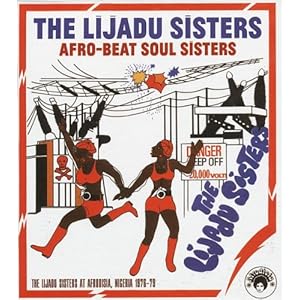
 

Afro Beat Soul Sisters


Perhaps it’s not surprising that the Lijadu Sisters have spent the last 30 years languishing in obscurity. Life as a female artist in the 1970s was no barrel of laughs, wherever you hailed from. It was the era of an all-female rock band called Fanny and Gilbert O’Sullivan’s 1974 hit single A Woman’s Place, which, he reckoned, was in the home. Even at the height of punk, with Patti Smith supposedly overturning outmoded ideas of women in rock, it was somehow deemed acceptable to advertise a new single by Blondie with a picture of Debbie Harry and the tagline „Wouldn’t you like to rip her to shreds?“ But imagine trying to forge a career as a tough, groundbreaking, independent-minded female artist in 1970s Nigeria. The country’s dominant artist was Fela Kuti. The crisply self-styled One Who Emanates Greatness Carries Death in His Quiver and Cannot Be Killed by Human Entity was many things – a musical genius and an unimaginably brave political rebel among them – but there were certain areas in which his zeal for fairness and justice seemed a bit lacking. He thought homosexuality was a psychological illness caused by pollution, and he thought women were „mattresses“. „An African man should not do anything called housework or cooking,“ he cheerfully told one journalist, but not everyone was as forward-thinking and progressive as that.

Into that environment charged Taiwo and Kehinde Lijadu, audibly aiming for more in life than doing Fela Kuti’s dusting. Given the prevalent climate, they were perhaps doomed to failure, but they did make a string of attitude-laden albums before moving to the US in the early 1980s. That attitude veered remarkably close to punk, via an appealingly ramshackle, untutored vocal approach, and lyrics that move from righteous political needling and calls for a riot of their own („Get out! Fight! Trouble in the streets!“ opens Orere-Elejigbo), to something far more complex and troubled. „We’re cashing in, prostitution, yeah, we’re cashing in, revolution yeah,“ they sing, brightly and blithely on Cashing In. „Poverty is still a common sight.“ It’s a cocktail of cynicism, fury and impotent despair the Sex Pistols might have recognised.

Attitude aside, what lifts Afro-Beat Soul Sisters from worthy archaeology to something genuinely thrilling is the music they made. You catch echoes of all kinds of things in their sound: a stripped-back, concise take on Kuti’s slippery funk, the insistent pulse of disco, the stinging guitars and organ of psychedelic rock, plus acoustic folk and the bassy thunder of talking drums. At its best – the mesmeric groove of Bayi L’Ense, or Life’s Gone Down Low’s defiant, super-cool strut – the music on Afro-Beat Soul Sisters is as tough as the women who made it.

They are at their least interesting when they try to make straightforward disco, because their hearts audibly aren’t in it: the vocals on Get Up and Dance cross the boundary from appealingly ramshackle and untutored to flatly out of tune.

European and American listeners who find themselves surprised by the cynicism of Cashing In – because they somehow expect African music to be intrinsically more earnest and straightforward than the rock and pop produced in New York or Los Angeles or London – might be mollified to discover that cultural preconceptions cut both ways. Disco was an infinitely adaptable genre, perfectly capable of conveying dissent. But listening to Sunshine, you get the distinct feeling the Lijuda Sisters thought disco was meaningless western pop pap, too flimsy to bear the weight of their message, and toned down their rhetoric to fit: the shift from the smartness of equating the corruption of Nigerian society with an abusive lover on Danger, to Sunshine’s facile „clap your hands and stamp your feet, be happy“ is a bit hard to take.

Still, you can’t blame them for wanting to reach a wider audience. They never did: at a time when the storecupboard of rock and pop feels pretty bare, when it feels as if everything from the past worth hearing has already been compiled in digitially remastered sound, you boggle a bit at something this good languishing in relative obscurity. What else is out there? The one certainty is it won’t be quite like this: the Lijuda Sisters still feel as singular as they must have done four decades ago.

Es scheint nicht viele Frühaufsteher zu geben in Dortmund. Die Strassen sind seltsam leer, wenn ich in aller Herrgottsfrüh (ich bin nicht religiös, hatte aber einen schrecklichen Pfarrer, der aus dem Mund roch, uns Messdiener mit Weihrauch traktierte und von der Hölle faselte, daher bleiben manch alte Worte hängen, die im späteren Leben wegen ihrer Markigkeit ruhig nachschwingen dürfen – sie bereiten keinen Schrecken mehr) in die City von Dortmund fahre. Ich habe schon mal  mein H.G., kaum hatten sich die Ränder der Morgendämmerung verkrochen, in das erste sich öffnende Starbucks in London geschleppt, durch geisterhaft leere Strassen, sie hat es mir verziehen, und ich habe ihr später den „Cappuccino Song“ gewidmet (ein Gedicht).  Zum Glück hatte ich heute morgen den richtigen Stoff dabei, das Album ANOTHER DAY ON EARTH von Brian Eno. Ich hörte eine Dreiviertelstunde lang, unterbrochen von einem Milchkaffee im Bahnhof, nur den Song UNDER: und alles wurde in mir wach, jede Müdigkeit abgeschüttelt, jede Angst löste sich – und eine unbeschreibliche Sehnsucht machte sich breit. Ich habe keine Hemmungen, dies in so schlichten Worten zu formulieren. Die scharfen, schneidenden Konturen der in den Vordergrund gemischten Perkussion, die sich allmählich steigernde Intensität von Enos Gesang, dieser himmelwärts (ganz unbiblisch gemeint!) taumelnde Text, den ich Wort für Wort mitsingen kann – mein ganz und gar unchristliches Erweckungslied ist das!  Ich fuhr auf dem Rückweg am Westfalenstadion vorbei, wo Borussia Dortmund gestern in einem Klassespiel Mainz 2:1 besiegt hatte, liess das Seitenfenster auf, damit ich den Song weiter hören konnte, und genoss die Morgenruhe vor den Haupttoren. You´ll never walk alone, singen wir drinnen im Stadion immer, das Lied haben wir  von den Fans aus Liverpool vor Jahr und Tag übernommen, und es erzeugt, im Kollektief, eine ähnliche Gänsehaut wie Brians Morgenlied.  

Artist: Eliane Radigue

Album: Geelriandre/Arthesis

Label: Senufo Editions

When the music of Eliane Radigue is discussed, two aspects always come up: her practice of Tibetan Buddhism and the drone. While her spiritual interests are surely important for her on a personal level, and “drone” is a valid description of her long-form electronic compositions, there’s a problem here: The reduction of her work to these two aspects ultimately limits how we understand it. The interest in them actually distances us from her sound. Her Buddhism and her exploration of the drone get tossed out like exotic facts. They make for easy pegs to talk about her music, but they do nothing to tell us why we should be listening to her today — and listen we should.

These two pieces, both from the 1970s, were originally released on Giuseppe Ielasi’s Fringe Recordings in 2003. In his Paris Transatlantic review of the original issue, Dan Warburton makes a good case for why Radigue’s music is unique in the late 20th century canon of both electronic music and minimalism. She was the first, he suggests, to fully explore the capabilities of analog synthesizers to produce sustained, slowly shifting timbres — what these days we inevitably, and not always accurately, call a drone.

But Radigue’s music is anything but monolithic. It’s full of psychoacoustic activity and subtle gradations of color. Her compositions are like the sound of a bell being struck, its reverberations allowed to decay infinitely and captured in slow motion as complex webs of overtones interacting with your space. “Geelriandre,” here a live performance of Radigue’s ARP synthesizer and Gérard Fremy’s live prepared piano, evokes this sound almost literally. It not only sounds like the tolling of a gigantic bell; it feels like it. Turn it up loud and walk through your house or apartment. This music follows you, changes as you change rooms and go around corners.

Here we get to an essential point. If you’re listening to Radigue on headphones or computer speakers, you’re not really hearing her. This isn’t an argument for hi-fi or against downloads. It’s just stating an acoustic fact. Her work is immediate and physical. You’re meant to be in contact with it.

Listen to Arthesis on headphones and what you hear is this: a slow, vague rumble in the right channel and more active mid and high frequencies in the left. It stays basically the same for the duration. But put the same piece on a pair of loudspeakers and it is transformed. You start to notice a gradual, rising dynamic. The channel separation starts to produce pockets of audio hallucinations. By the end, the air is alive with beat frequencies, difference tones and rich timbral interaction.

And now we get to why Radigue matters. She doesn’t fit into our cloud-mind, playlist culture. You can’t listen to Arthesis on a bus or a subway. I’m no Luddite and I’m not getting nostalgic, but we shouldn’t confuse progress with development. Progress is just movement. When we gain one thing, we lose something else. Radigue represents what we lose with endlessly streaming playlists and ultimate mobility. Her work is long. Unhurried. Subtle. Accurately experiencing it, much less understanding it, requires concentration and a measured pace — two qualities our online life fails to promote.

I chose to not include a sound sample with this review. If you seek this music out, do so deliberately. Listen to it and it only. Don’t read something else. Don’t put it on a playlist. Its moral is simple: stop, listen, and above all, experience.

By Matthew Wuethrich

Ich bin nun wirklich kein Spezialist für brasilianische Musik, und die Begeisterung, mit der einige Freunde und alte Bekannte (Theo, Manafonista Jochen u.v.a.) über Jahre hinweg und unentwegt, mit glänzenden Augen, Bossa Nova, Samba und den Zauberzucker der brasilianischen Sprache anhimmelten, ließ mich zwar nicht gänzlich kalt, doch nur selten konnte ich mich für diese Musik erwärmen: zwischendurch fand ich Songs, deren Melodien mich gefangen nahmen, zuweilen auf Kompilationen, welche den Aufruhr von Tropicalia dokumentierten (eine Ära, in der sich unter einer Diktatur ein „Untergrund“ formiert, ist per se interessant!), aber selten war eine Stimme so wirkungsvoll, dass ich gross auf Plattensuche ging.

Sobald die Stimmen zu geölt waren, schien mir alles Revolutionäre in selbst angefertigten Süssstoffen zu ertrinken. Der Stimme von Caetano Veloso konnte ich allerdings nicht widerstehen, doch seine schönsten Alben (neben „Tierra“) sind für mich die, bei denen Arto Lindsay (bekennender Bossa-Fan und No-Wave-Wilder der ersten Stunde) die Lieder mit dezenten Subversionen vor einem historisch abgesicherten Dornröschenschlaf bewahrte, so zumindest empfand ich es. (Tom Ze lernte ich erst später kennen, durch David Byrne, und Ze war wohl von Anfang an ein Klangradikaler, eine ungeheure Wucht!) Doch selbst Lindsay mutiert zum kleinen Jungen, wenn er von seinen Initiationen erzählt, zu denen gewiss die ersten Platten von Joao Gilberto zählen, Klassiker allemal – aber was ficht mich ein Klassiker, wenn mir die Musik nicht unter die Haut kriecht?!

Nun bekam ich per Post das erste Album von Edu Lobo zugeschickt, ein Name, den ich kannte, aber keine Stimme, mit der ich bislang etwas verband. „A Musica De Edu Lobo Par Edu Lobo“ erschien 1965, und wurde soeben bei Soul Jazz Records (als LP und CD) neu herausgebracht. Die Magie dieser alten Musik wirkte von Anfang an, die Stimme berührte mich unmittelbar, und ich habe keine Ahnung warum. Doch – Ahnungen habe ich, aber die brauche ich hier nicht auszubreiten. Ich bin ja nun wirklich kein Spezialist für brasilianische Musik.

2012 2 März

Tim Berne – Snakeoil

| Filed under: Blog,Gute Musik,Musik aus 2012 | RSS 2.0 | TB | Tags: , | Comments off

Seit den Fractured Fairy Tales aus dem Jahre 1989 ist Tim Berne seiner Linie treu geblieben – und bruchstückhafte, fragmentierte Erzählungen bekommt man auch auf Snakeoil, dem jetzt bei ECM erschienenen Werk dieses Musikers, zu hören. Und um es gleich zu sagen: Snakeoil ist ein grosser Wurf.

Vom Maler Max Ernst hieß es, er sei ein Zauberer kaum spürbarer Verrückungen gewesen. Gleiches gilt auch für den Saxofonisten Tim Berne, denn seine Musik entfaltet eine ganz spezielle Wirkung. Er schafft es nämlich, in seinen sich entwickelnden Kompositionen von bis zu einer Stunde Dauer Überraschungs-Effekte entstehen zu lassen – und man fragt verblüfft: „Wie macht der das?“

Nicht so einfach: asymetrische, verschrobene Melodielinien – dazu vertrackte Rhythmen und Metren; eine vorgegebene Komposition und der festgelegte Gesamtablauf bilden das Gerüst, mal im Akkordschema sich bewegend, aber meistens frei davon. Hinzu kommt jede Menge Freiraum für Improvisation und Mitgestaltung der Musiker. Das ist der Trick – und das macht Spass, weils keine öde Skalenreiterei ist. Obwohl Komposition, ist doch alles offen. Nichts für Klassikpuristen.

Es beginnt meist mit leisen, improvisierten, stimmungsvollen Passagen: eine einsame, suchende Bläserstimme etwa, von einer zweiten dann umspielt, quasi bezirzt. Gekratze auf dem Kontrabass, perkussives Zirbeln und Geraschel. Still und heimlich schiebt sich da ein Blues-Groove drunter, massvoll in vertracktem Taktmass erst, der das Ganze treibt, langsam aber sicher hin zum explosiven Schlusspunkt. Darüber haben sich inzwischen längst diese bernesteinfarbenen Melodielinien gelegt: fein auskomponiert, organisiert – als Themen und Schemen mit Wiedererkennungswert – aber frei von Sentimentalem.

Das Gesamtwerk Bernes ist ein Perpetuum Mobile, eine sich ewig fortsetzende, spannungsreiche, klangfarbenfrohe Prozession in dieser eigenartigen Polarität aus Stille und Aufruhr. Fractured Fairy Tales – um diesen Titel nochmals aufzugreifen, bezeichnet zum einen die erzählerische Komponente in Bernes Musik, mit splitterhaften Melodielinien, aber auch ruhigen, friedlichen Momenten der Besinnung und des Vorantastens.

Zum anderen bezeichnet er ihren hohen Assoziationsgehalt. Denn wie ein gut organisierter, durchdachter und drapierter Scherbenhaufen spiegeln die Berneschen Kompositionen fast die gesamte Musikgeschichte.

Durch die Nähe zu allen möglichen Genres wirkt diese Musik wie ein eröffnender Schlüssel: da sind die Blues-Roots (der Einfluss seines Lehrers Julius Hemphill?), dann Folk, Klassik, Neue Musik. Es spiegelt sich darin vor allem aber der Geist des melodiös-romantischen Jazz, wie ihn vormals Oregon spielte oder das “American Quartett” des Keith Jarrett (mit Paul Motian, Dewey Redman und Charlie Haden) – auf der Survivors Suite oder auf Fort Yawuh.

Welch ein Glücksfall ist es nun, dass diese Musik jetzt auch bei ECM seine Wirkung zeigt – in einem ausgeprägt kammermusikalischen Tonfall. Nicht nur die dem Label eigene Ästhetik, auch die Mitmusiker dieser Produktion tragen ein Übriges dazu bei:

Ches Smith mit seiner ganz eigenen Kunst der Perkussion, Oscar Noriega mit virtuosem, geerdetem Klarinetten- und Bassklarinettenspiel, und einem Matt Mitchell, der versiert und modern wie Berne-Companion Craig Taborn spielt – auch er ein Crack an den Tasten, sehr gelassen und mit fast klassischem Anschlag.

Nehmen Sie sich Zeit.
 
(von J. Siemer und M. Engelbrecht)

2012 1 März

Hannes Wader – 7 Lieder

| Filed under: Blog | RSS 2.0 | TB | Tags: , | Comments off

„Ich bin unterwegs nach Süden und will weiter bis ans Meer, will mich auf heiße Kiesel legen, und dort brennt die Sonne mir die Narben aus dem Nacken, jeden Kratzer, jeden Fleck, dass von den tausend Händen, die mich das ganze Jahr befingert und geschlagen haben, keine Spur mehr übrig bleibt. Und wenn der Wind mir fetzenweise meine alte, tote Haut vom Rücken fegt als weiße Asche, steh ich auf und bin gesund … Ich bin unterwegs nach Süden, will nicht weiter bis ans Meer, ich bin müde, will nur schlafen, morgen, morgen schreibe ich meine Träume auf und sehe wie in der Vergangenheit der Schmutz in meinen Eingeweiden, im Rückenmark, im Hirn begonnen hat zu faulen und zu Gift geronnen ist. Morgen werde ich dann wissen, wie es heißt, woher es kommt, und wenn ich erst den Namen kenne, bringt dies Gift mich nicht mehr um.“

(Hannes Wader, Unterwegs Nach Süden)

Unvergessen jenes Weihnachten, als unterm Tannenbaum die 7 Lieder des Hannes Wader lagen. Pure Freude und Inspiration weit übers heilige Fest hinaus: eine neue Dimension.  In der Tradition linker Arbeiterlieder ebenso erklingend wie auch im Kontext von Chanson und Liedermacherei. Modernes Fingerpicking, One-Man-Show, Witz (auch Insterburg und Co. begeisterten zu jener Zeit mit anarchischer Musiziererei), Sprechgesang (Der Tankerkönig als Talking-Blues), dann dieser scharfe Ton, der dem bundesdeutschen Nachkriegsmuff etwas entgegensetzte … das alles und viel mehr noch. Ein ansprechendes Cover auch: Rattenfänger von Hameln, in seriösem Blau. Und das Orange in der Schrift? Aufbruch, Hoffnung, „Unterwegs nach Süden“.

For around a decade and a half, Hood inhabited a strange parallel universe in which dub, techno and hip hop were native genres to rural West Yorkshire. Their peculiar magic seemed to stem from an anxiety, a kind of dual attraction-repulsion, towards electricity. A childhood fear of pylons that grows into an adolescent obsession with photographing them, as if containing these strange alien figures, literally humming with power from an unknown elsewhere, capturing them within a frame, might tame them, make them safe.

The American composer La Monte Young used to spend hours listening to the hum of power lines, out of which came the four pitches of his „dream chord“, the harmonic basis for much of his music. Hood might have just such a dream chord – a magic harmonic formula that runs through their oeuvre. A lot of their signature driftwork guitar lines seem to stack up intervals in seconds, fourths and sevenths, just on the edge of harmony and dissonance; sweet – even lush – but always asking for a resolution that never comes. These are musical intervals on the cusp, outside the normal triadic basis of Western harmony; notes that would usually be in addition to this or that chord, but here shorn of that base of thirds and fifths which would ground them, and left free floating, deterritorialised.

Wetherby, home town to Hood’s only two constant members, the brothers Chris and Richard Adams, is likewise a town on the cusp, as Robin Carmody remarked in a 2002 review of their album, Cold House. On the cusp of „urban and rural, Labour and Tory, old mining villages and prime foxhunting country, hippie settlements and aggressively conformist working-class heartlands, and the Bradford estates with an almost entirely Asian population up against many rural areas which are pretty much all white“.

Like the harmonic intervals Hood favour, Wetherby is a town outside the normal circuit. There are few venues for live music in Wetherby and touring bands do not tend to stop there, so playing gigs, putting on club nights (Echolalia, Freedom Sounds in Pub), and going to see other bands, would always mean a trip to Leeds, introducing an irreducible geographic split between the domestic life of the group and its public life. They remain caught between a desire to „paint the town dead“ in a world which „touches too hard“ – the „blank city“ mentioned by Dose One on ‚you’re worth the whole world‘ – and a home „where it hurts“ located in a „cold house“. Several of the photos that decorate their record sleeves seem to be taken from moving trains or car windows.

For all that, there is a warmth to the swells of those guitars, the already distended, throbbing bass. It’s the electronics that really pile on the anxiety; the skittering electronic rhythms that underpin tracks like ‚any hopeful thoughts arrive‘ and ‚they removed all trace that anything had ever happened here‘ always sound jittery, on edge. Carmody could hear, in the electric crackles of ‚the winter hit hard‘, the burning pyres of the previous summer’s foot-and-mouth disease cull. Equally it could be the sparks from a loose cable, dancing erratically in the fluorescent light and concrete reverberation of an underground car park.

By contrast, the bursts of (usually guitar-produced) noise, as in the last two minutes of ‚diesel pioneers‘, don’t sound like bawls of frustration or womb-like sonic enclosures – on the contrary, they have an exultancy: like running through the fields yelling at the top of your voice because you can and because there’s nobody around to hear it. A lot of Hood’s music seems to have that uniquely bloody-minded self-assurance that comes from the belief that nobody is listening. Strange, uncompromised sounds often come about when the only audience you are trying to please is yourself and a few mates. This would also explain a certain restlessness with regard to style: from the noise rock of Cabled Linear Traction to the dubby folktronica of Cycle of Days and Seasons, the dreamy post-hip hop of Cold House to the stuttering electro-indie of Outside Closer.

Things have definitely changed by the time you get to 2005’s Outside Closer, the last of this suite of albums. You can actually hear (most of) the words; the strings and brass sound arranged rather than just played and edited later. That album came out in the same year as the Kaiser Chiefs‘ multi-platinum selling Employment and the same year that Dave Simpson, writing in The Guardian, saw a sudden surge of new bands coming out of Leeds and getting national attention: The Research, Duels, The Sunshine Underground, The Ivories – the latter on 48 Crash Records, the label run by Choque Hossein, Outside Closer’s producer. Since then the band have been on an extended hiatus, as though even this possibility of attention was too stifling.

Across these six discs, Hood have created a unique experimental cartography; the English countryside mapped out as an imaginary terrain inhabited by as much magic and mystery as David Lynch’s woods and small towns. The wind blows backwards through the trees, misplaced, half-remembered voices caught in the gusts through the branches; impossible creatures glimpsed out of the corner of your eye. If their pastoralism suggests a relation to the soil, then it must be stressed that this is a soil already fully alien and alienated in advance; a land haunted by the wiccan paleo-science of dub echo and house clicks, a terrain whose very topography produces dreamlike psychoacoustic mirages.

In a way, the parallel world which Hood made their own – a world of lens flares and super8 film, of the chance meeting of unlikely genres and styles on a Cubase dissecting table – has, in the last six or seven years since they stopped making records, become a kind of Pitchfork-approved hipster mainstream. But back in 1997 these were not obvious strategies. Hood were out in the wilderness in more ways than one. Looking back now over the albums and singles from Hood’s Domino period, it’s clear that these records are in many respects the culmination and crowning achievement of everything the more experimental side of that thing called ‚indie‘ music (which once actually had something to do with being on an independent label) ever tried to do, before it became interminably smug and self-referential, lost in the spin cycle of its own laundry.

For my part, they are probably the only band that I have listened to and loved consistently throughout the last fifteen years. And yet, strangely this review has been harder to write and taken longer than practically anything of comparable size I’ve ever written. I think the problem is I don’t really want to tell you what this music is like or what it means; I just want you to listen to it.

… (einem viel zu süßen Pfannkuchen gewidmet, den ich in Berlin gegessen habe, im Mai 2006, und einem Schlüssel, der sieben Stockwerke tief in einen Haushof fiel) …
 

Als ich die neue Arbeit von Andrew Bird erstmals hörte, stutzte ich bei einem wunderbaren Song, denn ich hatte das Gefühl, der „spirit“ des 2006 tragisch früh gestorbenen Grant McLennan (von den geliebten Go-Betweens) sei da auf seltsame Weise anwesend. Später las ich eine Besprechung, in der ein Kollege (s.u.) eine ähnliche Beobachtung machte. Gerne würde ich den pfeifenden Violinisten fragen, ob Grant ihn direkt inspiriert habe, oder, rückblickend, vielleicht unbewusst, oder, das wäre auch interessant, überhaupt nicht, weil die Musik der Go-Betweens womöglich Andrew Bird gänzlich unbekannt ist. Vielleicht aber kommt durch diese kleine Erwähnung am Rande, die wahrscheinlich bloß auf einem seltsamen Zufall basiert, ein Leser dieser Zeilen, auf die Idee, sich diesen Song runterzuladen, weil dieser Leser einfach ein Go-Betweens-Fan ist, und er oder sie einfach zu gerne einen Song hören möchte, in dem der erwähnte „spirit“ tatsächlich spürbar ist. Es kann natürlich geschehen, dass dieser potentielle Downloader die Beobachtungen der zwei Musikkritiker ins Reich der Fabeln und Privatassoziationen verbannt, aber eine CD entdeckt, die er oder sie richtig gut findet. Und Andrew Bird ist richtig gut!

 
… ‘Lazy Projector’ and ‘Sifters’ are the most moving inclusions here; the former a sweet damning of memory – “That forgetting, embellishing, lying machine”  – which plays cousin to the upper echelons of the works of Grant McLennan, the latter carrying a set of lyrics so tear-inducingly open, well-observed and worldly that it’s best not to regale you with them here. You can hear them when you buy the record.


Manafonistas | Impressum | Kontakt | Datenschutz