Manafonistas

on life, music etc beyond mainstream

Author Archive:


Das MHQ musste eigentlich schneller handeln, aber es dauerte Monate, bis das Team aus dem Elfenbeinturm reagierte. Man wollte es kaum glauben, man sichtete und sondierte, und es wurde immer klarer: die ganz und gar grossartigen TV-Serien der letzten Jahre haben Standards gesetzt, denen die Gegenwart hinterherhinkt. Natürlich wird es auch weiterhin immer wieder mal erstklassige Serien geben, aber kaum in der power spot-Häufung vergangener Jahre – sie werden wie „Ausreisser“ daherkommen. Keine einzige 5-Sterne anno 2018. Die letzten überragenden Serienabenteuer waren Little Big Lies, dann dieser unfassbar gute, siebteilige Western, dem John Ford aus dem grossen Jenseits salutieren würde, gewiss auch die bittere Abrechnung mit US-amerikanischer Klassenjustiz, und einem Detective Fish, der die grosse Ahnenreihe der Marlowes und Spades bereicherte – sowie, kleiner Kalauer, das Beste kommt am Schluss. Auch Stranger Things 2 war noch richtig gut, aber weiterhin und dauerhaft über „Zweitbestes“ berichten zu wollen, ist nicht so prickelnd. Darum verschwindet die Rubrik „TV Series of the Month“ ab August von unserer Empfehlungsliste, und singuläre Begeisterungen werden entpannter Teil des „Blogtagebuches“ sein. Sons of Anarchy, Mad Men, Game of Thrones, Lost, The Leftovers, Justified, Halt And Catch Fire etc etc – those were the days. Es gibt eine Ironie in dieser Geschichte. Die Revolution begann (um dann eine Zeitlang kreativ zu verschnaufen), mit Twin Peaks und The X Files – und sie endete, im Grunde, mit David Lynchs tollkühner Zumutung und Hammerserie Twin Peaks – The Return.


2018 29 Juni

An Allman Brothers Love Song

| Filed under: Blog | RSS 2.0 | TB | Comments off


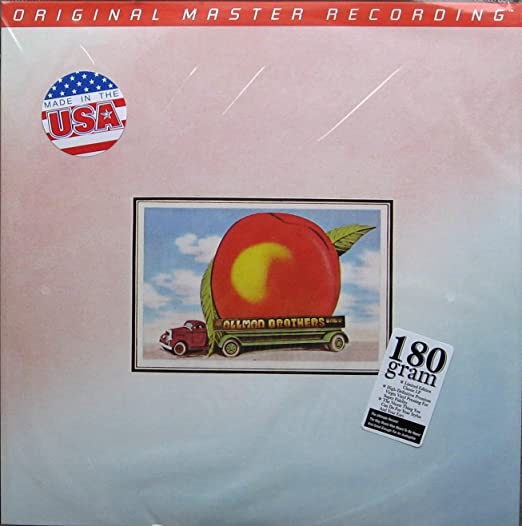
When the double album At Fillmore East was released (Eat A Peach came later), I was about sixteen, and a radio man played a  piece from it called In Memory Of Elisabeth Reed. That was one of the most stunning instrumental pieces I had ever heard (not that I was too old already to have heard too much). I fell in love immediately, like I fell in love at first sight in girls that carried wonderful names like Margarete Scheibenhut, Jutte Korte (a  more simple name, but she compensated its lack of magic with undisputable beauty), or later, when there were teens in my age, Regina Detert or Marlies Durch-Den-Wald. Regina was a too sad affair, with one long kiss and a constant good-bye. (these names are all real, nothing made up.) I digress. I got the double album with the great cover photo and was hooked again when listening to all the four sides. Now I knew my rock heroes had their knack for old blues singers, but I was never so deep into blues, and I was surely not so deep into that thing blues rock. You could not say that In Memory Of Elizabeth Reed is a blues rock piece (I later read, guitar master Duane Allman had been listening a lot to modal Coltrane), but in their own peculiar ways, all the other tracks were definitely  coming from that world of Blues Rock Southern Style. And I loved them. The whole music was brimming with life, and though In Memory of Elizabeth Reed was my private stand-out, all the other tracks were stand-outs, too. The long jams seemed never to run out of focus, and I even liked the hoarse voice of brother Gregg Allman (being far away from voices I normally loved).  Whippin‘ Post was another killer, and I then started to find the love of my life (in fact I started it when being five (the beautiful neighbour woman) or  seven (the female owner of a Langeoog pension)), but my searching got quite more serious with fifteen, and till I discovered my greatest early love in an elevator in Würzburg in 1975, I was training the deepness of love, my abilities of getting lost, my desires for the everlasting by listening to the usual suspects from Neil to Joni, from Ray to John  – and Live At The Fillmore. Sometimes I had to dance while listening to In Memory Of Elizabeth Reed. With years going by, I got a nice digipak  CD version of the double album, and in music magazines I read that the album was a favourite object of desire to test your hi fi system. No doubt about that:  nothing sounded boxy,  everything was full there and fleshed-out. As the decades went on and on, I kept returning to the Fillmore East that had already been closing its doors deep in the last century, but stayed strong as a power spot in my record collection. So I finally got an Sacd documenting all three nights at The Fillmore, from which chosen pieces made it for the final version. I returned to that venue again and again and learned that my best friend from Nothern California (I have no friends in Southern California) was there on one  of those magic nights: since then I started to  search for the clapping of his hands in the crowd. Mission impossible, but I tried hard, with a smile. Knowing Brian Whistler was there, I came even closer to the audience with that Sacd. The soundstage was broader, the reverb seemed to pop back from behind, and the applauding hands: now on the real side of listening, around me. On the rear channels. Two years ago I got another Sacd with a 5:1-mix now spreading the instruments over all channels. A fantastic experience that transported me to being on stage with the musicians. Holy shit. By listening to the album since my teenager years, by changing the formats, the music was never on the verge of collecting its patina of nostalgia or „I wanna be  fuckin young again“, but got more real and real – and real. I live in a house where volume has no restrictions, and neither have the portals to another time. On a  rainy night (long story short) of a rainy day, not long ago, I crossed the screen, so to speak, and I was there. For real. Just when Whippin‘ Post started I came back to my place near the controls with a Budweiser. (In moments of deep entrancement, your attention can be caught by the funniest, nonsensical details – a guy next to me was holding a clear bag from a record store called Licorice Pizza, and inside I glimpsed the cover of Electric Ladyland.) I was seeing the band, and since the famous photo of the double album left such a huge impact on me, it seemed that I had always been there. No stranger to this place, I started (as I always did) looking for the most beautiful girl around And fell in love immediately. When the band finally played In Memory Of Elizabeth Reed, my smile turned cosmic. And I am  not a friend of big words.


Jeder, der sich für Jazz / Musik interessiert, kommt in diesen Wochen an dem Cover der neuen Platte von Kamasi Washington nicht vorbei. Wir werden uns hüten, es hier nochmals aufzutischen. Offensichtlich sind da beträchtliche Werbegelder im Spiel, und die Musikkritik zeigt sich überschwänglich. Wer so blöd ist, da gleich den neuen Coltrane wahrzunehmen, wie des öfteren passiert, anlässlich des kräftig gehypten Debuts, nimmt sich selbst aus dem Feld. Was ich über die Musik lese, ihren Mut zum Pathos, zum grossen Klangtheater, etc., lässt mich eher zaudern, sie anzuhören. Das Schlimmste ist das Cover von „Heaven and Earth“: als könnte der aufgebrezelte Kamasi über Wasser gehen. Ein Götterbote, mindestens. Pseudomystischer Overload. Wie sehr mag ich dagegen ein ähnliche Motiv ohne posierendes Ego: die vier Luftballons auf dem Cover von Keith Jarretts „Belonging“.  Und wie sehr schätze ich, im Kontrast zu Kamasis Kitsch, das Cover der neuen CD von Graham Nash (Gregor öffnete seinen Plattenschrank dazu, vor Tagen): ein Junge schaut mit seinem Fernrohr auf ein riesiges Naturpanorama. Beide Bilder inszenieren Natur, aber bei dem Cover der übrigens betörend schönen Arbeit („Over The Years“), Demo-Versionen bekannter und weniger bekannter Lieder des alten Barden, spielen Staunen und Nostalgie auf durchweg sympathische Art mit, und die Lieder zahlen diese Mixtur aus Einfachem und Profundem mit Mehrwert zurück, und vollkommen reduziert. Was für eine Zeitreise, ohne Prätention und Zirkusgehabe. (Und wie ich die Musik von K.W. wohl empfinde, nach dieser Vor-Urteilsbildung, sollte ich sie wirklich einmal hören!?). Und wenn diese zwei Cover auf so unterschiedliche Art mit dem Motiv „grandioser Natur“ umgehen, wie umschattet wirkt da die Bebilderung des Soloalbums von Stuart Staples – auch da taucht der Himmel auf, in einem Bild von Suzanne Osborne. Ursprünglich wollte Claire Denis Suzannes Serie von 365 Ölgemälden, mit dem Himmel als durchgehendem Raum, in einen Film verwandeln. Als Langzeitlauscher der Tindersticks wartet „Arrhythmia“ daheim auf mich, ich kenne keine einzige Komposition, ahne aber, dass die Musik bestens passen wird in die Klanghorizonte im August, vor oder nach zwei, drei Stücken der kommenden CD von Tord Gustavsen. Von der ich gleichfalls noch keinen Ton gehört habe.

1
 

The last radio show, for example: the check-up routines for the two record-players, and, in a night that was full of untold angst, untold sadness (Susanne, please, no reason to die, if we simply had been able to  freeze a single day!), „Across The Universe“ from the Mono Masters, seemed to stumble near the end, as if our Fab Four‘s spiritual utopia had been devoted to crash test driving.

You know what happens in movies when someone says she‘s / he‘s just going around the corner for a bottle of Merlot, a pack of cigarettes?! Going away has many discreet announcements in the way of „Nothing’s gonna change my world“, but then, you know …


2
 

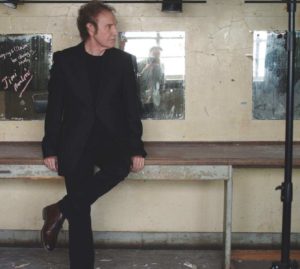
Always returning is more tricky than most people think – old pain just reveals different colours with decades going by. Think of Ray Davies (nearly being killed in New Orleans) re-visiting his past one more time on „Our Country – Americana 2“. The Jayhawks are the most thrilling houseband he could imagine for his time travel enterprises, and for good reasons. They are simply able to wipe away the dust from every post-WW2 syle of American tapestries – just to let all those dust molecules fall back softly like brand-new memories.

A propos time-travel: when the late 60‘s had put psychedelic drugs on their agenda, it was only a matter of time when a mix of naivety (on the side of hippie romantics) and supression (the reactionary boomerangs) put the likes of LSD, mescaline and associates under constant suspicion. Times have changed (sometimes that really happens!), and famous culinary writer (!!!) Michael Pollan makes the transition from feeding your body to feeding your head. „How To Change Your Mind – What The New Science of Psychedelics Teaches Us About Consciousness, Dying, Addiction, Depression, Transcendence“ is a book with stunning insights, simple as that.

„Words are flowing out like endless rain into a paper cup / They slither while they pass, they slip away across the universe“. Sean Duffy is such a refreshing mind when it comes to music, he could easily sing  along with that old Beatles track and leave some dry remarks. But, being a detective in his real, fictional life, he certainly has different things going on in his mind on the first pages of Adrian McKinty’s new thriller. Things can go terribly wrong, oh, yes, they can! Though this is another book of the famous McDuffy series, it can be read as a stand-alone novel, and no one should hesitate because of the simple German (!) title, „Dirty Cops“, leaving out the wit of the original, „Police at the Station and They Don’t Look Friendly“. A historic crime novel of sheer dark brilliance!

What‘s your favourite flute player since the salad days of Rahsaan Roland Kirk and Herbie Mann? Still whispering along „Memphis Underground“? Early Jeremy Steig? The fabulous Chris Hinze – oh, you never heard his „Mission Suite“ on MPS?! Maybe it‘s a good time to meet a French wizard of the flute, yes, the early  70‘s again, a sometime collaborator of Jacques Rivette. So, be ready for two buried treasures finally brought to daylight by the fine French label „Souffle Inconnu“. Jean Cohen-Solal studied the flute from all angles, he knows about the far away horizons, as he does about the electro-acoustic school of sound. „Flutes Libres“ maybe the perfect starting point, a record that knows how to escape well-trodden roads.

Small roads, tiny villages and rainy coastlines: you get all of this and much more in „Shetland, season 4“. Based on the novels by Ann Cleeves, the British TV-series is slow and quiet, very slow, very quiet, luckily it’s convincing, too, in every way. If you want to know why Patti Smith has a knack for English crime series, enter the world of DI Jimmy Perez (aka Douglas Henshell), and you will be drawn into a landscape that has a hundred different words for grey.

All our recommendations for July are definitely not about entertainment, they are about the old question: what is this life all about? Well, serious questions can produce funny answers: „Images of broken light which dance before me like a million eyes / They call me on and on across the universe / Thoughts meander like a restless wind / Inside a letter box they / Stumble blindly as they make their way / Across the universe“.


3
 
No smartness required.

Just a little break.

I will go for a Merlot.

Don‘t wait.

Just put the needle on the record.


Stephan Thelen sandte mir das Album VORTEX seiner Band SONAR gerade noch rechtzeitig, nun sind alle manafonististischen „Alben des Monats“ versammelt. Die Nacht beginnt, nach dem Krimi, wie immer, mit zwei Stunden randvoll mit neuen Produktionen. Die üblichen Verdächtigen können immer noch in ihren Bann ziehen, und laden durchweg zum Lauschen, der Gegenwelt des flüchtigen Reinhörens.

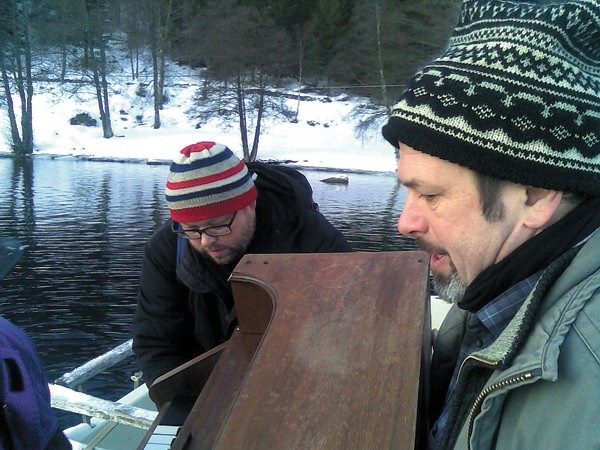
Sehen Sie sich das Foto an: Nils Okland und Sigbjorn Apeland setzen über zur Insel Lysøen, um den Spirit des einst berühmtesten Geigers ihres Landes, Ole Bull, zu beschwören. Die „Hardingfele“, wie Oklands Hauptinstrument heisst, gibt den Ton an in der dritten Stunde, der Nahaufnahme der Klanghorizonte, zwischen Freitagnacht und Samstagmorgen im Deutschlandfunk.


„Pools of sorrow, waves of joy, are drifting through my opened mind“, schrieb John Lennon einst, und diese Zeile könnte sich morgen im Äther herumtreiben. In den beiden Zeitreisen zum Ende der Nacht, erinnere ich an den jüngst von uns gegangenen Pianisten Misha Alperin, und um eines seiner radikalsten Alben herum spiele ich Musik, die sich luftig zwischen Trancesession und Grenzgängerei bewegt, neben Klassikern gibt es ein wieder aufgetauchtes Album aus dem französischen „Chanson-Underground“ der frühen 70er Jahre, und, vielleicht, einen Song aus Gregs Jukebox.

In der Stunde nach dem ersten Hahnensschrei schliessen und öffnen sich gleich mehrere Kreise (das passiert schon vorher permanent – Vorsicht: Dejavu! – man denke an Steve Tibbetts‘ Begegnung mit der Hardanger Fiedel) – Jon Hassell begegnet seinem jugendlichen Ich anno 1978 in New York und erinnert sich an Italo Calvinos Buch „Die unsichtbaren Städte“.


2018 13 Juni

Das Hotel am Bahnhof von Garmisch-Partenkirchen

| Filed under: Blog | RSS 2.0 | TB | Comments off

Es war eine Nacht lang meine Verbindungsbrücke zur Welt und heisst „Vier Jahreszeiten“, was ein kleiner Scherz und doch wahr ist. Von dem berühmten Hotel gleichen Namens hat es immerhin den vollkommen verblichenen Abglanz einer alten Ära übernommen. Da schwirren ja überall Trachtenmädels herum in der Stadt, der Lokalkolorit kann gnadenlos sein, von alten Männern mit grosser Vogelfeder im Hut ganz zu schweigen. Ich kann auch meine Geschichten von Hotels erzählen, ähnlich, wie es, in der Nacht zum Samstag, in den Klanghorizonten, Father John Misty und Ketil Bjornstad angehen. Wenn es nicht um Begegnungen mit Unbekannten geht oder Liebesrauschnächte, ist das Hotel ein guter Ort, das Alleinsein zu kultivieren. Der norwegische Pianist hat diese Lektion gelernt, von seinem alten Freund Terje Rypdal, wie man in solch fremden Räumlichkeiten aufschlägt, in dem man das Persönlichste (Musik, Bücher etc.) sofort nach Betreten des Zimmers um sich ausbreitet. Habe ich in den „Vier Jahreszeiten“ auch gemacht. Nicht zuletzt das Booklet von Bjornstads „A Suite of Poems“. Der Raum mit seiner hohen Decke und der Bahnhofsnähe brachte frühe Kindheitserinnerungen zum Vorschein. Asthma in Bad Gastein, Gespenster unter dem Bett. Erste Fahrstuhlfahrten. Viele alte Fahrstühle sehen aus wie Särge aus den Fünfziger Jahren. Beengt und schmucklos, Rumpelsärge. Guter Humor ist stets gefragt, in Garmisch wie in New Orleans: „It’s brass band in the bathtub / It’s the devil in the minibar / It’s voodoo in the wall / I think I’ll call it a day.“ (Lars Saabye Christensen)

2018 7 Juni

Eivind, surprised!

| Filed under: Blog | RSS 2.0 | TB | Comments off


What a wonderful new Jon Hassell album, I had to smile reading you‘re listed on one track. In my next show I will play some of it, and his ancient „Vernal Equinox“, too.

Honestly I didn’t know I was on the record, but I only heard the two tracks available on spotify (and ordered the album). I love what I heard so far, and are really happy to hear that he used some material from the time we played as well. Looking forward to hear the rest!


2018 2 Juni

Words with the shamans (preparation)

| Filed under: Blog | RSS 2.0 | TB | Tags: , , | Comments off


Arrival at „Romantik Hotel Platte“. Moving to a place nearby. Two days of shamanism. Peruvian healer Don Agustin and his team. 50 clients. I heard before it would not be an easy ride. I think it was a good preparation to only listen to two records within the last three days, Santana‘s „Abraxas“, and Jon Hassell‘s forthcoming album „Listening to Pictures“. Both albums contain cover art by Mati Klarwein known for his magic realism, think of „Bitches Brew“, think of „Dream Theory In Malay“. Speaking of the music, I can only say that listening to Hassell‘s album can even take the most experienced lover of his music by surprise. It is one of those works of an old master that is not painting the world soft and sweet, but much more an invitation to surround oneself with cutting edges, distant echoes, and something unspeakable. Just an idea coming up for sequencing the first hour of my radio night in June: Jon Balke with Batagraf (one track, see Jazzland Records), Steve Tibbetts (three tracks), Brian Eno (three tracks), Jon Hassell (three tracks) Nik Bärtsch (one track). And yes, the two days in the green hinterland would not become an easy ride. But impressive in many ways.


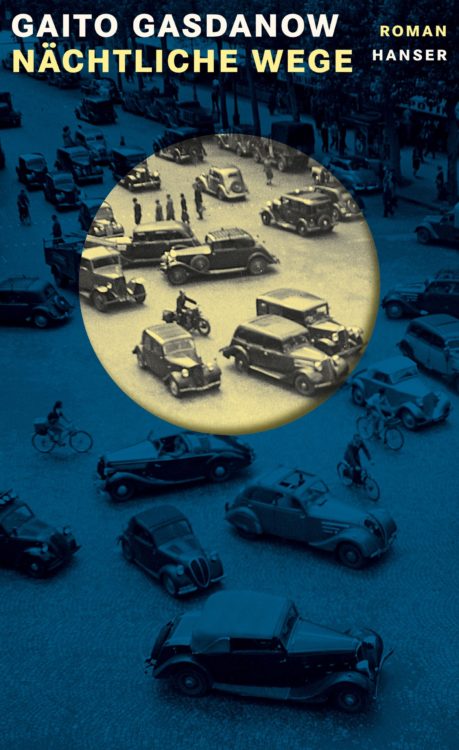
Wahrscheinlich ist Gaito Gasdanows Buch „Nächtliche Wege“, für mein Empfinden zumindest, eine dermassen faszinierende Zeitreise ins alte, uralte Paris, dass sich nahezu alle Manafonisten auf ein a capella vorgetragenes „merveilleux“ einigen könnten! Wahrscheinlich werden die drei Alben des Monats keine Verkaufsrekorde erziehlen, steht hinter ihnen ja auch kein gigantisches Werde-Budget wie bei Kamasi Washington und der neuen, mir fremden, Lust am Jazz-Pathos, doch sind bei Sonar mit David Torn, bei Steve Tibbetts und Jon Hassell andere Ekstasen des Augenblicks im Spiel, ganz gleich, wie verinnerlicht, wie überbordend, und alles Hören bleibt Herausforderung – übrigens wird in der Radionacht Klanghorizonte am 16. Juni im Deutschlandfunk, in der fünften Stunde, an Jon Hassells fast vergessenen Klassiker „Vernal Equinox“ erinnert, der jetzt endlich wieder zugänglich wird. Wahrscheinlich könnte man Lust auf einen ihrer grossen Mystery-Romane bekommen (Brian Eno las sie in seiner Jugend gern), lässt man sich mit Ursula K. Le Guin und Todd Barton auf die Musik und Dichtkunst eines mythischen nordkalifornischen Stammes ein! Wahrscheinlich ist ein Zusammenprall von Kulturen (konservatives Hinterland vs. Osho-Jünger) selten so spannend dokumentiert worden, wie in der Netflix-Serie „Wild Wild Country“, aber alles wäre nicht ganz so beeindruckend, würde der Soundtrack, insbesondere die Songs von Bill Callahan, nicht eine weitere Erzählebene hinzufügen! Wahrscheinlich ist der am 18. Juni in deutscher Übersetzung erscheinende Thriller „In deinem Namen“ von Harlan Coben einer seiner allerbesten, handelt er zwar einmal mehr von einer vermissten Person, doch rankt sich da herum eine virtuos gestaltete Story um Liebe, Freundschaft, Trauer, Verrat und Rache – klingt ein bisschen nach einer „wilden Räuberpistole“, ist aber so leicht und raffiniert zugleich in Szene gesetzt, dass der Leser sich zwingen muss, das Lesetempo eine Spur zu veringern (dass Coben auch mal richtig scheitern kann, zeigt die Netflix-Umsetzung eines anderen seiner Erzählwerke, „Safe“, eine hanebüchen konstruierte Geschichte). Tja, und dann hören Sie sich bitte einmal „Moon In June“ an, zu finden auf „Third“ von Soft Machine!


Manafonistas | Impressum | Kontakt | Datenschutz