on life, music etc beyond mainstream
2022 13 Nov.
Manafonistas | Filed under: Blog | RSS 2.0 | TB | Tags: buried treasure, Collector‘s item | 2 Comments
2022 13 Nov.
Manafonistas | Filed under: Blog | RSS 2.0 | TB | Comments off
Notes: If Station to Station was like plate tectonics – plate to plate, stationary-stationary – then Low is the place it hinted at trying to get to but never quite found the coordinates for. It may feel like there has been an eternity since the last truly great David Bowie record in this post, but a quick look at the above text, the calendar and some magical arithmetic on a Casio calculator puts the distance at ten years. 1967 is the debut LP year, 1977 is Low. I’ve checked twice with the Casio and it does compute. Only 10 years passed between 1967 and 1977. The weave of time and space must have a central fuck up, or crack up, or a whole book of crack ups. How did we get here? Via Sell Me A Coat and the Immigrant Song high-register honk? Maybe. By the way, I saw a Blood Transfusion Service van driving up the street on Friday. Ordinarily this would be unremarkable, of course, but then I saw a horde of vampires running after it. The blood van stopped at the red light, and the vampires sprinted close, within kicking distance of its number plate. Saliva dripping from their fangs. A blood frenzy. Then the lights changed to amber and the transfusion service van was off at 30 miles per hour into that generalised granular dark concrete greyness that is typical of your usual UK street. A literal disappearance, an unplayful camouflage. The vampires ran on in vain, in the drizzle.
2022 10 Nov.
Manafonistas | Filed under: Blog | RSS 2.0 | TB | Comments off
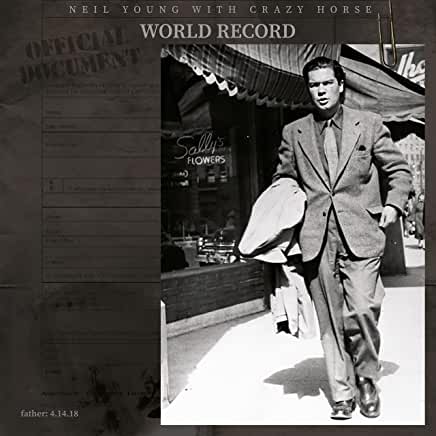
Auf der Vorderseite des Albums „World Record“ ist ein Foto von Neil Youngs Vater, dem Schriftsteller Scott Young, zu sehen, wie er in Anzug und Krawatte, den Regenmantel über dem Arm, die Straße entlang schreitet. Es könnten die späten 1950er Jahre sein, und er sieht aus wie ein Mann, der dort etwas zu tun hat. Man muss das Gesicht nicht erkennen, um zu wissen, wer er ist: Das Bild ist wie ein Museumsexponat beschriftet. Im Innenteil sind Neils Bruder Bob, seine Mutter Rassy und Neil selbst abgebildet – die erste Familie, die Young kannte, bis er 12 Jahre alt war und seine Eltern getrennte Wege gingen.
Der 50er-Jahre-Style des Covers hallt im Opener „Love Earth“ nach, einer Aufnahme, die so warm ist wie ein Ernteabend. Während Nils Lofgrens Lap Steel mit Youngs Klavier flirtet und die Rhythmusgruppe Billy Talbot und Ralph Molina das Pferd zum Schlendern bringen, erinnert die Melodie an einen der größten Hits aus Youngs Kindheit, „Sh-Boom (Life Could Be A Dream)“, den die Jungs von The Crew Cuts aus Toronto 1954 aufgenommen haben. Auch der Text scheint eine Referenz zu sein, denn Young unterläuft seine Skizze einer idyllischen Erinnerungslandschaft mit einem bittersüßen Seufzer: „We were living in a dream“.
Geht es auf diesem Album um seine Familie, seine Kindheit? Nun, nein. Nichts hier ist so unverhohlen autobiografisch wie „Don’t Be Denied“ von 1973 oder so direkt wie „Heading West“ auf dem letztjährigen Album Barn. Andererseits, ja. Wie immer stehen Umweltbelange im Vordergrund, aber hier kommen sie als Erinnerungen an die Welt, die Young damals kannte, zum Ausdruck, als ungeschönte Beschwörungen von blauem Himmel und klarem Wasser, die sich in „Love Earth“, „Overhead“ (einem 12-taktigen Speakeasy-Stomp, der auf Burt Lancaster und die Beatles verweist), „This Old Planet“ (die Melodie von „Human Highway“ wurde mit dem Sound von „After The Gold Rush“ bearbeitet, hallelujah) und dem schlichtweg wunderschönen „Walkin‘ On The Road“ wiederholen.
Gleichzeitig wandert er (ein weiteres wiederkehrendes Motiv; allein wandernd, gemeinsam marschierend) durch die Welt der Gegenwart – im Gefühl der sich entfaltenden ökologischen Katastrophe, des Krieges, der Pest in der Luft – und er ist offen über seinen Platz darin: dass jetzt mehr Weg hinter ihm liegt als vor ihm. „Ich bin so dankbar, dass ich all diese Jahre gelebt habe“, erklärt er in „I Walk With You“.
Damit das nicht zu nachdenklich und herbstlich klingt, sollte man erwähnen, dass es auch auf diesem Musterexemplar eines Spätwerks voller Rückblicke ein, zwei Kracher gibt, ein herausragendes Beispiel dafür, wie Crazy Horse es diesmal oft schaffen, wie Crazy Horse zu klingen, obwohl sie gar nicht wie Crazy Horse klingen.
Nach Colorado aus dem Jahr 2019, das die jüngste Besetzung der Band vorstellte, da Lofgren nach dem Rücktritt von Gitarrist „Poncho“ Sampedro zurückkehrte, und Barn ist dies das dritte Album, das Young mit Crazy Horse in Folge aufgenommen hat – das erste Mal, dass das überhaupt passiert. Barn fühlte sich wie eine Konsolidierung von Colorado an, als sich das Lineup in den gewohnten Horse-Groove einlebte. Aber mit World Record wirft Young die Dinge in die Luft.
Über weite Strecken des Albums verzichtet er auf die Gitarre und damit auf den klassischen Horse-Sound und setzt stattdessen auf die Tasteninstrumente, vor allem die Pumporgel. Wenn er bei „The World (Is In Trouble Now)“ fröhlich ein Riff aus Herbie Hancocks „Watermelon Man“ schmettert und den Refrain mit Unterschall brummt, ist das glorreiche Ergebnis eine Art schlampiger, betrunkener, organischer Funk, der bei „The Wonder Won’t Wait“ wieder auftaucht.
Dieser Song bringt das Thema dieses verdammt schnell entstandenen Albums auf den Punkt: den Moment nutzen, oder sich zumindest dessen bewusst sein. Der Produzent Rick Rubin fängt sorgfältig einen Live-Sound ein, ein spontanes First-Take-Gefühl, das von „Break The Chain“, einem der beiden wichtigsten Gitarrensongs des Albums, veranschaulicht wird, einem Crazy-Horse-Drescher in der Tradition von „Welfare Mothers“ und „Fuckin‘ Up“, mit zusätzlicher Post-Covid-Unruhe. Neil nennt es seinen „flirt with death“ in dem Video, das man sich überall anhören kann. Und der Song IST ein Drescher.
Das epische Schlussstück heisst „Chevrolet“: ein 15-minütiger Horse-Jam, der es in sich hat, komplett mit der massiven, zerrissenen Horse-Harmonie, und kein Song über ein Auto, sondern über verschiedene Phasen in Youngs Leben, über Wege, die er gegangen ist, über Menschen, mit denen er zusammen war, über Fehler, die er gemacht hat. Die Epochen verschwimmen und kollidieren in den langen Instrumentalpausen, wenn er sich auf die Suche nach der perfekten Melodie begibt, die gerade unerreichbar ist. Hier vergeht die Zeit nicht; sie brennt und schmilzt.
(Damien Love Uncut, January edition 2023)
In the music of the new album, there are a lot of low, groaning, distorted sounds that are really remarkable. What am I hearing?
Eno: Partly because I don’t have bass and drums on there, there’s a lot of space for those kinds of sounds. Often when I’m making a piece, I’m thinking like a painter: I need more shadow here in order for this brightness to shine. One of the catastrophes of recording lately—not so much now; people got wise to it—but there was a period when people wanted every instrument to be at the front of the mix. I call those “cocaine mixes,” because they often seem to accompany the ingestion of lots of cocaine. Everything is brightened up and sharpened up and pushed to the front of the mix. Of course, that means that everything is in the same place, essentially. You start to realize after a while that in order for something to appear bright, there has to be something dark beside it. And vice versa. So just from a purely painterly point of view, those [low] sounds are counterpoint to the higher, brighter sounds that I’m using. I want to make universes that seem credible, which means that they have threat as well as joy in them.

„In diesem Monat vor sechzig Jahren kam „Love Me Do“ in die Charts und die Welt veränderte sich. Aber was änderte sich dadurch? Nicht nur das mit der langweiligen, selbstgefälligen Strickjacken-und-Billy-Cotton-Karikatur der britischen Nachkriegskultur. Bevor die Beatles und die Stones auf den Plan traten, gab es viele Anzeichen dafür, dass sich etwas ändern würde, wenn man nur genau hinsah. Zwei Dutzend von ihnen sind in A Snapshot in Time versammelt, einer neuen Zusammenstellung von Klängen aus den Jahren 1960-63, die man heute als eine Reihe von Vorahnungen betrachten kann.“
alles weitere in Richard Williams‘ Blog „The Blue Moment“
2022 31 Okt.
Manafonistas | Filed under: Blog | RSS 2.0 | TB | Comments off
One time I was in a coffee shop at 10 at night, during a thunderstorm, when this song came on the radio. I put away what I was doing. I soaked in the experience. I’m pretty sure my life peaked at that moment. The music washed around me, harmonizing with the drama of the thunder and lightning surrounding the shop. All the others in the coffeeshop looked perfectly in place. I at that time was trying to escape an argumentative mother and a family too chaotic to enjoy. For the few minutes this song played, everything made sense.
(Allie‘s story)
2022 30 Okt.
Manafonistas | Filed under: Blog | RSS 2.0 | TB | 1 Comment
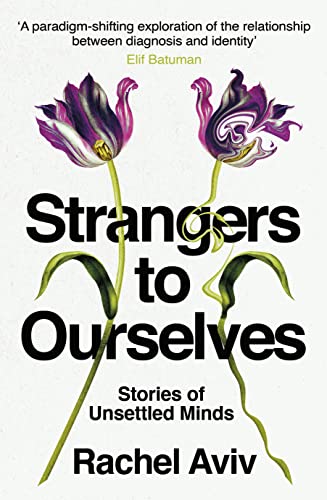
„Strangers to Ourselves ist ein mitfühlender, mutiger und gründlich recherchierter Blick auf die Art und Weise, wie wir in Zeiten von Krisen und Not über uns selbst sprechen und uns selbst verstehen. Auf der Grundlage von Gesprächen sowie unveröffentlichten Tagebüchern und Memoiren folgt sie Menschen, die festgestellt haben, dass die psychiatrische Sprache ihre Grenzen hat, wenn es darum geht, zu erklären, wer sie sind, oder dass eine Diagnose, die ihren Erfahrungen einen Namen gibt, ein Gefühl für ein zukünftiges Leben schafft, das sie in Frage stellen oder dem sie widerstehen möchten.
Rachel Aviv ist bekannt für ihr radikales Einfühlungsvermögen: Sie versteht es hervorragend, die Welt mit den Augen ihrer Mitmenschen zu sehen. Sie schreibt zunächst über ihre eigene Erfahrung, als sie im Alter von sechs Jahren in eine Anstalt eingewiesen wurde, und stellt dann unter anderem eine Mutter vor, die sich von einer Psychose erholt und die Beziehung zu ihren Kindern wieder aufbaut; eine Frau, die in heilenden Tempeln in Kerala lebt, wo sie als Heilige gefeiert wird; und eine junge Frau, die nach einem Jahrzehnt, in dem sie sich über ihre Diagnose definiert hat, beschließt, ihre Medikamente abzusetzen, weil sie nicht weiß, wer sie ohne sie ist.
Durch verblüffende Zusammenhänge, intime Zeugnisse und unterschiedliche kulturelle Perspektiven eröffnet Aviv neue Wege, um über Krankheit und den Geist nachzudenken, in einem Buch, das vor allem zutiefst menschlich ist.“
Manchmal ist auch ein Verlagstext informativ. Das Thema hat mich immer, und nicht nur beruflich, im Feld Klinischer Psychologie, interessiert. Ich durfte zweimal erfahren, welchen mächtigen impact komplett falsche Diagnose auf die Selbstwahrnehmung haben, selbst wenn sie sich nach Wochen bzw. Monaten als komplett falsch erwiesen. Wie aber geht es Menschen, die mit Diagnosen chronisch stigmatisiert werden, deren Lebenshorizont durch sog. wissenschaftlich oder theologisch „fundierte“ Zuschreibungen eben keinen Weg der Heilung antreten (oder innerer Gelassenheit), sondern einen steinigen Weg zunehmender Selbstentfremdung. Die NYT wählte das Buch zu den zehn besten Büchern des Jahres, und nachdem ich ein einleitendes Kapitel las, kam es sofort auf meine Einkaufsliste. Übrigens: die ungewöhnliche Spionage-Thriller Serie „The Old Man“ (Disney +) (mit Jeff Bridges und Amy Brenneman) bietet zum Thema Identität und Identitäts-Auflösung eine herausragend inszenierte Story, die durchaus auch, würde sie auf realen Ereignissen basieren, Eingang in dieses Buch hätte finden können. (m.e.)
Gestern Abend war ich auf dem Weg zu einem Konzert von Bob Dylan in meiner Heimatstadt, nur ein paar hundert Meter von dem Ort entfernt, an dem meine Freundin und ich fast 60 Jahre zuvor Freewheelin‘ ganz durchgehört hatten, zusammengepfercht in einer Hörkabine eines Plattenladens, bevor wir es kauften, zu ihren Eltern brachten und es noch einmal ganz durchhörten. Und dann noch einmal.
2022 24 Okt.
Manafonistas | Filed under: Blog | RSS 2.0 | TB | 1 Comment
On par with some of the bleakest works of music, like Gustav Mahler’s „Das Lied von der Erde“, George Crumb’s „Black Angels“, David Bowie’s „Blackstar“ or Leonard Cohen’s „You Want It Darker“, this is music for listening in the dark (maybe with candles lit), or mellow daylight floating through curtains – at best alone, or with a friend or lover at your side. A quiet state of mind is recommended. When I received one the first vinyl pressings of Foreverandevernomore, it was clear I would write another review, and this time not ask for an interview. I wrote some sentences here and there, but nothing added up to a complete text. How come? I was hesitant to write a conventional review, but also didn‘t succed in making am experimental thing instead. Or a short story like the one I did with Ian McCartney on The Ship. DGG sent me the lyrics of the new album (very helpful, Mr. Goldwyn!), so I really dived into all those lines, but again, they didn‘t fuel a quick, clever or knowing response. They seemed more to be a trigger for meditation (or thinking twice), the best thing to do with lyrics. Apart from singing them. The more I listened to the ten compositions, the more I felt to be „there“ – more or less speechless. You cannot spotify this song cycle, you have to be drawn in and let it all happen until the final decay. So, in the end I had a lot of fragmented phrases, and an email from Dr. Leah Kardos. On the day of release, everything fell together. Mosaique-style. I added a phrase here, I cut something out there. I was thinking English, writing English. Then I found the result quite okay, with its mix of observational and slightly poetic passages. Days later, I translated it carefully into my home language with small things added. Here, with kind permission, the WIRED interview from Sophie Charara. Another way of going deeper in regards to the making of the album. And some backgrounds. That this late masterpiece has elements of elevation, and consolation, in spite of all its bleakness, may add to its power, and the rewards of repeated listening. (m.e.)
Sophie Charara: Can you tell me about the birds we hear on the album?
Brian Eno: The British Library’s National Sound Archive has a huge collection of bird recordings, some of which are now extinct. We settled on the Yellowhammer, an increasingly rare bird. I also like trying to make deepfake birds, so several of the birds you hear on the album are not real.
How do you go about making deepfake birds?
Oh, I just listen to bird sounds a lot and then try to emulate the kinds of things they do. Synthesizers are quite good at that because some of the new software has what’s called physical modeling. This enables you to construct a physical model of something and then stretch the parameters. You can create a piano with 32-foot strings, for instance, or a piano made of glass. It’s a very interesting way to try to study the world, to try to model it. In the natural world there are discrete entities like clarinets, saxophones, drums. With physical modeling, you can make hybrids like a drummy piano or a saxophone-y violin. There’s a continuum, most of which has never been explored.
Why did you choose to perform vocals?
Really I wanted to try writing some songs. I make instrumental music like diarrhea, it just flows out of me. I thought, what would happen if you left out some of the ingredients of songs—strong rhythms, chord changes by and large—but still treated it like a song? I wanted to keep the landscape sensibility I’ve been developing, the sense of music being a place rather than an event. Another thing that’s happened is that over the 50 years I’ve been recording it, my voice has dropped quite a lot in register. It’s a different personality that I can sing from. It can be melancholy, regretful even.
How did you work with generative music this time?
Most of the music originated like that. When I make a record, I’m taking a tiny excerpt of one of those infinite, generative pieces and saying “that bit is fixed, that bit is going to repeat.” Here it’s recomposed in the way I would work on a pop song. Sometimes certain elements lock together in a way that is interesting. So now there’s a little chunk. Chunking up is my version of evolution in generative music. It occurred to me, after many years, that a creature always evolves in respect to its surroundings. So I thought, “What are the surroundings of a piece of music?” Well it’s human ears. That’s the landscape, my ears in particular.
What’s going on in your brain in this compositional mode?
This is critical. I’m always in one of three modes. I’m in “Let’s try an experiment” mode, which is quite undirected. The next stage is a flow state where I’m just fiddling with things. I’m in a mood of some kind. I can be in that stage for hours, and I only notice when I have to pee. The third stage, which I probably spend a lot more time in than most other artists, is a questioning stage: “OK, I’ve made that thing. What does it mean? Why did it interest me?” This is something I’ve always done, but it’s a stronger feeling in me now than ever before. If something catches my attention, I ask why. Those are your antennae responding to something that nobody told you to respond to. We’re absolutely drowning in shit. So you have to be very careful to try to protect the times when that comes from you rather than Nike or Google.
In what way does paying attention feed back into the music?
If I’m the landscape, I want to be a responsive landscape. I want to be noticing what’s going on. I don’t take drugs, but I have to think of other ways of hearing my music in ways as though I hadn’t made it. In my computer I have a huge archive of eight thousand or more pieces. With my friend Peter [Chilvers], we decided that the archive was a key creative part of my life. If I go to “shuffler,” it’s a way of saying to the computer: Take between two and five pieces randomly from these 8,000 pieces and play them all together. It’s usually a complete mess, but sometimes something amazing happens. This is very good way of generating film soundtracks. In fact, two of the tracks on the album, including “We Let It In,” came out of this. Another trick is we can shuffle, play sound bites at various lengths, and start at some random point. It’s really nice when it pops from one to another.
One transition I liked on the album was “Garden of Stars” to “Inclusion,” which comes as a relief. It made me think of the fire lily growing after wildfires.
That’s always a dialog, the possibility that something good might come out of it. In “We Let It In,” that line “the whole of it in gorgeous flames” is an attempt to say that the destruction is a part of the process. Nature is always changing. What we’re worried about is that we won’t be part of the picture.
Can we mix innovation and preservation?
You want some kind of play between those two. Obviously we can’t fix the world in aspic. My friend who is a farmer says, “There’s new species all the bloody time, some of them will look after themselves.”
And what can follow a “fix it” techno-utopianism?
We all thought politics wasn’t important anymore, that technology would become the politics and create the future itself. It’s related to that horrible individualism of Ayn Rand—Nietzsche for teenagers—and the idea that the power of will is the strongest power on the planet. I would like to tell her that it turns out not to be true.
If community is the alternative, do we need a shared climate culture?
What I see happening now is the biggest social movement in human history. There are billions of people involved in environmental care of some kind, but the media aren’t looking. There’s a huge amount of creative intelligence around, that’s what makes me hopeful. There’s a book I often mention by Alexei Yurchak called Everything Was Forever, Until It Was No More.
Your album title.
Yes. It’s about the end of the Soviet Union, how it just disappeared overnight. One day everyone was communist, the next day they weren’t. I always think of that as an illustration of how quickly things can change. I think the idea came from this book that revolutions always happen in two stages. The first stage is when everyone realizes something is wrong. So that’s where we’ve been now for a while, with the exception of a few ostrich holdouts. The second stage is when everyone realizes that everyone else realizes it as well. That’s the moment I think we’re heading towards. When the thing goes from being a liquid to a solid. Suddenly it’s a phase change. Within three years it will be impossible for a politician to run for office without climate change being the primary issue.
How do you avoid a climate change album being didactic?
Propaganda is unpleasant and relatively ineffective. What art is mostly doing is testing where we are by how we feel about things. Feelings are the beginning of thinking. The other thing the artist is saying is there are other realities possible. It’s offering you a little world with its own terms and values.
Do you still watch ASMR?
When I mention ASMR, most people don’t know what it means. It’s a real underground movement, one involving millions of people. Quite a good metaphor for the climate change movement. I’m slightly touching on it in some of this record, it’s not declarative: “I’m here, you can listen if you like.” The commercial answer to attention has always been bright, loud, fast, shocking. ASMR is saying no, this is quiet, slow, uneventful, nothing much goes on, and it lasts a long time. Well, that’s what I’ve been doing for bloody years.
It’s one of those things that to me hints at a change in the world. Marie Kondo is another. The lesson of minimalism has finally penetrated at a general level. It’s a profound message because it’s anti-capitalist. The impact of what she’s saying is: What’s your life about if it requires all that stuff? This is how people change their feelings. They might never have heard the word minimalism—or capitalism—but they start to live a bit differently.
Are these signals of the phase change you were talking about?
That’s right. In the Yurchak book, when the Soviet Union disappears overnight, everybody’s ready. Everybody had been working around the system anyway, in its stagnant era, doing all the things you need to do to keep life going. When the system disappeared, they just carried on. There was very little chaos.
„Wenn ich mir FOREVERANDEVERNOMORE anhöre, werde ich an David Sylvians Album Blemish aus dem Jahr 2003 erinnert, das in ähnlicher Weise mit winterlicher elektronischer Musik und schrägem Gesang Verwüstung heraufbeschwor, obwohl es in diesem Fall um die Auflösung einer Beziehung ging. Entscheidend ist, dass Sylvian seine rasante Laptop-Elektronik mit Derek Baileys zerbrochener, improvisierter Akustikgitarre kompensierte, was Blemish eine besondere Spannung verlieh. Was beide jedoch gemeinsam haben, ist ein ausgeprägter Sinn für Intimität, in Enos Fall ein familiärer – seine Nichte Cecily tritt als Sängerin auf, und die Handschrift seiner Enkelin ist im Video zum Song „We Let It In“ zu sehen. Es ist genau die Art von unkonventionellem Denken, die man von Eno erwartet: ein Album über etwas Großes und Beängstigendes, das mit und für die Menschen gemacht wurde, die einem am nächsten stehen.“
– Tal Rosenberg