Manafonistas

on life, music etc beyond mainstream

You are currently browsing the blog archives for the month Mai 2018.

Archives: Mai 2018


„What a wonderful book. Part essay, part travelogue with a smattering of fiction, it’s an indescribable blend of humor, sadness, quirk and love. Author Julio Cortázar cooked up a plan with his second wife Carol Dunlop to drive from Paris to Marseilles in their VW bus nicknamed Fafner, the dragon. The catch is, they stopped at every single rest-stop along the way at the count of two per day, sleeping over night at the second one. This book chronicles their thoughts and notes throughout the journey. It really is a wonderful book, demonstrating how despite such odd circumstances Cortázar and Dunlop found great joy escaping the world, being not utterly isolated but separated from their responsibilities and obligations. Instead, they focused on each other, on reading, writing and observing.

Love, and the joy of their togetherness, was a major theme expressed throughout the story. Physical and emotional love. Their affection is so gentle and so poetic, reading it is near meditative in quality.

In the end, they summarize the journey, as unintentionally a Zen expedition. They set off not knowing what they would find and what they found was the beauty of existence even in the most absurd of situations. Touring rest areas.“

(Peter Katzman)


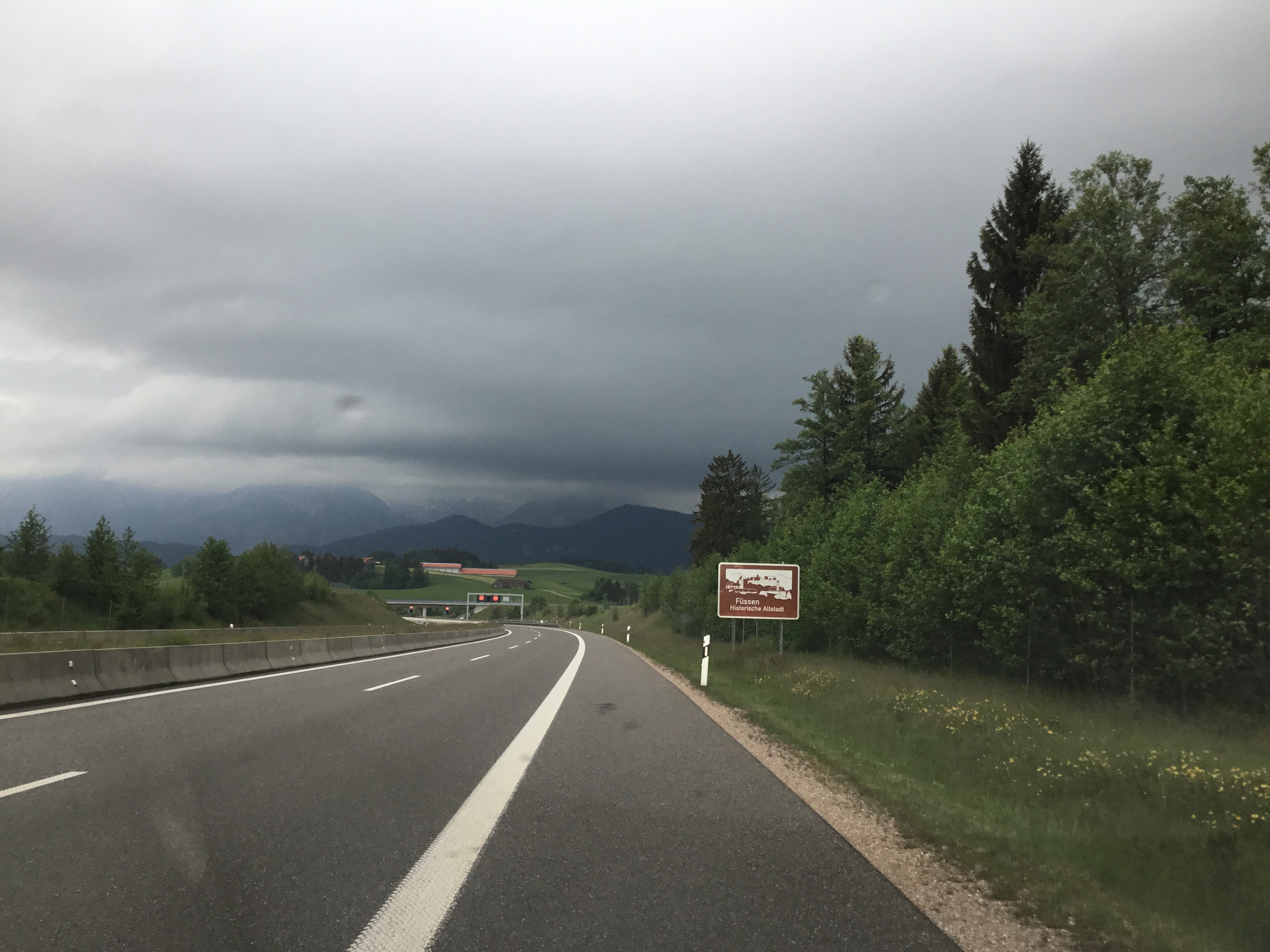
This all happens today. And tomorrow. And the day after tomorrow. Oh, that song. „Goddess on the Highway“, from Mercury Rev. Greetings from one of my beloved „Missions Impossible“, I‘m heading to Grainau, will arrive tonite. It‘s a small archetypal Bavarian village at the „Zugspitze“, the highest mountain of Germany, south of München. A special psychological task force at work. And back to the lucid dreaming camp anyway. No goddess in my car, but a bag of apples and mineral water for the road. And memories I‘m so fond of: Julio Cortazar‘s strange holidays with Carol Dunlop. Let‘s believe in happy endings, and the mountain goats of Grainau. Or is it Greinau, I‘m a stranger here. Die Berge erscheinen mir Freund des Meeres ein wenig unheimlich, bei der Anreise. I‘m traveling without my true Amazon, so I can be booked for psychological advice and campfire stories.


(This is the 2nd article in a series of pieces devoted to jazz pianists I consider to be highly underrated: )


The first time I saw Art Lande with the Rubisa Patrol was in of all places, Cotati California, a small college town about 45 minutes from San Francisco. I had brought my fiancée and was sitting with her in the legendary Inn of Beginning, trying to explain to her what she was about to hear. I remember telling her that the music was lyrical, but there was also an unpredictable wackiness in his approach, and at times his music could get very weird. A few minutes later Art and the band appeared on stage. This was the original ECM band consisting of Bill Douglas on bass, Mark Isham (who went on to become a solo artist and well known film composer,) on trumpet, and Glen Cronkite on drums. Art was sitting at this old, funky upright piano on the stage where rock greats such as Neil Young and Van Morrison had recently made impromptu appearances. Art turned to the small audience and said, “I’m Art Lande, this is the Rubisa Patrol, and I hope this music isn’t too weird for YOU!” And he pointed right at my fiancée. 


What I most remember from that night is Bill and Mark playing a duet on two shakahachis, which suddenly morphed into a samurai sword fight. At one point the music was so fierce, the keyboard lid fell, almost squashing Art’s hands. Art immediately responded by deliberately banging the lid up and down as a kind of impromptu percussion instrument. This clever adaptation captures the essence of the man, who is able to be present and creatively respond  to musical happenstance with lightening quick reflexes.


Although I never took a formal lesson from him, Art has been a kind of mentor to me over the years. I have probably seen him live more than any other pianist. In fact, I just saw him play a marvelous Mothers Day concert last Sunday with the irrepressible singer/songwriter Kate McGarry and her guitarist husband, Keith Ganz, (who has to be one of the most underrated guitarists on the planet- check them out.)


What draws me to Art’s playing is his originality and spontaneity. I’ve listened to the man live and on record for over 40 years, and I don’t think I’ve heard a single “lick.” If one goes all the way back to his (vinyl only) first release, The Eccentricities of Earl Dant (an anagram of his name,) one finds his original style already evolved to the point of being recognizable as pure Lande: the lyricism, the idiosyncratic humor, the rhythmic drive, odd clusters, lines that dance, swirl and unexpectedly veer towards the edge of tonality, yet always evincing the trademark warmth and humanity that makes Art so unique. 


His harmonic concept is obviously influenced by Monk as well as Bill Evans, but equally influenced by classical composers, such as Bartok, Bach and Debussy, not to mention his studies with composer/performer/writer, W.A Mathieu. He is listed in Wikipedia as one of the founders of what is known as “chamber jazz.” Knowing Art, I’m sure he would hate that label, because it truly limits the scope of his musical curiosity and invention, which has led him down many paths, often away from the ECM sound he was most known for in the late 70s. 


Art only made a few albums for ECM. The first was a duet album with Jan Garbarek. Red Lanta (1974 – the title is another anagram of Arts name,) is a landmark album in the classic chamber jazz mold. The tunes are airy and light on the surface, yet reveal hidden depths –  this intimate recording captures a casual rapport between these two great players, both of whom had a signature sound right out of the gate. Years after it’s release, upon mentioning the album to Art, and telling him how much it meant to me, his response was, “Oh, that old thing?” 


The two Rubisa Patrol albums are ECM classics. The writing is mostly Art’s, and it certainly fits into the chamber jazz setting. After that, Art was the featured pianist on Gary Peacock’s Shift in the Wind, a trio album with drummer Elliot Zigmund. A far more energetic album with some free play interspersed with Gary and Art’s compositions, I consider it to be among the best trio albums in the early ECM catalog. There was also an experimental record with Mark Isham, entitled We Begin. Combining Art’s piano with Mark Isham’s trumpet and synthesizer skills, it’s somewhat of an oddity, but one that grows on the listener with repeated plays – in retrospect, while the 80s synth sounds date it somewhat, it’s still a very forward looking recording in many respects.


I consider the album, Skylight to be one of the finest examples of “chamber jazz” in the entire ECM catalog. Here the trio, consisting of Lande, Paul McCandless and vibist Dave Samuels pick up where they left off on McCandless’s first solo release, All the Mornings Bring (Vanguard – a great recording, finally released on CD), with more of the same: superb compositions and incredibly intuitive ensemble playing. I consider both of these albums to be essential listening in this genre. 


Seeing Art live, one never knows what to expect. Back in the late 70s, Art would sometimes hold court at the Great American Music Hall for several nights, each night having a different theme. One night it was lyrical duets with Paul McCandless (it’s amazing that after decades of performing together as a duo, Paul and Art have yet to release a duet album), the next, the Rubisa Patrol playing nothing but waltzes. Another night there were mattresses and blankets on the floor; the lights were down low onstage and everyone in the band was lying down. Occasionally, a somnambulant figure would rise in the darkness and sleepwalk to an instrument – slow abstract lullabies emerged. 


Art is also a literary kind of guy. He often reads poetry aloud while improvising. Sometimes, he just makes stuff up. I remember a night where he told a spontaneous tale of an alien sneaking into a house and raiding the fridge- his alien voice was hysterical. On rare occasions he has been known to sing one of his own humorous and quirky songs.


Eventually Art left the Bay Area for Switzerland where he was active as a teacher and performer for a number of years. For some reason that period isn’t documented by any recordings I am aware of. He was no longer with a label at that point – in fact he has continued to be an independent artist to this day. Art eventually returned to the states where he made his home in Boulder Colorado. At 71, he has been more active than ever – he currently plays in at least 6 bands and still records and tours regularly.


Art likes to pair up with young musicians – occasionally as the drummer rather than pianist. One such band is called the Russian Dragon Band (Rushing/Dragging – a drummers joke?) Another group with Art in the drummer’s seat is the Boy Girl Band, a group entirely  devoted to playing completely improvised music.  He is also featured on drums in the experimental group Funko Moderno, a postmodern band that plays music that supposedly originates in the fictitious country of “Italavia.” It’s a premise that allows for funk, bebop, tongue in cheek jazz themes and Slavic music influences to collide in unpredictable ways.  


Art also guests on countless albums. One such example is Sioux Country, by sax player/educator Pete Sommers – It is a fine duo album. Featuring Pete’s compositions, it’s not unlike Red Lanta in tone, although it feels distinctly American, coming as it is from the southwest. Art also has an ongoing series of free improvisation recordings with sax player, Mark Miller. Seeing the two together live, one can expect an evening of musical mayhem. Occasionally, Art will whip out his trusty melodica and perform as a 2nd horn player. The two are good friends – it’s an anything goes musical situation that often becomes comically theatrical.


Art has also had a special musical relationship with French/Vietnamese guitarist/composer Nguyen Le. Appearing in the mid 80s on both of Le’s first two albums (Universal – both excellent) , Miracles and Zanzibar (with Paul McCandless), and his superb ACT recording, Walking on the Tiger’s Tail (also with McCandless,) there is an electric current running between these two distinctly unique artists – their highly contrasting styles and temperaments seem to bring out the best in one another. In 2008, while recovering from a bad breakup, I took a trip to the southwest where I followed Art and Nguyen Le on their mini tour of the Southwest. The first concert of the tour was a house concert in Boulder. I remember sitting in a small living room crammed with around 12 guests, looking at a grand piano and next to it, an electric guitar, a MacBook Pro on a music stand and on the floor, a pedalboard filled with blinking lights – I asked myself, “How on earth is this going to work?” What followed was a surprising mix of atmospheric sounds, ambient jazz, and world music. It was a magnificent, unforgettable performance. 


That’s the thing about Art Lande: he has an insatiable musical curiosity. His work embodies the perfect balance of freedom and form. He supports creativity in others and loves to collaborate. His collaborations even go beyond his musical associations: In 2011, with the help of two graphic artists and an editor/writer, he created his own tarot deck. The “Art tarot” is the fruit of decades of study and 6 years of development. The goal was to strip away the medieval archaisms of the original decks, cutting to the essence of the archetypes and energies represented by each card. If you’re interested in tarot as a tool for self transformation, it’s worth tracking down. 


Art’s albums are worth tracking down as well. Unfortunately, they’re  not always easy to find. Art cares not a whit about self promotion. He never speaks of new releases – he doesn’t use the internet at all. The only way to find new music by this artist is to visit his website (which he proclaims he has nothing to do with,) or do a Google search. Besides the ones mentioned in the article, I also recommend checking out the following:


Melissa Spins Away (vinyl only,) Great American Music Hall label, solo piano (an album of jazz waltzes – gorgeous.)

Friday the 13th- Vartan Jazz, music of Monk-solo piano  (very cool album- was supposed to be a live album but something went wrong and wound up recorded live in the studio.)

Shapeshifter- Synergy Music- original compositions, with Paul McCandless, Peter Barshay and Alan Hall

Recurring Dream – Mike McGinnis with Art and Steve Swallow (they just released a followup album)

Nemesis- Songlines- Mark Nodwell, Drew Greiss, Tom Rainey, Doug Young, Ron Miles (Marc Nodwell’s compositions are notable and it’s an SACD)

Polar Opposites- Dave Peterson guitar, Art Lande piano (good guitar player, nice tunes. Mostly duos, but I think theres a rhythm section on a few tunes as well.)

For a complete discography of Art’s recordings both as leader and sideman, including the aforementioned bands and albums, (some of which are only available as download on his site) and touring schedule, check out www.artlande.com 

2018 17 Mai

Updating_68

| Filed under: Blog | RSS 2.0 | TB | Comments off


„At Home“. Der Klavierspieler geht spät abends regelmässig ins Dachgeschoss, das Fenster weist zum Fjord. Da steht sein Flügel, ein Nachtmöbelstück par excellence. Spärliches Licht. Es ist 1996 oder 1997, Jahreszahlen bedeuten wenig in diesen „blauen Stunden“. Mikhail Alperins radikalstes Werk! Die Kargheit dieses Solo-Piano-Albums ist kaum zu steigern, und dass den Stücken so viel Gesang innewohnt, ist das schöne Paradox! Alles, was Effekt ist, Ausschmückung, Triumph, ist verschwunden. in ihrer Reduziertheit, ihren aus wenigen Klängen entwickelten Essenzen führt die Musik jazznahe und jazzferne Traditionen fort; man kann At Home in einem Atemzug nennen mit dem Sparsamsten von Paul Bley (Open, to Love), dem Pausenreichsten von Erik Satie, dem Minimalsten von Dennis Johnson. Man kann dieses Werk der Stille in seiner Rigorosität mit Thelonious Monks Alone In San Francisco vergleichen, dieser weltverlorenen Träumerei in einem leeren Ballsaal, oder auch mit Keith Jarretts The Melody At Night With You, diesen Destillaten von Melodie und Atem.  Ich erinnere mich an spannende Gespräche mit Misha Alperin, in Oslo, Bremen, und auf Lanzarote.


hi michael,


on land – that would be my favorite eno album. a timeless piece of music, highly inventive and enough room for the listener to create our train of thoughts. wonder if some of the reasons of its success simply has to do with it having almost no high end in the instrumentation, apart from the trumpet lifted from (was it „dream theory“?). same thing with brook´s „hybrid“ – only low, low / high mid areas involved. if you listen to „dream logic“ or „cartography“ – or for „poppies“ for that matter – it´s hardly anything going on in the treble (as if such word belongs in the analog world). when something do enter that frequency (voice, trumpet, the odd sine wave) area, it can be performed so softly and will still be extremely present in the recording.

wonder if the getz / gilberto album was (and still is) such a success, merely has to do with bass levels …

currently in norwich with matt calvert giving a performance tonight of battleship potemkin at the norfolk festival.


best,

jan bang


2018 15 Mai

The Future

| Filed under: Blog | RSS 2.0 | TB | Comments off


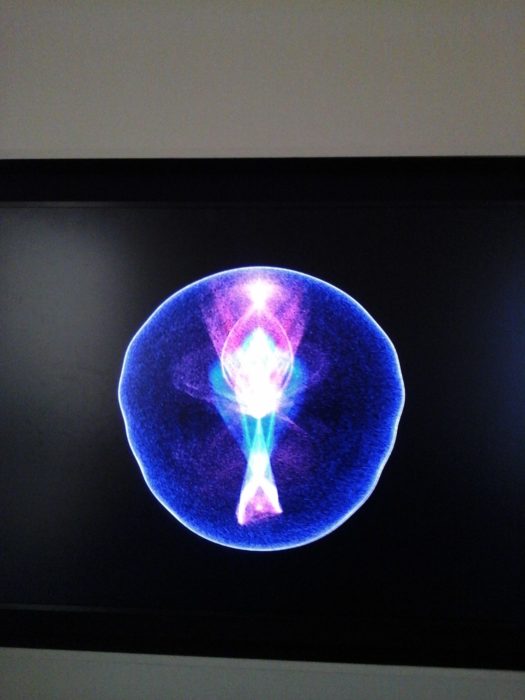
ARGO ist eine illuminierte, interaktive Musikkomposition von Jacopo Baboni Schilingi (Mailand 1971 – )


Schilingi forscht auf technologischem Gebiet nach neuen Möglichkeiten, Musik zu komponieren. Seine Werke sind mit Algorithmen programmiert. Die abgebildete Installation bewegt sich seit 2017 ständig neu, die sich verändernden  Klänge reagieren auf das Atmen der Zeit.


The Guitar (1) – I have a Martin 12-string that my father gave to me. (…) It’s an old guitar, now. It has a peculiar internal resonance, as though it has a small concert hall inside of it. I try to bring that quality out by stringing the guitar in double courses. In other words, instead of stringing the 4 lower strings with octave courses, I string them in unison. It makes it a lot harder to play, but with double courses I can draw out overtones if I’m willing to really physically engage the strings.


The favourite guitarists? It’s not a discovery often made, no matter how much guitar music hits your ears. Neil Young, wizard – electric. Ralph Towner, wizard – acoustic. Yes. And when I heard Steve Tibbetts for the first time, it was a revelation: Northern Song (1981) followed by Safe Journey (1984). All those singular albums, among them Big Map Idea (1989) and The Fall Of Us All (1994). 

I’ve been returning ever since. Always returning.

Tibbetts‘ albums only appear sporadically. You wait in anticipation for the next one. Some very interesting side projects pop up on other labels along the way, while in the meantime ECM always offer a kind of constant companionship. (It’s worth noting here that Northern Song was the only album produced by Manfred Eicher – no introduction necessary.)

A unique sound-world created from St. Paul, Minnesota. A guitar sound you recognise after seconds, never formula. The thrill comes from just listening, and letting  go. And now, LIFE OF. Steve Tibbetts, Marc Anderson, Michelle Kinney, the inner circle. What made me quite so addicted to this music? Honestly I’ll never really know. This confession of not-knowing puts a bigger smile on my face than evocative pictures of distant worlds. 
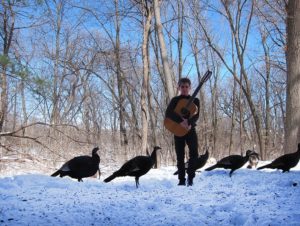


Michael Engelbrecht: Steve, at first, this photo with the turkeys … a walk through the woods?


Steve Tibbetts: This is my back yard in Minnesota.The turkeys arrive around 9 in the morning and cluster outside, gobbling. They are out there right now, talking to each other. There is a bird feeder above them, hanging off of a balcony, so they scratch around in the snow and leaves looking for bird food. The turkeys are quite tame, and they associate our bipedal primate family with food, so they sometimes come running and making sounds when they hear the back door open. Sometimes rival gangs of turkeys go to war in our back yard. It is really something to see and hear. At those time their raptor past is revealed. 


Michael Engelbrecht: LIFE OF is vintage Tibbetts, all compositions are credited to you, I think, for the first time ever. It is more on the quiet side, like NATURAL CAUSES, but with its own darknesses and edges.


Steve Tibbetts: Yes, it’s of a piece with the last album. They’re relatives. 


The Guitar (2) – The frets on my guitar are worn almost flat. There are some tiny intonation issues and places where strings buzz against frets. I took the twelve-string to Ron at St. Paul Guitar repair. He looked the guitar over. He picked up the guitar and sighted down the fretboard. He said, “The frets are flat. There might be some buzzing or intonation issues. Do you like the way it sounds?” I said, “I love the way it sounds.” He handed the guitar back over the counter to me and said, “Then I won’t fix it for you.”


Michael Engelbrecht: Looking at the titles, they seem like a collection of people from your life and times. What made you combine the pieces with certain names?


Steve Tibbetts: A lot of the songs have a similar feeling to them. I let them cross-pollinate. In order to more easily distinguish them I gave them names a few years ago, and I used the names of friends and family.  Some of those names started influencing the music.  It was a little spooky, but I played along with the process. Some names have more than one reference in my family. For instance, there are several women named „Alice,“ two named „Joel,“ and so on. One of the Joels died last year, another is still living. This sort of thing can give the music a peculiar resonance. „Half of ‚Joel‘ died,“ I might think to myself. This is typical of the managed insanity inherent in the artistic process. It is good to use any upwelling of meaning and emotion you can find, but you have to maintain due diligence and stay sane. 


Michael Engelbrecht: „Life of Carol“ – is there a story?


Steve Tibbetts: No story, I’m afraid. It’s just another guitar circling, circling.  


The Guitar (3) – I try to play the guitar for one or two hours before recording. Something needs warming up. Maybe the back of the twelve-string needs to be physically warmed up, or my fingertips need a certain pliability. At some point the guitar settles down and the little concert hall inside opens for business. I like the physicality of playing 12-string. I don’t use a pick. If I’m drifting off to sleep at night and feel my fingertips throbbing I know I had a good day.


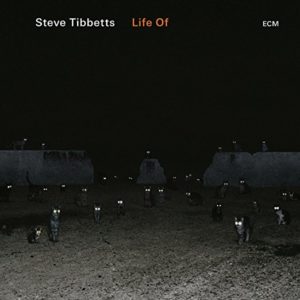
Michael Engelbrecht: There‘s a kind of discreet tension between some more introspective moods, carefully developed dynamics – and the haunting picture on the cover with the „army of cats“. 


Steve Tibbetts: Yes, just open up the back door at the right time of day and you’ll see turkeys and ghosts waiting and staring. 


Michael Engelbrecht: Are you making use of meditation or other tools to stimulate creativity?


Steve Tibbetts: The process of creativity is really hard to talk about: where does creativity come from? How does artistic vision and inspiration arise? It is a nearly tangible experience when inspiration finally does come to visit, but it’s still very ephemeral and vapor-like.  To go one step further and talk about a meditative influence on the creative process would be a bridge too far, I think. One can only speculate. An interesting thing however: sometimes an apparent spiritual or creative awakening is not at all meditative or serene in its manifestation. Look at „A Love Supreme“ or, especially, „The Inner Mounting Flame.“ There’s a kind of violence there that seems exactly right. Be leery of anyone who speaks with authority about practices of meditation and their impact on the creative process. Be afraid, be very afraid.  


Michael Engelbrecht: The music seems to be more centered around sound and texture than around melodies, for example. It seems to circle around an invisible center …


Steve Tibbetts: Part of that is my being easily satisfied with circular musical logic. When I worked in Southeast Asia I got used to music that didn’t really go anywhere. It always folded back on itself and it seemed right that it did so. I wish I could compose a piece of music with real changes and progression but I don’t really know how to.  


Michael Engelbrecht: Your love for your acoustic 12-string guitar is a life long affair. It is a familiar sound that never gets too familiar …


Steve Tibbetts: I remember an interview many years ago with Nana Vasconcelos where he talked about the berimbau which is, as you know, a 1-stringed instrument – a bow, a wire, a stick and a shaker. He said he found new sounds every day on the instrument. I feel the same way about this 12-string. There’s always something new, or something old that refines itself. I can’t take credit for a good sounding instrument.  


Michael Engelbrecht: There‘ s such a special balance between the rhythmic parts of the music and the drone fields (of sampled sounds, Michelle‘s cello sounds etc.) Remember Miles Davis, in his electric period 69-75, also had, inside the whirlpool of energy, those stop-and-go passages inside the music. Of course it is a very distant parallel, but in your pieces here, one can also observe a lot of moments where the music seems to hold its breath, stand still, before moving on, and back again …


Steve Tibbetts: Yes, I have a copy of „Get Up With It“ at the studio; „Rated X.“ Badal Roy plays tabla. I think that may have been more Teo Maceo than Miles. It’s always special when a great artist works with a visionary producer.  


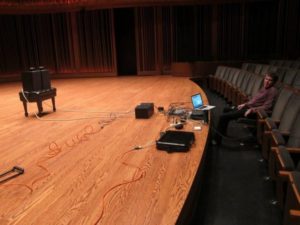
Mixing – The small concert hall in the guitar encouraged me to seek out a large concert hall to mix the album in. The Macalaster College music department kindly let me bivouac in their concert hall for an evening. I set up two pairs of mics: one in the center of the hall, and one pair in back. It worked well to allow a room’s ambience to settle around the piano and percussion. The natural acoustics of the hall helped the guitar settle into the piano.


Michael Engelbrecht: Apropos piano, you have played that instrument on „Natural Causes“ for the first time. Was the reason for that to keep the spirit of the beginner awake who has, according to Zen teaching, at times more fresh choices than the highly virtuoso & professional „approach“?


Steve Tibbetts: I just wanted to be able to read music a little bit. I read a review of a book about Bach’s „Musical Offering.“ As I recall, the book titled „Evening In The Palace Of Reason“ concerns a challenge from the King of Prussia to Bach. The King presented Bach a theme, a melody, and tasked him with improvising a fugue from it. Bach took up the challenge and played a 3-voiced fugue. The King’s request to create a six-part fugue ex tempore could not be fulfilled by Bach, because the Royal Theme was too difficult for that. The „Musical Offering“ contains a 6-part fugue, elaborated on desk. When I read that, I thought, „Even if I saw the music I wouldn’t be able to understand what Bach had done.“ I wanted to understand. So I began studying with Susana Pinto and she taught me Bartok‘s „Mikrokosmos“ and Bach’s „Inventions.“


Michael Engelbrecht: I keep circling, too, a bit. Listening to „Life Of“ you can easily feel something brooding, some darkness, a certain twilight zone. Is the origin for these sensations unknown – or somehow graspable? Echoes from all those „stranger things“ you experienced in Asia?


Steve Tibbetts: There is sometimes a sort of credulous enthusiasm to believe in „stranger things“, as you say, especially in Asia. Nonetheless there does seem to be a certain permeability to the fabric of reality in some places in the world. A friend of mine called it „thinness.“ You can look for that in music and art as well. You listen and there is a quiet collapse of duality, self and other. This might sound terribly exotic or over-thought, but if you watch your mind when you listen to music you might witness a kind of melting.


Michael Engelbrecht: After all these years, you and the percussionist at your side, Marc Anderson, did develop a kind of „secret language“ in the studio, not always easy to understand for people you start working with. But Michele Kinney is long enough part of your „inner circle“, I think.


Steve Tibbetts: No secret codes. Michelle can make her cello sound like a distant electric guitar feeding back through a Marshall amp. Tony Iommi-style.


Michael Engelbrecht: Haha, echoes from Bach and Black Sabbath within a minute. Now, Steve, living in Minnesota: did you follow those cold winter chills that were part of the three seasons of „Fargo“ (I love them!), and the original movie by the Coen brothers? Do you have a favourite TV series at the moment?


Steve Tibbetts: Yes, there is definitely a Minnesota way of being that I have grown to love. Very Norwegian, taciturn, reserved. I moved here from Wisconsin in 1972 and this is my home now. I like the way people are here, and I like the devotion to arts, education, and the liberal politics of this state. Some great political figures have come from Minnesota: Al Franken, Hubert Humphrey, Walter Mondale, Eugene McCarthy, and especially Paul Wellstone. And, mhmm, Favorite TV series: politics and the Scandinavia mindset probably figure into my enjoyment of „Okkupert.“


Michael Engelbrecht: I know you have quite a big ECM collection. What was the last discovery or re-discovery inside the new or old ECM releases? I personally re-discovered that wonderful Shankar album „Vision“ with Jan Garbarek and Palle Mikkelborg. When I played it on air, the needle died a slow death and added weird distortions to Garbarek‘s high notes.


Steve Tibbetts: I don’t have to re-discover the first 300 albums in the ECM catalog; I’ve never really left them! I have „Dis“ on now, as I write this. Brooding, dark, just the way we like it.


Michael Engelbrecht: Wow – this is a lovely synchronicity. Yesterday, on the day you wrote this, I felt the urgent need to listen to an ancient ECM recording, I haven’t heard in years and that didn’t leave my turntable for weeks when it had been released deep in the last century. „Witchi-Tai-To“ from the Jan Garbarek-Bobo Stenson quartet. On the opening track, the Carla Bley-composition „Air“, his sopranino sounds sharp like a tool for cracking ice. Listening to that record now, I‘m still stunned, and not so much on memory lane. Thank you for sharing your thoughts, Steve!


The End – I still think in terms of albums, even in terms of album sides. I lined up the songs, left to right, and worked with the running order until it seemed to hang together or make some sort of story. I played the ending of every song with the beginning of every other song until a plot started to reveal itself (this is what happens when you work alone—musical plots reveal themselves). Here’s how it ends: The kids went to college. Their parents were sad for a little while, then fine. Ellen lived and is in remission. Grandma died. Grandpa was sad. Everyone else lived as happily ever after as could be expected.


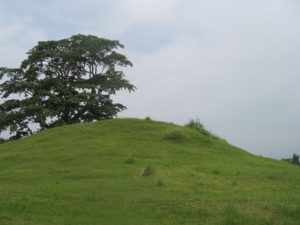
The End (2) – The texts about the guitar, the mixing process, and „the end“ were taken from Steve Tibbetts’ Life Of-page. Steve’s landscape photo belongs to the „thin places of the world“ he’s talking about, and is from Ramagrama, near Lumbini, 2015. This assembly is a truely manafonistic work: thanks to „Joey“ Siemer for fighting the devil in the details, and his sensitive, delicate and tactful design that allows linear and non-linear reading. Thanks to Ian McCartney for giving my small introduction the right groove and sharpness. Thanks to my late English teacher Dr. Egon Werlich who inspired my love for English language and culture (I still have in mind what he told us about the Beatles song „When I’m Sixty-Four“ – and I never got a better introduction to the works of Samuel Beckett (on an existential level, no smart-ass knowledge). Thanks to Hans-Dieter Klinger for cross-checking the Bach anecdote – Steve asked for this. Hans Dieter, former music teacher, once invited Keith Jarrett to play a solo concert in his school in Kronach (German hinterland), and still remembers well how carefully Manfred Eicher had placed the microphones. A week later music history was in the making – The Köln Concert happened! And, to be circling one more time: thank you for LIFE OF, Steve – „Where-am-I-music“ of a rare kind!

Manafonistas | Impressum | Kontakt | Datenschutz