Manafonistas

on life, music etc beyond mainstream

You are currently browsing the blog archives for the month Oktober 2016.

Archives: Oktober 2016

MHQ: You like that title for our small talk?
 

Michael: Yes, for my teenage heart!!! A nice dictaphone you have, let me have a look (silence, noises). You know my taste. DRUMS AND WIRES is a fucking great XTC album. I think our Ian listens to it on a regular basis, everytime his Celtics are switching to fuckng old Bravehearts :):) Steve Wilson’s genius remixes (stereo and surround) made me return to the treasure grove of ancient Progressive Rock. King Crimson are the greatest of them all. And you know the unkown HOLY GRAIL of Prog Rock?


MHQ: Tell me.


Michael: XTC’s MUMMER. Totally surreal, inventive, melodic, dark, mysterious. Tony Visconti is a big fan of it. As good as, well, IN THE LAND OF GREY AND PINK, one of the two really awesome CARAVAN albums.


MHQ: What has been the last of those records in your studio?


Michael: THICK AS A BRICK, the 5:1-version. I loved it when I was a teen, I still love it. Some years later, Jethro Tull turned a bit too whimsical, but their special Englishness, and the inventiveness of their CEO delivered some masterpieces. PASSION PLAY is an unusual approach to death. A bit Monthy Python, a bit Harold Pinter. I listened to THICK AS A BRICK, full volume, four active speakers, ground control from Trinnov Amethyst, and I was in heaven, even as a wall was cracking!

But, now, some guilty pleasure. Different from my new old companions, John Kelman and Brian Whistler,  I couldn’t stand TALES FROM TOPOGRAPHIC OCEANS. It was pure kitsch for me, Rick Wakeman aka „Mr. Hypervirtuoso“ (a reason for punk to arise quicker!) – horrible – and when I heard it in very young years, I decided never ever to return. But now I ordered Steven Wilson’s surround edition – I will drink two glasses of red wine (Molly Dooker, Two Left Feet, 2013) before starting the  machine – and then do my „reevaluation“ job.


MHQ: What do you expect?


Michael: The child in me always had big ears and merciless judgement. I think I will still find it awful, but enjoy the sound. Marihuana would suit better to play tricks with my mind. But in a few weeks from now, BEAT will be released, Steven Wilson-style. King Crimson’s great folllow-up of their unsurpassable quartet incarnation with Fripp, Belew, Bruford and Levin, DISCIPLINE.


MHQ: Another confession?


Michael: I never loved the music of Jimi Hendrix and Led Zeppelin.


MHQ: No one of your fellows believe this will be your last sign of life till December 6th, on this blog. You seem, ähem, a bit addicted, writin here.


Michael: Well, death notes come sooner. You can bet on it, Joey! I will still write my „memory lane review“ of those five excellent ECM vinyl albums from the days of old (will happen within the next seven days), and do some comments on my posting of the last radio night. Then I will cross the seven seas.


MHQ: Seven seas, Michael, keep it low …


Michael: You’re right. The old romantic in me. Time for reloading batteries. The seven seas are Baltrum, the Alps near Krems in Austria, England (somewhere in England), and that’s it. Maybe, Forestville, CA – no, no, that may be something for 2017 :) – would like to see here some photos of Mr. Whistler’s power spots there, with some short notes … Or stories.


MHQ: Eight free weeks, that’s pure luxury!


Michael: First of all, it’s brainstorming. And shit can happen anyway. But: Health comes back, or so it seems. ASS 300 was quite toxic, and this specialist in the „Sauerland“ didn’t tell me a fucking word to take it regularly after the meal, and after some Omeprazol.


MHQ: Will you visit Brian Eno in Notting Hill?


Michael: Dunno. He’s still the busiest guy I know. Yesterday I wrote him a mail concerning a meeting in Hamburg. I do know two fucking great places, great food, great view, and no shitty background music – thanks to the late Peter Rühmkorff, by the way … I miss the days in the studio of eccentric Michael Naura. Loved that guy!


MHQ: Something new on the loudspeakers?


Michael: In the car. Got a promo copy of that awful LAZARUS-musical with Bowie. There they even killed some of his best songs in broadway style. But: three pure, great songs from Bowie’s last months! A propos Broadway and entertainment. Leonard Bernstein did a great job with Mahler symphonies, and then, me, oh my, this awful musical and movie WEST SIDE STORY. Shakespeare drowned in American  mainstream. With a ridiculous view on harsh realities. There is only one medicine: the greatest (Shakespeare-fuelled) TV-series ever, „Sons of Anarchy“.


MHQ: Last question: which song do you sometimes sing in a shower?


Michael: Oh, my favourite question from Mojo Magazine. „Tell Me Why“ from Neil Young. „Some Of Them Are Old“ from Eno. All my personal evergreens. There is another one I would like to sing these days, but I couldn’t sing without my voice cracking, „Do You Realize“ from The Flaming Lips. And I would need a band in the bathroom for support, the band from the master class movie „Frank“, and, yes, Frank should better sing it, I would be very, very happy to do the background vocals. Oh, in fact I’m really keen to see the Flaming Lips again live on January 16th, 1917, in Berlin. Buy the ticket today!


Die Musik von Disasterpeace (Rich Vreeland) ist der Soundtrack, den solch ein minimalischer Horrorstreifen benötigt. Mit Echos von Cage, Carpenter und Penderecki. Ohne die laufenden Bilder macht er nur Sinn, wenn man etwas zum Film erzählt, der in und um Detroit herum gedreht wurde. Eine urbane Kulisse, die immer mehr zur Geisterstadt taugt. Alles wirkt seltsam retro in diesem Film, der sich in einem Nirgendwann zwischen den Siebzigern und der Gegenwart zu bewegen scheint. Wenn zu Anfang die blonde Jugendliche in High Heels verwirrt auf die Strasse läuft, wähnt man sich in einem Traumszenario.

Überhaupt scheinen sich die jugendlichen Protagonisten in einer Art Blase zu bewegen, zwischen der Zeit des Erwachsenseins und den Geschenken der Kindheit, die immer noch den grösseren Charme besitzen. Man liest auf E-Books (die wie digitale Poesiealben aussehen) Dostojevskis “Idiot”, man guckt alte Schwarzweissfilme mit Cops und Sternenreisenden, man ist vielleicht ein wenig gelangweilt, aber man ahnt und weiss, wie wichtig Freundschaften sind. Die Geschwister zicken nicht miteinander, man ermutigt sich, in dieser Welt, in der die Erziehungsberechtigten ein relatives Schattendasein führen. Und wenn dann das Grauen zur permanenten Bedrohung wird, ist Freundschaft allemal gefragt. Was ist man bereit zu geben, zu teilen?

Als Genrefilm bleiben verstreute Verweise auf andere Klassiker des Horrors im Vorstadtamerika nicht aus, von “Blue Velvet” über “Carrie” bis “Halloween”, aber nicht als ausgeklügelter Subtext für Filmjunkies – alles ist organisch verwoben, es gibt keine einzige überflüssige Szene in einem Film, der trotz unheimlichster Strecken immer noch Momente des Atemholens unter einem weiten Himmel findet,  in denen reine sanfte Melancholie herrscht, und die Gewissheit, dass die Kindheit ein für allemal vorüber ist.

Genau wie der Western, dessen Ende regelmässig verkündet wird, ist auch der Horrorfilm einfach nicht totzukriegen. Immer wieder mal kommen da wie dort kleine Meisterstücke zum Vorschein, die so “creepy” sind, dass manche sich an die erste Gänsehaut im Kino erinnern werden. Dieser Film ist so raffiniert, dass man leicht alle Requisitenvergisst, sogar die Tüte Popcorn in der Hand.

Unvergleichliches habe ich am Sonntag Abend erlebt:


– zwei charismatische Musiker (Altersunterschied 45 Jahre 6 Monate)

– Klavier- und Tenorsaxophon-Klänge (farbenprächtig leise kraftvoll)

– naturrein (kein mic kein amp kein speaker)


Some joyful Kind of Blues overwhelmed me.

Mysterious.


2016 18 Okt.

„Die Stille“

| Filed under: Blog | RSS 2.0 | TB | Comments off


2016 18 Okt.

Windowlicker

| Filed under: Blog | RSS 2.0 | TB | 2 Comments

Assange and The Big Money
 
 
The Snowden reference Lajla made in the previous post provides me with a perfect link to this post. (Great Gabriel lyric there Lajla, by the way.) Anyway:

Yesterday I stood just ten metres away from Julian Assange. I didn’t see him. Maybe he saw me. Who knows? Thousands of people pass Assange every day, most probably unaware that behind a net curtain, there he is – on his exercise bike, or watching the news on cable, or both.

Whenever I go to Knightsbridge I always stand on that corner for 30 seconds or so. For a good while there was a uniformed police presence on the corner. Then for a few months there was a presence that didn’t identify itself. Now there is nobody. It’s not a part of the area you’d much notice – Harrods‘ loading bay is at the end of the short street, and the Ecuadorian flag flies from the bay window of the Embassy where, in a presumably small and airless room, a weird captivity plays out, at length, while – in a very real sense – history slowly unfolds around it.

From a pyschogeographical viewpoint there is something fascinating here. You have the unstoppable flow of people everywhere – and of money too, with One Hyde Park (or whatever it is called) just across the road. London’s most expensive new development, architected by the same guy who did the Pompidou.


In most new developments you’ll get a few retail units that house a coffee shop, a deli, things of these nature. At One Hyde Park the retail units are McLaren cars, a private Islamic bank, and Rolex Watches. In the walkway between the buildings there is a recess maybe ten feet square, unused, where for some reason the building’s wall isn’t flush. There are spikes on the paving in the recess, to deter anyone from sleeping there. They look like a large version of the spikes used on window ledges to deter pigeons. Pure JG Ballard.

Anyway, it’s totally weird to walk between these points so close together and on the one hand see the river of big money and the almost overwhelming amount of people passing through, while on the other, a window behind which the feeling of stasis can only be injurious to mental health.
 
 
Brockwell Park
 
 
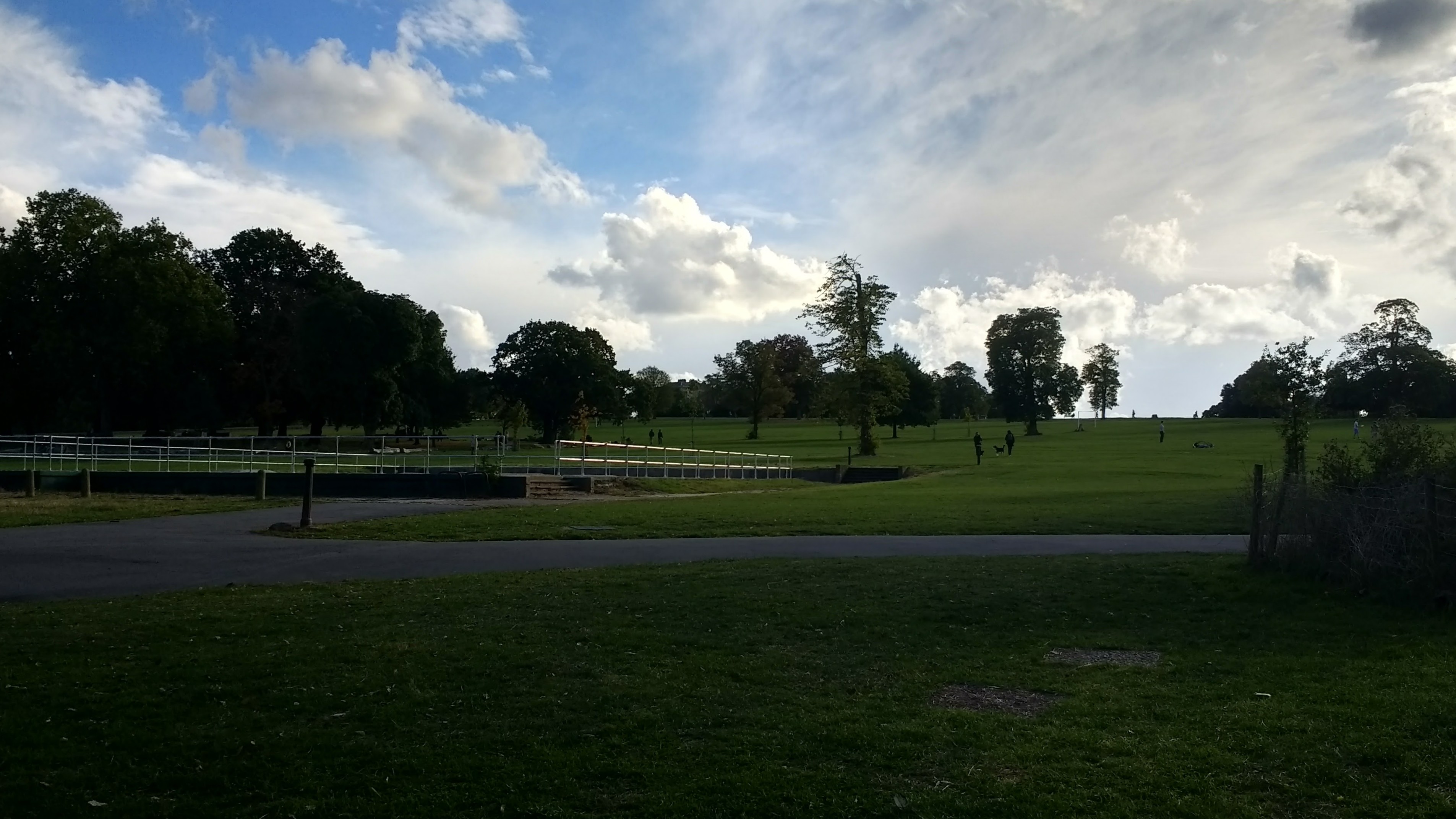
No adventure in pyschogeography should have an itinerary. Psychogeography is not a narrative, although I guess there’s an element of narratives overlapping or colliding. A friend called, she said do you want to meet for coffee. I said yes, let’s meet at Brockwell Park. So we went to Brockwell Park. Which was remarkably free of Hundescheiße.


The coffee was good but the weather turned cold and it started to rain and I had to go to Stoke Newington so that was that. It’s an unremarkable park but it has that sense of South London invincibility.
 
 
The Isle Of Dogs
 
 
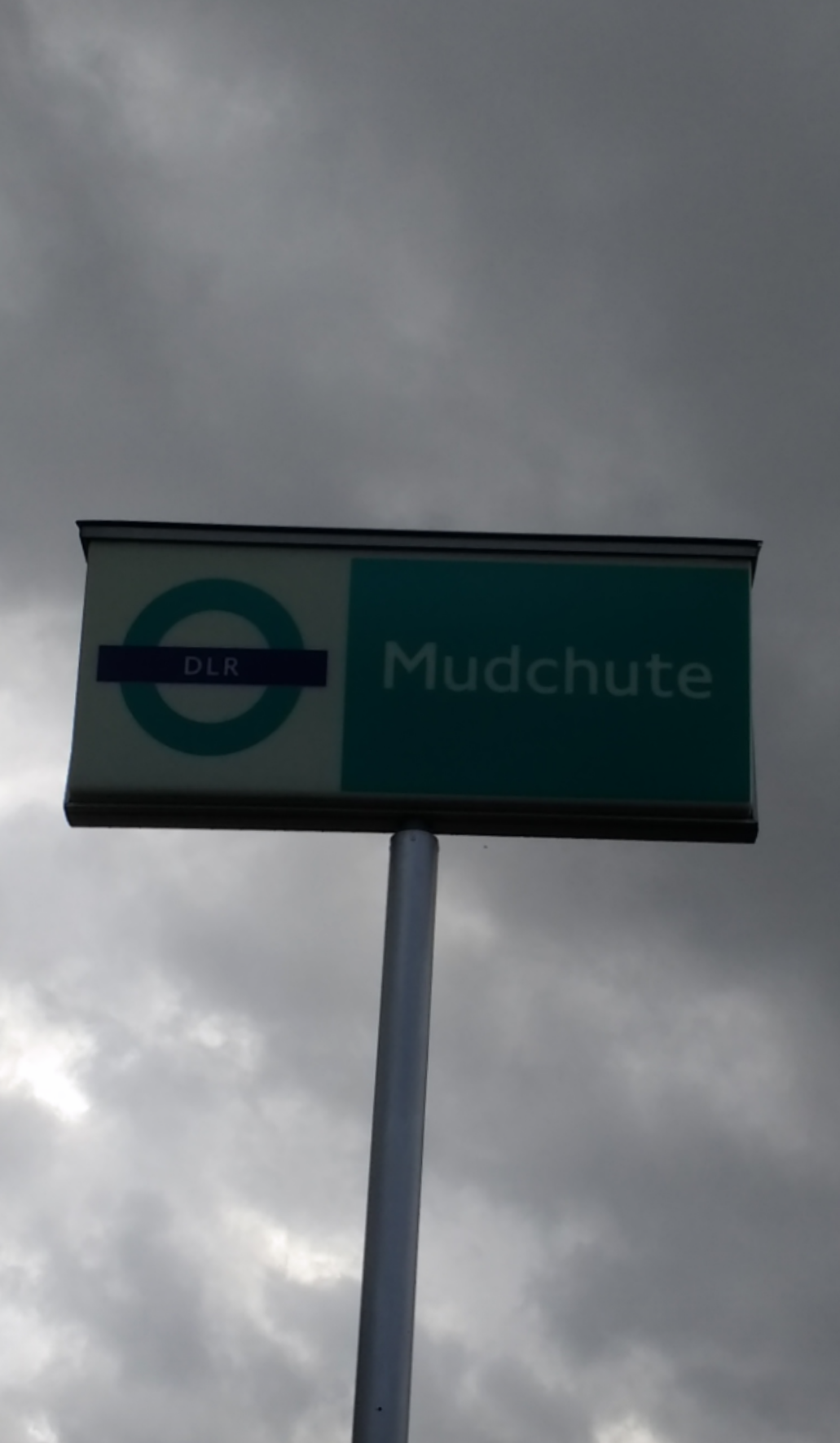
At some point prior to or after this, I was on the DLR and did what all good psychogeographers should do and got off at a random stop. Mudchute.


This used to be the real East End, the murder and mayhem end of town. But these days it has the feel of success. Not trendy enough to be trendy, not desolate enough to be London’s answer to Staten Island. Then before you know it you’re on a walkway under the Thames. Where in typical British fashion there’s an instruction: do not cycle. And a typical British response: the tunnel is full of of fucking cyclists.


Quick look around Greenwich, not in the mood for maritime museums, let’s go to Canary Wharf for no other reason than that it is there. I was looking for another walkway. One I’d seen photos of but couldn’t locate even with Google Maps. I asked a security guard. Got my smartphone, showed him the picture (expecting to be told it didn’t exist or wasn’t yet open). He said: go out that door, it’s above you. So I did, and it was.


Crossrail Place, One Canada Square. You could have a flight of stairs either end, easily, and not need the walkway. But it has to have been worth the money – it’s pure Kubrick.

 
*
 
„How the Chimney-sweepers cry
Every blackning Church appalls,
And the hapless Soldiers sigh
Runs in blood down Palace walls“
 
*
 
„Now as the ladder of life
‚as been strung
You may think a sweep’s
On the bottommost rung
 
Though I spends me time
In the ashes and smoke
In this ol‘ wide world
There’s no ‚appier bloke“
 
*
 
„In the night we freeze
And you want me to tell
In London’s lonesome park
Brockwell“
 

2016 16 Okt.

Das flackernde Neonlicht auf der Boogie Street

| Filed under: Blog | RSS 2.0 | TB | Comments off

Leonard ist weiterhin auf der „Boogie Street“, aber er begnügt sich damit, den grellen Neonlichtern gegenüber beim Flackern zuzusehen, wie einem Edward Hopper-Bild, das unter Zuckungen leidet. Zwischendurch schreibt er ein paar Zeilen auf, Verse, die ins Dunkle treffen. It’s a long and winding coffin road …


Underneath the sky where the cold winds cross
Theres an ocean where data flows
Woman in a boat out on the sea
A sea of little bits of you and me


Peter Gabriel hat den Song THE VEIL für den Film SNOWDEN geschrieben. Ich möchte ihn wirklich hier empfehlen, anzuschauen. Wir sind die Urenkel von Kant, eine Entmündigung dürfen wir uns nicht gefallen lassen. Dass Edward Snowden, die Intelligenz und den Mut aufgebracht hat, uns darüber aufzuklären, ist ein globales Zeitereignis. Oliver Stone ist als Filmregisseur nur ein Multiplikator, genau wie Gabriel. Don’t miss the film.


ERSTE STUNDE


ZWEITE STUNDE – Jherek Bischoff / Okkervil River / Zsofia Boros / Andrew Cyrille / Radiohead / Jenny Hval / Bon Iver / Andrew Cyrille** / Leonard Cohen / Jherek Bischoff


DRITTE STUNDE


„NAHAUFNAHME“ – „David Darling-Mixtape“ with a surprise;  „I knew Brian Eno would love CELLO when I sent it to him in the early Nineties.“ (m.e.) (ein besonderer Dank an Hans-Dieter Klinger für den „support“ von „Journal October“) 


VIERTE STUNDE – erste Zeitreise, die „Vinyl-Reissue“ von Terje Rypdals „Waves“ (1977), und „Modena, Part 1“, aus der 4-CD-Box „A Multitude of Angels“ von Keith Jarrett (VÖ: 4. November)


FÜNFTE STUNDE – zweite Zeitreise, mit „Jesus‘ Blood Never Failed Me Yet“, von Gavin Bryars aus dem Album „The Sinking of the Titanic“ (Obscure Records), und  „Octet“, aus der kleinen Schatzkiste „Steve Reich – The ECM Recordings“)***


image


* … nur die erste Stunde hier als „diskreter Podcast“. Da ist soviel Spannendes von HUBRO zu entdecken. (Die „dritte Stunde“ ist noch eine Option.) Und obwohl einige Themen dieser Nacht eng mit dem Label ECM verbunden waren, gab es in der ersten Stunde keine einzige ECM-Produktion:)! Das lange Stück von Keith Jarrett (in der vierten Stunde) war exklusiv (sozusagen), und als einmaliges Ereignis gedacht. 


** … eigentlich sollte vor Leonard Cohen eine Komposition von Egberto Gismonti kommen, interpretiert von Zsofia Boros auf dem Album „Local Objects“ – aber der „Denon Professional CD-Player“ gab den Geist vorübergehend aus („Error 103“ zeigte das Teil an, danke auch:)), und machte es unmöglich, „Local Objects“ zu verwenden („stuck in the dead machine“). Stattdessen kam die Andrew Cyrille-CD ein zweites Mal zum Einsatz, die faszinierend ist, aber vor Cohen nicht ihren idealen Ort hatte. Dafür aber vor „Numbers“ von Radiohead.


*** … musste mich bei dem „finale furioso“ um 5.40 Uhr recht kurz fassen, und die Uhr im Blick behalten, um die Komposition von Steve Reich punktgenau „abzufahren“. Deshalb gingen noch ein paar Sachen verloren, die ich unbedingt loswerden wollte. Das sei hier nachgeholt. Es gibt nicht nur die „Schatzkiste“ von ECM mit drei Reich-Werken (incl. „Music for 18 Musicians“, sondern auch, bei der Deutschen Grammophon, eine drei Langspielplatten umfassende Neueditition  von frühen Klassikern a la „Drumming“, letzteres hat aus meiner Sicht eine ähnlich tiefreichende Wirkungsgeschichte Wie die „Musik für 18 Musiker“. Zudem bin ich immer noch ganz vernarrt in die hypnotischen wie psychoakustischen Effekte seiner frühen Bandexperimente a la „It’s Gonna Rain“ und „Come Out“ (bei Elektra/Nonesuch erhältlich, unter dem Titel „Early Works“). 


image


P.S.: Ich habe in den letzten Tagen teilweise erschütternde Post von lieben Freunden / Bekannten  bekommen. So verdammt traurige Dinge schiessen gerade volle Breitseiten ab.


P.P.S.: Ich moderiere hier noch die Novemberempfehlungen, und das „Nachspiel“ dieses Beitrags hier – dann tauche ich für eine Zeit ab, ähnlich, wie ich es in den Northern Highlands gemacht habe, Anfang des Jahres. Comebackdatum: Nikolaus. Allen sei bis dahin die dritte Staffel von „Transparent“ ans Herz gelegt. Brian W. sieht sie sich gerade in Forestville, CA, an, schrieb er mir. Gleich die erste Episode, zum Heulen einsam. Und wer spielte da was: Nina Simone „Ne Me Quitte Pas“. Wer sie mag: alle sieben Aufnahmen bei Phillips aus den Sechziger Jahren liegen in einer preiswerten CD-Kiste bereit.


„There are too many stand-outs to list in detail; highlights include her cover of Irving Berlin’s ‘This Year’s Kisses’ and Bob Dylan’s ‘The Ballad of Hollis Brown’ from 1966’s Let It All Out; while ‘Wild Is The Wind’, later covered by David Bowie on Station to Station, is devastating in its searing beauty.


Bin gespannt, was unser „special guest“ Ingo Biermann im November zum „album of the month“ kürt! Hope you’ll keep this site alive in the following weeks.

The only thing I would call „written in stone“ Is playing David Bowies swan song „I can’t give everything away“ in my night show on the last day of 2016. Next Friday you can kill the flame, if you want it darker. Cohen’s album coming out.


Peace, Michael!


Es ist einfach, diese Musik zu lieben, wenn man einen guten Draht zu freien Jazzklängen hat – und das Melodische auch da gern aufspürt, wo Anarchie und Ausbruch Optionen sind. Andrew Cyrille muss Freunden der Free Jazz-Historie kaum vorgestellt werden, aber es sollte unbedingt der Hinweis erfolgen, dass ein Etikett wie „Free Jazz“ für dieses Album so irreführend ist wie der nach alten Losungen der wilden 60er Jahre klingende Titel „The Declaration of Musical Independance“ (ECM 2430).  Andrew Cyrille muss niemandem mehr etwas erklären. Das ist stiller freier Jazz, jederzeit auch  extrem dynamisch, nie nervös sich verzettelnd, immer konturiert, luftig, abenteuerlich. Für den Gitarristen Bill Frisell, der lang kein bedeutendes Album mehr unter eigenem Namen aufgenommen hat, ist dieses Dokument eine Erinnerung an seine kreativsten Jahre bei ECM, an frühe Zeiten bei NONESUCH. Anders geerdet, und ähnlich eindringlich, sein raues Spiel auf Lucinda Williams jüngsten Liedern vom „Highway 20“! Ben Street ist der Bassist, der sich hier nicht nur im Tiefkellerbereich der Sounds abarbeitet, sondern gleichermassen zur Luftkunst dieser neun Kompositionen beiträgt. Hinzu kommen all die sparsam gesetzten Töne und Klangwirbel des Synthesizer- und Pianospielers Richard Teitelbaum. Eine Platte wie ein Vermächtnis des Poeten am Schlagwerk, an der Perkussion. Der Produzent ist Sun Chung, und wer immer das ist, er hat exzellente Arbeit geleistet. Von ferne erinnert mich diese „Unabhängigkeitserklärung“ an eine ältere Manfred Eicher-Produktion mit dem schlichten Titel „The Paul Bley Quartet“ (ECM 1365). Der in diesem Jahr verstorbene Klavierspieler war ein ähnlich stilgrenzenbefreiter Pionier, ein Seelenverwandter von Andrew Cyrille. Und bei jener Produktion waren, neben John Surman und Paul Motian, auch ein gewisser Bill Frisell dabei. Und damit habe ich Ihnen eigentlich gleich zwei Aufnahmen wärmstens empfohlen. 


Manafonistas | Impressum | Kontakt | Datenschutz