Good that we have our man in town. Now if you have a quick look at the August issue of Mojo, you might overlook a really interesting review from Victoria Segal. Cool, sharpminded, blond lady, I got to know her once. There she’s offering her thoughts on „Scottish instrumentalists‘ third session of musical regression therapy“. Mhmm. musical regression therapy might hint to some falling back on an early level of age, first flirts with sounds, everlasting impressions… Seems to fit cause the first track of the album titled FORGETTING THE PRESENT is called „Blabbermouth“. The band carries the name REMEMBER REMEMBER, is a Glaswegian six-piece, and, as Victoria writes, „they hold all the keys to unlock those (possible false) memories of lost summers, late-night sadness, and that time the village was troubled by witches.“ Now, Ian, is that true, witches had supposed to be in your town. Any historic novel existing that might shed some tiny light here?:) But let’s return to the review, Victoria knows something about witchcraft, I guess. „There are shades of Tortoise in the way „Blabbermouth“ dips, dives and suddenly falls away, while the puff of Popol Vuh mysticism on „Why You Got A Blue Face?“ sends them floating ever further from land. More robust moments (…) provide a necessary shift, but, with all its delicate finesse, FORGETTING THE PRESENT largely prefers to take its oblivion lying down.“ This music seems to follow special sideways of Scottish weirdness. Let’s wait and listen!
Archives: Juli 2014
2014 2 Juli
Blabbermouth, or: strange things happen in Glasgow!
Manafonistas | Filed under: Blog | RSS 2.0 | TB | 1 Comment
Bryan Sikes stöhnt. Das Leben ist voller erstaunlicher Dinge, aber zu gerne stöbert man in den Zonen der Mythologie, und überlässt der Wissenschaft die Ernüchterung. Oft genug spielt die empirische Forschung mit, macht esoterische Angebote. So bleibt man auch im Gespräch. Der mythische Yeti aus dem Himalaya war ein Bär, das belegen jetzt Haarproben. Bryan Sikes trinkt am liebsten Americano. Er hat ein Team von Wissenschaftlern im sich geschart, und sie stellen ihre gesammelten Ernüchterungen auch ins Netz. Wie jüngst in den PROCEEDINGS OF THE ROYAL SOCIETY B. Das Erbgut von 32 Haarproben wurde unter die berühmte alte Lupe genommen, die im 21. Jahrhundert ein etwa anderes Design hat. Bryan stöhnt schon wieder. „Das ist wie in den Colin Dexter-Krimis“, sagte er, „oder der Nachfolgeserie „Lewis“, die hier in Oxford spielt. Da hast du jede Menge historische Rätsel, Unerklärliches – und mit der Auflösung kommt immer die Ernüchterung. Beim Kriminalroman funktioniert das, weil der Schurke überführt wird. Aber in unsrem Metier ist die Auflösung wie ein Kater nach einem Abend mit billigem Fusel.“ Die lange als völlig aus der Norm und Reihe fallenden Primaten, die „Fabelwesen“ Bigfoot und Almasty sind schlicht bekannte Säugtiere gewesen. Auch andere rätselhafte Geschöpfe entpuppen sich nun reihenweise als Kuh, Waschbär, Hirsch, Schwarzbär, und einmal gar als, ähem, Mensch. Wir sitzen in „Zappi’s Bike Cafe“, wo sich einmal in der Woche ein Thriller-Zirkel trifft. Bryan trinkt mittlerweile den zweiten Americano: „Bei denen könnten wir gut mitmischen. Einer aus meinem Team hat hier mal ein richtiges Referat gehalten: „Die Spurenelemente der Realität im modernen Wissenschaftsthriller“.“ Die Frage liegt nahe: „Brauchen sie da nicht mal zur Erholung reine Fiktionen?“ „Richtig. Etwas, bei dem man überhaupt nicht ins Grübeln kommt. Also, sagte man mir, ich sollte mal abschalten, und in eine andere Welt driften. Dann las ich Stephen Kings Schmöker „Der Anschlag“. Ich wollte das Buch richtig doof finden, aber es war brilliant geschrieben, und, damn it, es brachte mich, nachdem ich die letzte Seite verschlungen hatte, ganz kräftig ins Grübeln.“
2014 2 Juli
The Secret Destination In Calabria
Manafonistas | Filed under: Blog | RSS 2.0 | TB | Comments off
Praia Art Resort
Loc. Praialonga | Isola Capo Rizzuto
I – 88900 | Italy
Highly recommended by one Manafonista who has not even been there yet. Just a matter of empathy and premonition. No problem to live up to the cliche: don’t forget your Paolo Conte records, and a couple of wonderful books for the beach: Helge Timmerberg’s „Die Märchentante, der Sultan, mein Harem und ich“ is a good choice, as might be Ernst Augustin’s „Der amerikanische Traum“. And here, in Calabria, well, a nice place to read „Schöne Ruinen“ one more time. Amore, you know, amore, and great food, You walk into your room a night, after another swim, and out of the tiny loudspeakers you’ll hear softly descending notes from a Nino Rota soundtrack.
„High Life is a genuine surprise. As the second meeting between Eno and Hyde in the last four months, it would have been reasonable to expect outtakes, another set of OK half-songs to accompany the ones released earlier this year. But High Life—recorded in just five days, with much of it played and processed live—is something else altogether. This is Eno’s best vocal album in 25 years, since his 1990 collaboration with John Cale, Wrong Way Up.
It’s interesting to go back that far because High Life has a few things in common with that record, most prominently the elements inspired by pop music from the African continent. Yes, this is a recurring obsession of Eno’s, dating back at least to his first co-billed collaboration with David Byrne, 1981’s My Life in the Bush of Ghosts. But on High Life it’s again made explicit, from the title (Highlife is a broad genre of jazz-inflected West African pop music that emerged late in the last century) on down.
That said, many of the references are less musical and more textural, and guitars are the first thing you notice. The opening “Return” is nine minutes of drone-guitar bliss, as Karl Hyde strums two chords furiously with the sort of pinched, trebly, delay-heavy tone that evokes both West African styles and the Edge circa The Unforgettable Fire. The tension of pivoting between those two chords without resolution is softened by Eno’s voice, which he layers into sturdy central melody softened by billowing harmonies. It’s the kind of blindingly simple thing that nobody does better than Eno, and it points to why this record towers over much of his recent output—it sounds analog, like people in a room playing who could make mistakes.
Despite his technological pedigree, Eno has always been most inspired by the place where abstract mathematics meet the messiness of nature. High Life shows how much he can wring out of just a handful of ideas. If I’m leaning heavily toward Eno’s contributions here, it’s because so many of his songwriting and production signatures are in the foreground.
Hyde is the guitarist throughout the record, but Eno’s fingerprints are all over his approach. “DBF” is a relatively upbeat track with a chicken scratch-funk feel that makes me think of Talking Heads’ “Born Under Punches”, while the slow and dreamy line in “Time to Waste It” brings to mind an ’80s interpretation of King Sunny Ade. But we’re talking about something more than just a collection of global music signifiers here—influences are stripped down, transformed, and often turned into something disorienting and strange through Eno’s processing.
“Time to Waste It” has pinched, warped, and ultimately very weird vocals of uncertain origin which seem to be singing lead from different songs with each new line. “Lilac”’s overlapping guitar lines have the frenetic pulse of classical minimalism, with odd bleeps and squawks mixing in with the chords, and they’re contrasted with the richly harmonized vocals, which remind us how in tune he is with the pure joy of singing.
That big-hearted spirit is embedded into the record as a whole. On the elegiac closer “Cells & Bells”, grinding Fennesz-like electronics are set against a mass of voices singing a dark but faintly hopeful prayer. It’s a moving end to a startling and inspiring record. Eno’s been involved with quite a few of those in the past, but it’s especially nice to experience a new one that reaches us in the present moment.“
– excerpts from Mark Richardson’s pitchfork review


„In philosophical terms, I’m what’s called a pessimist,“ Cohle tells Hart.
„All right, what’s that mean?“ Hart asks.
„It means I’m bad at parties.“
„Let me tell ya, you ain’t great outside of parties, either.“
(Dialogue from True Detective)

1. Elch auf dem Labrador Hwy

2. Schwarzbär im Riding Mountain NP, Manitoba (zum Glück vom Auto aus)
2014 1 Juli
My Favourite 8 Kronos Quartet albums
Michael Engelbrecht | Filed under: Blog | RSS 2.0 | TB | 1 Comment
1) Terry Riley: Salome Dances For Peace
2) Kronos Quartet: Nuevo
3) Steve Reich / Kronos Quartet: Different Trains
4) Black Angels (including George Crumbs Black Angels)
5) Pieces of Africa
6) Night Prayers
7) Floodplain
8) You’ve Stolen My Heart
And, yes, they contributed to John Zorn’s class A composition „Spillane“.
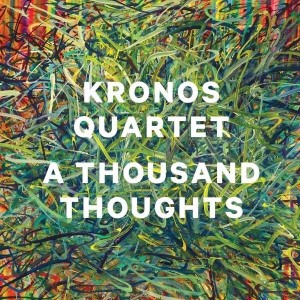
Mit „A Thousand Thoughts“ legt das 1973 gegruendete KRONOS QUARTET dieser Tage eine interessante Zusammenstellung aus bereits veroeffentlichten Alben vor. Versammelt sind auf dieser Compilation Zusammenarbeiten mit u.a.: Astor Piazolla (selbstverstaendlich mit einem Tango!), Le Mystère des Voix Bulgares, die ein Stueck von Terry Riley interpretieren sowie die bekannte irische Ballade „Danny Boy“. Dazu Musik aus Fernost und Afrika – und auch Blues, „Dark Was The Night, Cold Was The Ground“ von Blind Willie Johnson zum Beispiel.
Natuerlich: von einem klassischen Streichquartett interpretierte Musik weist aufgrund der Instrumentierung eine gewisse Strenge auf; die Zusammenarbeiten auf „A Thousand Thoughts“ zeigen aber, dass diese dem Klangbild, dass wir mit Violinen, Cello und Viola verbinden durchaus neue, interessante Ausdrucksmoeglichkeiten und Klangfarben hinzufuegen koennen.

Letztens habe ich ausnahmsweise einmal den Radiosender EINS LIVE eingeschaltet. Grund: der „EINS LIVE TALK“ in dem ab und an Gaeste eingeladen werden, die auch fuer alle, die nicht zum von EINS LIVE anvisierten Zielpublikum gehoeren von Interesse sind.
Tobi Katze zum Beispiel, der von sich, Poetry Slam (= kabarettistische Geschichten erzählen) und sein gerade erschienenes Buch „Rock’n Roll mit Buchstaben“ und bemerkenswert offen ueber seinen Kampf gegen Depressionen erzaehlte.
Der Reiz beim Poetry Slam und beim Lesen dieses Buchs ist fuer mich, dass sich hier eine andere und vorallem juengere Generation zu Wort meldet, die einen so ganz eigenen Blick auf Erlebnisse und ihre Lebenssituationen hat.
Natuerlich ist das Nachlesen im Buch etwas „trocken“ … aber vielleicht haben wir ja Glueck und als naechstes steht die Veroeffentlichung eines Hoerbuchs – womoeglich noch live vor Publikum mitgeschnitten – an ? Waere optimal.