Ich kann den Namen wohl immer noch nicht richtig schreiben (Jochen wird es richten), aber sein Spiel auf der Violine, von dem er einmal sagte, er wolle sie spielen wie Coltrane sein Horn, begleitete mich durch die Siebziger Jahre. Er tauchte bei Volker Kriegel auf und seinen besten MPS-Platten, und plötzlich bei der wunderbaren Gruppe Oregon und ihrem Werk „Violin“. Vor allem aber tauchte er als Solist auf, im Jugendhaus der Falken in Würzburg. Dort spielte er solo, bzw. im Duett mit geloopten oder sonstwie gespeicherten Sounds, die einem einfachen Tonbandgerät (Gregor hätte es sofort identifiziert) entströmten, oder einem speziellen „Looper“. Es war beeindruckend, diesen Mann vollkommen in sich versunken zu erleben. Allen Tonschleifen zum Trotz war sein Spiel gleichsam entfesselt. Wenige Jahre danach, vielleicht waren es nicht mal Jahre, starb er im Dortmunder Süden, in der Bittermark, an Krebs.
Archives: März 2012
2012 8 März
Der große Zbiginev Seiffert und sein Auftritt in Würzburg
Michael Engelbrecht | Filed under: Blog | RSS 2.0 | TB | Comments off
2012 8 März
„Buried Treasure“ (Ambrose Field / John Potter: Being Dufay, on ECM New Series)
Michael Engelbrecht | Filed under: Blog | RSS 2.0 | TB | Comments off
Oh, wie ich dieses Album liebe: Alte Vokalmusik, dekonstruiert mit Stimmenmanipulationen und Elektronik. Könnte akademisch klingen, ist aber eher „Soulmusik“, im weiteren Sinne. Ein Synthesizer ist dabei, den auch Pink Floyd einst benutzte. Das Album wurde „CD des Jahres“ in den Klanghorizonten, ist auch schon wieder eine Weile her.
2012 7 März
M. Ward and a new song from his forthcoming album „A Wasteland Companion“
Michael Engelbrecht | Filed under: Blog | RSS 2.0 | TB | Comments off
Inspired by his increasingly itinerant lifestyle M. Ward set forth to create something of a musical travelogue. He explains, “Between now and when I made Hold Time there has been a lot of travelling which requires a lot of reckoning with what to leave behind and what to carry – material and otherwise – and thinking about what I want versus what I need, creatively and otherwise. I wanted to get a reflection of that on the album. It was a process of stripping away my security blanket, which is the same four walls I always record in.”
2012 6 März
Show me everything: Tindersticks im Kölner Gloria, 12. März
Michael Engelbrecht | Filed under: Blog | RSS 2.0 | TB | 3 Comments
Bleibe in der Nacht in Köln. Nach meiner Sendung ausschlafen im Chelsea Hotel, und morgens beim Lieblingsitaliener Spiegelei mit Parmesan. Die Süddeutsche lesen, am besten wieder nur Gutes über Borussia Dortmund. Schwebetag. Besuch in der Alibi-Krimibuchhandlung. Was wird der Meister von HARD-BOILED und NOIR empfehlen? Ich empfehle ihm Steve Hamiltons Misery Bay. Hoffe auf frühlingshafte Temperaturen. Gerne auch Regen, zumindest im Radio: Spring Rain, von den Go-Betweens. Nachmittags zurück ins Chelsea. Träumen. Konkret träumen. Dann Vielleicht den neuen Roman von Joe R. Landsdale anfangen, „Ein feiner dunkler Riss“ heisst er, oder so ähnlich. Abends dann ins Gloria: die Tindersticks haben ein so starkes Album gemacht. The Something Rain. Sie haben einen Stil, seit langem. Und jetzt überhaupt keine Manierismen mehr. Hoffentlich spielen sie meinen neuen Lieblingssong: Show me everything.
„And then there is the standout Show Me Everything, unfurling against a heavy bass thump, resonating guitar and glacial female backing vocals. There´s a stage pause … we wait. And then Stuart Staples finally speaks for the first time on the record. Complexities / Treachery / We watch through glass / We see nothing. Building higher and higher upon itself until it overspills in a cacophony of guitar and the clambering tumult of his vocals; it is utterly, utterly brilliant.“
2012 6 März
Gregor öffnet seinen Plattenschrank (14)
Gregor Mundt | Filed under: Blog | RSS 2.0 | TB | 1 Comment
Man glaubt es ja nicht, aber es stimmt, es gab einmal eine Zusammenarbeit von Wolfgang Dauner, Volker Kriegel und Robert Wyatt, auch der damals noch sehr junge Terje Rypdal war dabei und der neuseeländische Bassist Neville Whitehead. Diese fünf Musiker bildeten die Begleitband für Don „Sugar Cane“ Harris. Das Ereignis, das diese sechs Herren miteinander musizieren ließ, waren die Berliner Jazztage 1971. Nur für dieses Ereignis hatte man diese Gruppe zusammengestellt. Kein Geringerer als Joachim E.Berendt hat, mit Hilfe seines damaligen Assistenten und späteren Nachfolger Berendts beim SWF bzw. SWR Achim Hebgen, diese damals in den Medien überaus hochgelobte Band zusammengeführt.
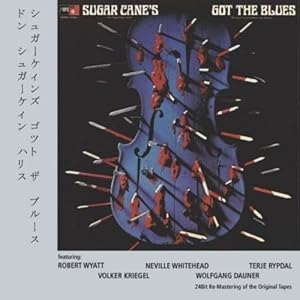
MPS brachte eine Live-Aufnahme dieses Konzerts auf Platte heraus. Dieses Schallplatte einmal aus dem Plattenschrank geholt, aufgelegt, „Liz Pineapple Wonderful“ gehört und man ist wieder einmal überzeugt von dieser fantastischen Gruppe, auch nach 41 Jahren. 2008 kam diese Platte als Original Recording Remastered CD wieder heraus und ist heute noch zu haben. | Ebenso im Jahre 2008 kam eine Schallplatte als Original Recording Remastered CD auf den Markt, die ein Jahr früher als „Sugar Cane`s Got the Blues“ im Orginal in die Plattenläden kam, nämlich 1970. Die Rede ist von der Gruppe IF und ihrem herausragendem Stück „What Did I Say About The Box Jack“. Auf einer preisgünstigen Anthology 1970 bis 1972 kann man diesem wunderbaren Stück Musik wieder begegnen.

IF, das waren Terry Smith, John Mealing, J.W. Hodkinson, Jim Richardson, Dick Morrissey, Dave Quincy, Dennis Elliot. Die Gruppe existierte bis 1975. Im BEAT-Club war die Band am 25.09.1971 neben Birth Control, Canned Heat, Curved Air , Deep Purple, und Family zu hören und zu sehen … Das waren Zeiten!
2012 6 März
Jennifer Egan: Der grössere Teil der Welt, oder: Das Leben in Sprüngen
Michael Engelbrecht | Filed under: Blog | RSS 2.0 | TB | Tags: Literatur&Musik | Comments off
“Complexities / Treachery / We watch through glass / We see nothing” (Tindersticks)
Er sammelt Stille, die längsten Pausen in den Songs der Rockhistorie, „Roxanne“ ist weit vorne. Das ärgert seinen Vater. Später begeht der Sohn Selbstmord; es genügte ihm nicht, Stille zu sammeln. Nicht alles ist so tragisch, obwohl vieles traurig ist, im neuen Roman von Jennifer Egan. Aber auch komisch. Und dann wieder herzerweichend. Auch habe ich dem möglichen Leser in den ersten Sätzen nicht viel verraten. DER GRÖSSERE TEIL DER WELT ist ein Puzzle aus 13 grossen Kapiteln, eins davon ist als Powerpoint-Demonstration getarnt. Wir landen in einer Zukunft, die wir alle noch nicht erfahren haben, und die erzählte Zeit, die hier ein sehr dehnbarer und durchlässiger Stoff ist, reicht zurück bis ins Amerika der späten 70er Jahre. Jennifer Egan war selbst ein spätes Hippie-Mädchen, aber sie konnte das Gespür der Punks für Umbrüche bestens nachempfinden. Und so lernen wie die Flaming Dildos kennen, mit ihrem Gitarrenzauberer Scotty (der als Teenager zu lange in die Sonne schaut, später Hausmeister wird und Fische angelt, und die Welt versuchsweise in Nullen und Einsen auflöst), sowie den unglücklich verliebten Bassmann Bennie, der später gross rauskommt im Rock-Business. Der Roman springt zwischen den Zeiten und Figuren, aber seltsamerweise zerfällt das Buch nicht bei der Lektüre in lauter unverbundene Einzelteile. Man könnte sich bei der Vorstellung des Romans verlieren in tausend Episoden. Wer einmal eingetaucht ist in dieses permanent den Tonfall, die Zeit und die Glückszustände wechselnde Erzählwerk, wird auch davon berichten wollen, denn hier wird einem, in enormer Kurzweiligkeit, mit glänzendem Humor und tottrauriger Prägnanz, das Leben als kurzer schneller Fluss präsentiert, und wer zweimal in den gleichen Fluss springt (in den schmutzigen East River etwa), bleibt eben doch irgendwie derselbe. Jennifer Egans Schreibstil hat zwar etwas Sezierendes, eine gewisse Unterkühltheit – doch zugleich, egal, wie paradox das erscheint, verrät sie nie ihre Figuren, lässt ihnen Luft zum Suchen und Lieben und Vögeln und Atmen und Träumen und Selbsterkennen. Die episodische Erzählstruktur ist natürlich nichts Neues, man denke an den Film SHORT CUTS von Robert Altman, man denke an Romane, die bestens geübt sind in verrücktesten Zeitsprüngen. Gelungen ist dieses Buch eben auch, weil keine postmoderne Romantheorie durchexerziert wird. An Theorien ist Jenniger Egan nur interessiert, wenn ihre Figuren sie sich zu eigen machen. Diese Theorien heissen dann Lebenslügen. Wie das Fremde einem ganz nahe kommt, und das ganz Nahe fremd wird, auch davon erzählt dieses Buch. Ein rauschhaftes Leseerlebnis!

2012 6 März
Statt Nichts Hannover
Jochen Siemer | Filed under: Blog | RSS 2.0 | TB | Tags: Hannover | 5 Comments
Es wäre ja mal an der Zeit, eine Lanze für seine Heimatstadt zu brechen (ja, ist er noch ganz frisch, frischverliebt zumindest nicht …) – „Leinen los!“ also für diesen Ort an der Leine, der soviele Berühmtheiten vom Stapel ließ: die Lena, die Scorpions, den Gerd und einen Schloßhund namens Wolf, der sich ´ne kleine Hütte vorfinanzierte. Aber seit Jahr und Tag wird diese Stadt von ausserhalb her denunziert als Dunkelort der Depression.
Wie kommt das bloß? Wo liegt der Grund begraben? Bestimmt nicht in der meist trostlosen Architektur (post war re-buildings) – die gibts auch anderswo und selbst in Rio de Janeiro (am Fluß des Januars) sind die Häuser häßlich. Nichts als Vorurteile also: pride and prejustice?
Vielleicht. Wer länger in Hannover weilt – und viele tun das nicht aus Schwermut, sondern purem Glück -, der weiß: hier lebt sich´s gut und komfortabel. Ein großer Vorteil nämlich ist die enorme Konformität: niemand fällt hier aus der Rolle – alles ist gemäßigt und normal. Nur laut ist es: die Lärmbelastung ist von allen deutschen Städten hier am höchsten. Merkwürdiger Widerspruch – denn optisch gleicht die Szenerie eher einem von de Chirico gemalten Augenblick ewiger Windstille.
Das ist für Fahrradfahrer vorteilhaft, denn wo kein Wind ist, da ist auch kein Gegenwind. Zum Bikerglück tragen auch die ebene Landschaft und ebenso expomäßig renovierte Wege und Erholungsflächen bei. Gehört man allerdings zu den trainierteren Naturen, muss man schon 30 Kilometer bis zum Deister fahren, um dann am Nienstedter Pass endlich den ersehnten Widerstand zu spüren: dort gehts, man glaubt es kaum, in Serpentinen steil bergauf … und hernach steil bergab.
Hannover ist eine Stadt der Kunst. Ein ungeheurer Satz wie dieser will begründet sein: längst vergessen ist zwar die Fachhochschule für Gestaltung – sie fiel den Sparzwängen zum Opfer (dafür wird das Herrenhäuser Schloss jetzt wieder aufgebaut). Aber besagte Flachland-Topografie sorgt dafür, das alles, was aus dieser Ödnis sich erhebt, sich gleich als Objekt hervortut. In abwechslungsreicheren Gefilden wäre das gar nicht möglich: allein die Natur sorgte für eine Konkurrenz zum Artifiziellen, die hier gänzlich fehlt.
So sind der Projekt(ions)- und der Gestaltungswille groß: denn wo nichts ist, muss etwas werden. „Warum ist denn überhaupt Etwas?“ – nach vielmehr Nichts sehnte sich doch schon der alte Leipniz, dem zu Ehren hier ein Tempel steht. Sein Wunsch blieb ungehört.
Denn was die Schöpfungsgeschichte uns verschweigt: am Siebten Tage, ausgerechnet, war Hannover an der Reihe. Es war gerade Sonntag und der Schöpfer sprach (im gleichen Dialekt wie Schröder): „Macht ihr mal fertig, Genossen, ich mach heute gar nix mehr!“ Und deshalb ist hier seit Genesis ewig Messe (what a mess!) und das Leben eine Baustelle. High Life für die Stadtbauplanung einer Hochkultur. Ist doch auch was – oder Nichts?
2012 5 März
Adam Nelson on Hood: Recollected (wahrlich eine der unterschätztesten Bands der britischen Pophistorie; diese Box wird für manchen zur Schatzkiste werden – hier werden Landkarten ausgebreitet und Klimaforschungen betrieben)
Manafonistas | Filed under: Blog | RSS 2.0 | TB | Comments off
While bands are often associated with a particular location or place, it’s arguable that no act in pop music has ever shared so completely a symbiotic relationship with its landscape as Hood. Over the course of seven albums and eleven years, Hood’s music was in a state of almost constant evolution — from their early lo-fi years through to the IDM-inspired glitch-pop of their final two albums, via a brief spell as post-rock innovators — but their inspiration remained stable: the desolate and fractured environments of their Yorkshire home.
Richard and Chris Adams’ (the brothers who were the band’s only permanent members) childhood home was in Wetherby, an isolated northern satellite town roughly inbetween York and Leeds. Hood’s music is steeped in the post-industrial, post-Thatcherite atmosphere of northern England; in the region’s struggle to evolve into modernity; in the dichotomy between the rural, pastoral villages and farming communities which, by the 1980s and 1990s, were pressed up against the sprawling, multi-cultural metropolises that cities like Sheffield, Bradford, and Leeds were becoming. ‘Western Housing Concerns’, the first track from The Cycle of Days and Seasons, opens with the naturalistic ambience of a church organ, which is undercut with the repeating sound of mechanical machinery at work, as what sounds like a photocopier churning out copy, after copy, after copy. The discordant interplay between old and new functions as a microcosmic demonstration of the manifesto behind Hood’s work. Recollected — first released digitally last year to coincide with the tenth anniversary of Hood’s commercial and critical zenith, 2001′s Cold House, and now as a six-CD box set which brings together the band’s final four albums along with two compilations of EPs and rarities from the same period — presents the perfect opportunity to re-assess that work and its legacy.
In his essay that accompanies this collection, the critic David Hemingway makes a point of noting the season in which the Adams brothers formed the band. It’s an important detail. Although not detached nor distant, there is a coldness to Hood; winter finds its way into every crack of their music. Their songs often begin with an ambience, through which an isolated guitar note cuts like a crack in ice. The artwork for all these albums depicts the Yorkshire winter days where grey skies bleed into grey landscapes. The cover of the first album in this collection, Rustic Houses, Forlorn Valleys, shows a cloudy watercolour sunset, cut into by the silhouette of a house, and bisected by power-lines. Again we see the clash of nature with industrial modernity. Outside Closer‘s artwork, green and yellow flowers and cold white sky, and a rusted signpost reading “END OF ONE TRAIN WORKING”, is loaded with the same themes that Hood built a career out of exploring.
This isn’t just marginal detail. Hood’s music carries an intensely visual aesthetic; seeing, watching, and particularly darkness and light play a prominent recurring role in their lyrics. “You’re cast in ancient light”, a line Chris Adams sings on Cold House‘s ‘They Removed All Trace That Anything Had Ever Happened Here’, could be directed at the very music he is making, coming from a place so far removed from familiarity that it sounds like it has travelled across light years to get here. Richard Adams has since likened Cold House to “a particularly grainy postcard”, which would be a bizarre choice of imagery for almost another band, but seems perfectly fitting for Hood. It also brings us back to ‘Western Housing Concerns” photocopier. Hood’s production methods and the structure of their compositions (slowly laying one instrument atop another, slowly developing a few sparse sounds into something recognisable) frequently has the effect of simulacra, a copy of a copy of a copy, or a photograph exposed to sunlight for too long, something that demands attention and is more than simple reproduction of a source. To return to the artwork once more, Cold House‘s cover image is a reproduction of a blurry photograph taken of a low-res Super 8 recording projected onto Chris Adams’ basement wall. The “ancient light” that remains from the original hillside still spills through, but it is transformed and disfigured. The methods of composition Hood were deeply involved in by this point — looping samples, distorted drum machines, cut-up vocals and lyrics from cLOUDDEAD’s Yoni Wolf and Adam Drucker, the meanings of which Chris Adams confesses to not really understanding — are the logical musical conclusions of the visual imagery that fascinated them. Behind each sound lies another, each one closer to the original, which always remains inaccessible.
Throughout their career, Hood’s albums seemed to come in pairs. The early duo of Cabled Linear Traction and Silent ’88 are not included in Recollected as they were pre-Domino releases, and while their omission is a shame from a historical perspective, musically it’s debatable how much we’re missing. Certainly, it is their tetralogy of albums for Domino that present us with Hood’s most lasting legacy.
On the two earliest albums here, 1998′s Rustic Houses, Forlorn Valleys and 1999′s The Cycle of Days and Seasons, Hood don’t make a habit of riffs, nor even generally of playing a whole chord. Their guitars slowly build, one note on top of the other, pursuing their end, as Goethe advised, “without haste, but without rest”. The percussion is gentle but relentless, with the effect of rain beating against a window. That most of the tracks on Rustic Houses circle around the eight minute mark helps Hood build up their sonic landscapes, when their tracks do reach a crescendo, it is with a sense of interruption of the calm, like a violent storm, delivering a palpable sense of release and of breaking tension. Hood’s Yorkshire, with its bleak and unforgiving winters, is as accurately evoked as Dickens’ London or Joyce’s Dublin.
Though the post-rock tag followed the band for the rest of their career, it was already more or less redundant by the time of Seasons, which reinvented post-rock while it was still in the process of being invented. Seasons retained much of the stylistic and aesthetic tendencies of its predecessor, but eschewed the lengthy, meandering tracks in favour of more focused distillations of the same themes; and took a more experimental approach to composition. The album’s standout moment is the largely wordless ‘In Iron Light’ (there’s that word again), a dub-influenced ambient composition, which uses Chris Adams’ vocals as much as part of the texture of the song as a means to communicate his lyrics. It is the track which most clearly preempts Hood’s final pair of albums.
2001′s Cold House is the album this set was released to commemorate, and is generally the band’s most well-regarded. There are no doubts that a trajectory tracing Hood’s creative experiments would see its apex here. The Adams brothers were introduced to hip-hop duo cLOUDDEAD, who contributed directly to three tracks, and whose influence was felt far wider, as Hood began to interrogate their own influences and philosophy more deeply than ever. “Sometimes the sunset doesn’t want to be photographed”, sings cLOUDDEAD’s Yoni Wolf on ‘Branches Bare’. Sometimes, nature resists modernity. Traditional instruments rub dissonantly against warped samples and somehow, despite being the album which most foregrounds modern recording techniques, Cold House is the album which sounds most alien, most ancient, like a document from a secret history. At once, Hood sound at their most comfortable and at their most restless. The Yorkshire that they built the preceding albums around was never the most inviting place, but nevertheless the Adams found some solace there. On Cold House, it is a positively hostile environment. On the album’s centrepiece, ‘The Winter Hits Hard’, Chris Adams sings in desperation that “this year has been so hard”. “You can feel the winter approach”, he says, as reverberating cymbal crashes sound like repeated physical attacks. Next, on one of the album’s more upbeat moments, ‘I Can’t Find My Brittle Youth’, he recalls “How you hated days that end so soon/Cause it makes your life slip away”. The dark days of northern winters have ceased to offer any comfort at all, and the song breaks down in spasmodic sampled percussion, echoing the failing consciousness of the protagonist.
Cold House is probably Hood’s most distinctive and complete artistic statement, but for all the originality and inventiveness it holds, I have never been able to resist the pull of Hood’s final album to date, the haunting and wonderful Outside Closer. Lacking in its predecessor’s relentless intensity, Outside Closer makes clear its intentions from the opening of its first track proper, the string-drenched ‘The Negatives’. “Go to the furthest place from you house/Make sure you’re broke/And watch the birds fly ’round”, is the advice it offers. For the first time, Hood seem willing to believe that there are seasons other than winter; that a ray of light is more than just a break in the clouds; that not everything in Yorkshire is painted in shades of grey. The sketchy, tangled hip-hop beats introduced by Cold House remain, but here they are more vibrant, less claustrophobic, exploring a broader pallet of sounds than ever before.
With this in mind, it is perhaps unsurprising that it turned out to be the band’s final record. Outside Closer marks a resolution in the career of one of the most underrated bands this country has ever produced, and it is difficult to see where the band might have gone next. Chris and Richard have both separately released music since, as Bracken and The Declining Winter respectively, and both have largely abandoned the themes they interrogated so vigorously with Hood. Arguably, Hood never created a bona-fide masterpiece. With enough hindsight, this doesn’t seem to matter. The four albums here represent a stunningly complete cycle of work, with each sounding unique and distinct from every other, and each displaying another stage of evolution. There is perhaps a debate to be had about the utility of this box-set—only The Hood Tapes, a 24-track collection of rarities from the Domino-era, is unique to this collection, and while it contains some magnificent moments (‘This Year’s First Storm’ is a highlight of the band’s career), it alone hardly represents value. But the central point here is that, whether any of these albums in isolation deserves the accolade “masterpiece” or not, Hood are a band ultimately best understood when their career is viewed as a whole. For new listeners and for long-time fans, there has never been a better time to take a fresh look.
2012 5 März
The Lijadu Sisters: Afro-Beat Soul Sisters – It’s about time the Lijadu Sisters‘ unique, punkish slant on 1970s funk, soul and disco got its rightful dues (written by Alexis Petridis, The Guardian)
Michael Engelbrecht | Filed under: Blog | RSS 2.0 | TB | Comments off
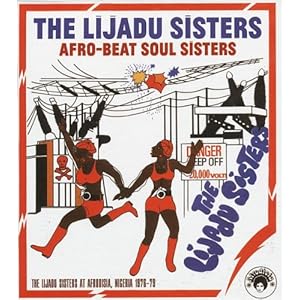
Perhaps it’s not surprising that the Lijadu Sisters have spent the last 30 years languishing in obscurity. Life as a female artist in the 1970s was no barrel of laughs, wherever you hailed from. It was the era of an all-female rock band called Fanny and Gilbert O’Sullivan’s 1974 hit single A Woman’s Place, which, he reckoned, was in the home. Even at the height of punk, with Patti Smith supposedly overturning outmoded ideas of women in rock, it was somehow deemed acceptable to advertise a new single by Blondie with a picture of Debbie Harry and the tagline „Wouldn’t you like to rip her to shreds?“ But imagine trying to forge a career as a tough, groundbreaking, independent-minded female artist in 1970s Nigeria. The country’s dominant artist was Fela Kuti. The crisply self-styled One Who Emanates Greatness Carries Death in His Quiver and Cannot Be Killed by Human Entity was many things – a musical genius and an unimaginably brave political rebel among them – but there were certain areas in which his zeal for fairness and justice seemed a bit lacking. He thought homosexuality was a psychological illness caused by pollution, and he thought women were „mattresses“. „An African man should not do anything called housework or cooking,“ he cheerfully told one journalist, but not everyone was as forward-thinking and progressive as that.
Into that environment charged Taiwo and Kehinde Lijadu, audibly aiming for more in life than doing Fela Kuti’s dusting. Given the prevalent climate, they were perhaps doomed to failure, but they did make a string of attitude-laden albums before moving to the US in the early 1980s. That attitude veered remarkably close to punk, via an appealingly ramshackle, untutored vocal approach, and lyrics that move from righteous political needling and calls for a riot of their own („Get out! Fight! Trouble in the streets!“ opens Orere-Elejigbo), to something far more complex and troubled. „We’re cashing in, prostitution, yeah, we’re cashing in, revolution yeah,“ they sing, brightly and blithely on Cashing In. „Poverty is still a common sight.“ It’s a cocktail of cynicism, fury and impotent despair the Sex Pistols might have recognised.
Attitude aside, what lifts Afro-Beat Soul Sisters from worthy archaeology to something genuinely thrilling is the music they made. You catch echoes of all kinds of things in their sound: a stripped-back, concise take on Kuti’s slippery funk, the insistent pulse of disco, the stinging guitars and organ of psychedelic rock, plus acoustic folk and the bassy thunder of talking drums. At its best – the mesmeric groove of Bayi L’Ense, or Life’s Gone Down Low’s defiant, super-cool strut – the music on Afro-Beat Soul Sisters is as tough as the women who made it.
They are at their least interesting when they try to make straightforward disco, because their hearts audibly aren’t in it: the vocals on Get Up and Dance cross the boundary from appealingly ramshackle and untutored to flatly out of tune.
European and American listeners who find themselves surprised by the cynicism of Cashing In – because they somehow expect African music to be intrinsically more earnest and straightforward than the rock and pop produced in New York or Los Angeles or London – might be mollified to discover that cultural preconceptions cut both ways. Disco was an infinitely adaptable genre, perfectly capable of conveying dissent. But listening to Sunshine, you get the distinct feeling the Lijuda Sisters thought disco was meaningless western pop pap, too flimsy to bear the weight of their message, and toned down their rhetoric to fit: the shift from the smartness of equating the corruption of Nigerian society with an abusive lover on Danger, to Sunshine’s facile „clap your hands and stamp your feet, be happy“ is a bit hard to take.
Still, you can’t blame them for wanting to reach a wider audience. They never did: at a time when the storecupboard of rock and pop feels pretty bare, when it feels as if everything from the past worth hearing has already been compiled in digitially remastered sound, you boggle a bit at something this good languishing in relative obscurity. What else is out there? The one certainty is it won’t be quite like this: the Lijuda Sisters still feel as singular as they must have done four decades ago.
2012 5 März
Brian Enos Morgenlied, oder: You´ll never walk alone
Michael Engelbrecht | Filed under: Blog | RSS 2.0 | TB | 1 Comment
Es scheint nicht viele Frühaufsteher zu geben in Dortmund. Die Strassen sind seltsam leer, wenn ich in aller Herrgottsfrüh (ich bin nicht religiös, hatte aber einen schrecklichen Pfarrer, der aus dem Mund roch, uns Messdiener mit Weihrauch traktierte und von der Hölle faselte, daher bleiben manch alte Worte hängen, die im späteren Leben wegen ihrer Markigkeit ruhig nachschwingen dürfen – sie bereiten keinen Schrecken mehr) in die City von Dortmund fahre. Ich habe schon mal mein H.G., kaum hatten sich die Ränder der Morgendämmerung verkrochen, in das erste sich öffnende Starbucks in London geschleppt, durch geisterhaft leere Strassen, sie hat es mir verziehen, und ich habe ihr später den „Cappuccino Song“ gewidmet (ein Gedicht). Zum Glück hatte ich heute morgen den richtigen Stoff dabei, das Album ANOTHER DAY ON EARTH von Brian Eno. Ich hörte eine Dreiviertelstunde lang, unterbrochen von einem Milchkaffee im Bahnhof, nur den Song UNDER: und alles wurde in mir wach, jede Müdigkeit abgeschüttelt, jede Angst löste sich – und eine unbeschreibliche Sehnsucht machte sich breit. Ich habe keine Hemmungen, dies in so schlichten Worten zu formulieren. Die scharfen, schneidenden Konturen der in den Vordergrund gemischten Perkussion, die sich allmählich steigernde Intensität von Enos Gesang, dieser himmelwärts (ganz unbiblisch gemeint!) taumelnde Text, den ich Wort für Wort mitsingen kann – mein ganz und gar unchristliches Erweckungslied ist das! Ich fuhr auf dem Rückweg am Westfalenstadion vorbei, wo Borussia Dortmund gestern in einem Klassespiel Mainz 2:1 besiegt hatte, liess das Seitenfenster auf, damit ich den Song weiter hören konnte, und genoss die Morgenruhe vor den Haupttoren. You´ll never walk alone, singen wir drinnen im Stadion immer, das Lied haben wir von den Fans aus Liverpool vor Jahr und Tag übernommen, und es erzeugt, im Kollektief, eine ähnliche Gänsehaut wie Brians Morgenlied.