Manafonistas

on life, music etc beyond mainstream

1
 

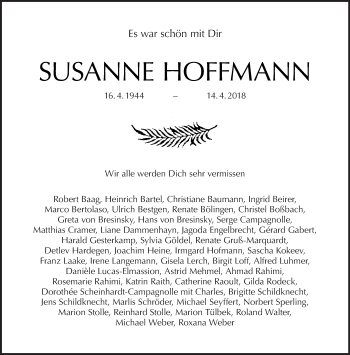
The last radio show, for example: the check-up routines for the two record-players, and, in a night that was full of untold angst, untold sadness (Susanne, please, no reason to die, if we simply had been able to  freeze a single day!), „Across The Universe“ from the Mono Masters, seemed to stumble near the end, as if our Fab Four‘s spiritual utopia had been devoted to crash test driving.

You know what happens in movies when someone says she‘s / he‘s just going around the corner for a bottle of Merlot, a pack of cigarettes?! Going away has many discreet announcements in the way of „Nothing’s gonna change my world“, but then, you know …


2
 

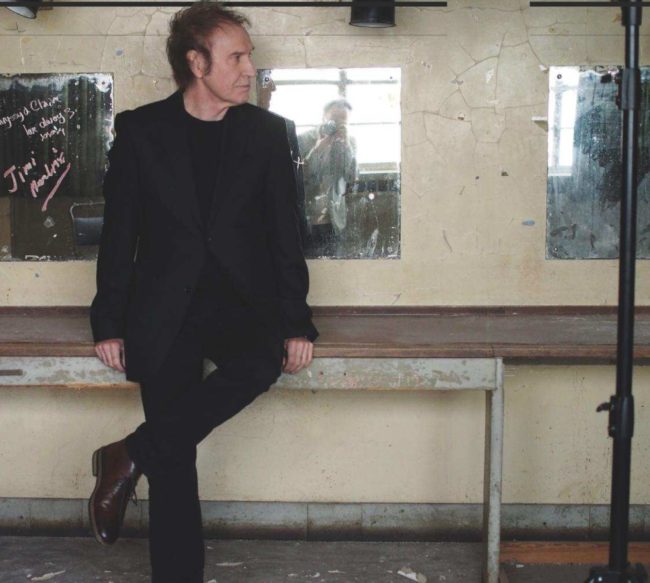
Always returning is more tricky than most people think – old pain just reveals different colours with decades going by. Think of Ray Davies (nearly being killed in New Orleans) re-visiting his past one more time on „Our Country – Americana 2“. The Jayhawks are the most thrilling houseband he could imagine for his time travel enterprises, and for good reasons. They are simply able to wipe away the dust from every post-WW2 syle of American tapestries – just to let all those dust molecules fall back softly like brand-new memories.

A propos time-travel: when the late 60‘s had put psychedelic drugs on their agenda, it was only a matter of time when a mix of naivety (on the side of hippie romantics) and supression (the reactionary boomerangs) put the likes of LSD, mescaline and associates under constant suspicion. Times have changed (sometimes that really happens!), and famous culinary writer (!!!) Michael Pollan makes the transition from feeding your body to feeding your head. „How To Change Your Mind – What The New Science of Psychedelics Teaches Us About Consciousness, Dying, Addiction, Depression, Transcendence“ is a book with stunning insights, simple as that.

„Words are flowing out like endless rain into a paper cup / They slither while they pass, they slip away across the universe“. Sean Duffy is such a refreshing mind when it comes to music, he could easily sing  along with that old Beatles track and leave some dry remarks. But, being a detective in his real, fictional life, he certainly has different things going on in his mind on the first pages of Adrian McKinty’s new thriller. Things can go terribly wrong, oh, yes, they can! Though this is another book of the famous McDuffy series, it can be read as a stand-alone novel, and no one should hesitate because of the simple German (!) title, „Dirty Cops“, leaving out the wit of the original, „Police at the Station and They Don’t Look Friendly“. A historic crime novel of sheer dark brilliance!

What‘s your favourite flute player since the salad days of Rahsaan Roland Kirk and Herbie Mann? Still whispering along „Memphis Underground“? Early Jeremy Steig? The fabulous Chris Hinze – oh, you never heard his „Mission Suite“ on MPS?! Maybe it‘s a good time to meet a French wizard of the flute, yes, the early  70‘s again, a sometime collaborator of Jacques Rivette. So, be ready for two buried treasures finally brought to daylight by the fine French label „Souffle Inconnu“. Jean Cohen-Solal studied the flute from all angles, he knows about the far away horizons, as he does about the electro-acoustic school of sound. „Flutes Libres“ maybe the perfect starting point, a record that knows how to escape well-trodden roads.

Small roads, tiny villages and rainy coastlines: you get all of this and much more in „Shetland, season 4“. Based on the novels by Ann Cleeves, the British TV-series is slow and quiet, very slow, very quiet, luckily it’s convincing, too, in every way. If you want to know why Patti Smith has a knack for English crime series, enter the world of DI Jimmy Perez (aka Douglas Henshell), and you will be drawn into a landscape that has a hundred different words for grey.

All our recommendations for July are definitely not about entertainment, they are about the old question: what is this life all about? Well, serious questions can produce funny answers: „Images of broken light which dance before me like a million eyes / They call me on and on across the universe / Thoughts meander like a restless wind / Inside a letter box they / Stumble blindly as they make their way / Across the universe“.


3
 
No smartness required.

Just a little break.

I will go for a Merlot.

Don‘t wait.

Just put the needle on the record.

 

2018 15 Juni

Michael Brook: Hybrid w/ Brian Eno & Daniel Lanois

von | Kategorie: Blog | | Comments off


a u d i o


2018 15 Juni

JSB

von | Kategorie: Blog | | 1 Comment


jetzt, da 2 Buchstaben entnommen wurden,
musste das mit ihnen verbundene Bild weichen


die verbliebenen 3 Buchstaben
sind zweifach enthalten in diesem Bild
 
 
das akustische Analogon kann man hören
– wenn man will –
 
listen


2018 14 Juni

The Meters: Rejuvenation

von | Kategorie: Blog | | Comments off

With ‚Cabbage Alley‘ (The Meters‘ first record for Reprise) the band began to smooth out it’s sound, moving away form the more down-and-dirty approach of it’s earlier releases. This trend continues with the superb 1974 release Rejuvenation. They sound a bit more commercial but boast far stronger and catchier songs and as such, this album is probably the most accessible Meters album and arguably the best one to get as a first purchase. Moving away from their early albums, every track now features vocals (from Art Neville’s brother Cyril), are often punctuated by the inclusion of horns and feature more backing vocals.

The album kicks-off with the fantastic ‚People Say‘, an irresistably funky guitar riff that builds up as drums, bass, horns, piano and finally vocals are thrown into the mix. Featuring a great singalong chorus, the track doesn’t throw in any solos but rather just lets the groove keep going right through to the outro. A funk classic.

They then switch tone for the second track ‚Love is for me‘. A slower smoother ballad with some wistfully soulful singing from Cyril: „Love is for me. You ought to be. Right in my loving arms“. A good ballad, but improved greatly by the addition of some female gospel-sounding backing vocals during the chorus and horns in the second-half of the song. A nice break for the outro of sung „love is for me’s“ by the choir. A great evening song.

The theme of love is continued into the third track ‚Just Kissed my Baby‘. Again, a great riff with some beautifully understated funk drumming by Ziggy and again punctuated with a little horn. A couple of nice guitar/bass riff/fills help to build up the groove again. Before a few sung „just kissed my baby’s“ kicks in after about 3 minutes. Again, some nice little understated fills allow the groove to keep simmering throughout as Ziggy’s drums subtely heat up for the outro.

‚What’cha say‘ is another great track. A few slow, sad-sounding guitar-notes start the track before some ultra-funky drumming kicks in for a break. The verses are not the most memorable, but they are relatively short before returning to the original break. The chorus is also one of the best on the album, a series of shout-and-repeat „hey hey hey, what’cha says“ It kicks in in the second-half of the track and keeps going to the end complete with superb funk-drumming.

A nice bass riff and the words „Here come da jungle man“ lead into the main song, really a series of syncopated funk riffs it’s a nice little slower, understated tune that gives a change of tempo before..

Track 7, ‚Hey Pocky Away‘, along with ‚People Say‘ the best song on the album, and released as a single (the two singles are bonus tracks). It’s also been covered by the Grateful Dead. A classic drum riff backed-up with piano instantly give this tune away when it comes on in a playlist. It’s a superb mid-tempo funk anthem with a great sing-along chorus, the horns blast out some nice notes to bang the song home and good vocals. Always puts me in a great mood:

„Lying back groovin‘, riding in your car. Don’t make no difference, where you are. Feel good music. In your soul. Makes your body, wanna rock ’n‘ roll „.

From this positive upbeat number there’s a nice contrast to the sadder, extended funk-jam of ‚Ain’t no use‘. Clocking in at over 11 minutes this is easily the longest track of the album and gives a chance for the band to show-off what they do best; playing tightly as a group and building grooves.

It opens with a couple of sung verses about wanting to be set free, but the singer knows he „wouldn’t last a day“. A couple of guitar tracks allow the groove to be maintained whilst Leo solos over the top between verses. Some sung words after the second verse as Leo solos more before the music quietens down, announcing the beginning of the jam at almost 4:30. This is where they get a chance to really show their playing as there are no solos in the previous tracks. The group-playing is great, starting with piano before kicking into guitar. Ziggy continues to provide a funk-drumming 101 class, and understated piano chords keep the groove going throughout and the individual musicians never ruin the groove with over-the-top flashy playing.

Finally, Africa. Talking about going „back to the motherland“ it’s a nice groovy tune, again with great drumming and understated riffs and some subtle organ helping to build the groove. The bass is a bit more prominent here, and although there are no really flashy riffs, that’s not really what The Meters are about. The groove does sound instantly classic and I wouldn’t be a bit surprised to see it sampled in a rap song.

Overall then“ Some great grooves, a smooth sound and good vocals. The material is pretty much excellent throughout and does contain a couple of true funk classics.  The opening immediately sucks you in and the playing never lets up. The drumming is excellent, riffs classic and the guys play as a group, never losing sight of the fact that funk is about the groove. As a result they don’t try and overwhelm you with their flash but play as a group all the way through. A fantstic introduction to The Meters and a great album from a band that deserves much more widespread recognition.


Stephan Thelen sandte mir das Album VORTEX seiner Band SONAR gerade noch rechtzeitig, nun sind alle manafonististischen „Alben des Monats“ versammelt. Die Nacht beginnt, nach dem Krimi, wie immer, mit zwei Stunden randvoll mit neuen Produktionen. Die üblichen Verdächtigen können immer noch in ihren Bann ziehen, und laden durchweg zum Lauschen, der Gegenwelt des flüchtigen Reinhörens.

Sehen Sie sich das Foto an: Nils Okland und Sigbjorn Apeland setzen über zur Insel Lysøen, um den Spirit des einst berühmtesten Geigers ihres Landes, Ole Bull, zu beschwören. Die „Hardingfele“, wie Oklands Hauptinstrument heisst, gibt den Ton an in der dritten Stunde, der Nahaufnahme der Klanghorizonte, zwischen Freitagnacht und Samstagmorgen im Deutschlandfunk.


„Pools of sorrow, waves of joy, are drifting through my opened mind“, schrieb John Lennon einst, und diese Zeile könnte sich morgen im Äther herumtreiben. In den beiden Zeitreisen zum Ende der Nacht, erinnere ich an den jüngst von uns gegangenen Pianisten Misha Alperin, und um eines seiner radikalsten Alben herum spiele ich Musik, die sich luftig zwischen Trancesession und Grenzgängerei bewegt, neben Klassikern gibt es ein wieder aufgetauchtes Album aus dem französischen „Chanson-Underground“ der frühen 70er Jahre, und, vielleicht, einen Song aus Gregs Jukebox.

In der Stunde nach dem ersten Hahnensschrei schliessen und öffnen sich gleich mehrere Kreise (das passiert schon vorher permanent – Vorsicht: Dejavu! – man denke an Steve Tibbetts‘ Begegnung mit der Hardanger Fiedel) – Jon Hassell begegnet seinem jugendlichen Ich anno 1978 in New York und erinnert sich an Italo Calvinos Buch „Die unsichtbaren Städte“.


2018 14 Juni

Quote from a great spy novel

von | Kategorie: Blog | | Comments off


– Kommen Sie oft hierher?

– Wahrscheinlich  öfter als ich sollte. Und Sie?

– Nur für Händel. Wenn sie mit Beethoven anfangen, verliere ich das Interesse.

– Sehr vernünftig.

2018 14 Juni

Remain In Light 2

von | Kategorie: Blog | | Comments off


„Inspired by nascent hip-hop, Fela Kuti and the trance-like rhythmic rituals of Haitian voodoo, Talking Heads’ 1980 LP Remain in Light – and its lead single „Once in a Lifetime“ – served as a gateway into African music for many of us. It thus makes perfect sense for the Benin-born singer Angélique Kidjo to further “Africanise” the album.

Kidjo, who has always said that she is as much influenced by James Brown and Otis Redding as she is by African musicians, tonight refashions Talking Heads as a frenetic Afrobeat orchestra. Where David Byrne was nervy and neurotic, Kidjo is forthright and regal, lingering on some of Byrne’s seemingly random lyrics; where Talking Heads’ punk-funk was jerky and machine-like, Kidjo’s band add syncopated horn blasts, spangly high-life guitar and some astonishing rhythms, with kit drummer Yayo Serka (from Chile) and hand percussionist Magatte Sow (from Senegal) turning the beats inside out.

By the second song – where Kidjo transforms Crosseyed and Painless into a jittery slice of horn-heavy Afrobeat – much of the audience were rocking so hard in their seats that you wonder why the gig hadn’t been scheduled in a standup venue. Soon the entire audience were on their feet, as Kidjo wandered into the audience and interspersed the Talking Heads album with other songs – her feminist anthem Cauri, her praise song Afirika and Miriam Makeba’s Pata Pata.

By the finale – a 15-minute take on Kidjo’s song Tumba – she’s joined on stage by an African djembe player, two Punjabi dhol drummers, and around 50 audience members, all dancing manically. For the encore, she strays from Remain in Light once more for a thrilling Afro-Cuban version of Talking Heads’ Burning Down the House. Cultural appropriation has never sounded this good.“

(John Lewis, The Guardian)


Question is: is it that good? With all due respect (I mean, Tony Allen on drums, master of the Afro Beat), with no doubts of being impressed by the re-shaping, the inventiveness of the arrangements, the passion involved, everything, I would always prefer the original version, and I dare to say, it‘s not a matter of nostalgia, or recurring to „the real thing“. Arguing what the „real thing“ is, might lead to funny conversations here.

(M. E.)

2018 13 Juni

Rachel, Jack and Ashley Too

von | Kategorie: Blog | | Comments off


„ (…) Besides everything else, this last episode of Black Mirror’s season five (on Neflix), a really outstanding story, ruminates on the power of celebrity and AI to fill in the cracks of lonely lives, seeming to mend them but ultimately only alienating us further from each other. But it’s also about the endless differences between the sanitised images we see everywhere and the brutal realities behind them, and the drive towards homogeneity in all things – from insecure adolescent teenagers seeking safety in the crowd until they figure themselves out, to the people who just want to make the biggest buck from the widest possible demographic.“

(Lucy Mangan, The Guardian)


2018 13 Juni

Das Hotel am Bahnhof von Garmisch-Partenkirchen

von | Kategorie: Blog | | Comments off

Es war eine Nacht lang meine Verbindungsbrücke zur Welt und heisst „Vier Jahreszeiten“, was ein kleiner Scherz und doch wahr ist. Von dem berühmten Hotel gleichen Namens hat es immerhin den vollkommen verblichenen Abglanz einer alten Ära übernommen. Da schwirren ja überall Trachtenmädels herum in der Stadt, der Lokalkolorit kann gnadenlos sein, von alten Männern mit grosser Vogelfeder im Hut ganz zu schweigen. Ich kann auch meine Geschichten von Hotels erzählen, ähnlich, wie es, in der Nacht zum Samstag, in den Klanghorizonten, Father John Misty und Ketil Bjornstad angehen. Wenn es nicht um Begegnungen mit Unbekannten geht oder Liebesrauschnächte, ist das Hotel ein guter Ort, das Alleinsein zu kultivieren. Der norwegische Pianist hat diese Lektion gelernt, von seinem alten Freund Terje Rypdal, wie man in solch fremden Räumlichkeiten aufschlägt, in dem man das Persönlichste (Musik, Bücher etc.) sofort nach Betreten des Zimmers um sich ausbreitet. Habe ich in den „Vier Jahreszeiten“ auch gemacht. Nicht zuletzt das Booklet von Bjornstads „A Suite of Poems“. Der Raum mit seiner hohen Decke und der Bahnhofsnähe brachte frühe Kindheitserinnerungen zum Vorschein. Asthma in Bad Gastein, Gespenster unter dem Bett. Erste Fahrstuhlfahrten. Viele alte Fahrstühle sehen aus wie Särge aus den Fünfziger Jahren. Beengt und schmucklos, Rumpelsärge. Guter Humor ist stets gefragt, in Garmisch wie in New Orleans: „It’s brass band in the bathtub / It’s the devil in the minibar / It’s voodoo in the wall / I think I’ll call it a day.“ (Lars Saabye Christensen)


Manafonistas | Impressum | Kontakt | Datenschutz