Manafonistas

on life, music etc beyond mainstream

You are currently browsing the blog archives for the category ‘Blog’.

Category: Blog

„I´ve just read a few parts from your blog, and I must admit that your interpretations of my solo harmonium playing corresponds very well with my own thoughts of it. Even if I play completely acoustically, my sound aesthetics is deeply inspired by electronic music and analogue synthesizers.“ (Sigbjorn Apeland, Email from Nov.2)

Hello Guy

Here in Dortmund we have a clear blue sky on November, 1, „Allerheiligen“,  not the ideal weather (at the moment) for people who love to listen to melodramatic Cure songs on their Ipods on  burial grounds. By the way, I´ve only loved one Cure album, “Seventeen Seconds”, an early one.

I didn´t hear any “Witch House” music until you told me about it. So I ordered Balam Acab and his cd “Wander / Wonder”. I like the richness of the textures, especially the aquatic atmospheres. It reminds me a bit of early trip-hop (a new recipe?) … The music is a bit too interesting to end up in New Age territory.

GS: Balam Acab’s new album is a conscious departure from Witch House. Witch House tunes usually feature lots of 808 drum machine. They’re like indie music with southern crunk beats. I think this is probably more to your taste than Salem or the other Witch House bands.

Yes, the synthesizer is an old-fashioned instrument now. And one has to be careful using it. It now carries along so much history: every new sound seems easily to be an “old sound”. Creativity is required to avoid the „retro stamp“…

GS: To be fair, I still think there are bold new ways to use synthesizers. Dubstep synth, as popularised by Rusko and Skrillex, really is new. They’re flaunting the brash digital wavetables and clocking filters of modern software synthsizers like Native Instruments‘ „Massive“ and Rob Papen’s „Albino“. You can’t make those kinds of sounds on a 1970s Moog or 1980s Prophet V. But in general, you’re right. The synth is now a historical instrument.

English synth player Benge has a vast collection of old synthesizers, and he has put out (you will know this) a record that works as a time journey: nearly every ancient synth gets a composition (synth only!), and listening to the tracks makes you think – in moments – of Vangelis, Kraftwerk, Eno (just by the colour of the sound, not by the themes)

GS: Actually I didn’t know his music. I’ll give it a listen.

I have a great idea for a double concert (at least I think this is a great idea): imagine Benge bringing  three or four old synths on stage, and he plays his little solo pieces. But he has to share the stage with Norwegian harmonium player Sigbjorn Apeland (who has put out a brilliant solo record of harmonium music on HUBRO, called “Glossolalia”, full of acoustic ambient music with old harmoniums, all on the verge of falling apart). Benge plays a piece, Apeland the next, and so on, till, in the end they play duos:

I mean, a duo of harmonium and synth sounds rather weird in the first place. But if you close your eyes and listen to Sigbjorn´s playing with drones and overtones and so-called false tones and irregularities, the harmonium sometimes sounds, well, like a strange electronic instrument. Being far away from perfection, gives an old synth the same human quality. So, what once seemed to come out of totally different worlds, now reveals interesting affinities (all linked to the fact that synths are no longer state of art, but are having a good time in museums.)

GS: That sounds like a wonderful idea :)

The best Giorgio Moroder (my memory may have holes) is the one who produced the classics with Donna Summer.

GS: Moroder had one simple idea – that aggressive, endless, hypnotic, motorised sequencer „chug“. I suspect he heard it in the middle bits of Tangerine Dream records like „Rubicon“, but he may have discovered it independently. Any way, he isolated it, and made it the basis of his style – a powerful musical meme which changed pop forever. I am not a real expert on Moroder, but my friends who are always urge me to get to know his album with Sparks, „No. 1 In Heaven“. One day I will.

Did you know that Moroder worked with Japan on „Life In Tokyo“? They refined his motoric sequencer approach into something more band-friendly on „Quiet Life“, donated it to Duran Duran, then abandoned it altogether. I’m kind of glad they did – it freed them to cultivate a completely opposite approach to synthesis. The synths on „Tin Drum“ sometimes suggest Stockhausen, sometimes Delia Derbyshire, sometimes imaginary ethnic instruments, and consciously avoid the motoric groove approach. I wish more synth bands had followed their lead.

Yes, you´re right, in the Ryan Gosling-movie, Cliff Martinez references the “decadent” Californian Moroder, and it works fine for the soundtrack – fluid and dense at the same time. A memory comes to mind: I liked  the way moviemaker John Carpenter performed (along with Gareth Williams?!) ) his own rather primitive electronic music on his early films like “Assault on Precinct 13”, “Dark Star” or “The Fog”.
.
Dark Star“ (1974) – Trailer
.
GS: I’m also very fond of Carpenter’s primitive synth scores. Back then, when people made records with only synths – especially when they were just monophonic synths – it was almost impossible to make normal sounding music. Even if you wanted to sound like Abba or the Bee Gees, two mono synths and a microphone wouldn’t let you. Weirdness wasn’t optional, it was inevitable. The first two Human League albums show that.

When I listen to 80s synth pop now, I notice how the arrival of the big fat polyphonic synth normalised things again, and made the arrangements less interesting. I think the Pet Shop Boys are great, great songwriters. But their arrangements – usually with one huge 10-finger synth pad in the middle – have far fewer interesting counter-melodies than, say, Vince Clarke’s Yazoo songs.

It is very interesting what you´re writing about M83 aka Anthony Gonzales. A guy who seems to re-interpret the 80s American-pop by adding a sad and yearning quality, as you say. I really can hear this in some of the (nearly) spoken pieces, but for me the music is a too much bombast. But, Guy, you really “tricked” me into listening to this double-album at breakfast time two days ago. I don´t like the colour and the sounds of the synths/keyboards, it makes me think of one of my “enemies” of old times: Trevor Horn and like-minded spirits of pathetic overkill.

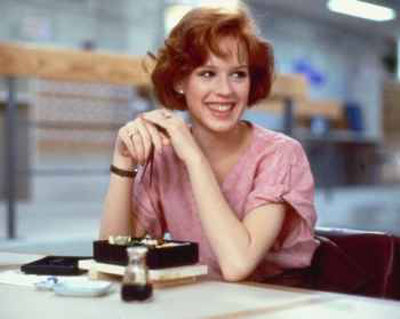
And why did I listen to this M83 music? First of all, I was looking for this element of yearning, and then, even more (as I could not find too much of it) for, what you called “the ghost of Molly Ringwald”. That rang a bell: two years ago, I saw that famous film with Molly for the first, time, “The Breakfast Club”, and liked this coming-of-age-film, and the performance of Molly! But I have no idea what Mr. M83 found here: maybe a nostalgic angle for his music?

GS: I’m sorry if M83 is not for you. It’s definitely bombastic – that’s a design feature, not a mistake. I could develop a whole argument about the recurring ways French artists discover depth in American trash. Baudelaire loved Poe where highbrow Anglophones thought him a cheap shocker; Godard found something inspiring in American genre movies; arguably the French took American jazz more seriously than Americans ever did, etc. Maybe another time, when we have some French wine to hand :)

I have to defend Trevor Horn a little, at least for personal reasons. He was the first record producer I ever worked with. I really learned how to „comp“ (compile) a vocal performance watching him do it. And „Slave To The Rhythm“ is astonishing for the sheer number of musical parts he manages to cram into one song. It’s the Mahler 8 of pop!
.

.
Speaking of sadness/yearning/melancholia: yesterday I received an interesting record with a very special mood: “If Grief Could Wait” by Giovana Pessi (baroque harp) and Susanna Wallumrod (voice; a neatly constant presence at our Punktfestival). The tow other instruments are a viola da gamba and a nyckelharpa. On ECM Records, a few seconds, and you realize, this is a Manfred Eicher production.

Now, a lot of the music is dedicated to Henry Purcell´s songs (centuries and centuries ago), and then there are three cover versions of Nick Drake and Leonard Cohen songs. The famous shiver was running down my spine when I listened to Susanne Wallumrod performing Cohen´s “Who by Fire”. And isn’t that, too, “old music”, coming from the Seventies?! A Quote from the background informations: “This record is neither a project that adheres rigorously to ideals of historical performance practice, nor one that strives self-consciously to “cross over”.”

I like the way this music moves between eras. I would not say I´m very keen on Henry Purcell´s music and his deeply religious lyrics. But I´m drawn into this music because of the “restrained” passion of the performance – as if the musicians made a clear rule before playing this utterly sad music: „no matter how heartwrenching this all is, we will never break out in tears“, (but, when listening, you get the impression, that zone of losing control is quite near…)

GS: Purcell’s Viol Fantasias are incredible. They still sound modern today. Which is odd, because they’re intentionally nostalgic. Purcell is re-imagining an old England of Gloriana, rejecting the flashy speed-metal innovations of the Italian violin style then arriving in England. The Fantasia for Three Viols in F major is a personal favourite, as is the Fantasia Upon One Note.

I think, sometimes, looking back turns out to be the most effective way of looking forward. Late Bach, late Beethoven both show that. The „Heiliger Dankgesang“ in Beethoven’s A minor string quartet is – for me – the most radical and most conservative piece he ever wrote. It looks back to Palestrina, and forward to Bartok and Pärt. I love it. Especially when it’s played very slowly but the players don’t try too hard to milk it. Again, achingly sad.

I sympathise completely with that aesthetic of restraint, BTW. Histrionic surface sentimentality is no proof of inner depth. Quite the contrary. Dry deadpan can be more compelling than melodrama. So I understand completely your reaction to M83. For me, Ralf Hütter half-singing „Computer Love“ – Kraftwerk’s saddest song – that’s infinitely more emotional than Celine Dion singing „My Heart Will Go On“.

I think I’m actually very drawn to under-powered, almost broken „weedy“ voices if they have that honesty. Robert Wyatt, Stina Nordenstam … I will definitely seek out this recording, BTW. Thank you for the recommendation.

Good sadness is uplifting, isn´t it?

GS: It’s the best.

Best,
Michael

GS: Best,
Guy

2011 1 Nov.

Daniel Richter – 10001 Nacht (2)

| Filed under: Blog | RSS 2.0 | TB | Tags:  | Comments off


„I´m a world`s forgotten boy,
The one who searches and destroys … „ (Iggy Pop)


In seinen neuen Arbeiten beschäftigt sich Daniel Richter mit Geschichten, die Konflikte studieren. In fiktiven Landschaften werden allegorische Duelle inszeniert, die gegensätzliche Positionen verkörpern: Anarchie im Kontrast zum Staat, Dominanz gegenüber Unterdrückung, Nomadentum versus Sesshaftigkeit. Diese inhaltlich ausweglosen Situationen werden durch formale Widersprüche angereichert. Die neuen Bilder sind durch die Linie bestimmt, die ursprünglich zum Medium der Zeichnung gehört. Richter hingegen verwendet sie malerisch. Er gestaltet seine Bilder mit linearen Farbverläufen, die an Edward Munch oder Gustav Klimt erinnern. An anderen Stellen verwendet Richter die Linie grafisch und zitiert kartografische oder seismologische Aufzeichnungen. Die Landschaften erinnern an Vorlagen, welche von Marlboro-Country, Märchenbüchern oder Reiseprospekten inspiriert sein könnten. Mitten in diese künstlichen Landstriche werden Figuren platziert, die bewusst mehrdeutig gehalten sind. Sind sie Mann oder Frau? Sind sie sich Freund oder Feind? Die Ambivalenz wird verstärkt, indem Menschen aus verschiedenen Kulturen in einem Bild zusammentreffen: Turbantragende Nomaden und Cowboys. Ost trifft West, Taliban trifft Amerikaner. Die neuen Bilder entführen den Betrachter in eine komplexe Welt- und Zeitreise und Daniel Richter überlässt es dem Einzelnen, sich seine Welt verständlich zu machen. Der Titel der Ausstellung »10001nacht« zielt auf vielschichtige Narrationen, für die 1001 Nacht nur eine Basis ist. >DANIEL RICHTER (VIDEO-CLIP)< In his new works Daniel Richter is concerned with stories that deal with conflicts. Fictive landscapes are the setting for allegorical duels embodying contrary positions: anarchy in contrast to the state, dominance as against oppression, the nomadic versus the sedentary. These no-win situations are enriched by formal contradictions. The paintings are determined by the line, which originally belonged to the medium of drawing. Richter, however, uses it in a painterly manner and gives his canvases lines of color that recall Edvard Munch or Gustav Klimt. Elsewhere he uses the line graphically and quotes cartographic or seismological charts. The landscapes look as if they could have been inspired by Marlboro Country, books of fairytales or travel brochures. Deliberately ambiguous figures have been placed into these artificial tracts of land. Are they man or woman? Friend or foe? The ambivalence is strengthened in that people from different cultures come together in a single painting: turbaned nomads and cowboys; East meets West; Taliban meet Americans. The new works take the viewer on a complex journey through time and around the world, and Daniel Richter leaves it up to the individual to find a way through. The title of the exhibition, 10001 Nights, is a reference to many-layered narratives, for which the Thousand and One Nights is only one basis. (Quelle: Contemporary Fine Arts)


2011 28 Okt.

Guy Sigsworth schreibt …

| Filed under: Blog | RSS 2.0 | TB | Tags:  | Comments off

Guy Sigsworth is a UK based composer, producer and songwriter.

In his career to date he has worked with many famous artists, including Seal, Björk, Goldie, Madonna, Britney Spears, Bebel Gilberto, Stina Nordenstam and Alanis Morissette.

He has also collaboated with many celebrated instrumental musicians, including Talvin Singh, Jon Hassell and Lester Bowie. He was previously a member of the band Frou Frou together with Imogen Heap. Unforgettable our breakfast and evening conversations in Kristiansand!


Hello Michael

I’m hidden away in Essex, working for a month at Imogen Heap’s house while she’s away in China!

I want to listen to all the music you list that I’ve never heard of. I’ll try and make time soon.

Wonderful to notice you’ve included Anton Karas’s music for The Third Man.

I’m listening to Balam Acab „Wander / Wonder“. It’s really good.

I’d previously heard his „See Birds“ EP. Back then he was being grouped together with bands like „oOoOO“, as part of the Witch House scene. Have you heard any Witch House? The hallmarks of the style are Goth imagery, distorted synths, 808 drum machines, slow tempos, and the influence of chopped and screwed Houston hip hop.

All this is irrelevant, because his debut album definitely isn’t Witch House any more. At times it reminds me of Stephan Betke’s first three „Pole“ albums, at times Murcof (especially the use of classical samples). Maybe it’s like „Burial goes to the countryside“. Tell me what you think…

I’v also been listening to Zomby’s „Dedication“. It’s intermittently great. „Natalia’s Song“ (which samples a Ukrainian pop singer), „Florence“ and „Haunted“ are great; „Things Fall Apart“ (featuring Panda Bear) is quite good; the rest of the album hasn’t stuck with me.

I’m thinking a lot about the synthesiser. The synth is now a historical instrument just as much as the lute or the viola da gamba. It’s interesting that people like David Sylvian – who grew up when synth was the new energetic instrument of the moment – almost never uses synth now. I’m guessing it feels too old-fashioned to him.

In the early 80s, Japan famously parted with their guitarist, because there just weren’t enough guitar parts for him to play any more. The musical action was all in the synths. In those days it seemed like everyone needed a synth just to sound correctly tuned into modern hearing. Even the white rock records of the 80s – by ZZ Top, Bon Jovi, Bruce Springsteen and Van Halen – feature prominent synths. ZZ Top’s „Afterburner“ (1985) is basically a hybrid of blues-rock and Donna Summer era Giorgio Moroder.

In the 90s – when I started to have a music career – something changed. If your song featured a synth prominently, it meant you were a dance act. Rock bands consciously dropped synths (and keyboards more generally, though hammond organs and pianos were tolerated). There were no keyboards in Grunge.

In styles where synths were still important, the main energy moved from synths to samplers – which were the basis of most US hip hop, UK drum’n’bass etc. The first Prodigy album (1992) has plenty of cool synths, but it’s the speeded up break beats and chopped up vocal samples you really notice.

In the noughties synths have made a comeback. There are many reasons for this. There’s 80s revivalism, hip hop’s embrace of European dance music and the cheap availability of soft synths. Dubstep is the musical style of the moment, and the first in a long time to use synths in a fundamentally new way. (You really can’t make dubstep with an old analog synth. You need something like Native Instruments‘ „Massive“ wavetable synth, with tempo sync’d LFOs.)

One of the most fascinating things about working with younger musicians is noticing how they creatively mis-hear the music of a past they never knew. So the music which inspires the most interesting current synth artists isn’t what synth connoisseurs who are old enough to remember the 80s would probably choose. These new artists love Giorgio Moroder, for instance, but not his 70s European Donna Summer classics. It’s his decadent LA Top Gun soundtrack that’s inspiring people.

Have you heard „A Real Hero“ by College? It’s featured in the new Ryan Gosling movie, „Drive“. That song – and the accompanying score by Cliff Martinez – references that mid-80s Californian Moroder. There’s a great Chillwave artist called „Washed Out“, and he seems more influenced by Boy Meets Girl’s „Waiting For A Star To Fall“ than by, say, Japan.

The king of all this is M83: a Frenchman, Anthony Gonzalez, just turned 30, who seems to live in an imaginary America of John Hughes movies. The ghost of Molly Ringwald seems to haunt his songs. His new album, „Hurry Up, We’re Dreaming“ is great, by the way.

There’s an emotional reinterpretation going on here. The 80s American pop they reference is hedonistic and „up“. But the new music feels sad and yearning. The new music is like a protest at what the 80s didn’t deliver…

Have to get back to work…

Best

Guy

(Molly Ringwald, in „The Breakfast Club“)

2011 28 Okt.

Drive

| Filed under: Blog | RSS 2.0 | TB | Comments off

Official Trailer: https://www.youtube.com/watch?v=Pe6eOqheva8 

College: A Real Hero – https://www.youtube.com/watch?v=-DSVDcw6iW8 

(for some background information, read Guy Sigsworth´s email)

1

Der November naht, Zeit sich an Heinrich Heines Gedicht Ein Wintermärchen zu erinnern. Weit hinten in meinem Plattenschrank habe ich heute eine Schallplatte ausgegraben, die 1977 erschienen ist und in dem damals zu den Top-Ton-Studios in Deutschlands zählenden Tonstudio Bauer in Ludwigsburg (gleich hier um die Ecke!) aufgenommen wurde (viele Jahre hat hier Manfred Eicher für ECM gearbeitet). Die Rede ist von der Gruppe Poesie und Musik, zu der neben René Bardet, Andreas Vollenweider und Orlando Valentini gehörten. Ein neues Lied, ein besseres Lied wird hier von Bardet in einer so eindringlichen Art vorgetragen und musikalisch so gut untermalt, dass mich diese Platte damals wie heute tief beeindruckt.

2

Nun war ja überhaupt in den siebziger Jahren Poesie und Musik angesagt. 1976 erschien bei ECM die Schallplatte Peter Rühmkorf: Kein Apolloprogramm für Lyrik. Mit dabei damals: Michael Naura, Wolfgang Schlüter und Eberhard Weber. Das letzte Stück der Platte hat es mir besonders angetan:

KOMM RAUS

Komm raus aus deiner Eber-Einzelbucht,
aus deiner Ludergrube.
Komm raus aus deiner kaskoversicherten Dunkelkammer!
Auch dein Innenleben
findet öfter statt, merk ich grade —
(Komm raus aus deinem Farbbandkäfig)
Im Prinzip — ja? — P r i n z i p
sind doch längst alle Schleusen geöffnet, Gitter gefallen …

Immer noch vierlerlei Lichter hier, wo sich
keine Anzeigenseite dazwischenschiebt,
keine Helium-Annonce –:
D I E S O N N E
unverwandt, mit angezogenen Strahlen —
(Komm raus aus deinem Leichen-Entsafter)
Vor dir das Meer und hinter dir
die Waschmaschine …
(aus deinem Metzelwerk, aus deinem Familien-Gefrierfach)
Hier nichts gewollt zu haben,
ist soviel wie verspielt, das weißt du, oder?

Heda, eingerahmtes Tier, du kriegst
den Kopf wohl gar nicht mehr raus aus dieser Pate, laß sehn!
Unbeugsam reflektierst du dich
an der Schreibtischkante —
(eisern nach innen blickend, ein Vesuv mit geschlossenen Augen)
Komm raus aus deinem handversiegelten Hockergrab!
A u c h K u l t u r
ist nur eine unmaßgebliche Schutzbehauptung.

Eine Schlacht im Sitzen gewinnen:
s c h ö n w ä r `s ! ?
Und schön der Gedankeda wer sich nicht rührt,
hat wenigstens Anspruch auf Schicksal — Aus deiner Tropfsteintruhe!

Komm raus aus deinem Todeskoben, überleg dir das Leben:
Die Morgenschiffe rauschen schon an —
Ein Tag aus Gold und Grau:
willst du mit rein? —

3

1978 folgte dann Phönix voran. Statt Eberhard Weber spielte hier der Saxophonist und Flötist Leszek Zadlo zusammen mit Naura und Schlüter. Beide Platten wurden übrigens in Ludwigsburg eingespielt. Mit Phönix voran wird die Scheibe eröffnet, vorgetragen natürlich vom Meister selbst, Peter Rühmkorf, und Naura schrieb dazu die Musik, den Melancholic Waltz.
.

.
4

Abschließend sei noch auf die Naura-Box hingewiesen. Die Plattenkiste enthält sechs CDs: Naura lyrisch, Naura musikologisch, Naura trifft Rühmkorf, Naura in Ochsenhausen, Naura im Studio, Naura Live im NDR, erschienen ist das ganze 2009. Von der dritten CD würde ich jetzt die Ballade von der Silberhochzeit auflegen, die sich übrigens auch auf der ECM-Scheibe Country Children wiederfindet.


It´s a brilliant record. It´s coming out of dark days. Don´t leave the music alone. It will pay back, time after time, in its own peculiar way.

www.kammerflimmer.com

2011 27 Okt.

Daniel Richter – 10001 Nacht

| Filed under: Blog | RSS 2.0 | TB | Tags:  | Comments off


Man sieht auf den zumeist großformatigen Bildern zb mit Elektrogitarren bewaffnete Taliban – und das erinnert unsereinen an die Geburt des Rock´n´Roll aus dem Geiste der Wildheit. Natürlich haben Richters wilde Werke Bezug zur Kunstgeschichte (cause we´re living in postmodern times and everything´s kinda remix of history), Edvard Munch lässt grüßen, es finden sich Anklänge an den deutschen Expressionismus.

Seine Bilder gehören in den Kontext einer poetischen und narrativen Malerei. Vielleicht nicht zufällig hält Richter derzeitig eine Professur an der Wiener Kunsthochschule, in dessen Umfeld die großen Geschichtenerzähler der Wiener Schule des Phantastischen Realismus, namentlich Rudolf Haussner, Friedensreich Hundertwasser, Arik Brauer und Ernst Fuchs hervorgegangen sind – und in Wien zuvor auch Gustav Klimt und Egon Schiele.

Mit ähnlicher Farbenfreude wie Friedensreich Hundertwasser gesegnet (mit allen Hundertwassern gewaschen) ist dem Hamburger aber verniedlichende Ornamentik fremd. Nicht von ungefähr war er ein engagierter Sponti der Hafenstrasse und ein Sympathisant des Punk und er ist mittlerweile sogar stolzer Besitzer eines Plattenlabels („Mir gehört Jan Delay“ – grins, Ironie). Nein, in solchen Bildern steckt eine Wucht und ein überschwenglicher, ungehemmter Schaffensdrang, den man auch bei seinem Freund und Ateliernachbarn Jonathan Meese sieht und spürt. Hier wird gemalt, nicht konzipiert.

Angenehm auch, den Maler reden zu hören, denn er ist nicht auf den Mund gefallen. Schweigsame Geheimniskrämerei ist seine Sache nicht.  „Die meisten Maler sind doof“, sagt Daniel Richter. Er nicht, soviel ist klar, denn eloquent erklärt er seine Arbeiten und seine Sicht der Dinge.

Ob sein derzeitiger grandioser Erfolg ein Hype ist – schwer zu sagen. Denn alle Zeit will Weile haben. Erinnert sei hier an die Jungen Wilden, deren Bilder stehn heut´ im Depot. Richter hingegen sieht seine Bilder nach Ausstellungen selten wieder. Derzeitiger Kurswert pro Bild: eine Eigentumswohnung in Berlin Mitte. Aber die braucht ein Nomade ja nicht.


2011 27 Okt.

Brian Eno Artistic Director of Punkt 2012

| Filed under: Blog | RSS 2.0 | TB | Comments off

(Email von Thomas Weber, Kammerflimmer Kollektief)
 
Meine 10 allerliebsten Jazzalben gibts vielleicht garnicht, zumindest fällt mir keine ewige Liste ein, alles ist immer in transition. Dazu höre ich viel zu viel. Hier aber sind 10 Platten, die ich in letzter Zeit oft und gerne gehört habe, und die vlt. irgendwas mit Jazz (prozessuale Gruppensituationen, Improvisation u.a.) zu tun haben könnten: 

JOHN COLTRANE Infinty
Späte Coltrane-Aufnahmen, erweitert & überschrieben nach seinem Tod von seiner Frau Alice. Kann ich immer hören. „Peace on earth“ ist mir die liebste Musik überhaupt.

DR JOHN Babylon
Wer „Treme“ gesehen hat, weil, dass New Orleans die Wiege der amerikanischen Musik ist. Und das grösste Geschenk der Amerikaner an die Menschheit vielleicht. Und Dr. John weiss das auch und noch viel mehr, vielleicht sogar alles, qua Voodoo gar?

ANDREW HILL Smokestack
Alles dichtestens verwebt hier. Wahnsinnsbesetzung mit 2 Bassisten. Richard Davis, der später auch auf Astral Weeks dabei war, spielt sich hier um Kopf und Kragen. 

ALLMAN BROTHERS Eat A Peach
Besonders schön: Mountain Jam. Ein Soul-Jazz Boogie made in heaven. Die Allman Bros extemporieren über ein Motiv aus einem Donovan Song und spielen sich in schwindelerregende Höhen, nach ca. 24 Minuten geht dann Duane, der Himmelshund, auf die Überholspur. So klingt Glück!

SONNY SHARROCK Ask The Ages
Einer meiner liebsten Gitarristen neben Robert Quine, Tom Verlaine und Richard Thompson mit einem monumental rockenden Spätwerk mit Pharaoh Sanders, Elvin Jones und Charnett Moffett.

CARLA BLEY Tropic Appetites
Besonders toll „Caucasian Bird Riffles“! Mit Julie Tippetts (aka Julie Driscoll), die Texte von Paul Haines singt. Mit Carla Bley, Michael Mantler & Dave Holland et al: „Bywords of mouth/ Knowledge is what/ Shakes its fears/ In Lacking/ All experience/ Of them.“

TELEVISION The Blow-up
Was Tom Verlaine hier live spielt im grossen Solo bei Litte Johnny Jewel ist an Coltrane geschulter Jazz, nix anderes. Leider nur ein bootleg. Aber es brennt…
 
JIM DICKINSON Fishing with Charlie and Other Selected Readings
Jim Dickinson als Schamane. Hat mit den Stones UND Sonic Boom gespielt. Das hier ist eine spoken word Aufnahme mit einigen seiner Lieblingstexte. Muss man gehört haben: poetry in motion! „Whirl ye the deadly voo-doo rattle/ Harry the uplands/ Steal all the cattle/ Rattle-rattle, rattle-rattle/ Bing/ Boomlay, boomlay, boomlay, Boom…“

ELLINGTON/MINGUS/ROACH Money Jungle
Joe Henry (dessen neues Album ganz gross ist) meint zum Money Jungle: „the trio play a game of catch with love, fire and brimstone, becoming a single runaway train on its way to crashing a prom dance.“)

RAFAEL TORAL Space 
Die Zukunft des Jazz, das ist nicht jazz with electronics, sondern jazz on electronics. Far out!


Jim Dickinson weiss: „The fleeting nature of the present creates in man the desire to capture the moment. The movement of time compels us to record. The record becomes a totem, a pageant with a potential for recurring cultural impact, a sacrament between artist and audience, an unique event preserved and repeatable.“ 

Amen! Get your Mojo workin‘!

yours

t
 

Thomas Weber über „Never Collapse, Always Dazzle“: 

Die Grundlage  bildet ein loop im 12/4 Takt. Der wollte eigentlich ein 9/4 Takt sein, weil mich das immer wieder wahnsinnig freut, wie griechische Rembetika Musiker so schöne loose rollende 9/4 Takte spielen können. Das aber hat nicht geklappt.
[Nebenbei nochmal von Griechenland nach LA zum Surf-Exkurs: Ein sehr schönes Beispiel für synkretische (also unreine, vermischt und zusammengesetzte) Musik ist „Misirlou“. Das Lied stammt ursprünglich aus Griechenland aus den 20 Jahren. Es ist eine Art griechischer Blues, auch Rebetiko o. Rembetiko genannt, der von Subkulturen bzw. griechischen genauer kleinasiatischen Flüchtlingen in Athen und Piräus gespielt wurde. In der 40er Jahren kam das Stück mit Auswanderern in die USA und wurde ein Jazzinstrumental, und in den 60er Jahren wurde erst vom großen Surf-Gitarristen Dick Dale gecovert und dann wurde es bei den Beach Boys zur LA-Surf-Folklore…]
 
In den loop singt Heike vom Leben auf der Bruchstelle und untergründigen Strömungen im Duett mit einer Slidegitarre. Komischerweise hatte ich mein Initationserlebenis mit dem Slide-Gitarren-Spiel, als ich Blixa Bargeld mit Nick Cave spielen hörte. Das war um 1984 und 1985. Blixa Bargeld verstand es wie kein anderer seiner Zeit, die Bluestechniken und seine Noise-Ideen von den ‚Geniale Dilletanten‘ zu etwas Neuem und Eigenem zu transformieren.
 
Erst später entdeckte ich dann die legendären Meister der Slide-Gitarre wie Lowell George, Duane ‚Skydog‘ Allman, Robert Johnson (ein großer Slide-Moment, wenn bei „Come In My Kitchen“ nach dem  gesprochenen „Can’t you hear that wind howl“ Johnson – wohl wissend wie und dass DER Effekt wirkt – den Flaschenhals nach dem Lick gaaanz leise an den Seiten scheppern läßt und so den Hörer näher ranholt und reinzieht) und Zoot Horn Rollo, der die langen mondsüchtigen Töne bei Beefheart traf und sie fließen ließ. (Big Eyed Beans From Venus, auf: Clear Spot!)
 
Und damit wir auch wieder auf mein Leib-&Magenthema kommen: die Idee auf der Gitarre ein Glisssando zu spielen, hatten ja nicht nur afroamerkiansche Bluesmusiker, sondern auch Menschen auf Hawaii, die die Saiten mit einem Messerrücken bearbeitet haben. Hier sind wir dann auch wieder bei der unterirdischen Verbindung zum Surfen, das ist nämlich neuerdings Schulsport ebendort in Hawaii.
Ach, seufz: Surfen. Es scheint mir immer, dass es die Menschen an einen Platz mitnimmt außerhalb der Gesellschaft, jenseits von Worten. Surfen (darin dem Musikmachen wohl nicht unähnlich) ist eben nicht nur eine Frage der Technik, sondern vor allem eine Frage des Bewußtseins. Hang loose!
 
Never Collapse, Always Dazzle: https://soundcloud.com/pdis_inpartmaint/kammerflimmer-kollektief

Manafonistas | Impressum | Kontakt | Datenschutz