Manafonistas

on life, music etc beyond mainstream

You are currently browsing the blog archives for the category ‘Blog’.

Category: Blog

Dear Gregor,


my German is not good enough to make it public, but I’ve been reading your column for quite some  time now (with a little help of a friend from Hamburg). You are really keen on vinyl, aren’t you!? I think it’s been well established at this point that vinyl is the enduring physical medium. Vinyl has already been at death’s door a couple of times in recent history, both when cassettes became the most popular format in the early ’80s and then again in the ’90s when the CD grew to dominate the market. We can debate why vinyl keeps surviving these onslaughts, is it actual vs perceived sound quality, the collectible nature, the intangible cool factor, but the fact remains, records simply will not go away. Even during those eras when it was being forced out to a large degree by newer formats, a hardcore collector market remained and was still actively buying and selling vinyl.

Having said that, I do think certain segments of the vinyl market are not sustainable. The idea that every release needs to come out in multi-color limited variants or a deluxe box set nearing the $100 price point just doesn’t seem to have enough demand for it to be a viable concept long term. As someone who buys some of these products, I can tell you that a large percentage of these titles end up being drastically discounted several months down the road when retailers need to purge dead inventory.

Once we get over the paradigm that every record is a potential collector’s item and get back to it merely being a preferred way to enjoy music, I think the talk of the “vinyl bubble” will cease and we can get back to just buying records for more utilitarian purposes as opposed to investing in them. So that’s what I think the future of vinyl really is, I can definitely envision a time when it’s the only physical format and everything else is just digital, or brain implant or whatever crazy technology is coming next. But there will always be people who want to hold an album in their hands, put it on a physical player and kick back with the liner notes and album art. Those folks will be listening to vinyl for a very long time.

As for record of last  year, the champ to beat in my mind is Father John Misty – Pure Comedy. The production is just immaculate, perfectly balancing strings, horns, vocals and even some electronic elements into a coherent and lush whole. And lyrically the guy is just going for it, a truly scathing critique of modern culture and his own role in it. I was a big fan of I Love You, Honeybear, but he really took it to another level with this one, at the risk of alienating a lot of people as well, which in my mind really paid off. Sure it’s kind of a downer, but as an artistic statement, it’s definitely an ambitiously brilliant work.


XO, J. Hicks


(and my kindest regards for all „Manafonistas“ around whatever that name means, seems to be a riddle, ha!)

Das ist der Tag. Am Anfang / ist das Wort, es sitzt am Tisch, hinterm Fenster / und wartet/ auf eine freundliche Nacht.

Johannes Schenk: „Segeltuch“.


Mein neuer Drucker führte mich in die Versuchung, alle meine Posts seit 2014 zu materialisieren. Jetzt liegen 4 gebundene Teile meiner Schaffensschreiberei auf dem Tisch. Mein Schöpfernarzissmus ist zweifelsfrei befriedigt. Bei so manchem Beitrag wäre ich auch froh, er wäre nicht von mir. Trotzallem ist die Relektüre ein fröhlicher Genuss, auch wenn er nichts mit dieser Wissenschaft zu tun hat :) Dieses Gefühl beim Lesen der Texte im Netz ist längst nicht so sinnlich und vergnüglich. Mein Lesergehorsam ist in dem Gebundenen nicht vorhanden. Die Schwellen: Öffnen des Tablets, Passwort, Ladegerät sind nicht zu nehmen.


Here come The Mountain Goats  –  Going to Detroit

watch the T shirt of that spaceguy, he shows you the future.

We are going to listen to music under water, not the robots will push the bottoms,

the fish will tenderly serve us.


Eine Abschlussarbeit von dem Rundgang 2018


HOUR ONE (new albums) – Dictaphone / Dictaphone // Norma Winstone / Norma Winstone // Roger Eno / Roger Eno // Andy Sheppard  / Andy Sheppard // Nils Frahm / Nils Frahm


HOUR TWO (new albums) – (Sternzeit) // Tocotronic / Fire! (two tracks, „a stone-cold, hot-blooded cracker“ (Michael Engelbrecht, Bagles and Beans, Aachen)) // Elephant9 (two tracks) // Laurie Anderson with Kronos Quartet (two tracks) / Nicolas Masson // Kim Myhr 


HOUR THREE (close-up) – „Ozeanische Gefühle und andere Rauschzustände – die Musik von Flying Saucer Attack (from the albums „Distance“, „Further“, „Chorus“, „New Lands“ and „Instrumentals“) 


HOUR FOUR

(time travel 1) – „Paris 1975“, feat. space-rock band Heldon with Richard Pinhas, and the real and imagined reverberations of Fripp & Eno raising eyebrows among Roxy- and Prog-afficionados.


HOUR FIVE

(time travel 2) – Richard Horovitz: „Eros in Arabia“ – His career has seen him work with a list of names such as David Byrne, Jon Hassell, The Kronos Quartet, Bill Laswell, and Suzanne Vega. Contribute to Steven Halpern`s New Age creations. Records with Teheran-born vocalist Sussan Deyhim. Collaborate with Ryuichi Sakamoto on The Sheltering Sky. Score countless other films and installations. Eros In Arabia was originally self-released in 1981. Full of sustained harmonies and supernatural winds. Whispering ancient tales of heroes and heroines. Twisting chimes and percussion. Distorting into an Industrial mystic. Rhythmic chant colliding with bar room piano and harpsichord. Increasing in frequency, gamelan-like. Machines melting the hammered gongs to mercury. Steel screams and close mic`ed stress fractures.

(time travel 3) – A selection of bird recordings, with solo performers, communal displays and soundscapes containing many different species, including two tracks that feature mammals. The recordings come from locations as diverse as Moroccan deserts, the Canadian tundra and the Siberian taiga. Selected highlights from 17 years of recording the sounds of birds and other animals. Whether it’s a thawing lake in the Canadian Arctic, a narrow plateau on a desert island in the Atlantic, the eaves of a house in a Spanish village or the roof of a yurt on the Mongolian steppes, these bird sound recordings will take you to places you’ve never been. Previously unpublished highlights from 17 years of travelling and collecting, with almost twice as many tracks on the accompanying USB. And, in between, from another vinyl revelation by EEC Records, one song about the end of the world (oh, there are birds, too!), and, perhaps, another one that has yet to be chosen. 


2018 3 Feb.

Roxy Who …?

| Filed under: Blog | RSS 2.0 | TB | 3 Comments


„Very few people are aware of this fact, and it’s something that you will never hear referred to in press or media profiles of Brian Eno, but he actually began his 1970s musical career as a member of the group Roxy Music. Marvel as EnoWeb brings you another obscure item of Pop’n’Rock trivia! Anyway, the band’s eponymous first LP has been re-released as a four-disc 12 x 12 Super Deluxe Edition featuring previously unreleased demos, outtakes, radio sessions, rare footage, 136-page book and a 5.1 remix by Steven Wilson.“ 


2018 2 Feb.

Earthbound

| Filed under: Blog | RSS 2.0 | TB | 1 Comment


G

g

Producer and sound engineer David Singleton has maintained an excellent overall balance when remixing the Summit Studio sessions from the original multi-tracks, providing a very live quad audio mix. Even the boxy club feel of Ian Wallace’s drums which spread across the front channels while reflecting in the rears add to the appeal of this live performance. Staples include “21st Century Schizoid Man,” “Pictures of a City,” and “Sailor’s Tale.” You may find yourself repeatadly spinning “The Creator Has a Master Plan” with its hypnotic jazz groove that spills into a nasty 12-bar blues lick, then returning you back to where you started.

(Wesley Derbyshire)

2018 31 Jan.

Sterntaler, nachts

| Filed under: Blog | RSS 2.0 | TB | 2 Comments


Ich bin wieder im Jahr 1977. Ich räume die Teetassen weg, C. ist schon zur Uni gefahren. Am Morgen bekomme ich Post aus Unterlüß, „Flammende Herzen“, von Michael Rother. Junge, Junge, kannst du nicht noch ein bisschen dicker auftragen? Die zwei Harmonia-Platten hatte ich verpasst, sie gingen fast unter, und Michael Rother fand neue Allianzen bei Conny Planck und Jaki Liebezeit. Als ich das erste Mal die Platte auflegte, erfreute mich der Melodienrausch, der Überschwang, und wenn schnell der eine und andere mit dem Kitschverdacht kam, machte ich da nicht mit. Erinnert euch doch, wieviele Melancholiker da durchs Land schlichen, und ich meine nicht die erhebende Melancholie der frühen Wenders-Filme, eher schon das virtuose Graugetöne der Fassbinderstreifen, die verbissenen Introvertiertheiten subdepressiver Horizonterkunder, und dann kam der Michael Rother mit so einem Teil raus, setzte seiner grossen Liebe ein Denkmal, so unverschämt poetisch wie das Cover von Keith Jarretts „Belonging“. Als ich gestern die Box bekam mit seinen Solowerken, „Flammende Herzen“, „Sterntaler“, „Katzenmusik“, und „Fernwärme“, war ich bald vom Flair der alten Zeit umfangen. Eine Woche nach meinen nächsten Klanghorizonten erscheint die Box, und ich werde in der Nacht zum 16. Februar eine gute Stunde mit diesen Alben verbringen, und manchen Hörer in die alte Bundesrepublik entführen. Rothers Alben, so rogoros und schillernd wie die Regenbogenfarben der alten „Edition Suhrkamp“. Nebenbei denke ich beim „Rotherhören“ auch an Kirmes, Karussell, Sechs-Tage-Rennen, Herzklopfenanfragen für eine Tasse Kaffee, die schönste Frau vom Möhnesee, die Gitarre spielte und „Heart of Gold“ sang, ich denke an den längsten Kuss auf der Alten Mainbrücke, Sonnenaufgänge im Internationalen Studentenhaus, und daran, wieso sich niemand beschwerte, wenn ich nachts „Sterntaler“ auflegte.

2018 30 Jan.

„From 1987 (and even more ancient times)“

| Filed under: Blog | RSS 2.0 | TB | Comments off


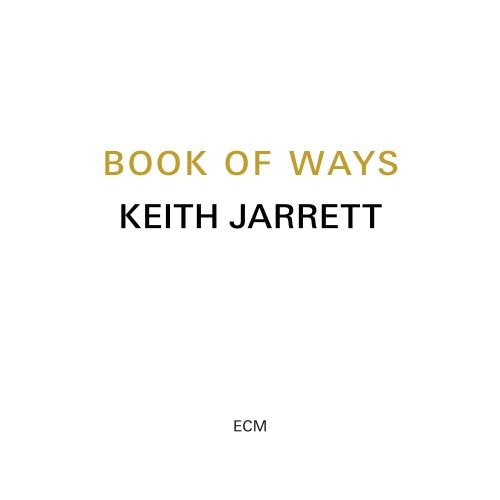
I suppose there are many quite different admirers of Keith Jarrett: most jazz, some classical, and, well,  generalists. This record will appeal to all. There is a fourth group that will be fascinated: professionals with an interest in unusual instruments and recording techniques.

The recording is super-clean, and makes no „earlier than thou“ concessions to the clavichord as historical instrument, i.e. no low level mastering (a clavichord is quiet, they say, so it should be barely audible), no emphasis on the clunking of the keybed (clavichords are „early“, they claim, so let’s make them sound primitive). Here every string can be heard, loud and clear, and the microphones are not straddling the keys. There appear to be two tracks of improvised playing, so well done that it blends into one „super clav“. The instrument(s) used appear to be single-strung, every string rings out true, there is none of the fuzziness of the museum specimens. It’s a new take on the species, and what a marvelous and expressive instrument this is!

With its guitar-like sonorities and expressiveness, it’s a keyboard player’s nirvana. I hope more keyboard players will discover it. The music itself is contemplative improv. A bit of the Koln concert in another dimension. It will speak to all of Jarrett’s fans who aren’t locked into record-bin categories. Some of the pieces have a baroque character, others a folk music simplicity that is disarming. A few are highly experimental, percussive, or oriental-sounding, a couple in-between – a sort of „reflections in the history of music“.

None of the music sounds contrived. He uses the full range of the instrument, with its note bending, great dynamic range and ability to pour out emotion. In some ways it makes me think of the great early Sandy Bull and John Fahey recordings. As to Jarrett’s occasionally audible humming and vocalizations, they indeed offer a glimpse into the composer-player’s mind, as someone said, into the „breathing“ that generates the piece, or that glues the two tracks together into that seamless whole.

It’s in a sense music for musicians, or for listeners who don’t mind glimpsing what goes on behind the scenes. It’s altogether an album for people who love all sorts of honest music, for whom it will be a frequent (evening?) companion.

If you have the original double vinyl, great, an audiophile recording of highest order. In March 2023, „Book Of Ways“ will get a double-cd reissue, and for all the good reasons – one being András Schiff playing Bach on the new and highly praised double-cd „Clavichord“! Anyways, it is a terrific instrument! 


(Frederic Randolph / remixed by Michael Engelbrecht)

2018 30 Jan.

Friesen Akt H21

| Filed under: Blog | RSS 2.0 | TB | 2 Comments


„Es war am Wochenende unseres Jahrhunderts, als ich bei starkem Unwetter auf einem westfriesischen Deich entlangging. Zur Linken hatte ich schon seit über einer Stunde die öde, bereits von allem Vieh geleerte Marsch, zur Rechten, und zwar in unbehaglichster Nähe, das Wattenmeer der Nordsee. Ich leugne nicht, ich wünschte mich mitunter in sicheres Quartier.“
 
(aus dem etwas veränderten Schimmelreiter von Theodor Storm)


Ich fand eine gemütliche Unterkunft in Leeuwarden. Ganz in der Nähe befand sich der schiefe Turm von Pisa, so wurde die alte Kirche genannt. Ein turmhohes Klanggebäude war daneben aufgebaut, verhängt mit durchsichtigen, „den heulenden Böen“ standhaltenden Planen. Pünktlich zu dem Jahrhundertereignis sah man nur schattenhaft das niederländische Königspaar die Kulturhauptstadt von Europa 2018 einläuten:


LEEUWARDEN UND  FRIESLÂN.
 

Kom dyn nêst ut jonge

Li nêst waarm fan feline

Skuor iepen de gerdinen

Spring derút de dei is Nu

Hearst de klokken
 

(aus dem Eröffnungslied: Seis oere thus)


Alle Glocken in Friesland läuteten um 22:15 am Samstagabend. Ich stellte mir die Bauern der Einödhöfe oder der Warftanwesen vor, wie sie stolz unter ihrer Glocke standen. Oder wie der Deichgraf seinen Schimmel zur Rückkehr lenkt, um dem vertrauten Geläut die Ehre zu geben.

Mir gefällt die provinzielle Choreographie ausgesprochen  gut. Hier hat ein Organisationsteam für die Kulturhauptstadt 2018 seine Umgebung betrachtet und dann geplant. Drei Kulturprojekte, in denen sich die friesische Provinz widerspiegelt, seien hier vorgestellt.


1. POETIC POTATOES
 

Kleine Kartoffelsäcke, an denen Gedichte befestigt sind, sollen per Schiff nach Valetta (die andere Kulturhauptstadt2018) gebracht werden. Von dort sollen Gedichte und Kartoffeln zurückgesendet werden.


2. In dem Song „Genius“ besingt Warren Zevon das „meisje“ aus Leeuwarden.


„Mata Hari had a house in France

Where she worked on all her secret plans

Men were falling for her sight unseen

She was a genius“


Das FriesMuseum widmet seine schönsten Räume seiner schönsten Einwohnerin Margareta Zelle, später dann MATA HARI.


Es sind nun 100 Jahre her, dass sie von 12 Fusilisten erschossen wurde. Ein Schuss traf ihr Herz. Da war sie 41 Jahre alt. Der meist begehrte Körper dieser außergewöhnlichen Frau wurde in ein Pariser Krankenhaus zu Studienzwecken gebracht. Ihr hübscher Kopf wurde entwendet und ist bis heute nicht auffindbar. Aktuell sitzen französische Juristen über der Akte von Agentin H21, um herauszufinden, ob Mata Hari wirklich auch für die Deutschen spioniert hatte. Bereits zweimal haben die Stadtväter von Leeuwarden nach Paris geschrieben und darum gebeten, ihr Meisje von aller Verratsschuld freizusprechen. Zweimal wurde dies abgelehnt. Man darf auf das Ergebnis der Aktenuntersuchung gespannt sein.
 
 
3. PASSAGE DE LA BALEINE 2015
 
Ich gehe durch die Gasse im kleinen Leeuwarden und denke an das große Passagenwerk von Paris. Dieses riesige Walskelett über mir ist jetzt echt eine Herausforderung. Wie bekomme ich es an meine Leine? Dieser Auftritt würde doch die frühere Eleganz der ausgeführten Schildkröten toppen, oder?

„Es ist meine letzte Momentaufnahme der europäischen Intelligenz.“
 
(Walter Benjamin)

 
Sjoddy = See you


2018 29 Jan.

„Harvest Time“

| Filed under: Blog | RSS 2.0 | TB | Comments off

Andrea Petkovic mag den Film nicht. Egal, ich schon. Nichts Dramaturgisch-Ausgefeiltes, einfach nur Fragmente und Momente rund um die Entstehung des berühmten Albums aus dem Jahre 1972. Wir beginnen in der Scheune von Youngs „Broken Arrow“-Ranch  in Kalifornien, wo ein junger Mann in den Zwanzigern die jungen Musiker (später The Stray Gators genannt) mitbrachte, die er in Nashville gefunden hatte, um die dunklen, elektrischen Momente für Harvest aufzunehmen. Die Aufnahmen, die sie beim Jammen und bei der Arbeit an „Words (Between the Lines of Age)“ und „Alabama“ zeigen, wirken wunderbar voyeuristisch – gefilmt von der Seite eines Klaviers oder durch ein Schlagzeug. Das Ergebnis ist ein unglaubliches Gefühl von Intimität, wie ein Kind, das auf einer Party seiner Eltern durch das Geländer späht. Plötzlich befinden wir uns in einem Studio. Neil mit David Crosby zu seiner Rechten und Stephen Stills zu seiner Linken. Es ist ein atemberaubender Sprung und ein Trick, der später in einem anderen Studio und mit Graham Nash anstelle von Crosby wiederholt wird. Was in beiden Szenen durchscheint, ist die Freundschaft, der Spaß und die gute Laune – und der prickelnde Nervenkitzel, den eine dreistimmige Harmonie in so ziemlich jede Party bringen kann. Der Film ist gespickt mit solchen Momenten, die einem den Atem rauben oder ein breites Lächeln entlocken. Die augenzwinkernde Vorstellung des Hausmeisters von Broken Arrow, Louis Avila, der Gegenstand von Youngs wunderschönem Brückenschlag über die Alterskluft „Old Man“ ist; der Sänger, der sich auf seiner Ranch entspannt und Bedenken bezüglich seines Songs „Alabama“ locker ausräumt, bevor Lynyrd Skynyrd ihn überhaupt gehört haben; in London, mit einem Bier in der Hand, beschwert er sich darüber, dass das Londoner Symphonieorchester zu langsam spielt, und arbeitet eher im Takt des Dirigenten als auf sein eigenes Stichwort hin.Vor allem aber, und das ist vielleicht noch wichtiger, ist Neil Young: Harvest Time ein fesselndes Dokument eines jungen Mannes, dessen Reichtum seine Vorstellungskraft übersteigt und dessen Leben ein Wirbelsturm war, der ihm die Zeit und den Raum gab, herauszufinden, wer er ist und was er tun will. Während des gesamten Films sieht man Young, wie er in ein breites, albernes Grinsen ausbricht: „Ich fühle mich jetzt so frei wie nie zuvor“, sagt er an einer Stelle. Es ist der Klang eines Mannes, der das Leben genießt und seinen Platz findet – eine Nadel, die ihre Rille findet.“

„Noise can become so complex that you get to a sort of complete gridlock, a kind of stasis; it’s almost meditative at its most extreme. I always remember Lester Bangs saying he had a friend who took acid once a year to blow all the shit out of his system. Bangs responded by saying that he, instead of taking acid once a year, played Lou Reed’s Metal Machine Music. I thought that was great.“

audio


Manafonistas | Impressum | Kontakt | Datenschutz