SandCity Pittsburgh: Sandskulpturen aus der Stadt Andy Warhols
on life, music etc beyond mainstream
You are currently browsing the blog archives for the month Juli 2016.


Generally speaking, strange chalices of vision, cups all up in a cloud, possibly reflecting transience or the overimagination or confusion of whoever makes them appear. Accordingly, they have been associated with wishful thinking.
There is some dispute as to what the 7 symbols in the cups mean, but Tarotologists have some suggestions as to the meanings. Know though that the exact elements within the vision may be less important than the very act of conjuring them.
Seven of Cups arguably represents temptation, choice, self-delusion.
The cups offer the following possible representations:
A human head – companionship, love
A shrouded, glowing entity – the burning need for the conjurer’s self-illumination
A snake – passion and desire, resultant powerful transformative knowledge
A castle or tower – power, stability, place of birth
A treasure hoard – wealth, not necessarily material or monetary
A laurel wreath – victory, honour, status. The skull inscription on the cup itself may be a reminder against triumphalism
A dragon – so many levels to this one. Partly it’s a signal that you need to visit Wales. No psychogeographer can visit Wales and leave unaffected by its magic. Dragons are also memetical – a myth that – until the dinosaurs‘ existence was proven by archaeologists in the 19th Century – was just a myth.
Paraphrased / reworked from Wikipedia
2016 9 Juli
Lajla Nizinski | Filed under: Blog | RSS 2.0 | TB | Comments off

Guernica (2016 Konzert zeitgenoessischer Musik, Urauffuehrung in Duesseldorf) komponiert von Bojan Vuletic. Mit dem MIVOS QUARTET waren Musiker eingeladen, die sich streng an die Struktur des Tryptichons hielten und erstaunlich gut den musikalischen Kontext rueberbrachten. 3 Violinen, eine Viola. Ihre meist hellen, schrillen Toene zerriessen jegliche Friedlichkeit. Die Blasinstrumente, am Saxophon die wunderbare Ingrid Laubrock, schlagen eigentlich warnend die Trommel. Ingrid Laubrock blaest mit all ihrer Luft in ihr Instrument, als ob sie noch eben dem Rauch der Kanonen entfliehen will. Sie blaest so heftig, dass alle Notenblaetter davon fliegen.
An ihrer Seite scheppert der Trompeter mit einem Streifen Zink ein staehlernes Gewitter herbei. Gaensehaut. Der zweite Teil wird durch Stimmengemurmel eingeleitet, eine diffuse Masse, versucht dem Tod zu entfliehen, aber gewaltige Explosionen folgen. Die Viola versucht zu retten, was zu retten ist, zeigt mit ruhiger Melodie zum Stairway to Heaven, der orchestral von den drei Violinen begleitet aus dem Tal des Elends zu den Engeln der Hoehen fuehren soll. Was fuer eine gelungene Rekomposition des grossen spanischen Dramas, was fuer ein wuerdiges Echo auf das riesige Gemaelde von Picasso.
2016 9 Juli
Ian McCartney | Filed under: Blog | RSS 2.0 | TB | 2 Comments
Did you ever dream actual music? Muted harmonic simplicities gently rocking back and forth. It could be the sound of the space between buildings in an industrial estate in the blue-grey half light of morning, where only seagulls walk. There are only empty Coca-Cola and Fanta cans, and crisp packets blowing in the wind. It’s nothing. Much.
Glial cells in the brain shrink during sleep increasing interstitial space in brain tissue, allowing an increase of fluid to wash toxins away: reality’s maker remade in the dream-space, just as real and true as the empty crisp bags and rusty cans, foxes, phantoms, yesterday’s dead half-lit in the pale half-light of blue-grey morning. The music is in there, actuated by what? What immortal ear or eye could rock this harmonic symmetry?
And, and, and … and if we think more closely about our ordinary/mundane concept of reality, maybe we don’t consider real the whatever-the-fuck that actually happens. Instead, we consider real a type/manner of happening that is familiar to us to be it, to be reality. Not tonight, said the cymbal, my head hurts.
Based on 10 listens to Arvo Pärt’s „Summa“ (Estonian National Symphony Orchestra)
*
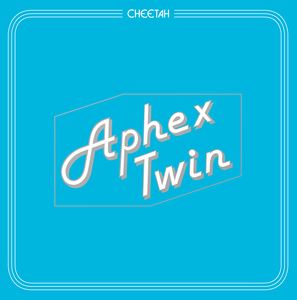
+ Cheetah
CHEETAHT2 [Ld spectrum] nice closing moments, clean/uneasy CHEETAHT7b hip hop handclaps weird phantom wash CHEETA1b ms800 genuinely amazing wtf moment, it’s like „
The hideous operating and programming system (2 digit LED) may drive you crazy but there’s nothing else quite like it for low-fi digital weirdness on the ultra cheap. Sum up:One for the adventurous/experimental/patient/mad“ retro in a way but something forward in the production that lifts it out of the retro toybox. „CHEETA2 ms800“ „CIRKLON3 [Колхозная mix]“ 8:13 6. „CIRKLON 1“ 7:17 7. „2X202-ST5“ This stuff is so fucking great, it makes my heart burst
Stolen lines: Russell Hoban, William Blake, Philip Larkin, BBC News, Roddy Doyle, New York Times


2016 9 Juli
Michael Engelbrecht | Filed under: Blog | RSS 2.0 | TB | Comments off
What’s the best British crime TV series you have been watching within the last two, three months?
Oh, that’s simple. LINE OF DUTY, Season 3. Highly addictive, psychologically compelling, incredibly performed. But you have to start with the great season 1 to get inside the „Internal Affairs“-team.
What has been the best documentary lately?
Laurie Anderson’s HEART OF A DOG, does certainly live up to the „Hörspiel“-version of it. It’s a meditation on life, death and contains, apart from that, one heartwrenching dream of turning time around.
Did you recently think of a book you have read a long time ago?
Funny, you ask that. Some stories linger on forever. It’s one by Ernst Augustin, EASTEND. A German writer who should be known to a much bigger audience. EASTEND had been avalailable, once upon a time – with a red cover and a small London bus photo on it – at „Suhrkamp Taschenbuch“, that great series with monochromatic covers. A love story with twists and turns, and a showdown, yep, in London. A unique voice, this „Augustin-sound“. Another cracker of his: DER AMERIKANISCHE TRAUM. You still can get his books at C.H. Beck Verlag.
What is the crime novel you’re reading these days?
The last novel of Michael Koryta, LAST WORDS. It’s a book with many layers, and a considerable portion of it is happening under the planet’s surface, in the world of caves. No book for people with claustrophobia. Full of ghosts, but no mystery novel. The ghosts are all coming from the inside.
What has been your last concert movie?
Neil Young’s RUST NEVER SLEEPS. Now reissued on DVD ans BLU RAY with a good surround sound. In the first part, Young plays alone with acoustic guitar, after which he gets into a bed and is carried off. When he returns, he is accompanied by Crazy Horse, the greatest, funkiest bar band ever to play packed stadiums. The music sounds indescribably immense, and the band seem to be shredding their very nervous systems to provide it. You have to hear it LOUD!
Has there been a movie recently that you have seen again and again?
One. THE DUKE OF BURGUNDY. Another very special love story situated in a lesbian colony of the British hinterland. In fact I’ve till now seen it about six times, still hesitating to look at the version with the audio commentary. It‘ so immersive. I still don’t want the „outside“-perspective. It succeeds on every level. The natural sounds and the music are gorgeous, it’s one of the best dramas on control and surrender I’ve ever seen. I sent a copy to Brian Eno. He hasn’t yet answered. I think he’s still speechless :)
questions: Manfonistas Headquarter
stolen lines (only a few): James Griffith
Smash the radio
No outside voices here
Smash the watch
Cannot tear the day to shreds
Smash the camera
Cannot steal away the spirits
The rhythm is around me
The rhythm has control
The rhythm is inside me
The rhythm has my soul

2016 8 Juli
Michael Engelbrecht | Filed under: Blog | RSS 2.0 | TB | Comments off
2016 8 Juli
Manafonistas | Filed under: Blog | RSS 2.0 | TB | Tags: Buchtipps | 1 Comment

„Die 60er, das ist eine Geschichte mit einem Anfang, einem Mittelteil und einem Ende. Mein Leben hat keinen Anfang, keinen Mittelteil und kein Ende, es streift umher, es hat keine dramatische Struktur.“
„Die 60er begannen 1956 und endeten 1973. Der Grund, warum sie 1973 endeten war der, dass der Ölpreis stieg. Dieser Umstand veränderte die Leichtigkeit des Lebens. Bis dahin konnten die Leute einfach ein bisschen arbeiten – und leben. Sie hatten Zeit, Songs zu schreiben und Drogen zu nehmen und umher zu reisen und an etwas glauben und auf ihren Instrumenten üben. Niemand glaubte an Karriere, an Hypotheken, an Krankenversicherungen, … an so was dachte niemand.“
„The music broadcast from The Lighthouse covers a pretty broad period. The earliest track here is from 1990, but we will be adding more pieces as time goes on. Some of them will go back even further. You’ll be listening to tracks in a randomly generated sequence, so there is the possibility of odd, and I hope exciting collisions – things that are very slow next to things that are very fast next to things that have no tempo, no pulse at all.“
– Brian Eno