
Archives: Juni 2015
2015 7 Juni
Am Ammersee, drei Tage
Michael Engelbrecht | Filed under: Blog | RSS 2.0 | TB | Tags: Achim Kaufmann, Barbara Gremm, Gary Peacock, Honigtopf, It's Immaterial, Lee Child, Postkutsche | 6 Comments
„… looking for me, rescuing me with your half-forgotten song …“ Der Schlüssel lag unter einem Honigtopf im Garten, neben einer leeren Hundehütte. Ich war noch nie am Ammersee, hatte mich aber vor langer Zeit fast mal dort beworben in einer Kurklinik für psychosomatische Störungen. Ungestörte drei Tage, in denen ich ab und zu in den kühlen See springe, Lee Childs „Worth Dying For“ für eine amerikanische Zeitschrift bespreche, die im Herbst ein „Special“ über den Thriller-Spezialisten rausbringt, der auch hierzulande viele Fans hat von Jürgen von der Lippe bis hin zu, kleiner Scherz, Michael am Ammersee. Über eine kleine Hifi-Anlage hörte ich mir Musik an für die JazzFacts am kommenden Donnerstag um 21.05 Uhr. Mir fehlt da immer noch das eine oder andere Stück Musik, und Matana Roberts‘ neues Soloalbum kann ich hier nicht runterladen. Ein treuer Begleiter ist, seit Sylt, Gary Peacocks Album, das ganz sicher seinen Platz in der Sendung finden wird, genauso wie neue Arbeiten von Ingrid Laubrock, Christoph Irniger und Nils Okland. Vielleicht kommt noch Achim Kaufmanns Solo-Piano-Cd dazu, aber da müsste eine Eilsendung her. Gestern sah ich hier eine Postkutsche, die wohl aus einem Museum stammt. Zwischendurch das Auf und Ab der Brainstorming-Phase des Buchs der Manafonisten. Ein sattes Gewitter war eine willkommene Abwechslung, der Besuch eines alten bayerischen Wirtshauses transportierte Erinnerungen an meine Zeit in der Oberpfalz. Dies ist so ein Text, der nie in das Buch der Manafonisten Einlass finden würde, weil er nichts über den Augenblick hinaus enthält, und nur einem kurzen Innehalten und Sammeln der Gedanken dient. Oder doch: man könnte etwas rausfischen für die „Interim-Texte“. Ich höre nur ein Liederalbum in diesen Tagen, „Song“ von „It’s Immaterial“. Seelenverwandte von „The Blue Nile“. Grosses Tagträumen einer vergessenen Band. The school of Liverpool. Gedanken an den blauen Nil kommen einem in dieser Ecke Bayerns eher nicht.
2015 7 Juni
Gregor öffnet seinen Plattenschrank (95)
Gregor Mundt | Filed under: Blog | RSS 2.0 | TB | 1 Comment
Wenn nicht der Tempo mit dem Jukebox-Man kommt, sondern der Mazda K 360 …
Schon vor dem Öffnen der Kneipentüre erkannte ich die Musik, die im Inneres des Lokals lief: eine selten gehörte Nummer der Gruppe Free, „Mr Big“, Live at Fairfield House in Croydon 1970. Ja, dachte ich, hier bei Henry in der Hafenkneipe würde sich die Wurlitzer wohlfühlen. Free hatte ja schon richtig gute Musik gemacht, damals, man musste eben mal über „All Right Now“ hinaussehen.
1970, das erinnert mich an einen sechswöchigen Aufenthalt in Edinburgh. Ich weiß nicht, wie oft ich am Abend Richtung White Elephant gelaufen bin, einem Musikclub in der Innenstadt. Diese Disco wurde tatsächlich als Club geführt, man musste Mitglied werden, um Eintritt gewährt zu bekommen. Gegen 23:00Uhr gab es eine Kleinigkeit zu essen, der ganze Aufwand nur deshalb, um die Polizeistunde nach hinten verschieben zu können. Eine Gruppe spielte dort öfter, leider habe ich mir den Namen der Truppe nicht gemerkt, aber ich weiß noch, sie spielte Musik der Gruppe Free nicht unähnlich. Was war das für ein schöner Sommer in Edinburgh: der Arthur´s Seat, die Forth Bridge, die Ausflüge in das Hochland …

Schluss mit der Nostalgie, zurück in die jüngste Vergangenheit, nach Hörnum/Sylt, die Fahrt mit diesem Mazda K 360 und seinen 16 PS und meine Wurlitzer 2150 auf der winzigen Ladeflüche festgezurrt, eine schwere, schwarze Plane schwungvoll darüber geworfen und festgezogen, um die Box möglichst ohne Wasserschaden zu ihrem Zielort zu befördern. Aber die Wolken hatten sich zurückgehalten, auch die Fahrt im Autoreisezug von Niebüll bis Westerland war bestens verlaufen, freilich, etwas nervig nur, die vielen neugierigen Fragen nach Auto und Ladung. In Westerland angekommen ging es dann – mit Rückenwind bin ich doch tatsächlich 65 km/h gefahren – Richtung Hörnum.
Ich erinnerte mich an meinen ersten Besuch auf Sylt … die Strandwanderung mit Martina, Treffen mit Lajla, die Insel-Besichtungstour mit Wolfram: Wir fuhren zunächst nach Norden, nach List, bzw. Gosch, überall Gosch, kein Ort für eine Jukebox und dann zurück mit seinem flotten Audi A3 nach Hörnum. Es war doch das Wochenende, an dem 96 gegen Augsburg, auch noch in Augsburg gespielt hatte, Michael, Wolfram und ich hatten uns das Spiel in einer Hotelbar angeschaut. Ich hatte schon in Aussicht gestellt, dass ich, sollte Hannover verlieren, wohl einen Abend in den Dünen verbringen würde, begleitet lediglich von einer Flasche kühlen Weißweins. Und dann doch gewonnen. Fahrt mit Michaels Leihwagen zum Abendessen, begleitet von Musik aus der neuen „Gary Peacock“: Now This. Tolle Platte!

Zurück nach Hörnum, in Henrys Kneipe am Rande des Hafens, direkt an der Nordsee gelegen. Die Box war entladen, ein geeigneter Stellplatz gefunden, die Aufhängungen entsichert, die Jukebox justiert, da erzählte mir Henry, dass er gerade Michael Chabon Buch „Telegraph Avenue“ (Köln 2014) lesen würde. Da außer drei Paaren, die mit sich selbst genug zu tun hatten, niemand im Raum anwesend war, wollte er mir seine beiden Lieblingspassagen aus dem Buch vorlesen. Also, es ginge in dem Buch um einen kleinen Jazz-Plattenladen, – Brokeland Records – der zwar gut sortiert und exklusiv bestückt am Rande der Pleite überlebe. Die beiden Besitzer, Net Jaffe und Archy Stallings würden nun durch die drohende Eröffnung eines Megastores in ihrer Existenz bedroht. Ähnlich, so Henry, ginge es ihm mit seinem Lokal auf Sylt schließlich auch. Er fühle sich doch auch in seiner Existenz bedroht durch Hotelketten und Luxusrestaurants und er hoffe, dass durch seine Idee mit der Wurlitzer und der konsequenten 70er-Jahre-Bestückung mehr Gäste in seine Kneipe gelockt würden.
Einmal, so Henry, war Archy am Ende, war nahe dran, den Laden aufzugeben und sich womöglich als Geschäftsführer der Plattenabteilung im neuen Megastore anheuern zu lassen: „… aus der dem Untergang geweihten Höhle von Brokeland Records zu kriechen, den düsteren Zukunftsaussichten auf endlose Mülldurchsuchungen und Flohmärkte zu entkommen, wo jeder Tag wie eine Platte auf den nächsten sank, am Ende des Tages die Kasse mit ihrem flachbrüstigen Bon, mit einer Kiste voll zerkratzter, schimmliger Schätze nach Hause zu kommen, nur damit die eigene Frau mit Lehrerstimme einen anhand von Zitaten aus einem Selbsthilfebuch über den moralischen Imperativ belehrte, alles aus dem eigenen Leben zu tilgen, was nicht wesentlich war …“. Und dann kommt der Investor, der Chef zahlloser Megastores doch tatsächlich in den Laden: „Er wusste, dass Nat und er sich finanziell in einem immer engeren Kreis drehten. Und da kam dieser Typ daher, der sich selbst in Zeiten, da die Plattenketten dichtmachten und ungezählte Gratis-Downloads in die Hosentasche passten, der es sich selbst jetzt leisten konnte, einen hammermäßigen Plattenladen zu eröffnen, fünfmal so groß wie Brokeland und zehnmal so umfangreich, der es sich des Ruhms und der Tugend zuliebe leisten konnte, Archy für alle Zeiten pleitegehen zu lassen, unerschöpflich finanziert durch sein Medienimperium, sein lizenziertes Abbild, sein alchemistisches Händchen mit Getto-Immobilien. Wehte an einem Samstagnachmittag bei Brokeland herein, ein König in Zivil, um seinen Stiefel in den Nacken der Eroberten zu setzen.“
Ich verstand Henrys Ängste, sortierte Platten in den Plattenkranz ein, Testphase, alles gut, alles lief bestens. Auch die Platten-Vorschläge von Jan, Uwe und Michael sind berücksichtigt worden. Gerade wollte ich den Besuch bei Henry mit einem Lagavulin abschließen, da rückte Henry noch mit zwei Plattenwünschen heraus: Midnight Theme (Fraternity 1975) und Redbonin´, eine Platte, die es im Juli 1972 bis auf Platz 32 der R&B-Charts geschafft hätte. Genaueres wusste Henry nicht, beide Plattentipps hätte er seinem Buch Telegraph Avenue entnommen. Na gut, beide Singles besitze ich nicht, ich werde mal Downtown-Gallery kontakten.

Well, what can I say? Around 1/2 way through 2015 I think I’ve found my #1 record of the year. (I still very much stand by my 2014 top choice, SYRO: I listen to it every day. Yep, every single fucking day – no exaggeration. SYRO is brain food for me. And I still LOVE the Charcoal Owls record. Big style!)
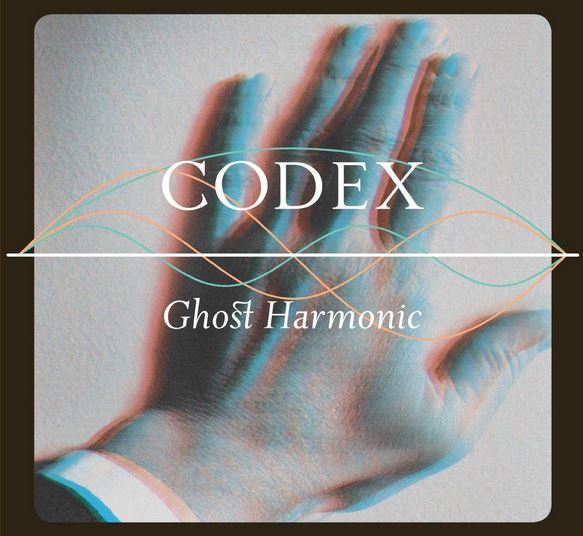
Ghost Harmonic’s Codex dropped thru the letterbox this morning with uncanny, almost mystical coincidence. I was piecing some thoughts together on a theme I’ve discussed at length in my book Der Papierkorb ist beschädigt (Chapter: „Vibes“). The theme about how recorded sound collects and inscripts more than just sound waves. For some reason London was in my thoughts, partly because I had been listening to Pink Floyd’s Animals and partly because I’ve recently been reading an interesting blog entitled Growing up on the Isle of Dogs, and also because I’ve been planning a London trip itinerary which involves my favourite coffee shop, which is on Kingsland Road (E2) and various other places, so I’ve been on Google Street view a lot, working out walking distances (and getting lost a lot too, which I value greatly).
It turns out that Codex was recorded at a studio 350 metres away from my coffee place. It also turns out that Codex is very much an embodiment – maybe even an apotheosis – of what I was on about in that chapter of Der Papierkorb ist beschädigt. (From the blurb for Codex: „The spaces in between the musical notes are often overlooked in modern recording,’ says Benge [one of Ghost Harmonic along with Diana Yukawa and John Foxx]. ‘It was these ideas that we wanted to capture on this record. The ‘ghosts’ in the studio that we were listening to for inspiration. The name came out of that.’ John Foxx: ‘I noticed an interesting effect when multi-tracking into long or complex reverbs – certain harmonics would be suppressed or enhanced and previously unheard ones would emerge from the miasma. This can be really beautiful and it’s now what I most listen for – I know a piece is going somewhere new when this sort of thing begins to occur.)
1. A Green Thought in a Green Shade
2. The Pleasure of Ruins
3. Dispersed Memory
4. When We Came to This Shore
5. Codex
This is music you need to get right inside of, like Through The Hill or The Pearl. Is this what music will sound like after the so-called Technological Singularity? Delays, echoes, pscyhoacoustics and the space between notes are things that a lot of my favourite artists explore – people like Edgard Varèse, Vini Reilly, King Tubby. Ghost Harmonic do it in their own magical way. It’s not mega-easy to explain, but I’ll try. You know how there are arbitrarily distributed zones in a city you know well, where a weird kind of magic resides, and viscerally affects you?
It can be a bus stop, a railway bridge, a weird two foot wide demilitarised zone between warehouses where only birds walk. It can be a kebab shop. It can be anywhere. When your psychogeographical filters are applied, these places are easy to spot. The effect can be so strong that you sometimes have to turn round (like a fucking idiot) and go back to where you’ve just been, to get another charge of the mental energy there. If you know that feeling, or the electrically transcendent vibe you can get from looking at an art print of a dog standing outside a beach hut on sale in a department store (an art print no connoisseur would love, hopefully), then you may just get from Codex what I get from it. It’s not ambient but its place is very much imprinted on it. Few releases excite me as much as this one: it’s like a dream where you find a book full of new ideas, but when you turn the pages there is something more than ideas, there’s a primordial mist of ideation/iration itself, leaving you to go ideate.
The tracks here form one continuous track. Some of it has the kind of gloaming time dopamine glow you get from Torn Sunset, one element of the music being devised to be projected onto by another element – holograhic harmonics. Attack ships on fire off the shoulder of Orion. C-beams glittering in the dark near the Tannhäuser Gate. Moments lost in time. Tears in rain. I’ve been listening to the Harold Budd and John Foxx record Nighthawks for about 4 years now and I feel I am beginning to understand it. Codex already feels like I am at the very beginning of another long and absorbing journey in sound/beyond sound.
Important note:
This is an experimental review. In fact, I haven’t heard the record yet. Not a fucking note of it! It didn’t drop thru my letterbox this morning. Hopefully it will next week sometime. (There are soundclips of three tracks online but I haven’t played them yet.)
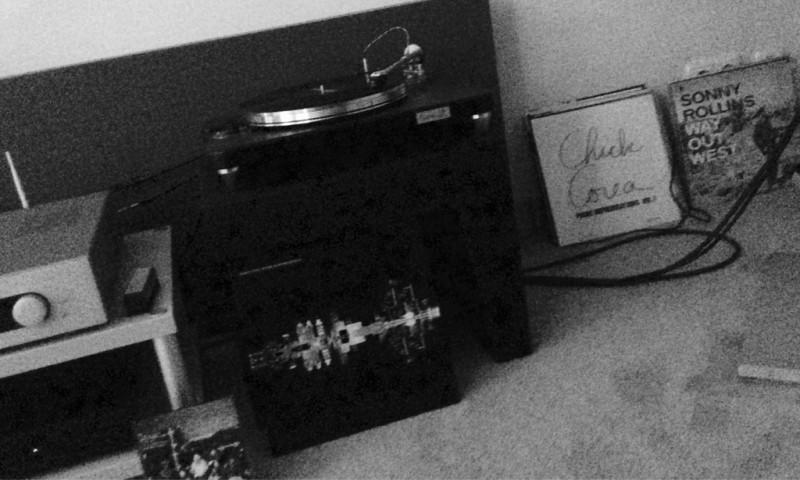
Die Welt der Vinylplatten ist wieder im Kommen, seit Jahren vergrössert sich diese Nische, und besonders in den Nischen von „independant record stores“ zwischen Köln und Boston und sonstwo wird das Eintauchen zur Entdeckungsreise. Unbekannte Schätze, Exotisches, Abgedrehtes. Dieses Foto zeigt, unterhalb des Plattenspielers, ein Objekt der Begierde, für manche. Alt, neu, das ist nicht die Frage. Daneben sind andere Platten, und ein Klassiker der Rockgeschichte zu sehen. Nichts an diesem Bild ist zurecht gerückt, diese Teile habe ich zuletzt gehört: The Allman Brothers Band Live At Fillmore East in einem 5:1-mix (ich nenne es Hyperrealismus, ich sass beim Applaus auf der richtigen Seite, I’M THERE, 1971 (!)), meine Lieblingsplatte von Sonny Rollins aus dem Jahre 1957, und ein Geniestreich von Chick Corea aus den frühen ECM-Jahren. Das Cover stellte ich in meiner letzten Radionacht „Klanghorizonte“ vor. Aber wie heisst das Vinylwerk unterm Dreher, und von wem ist es? Der erste richtge Kommentar erhält die neue Edition des Filmklassikers THE TRAIN mit Burt Lancaster.
2015 6 Juni
The Art of Ego Dumping In The Outer Hebrides – Das Buch der Manafonisten (part 1 of the plan)
Michael Engelbrecht | Filed under: Blog | RSS 2.0 | TB | 3 Comments
If Ian is part of the crew (would be wonderful, but require some extra working shifts after the paper basket desaster), this will be the working title of the book, a bi-lingual one. If Ian is not part of the writing crew, there will be another working title, for example this one: Die Beseitigung des Egos in den Äusseren Hebriden; in that case I will leave out all of my English texts. Not good. But unavoidable, in case.
2015 6 Juni
„Die Beseitigung des Egos in den Äusseren Hebriden – Das Buch der Manafonisten (German or bilingual edition) – part 2 of the plan
Michael Engelbrecht | Filed under: Blog | RSS 2.0 | TB | Comments off
((Everybody who has not yet offered his attitude towards the book must do so till the end of June, the earlier, the better. The „yes“-option would be purely provisorial (is that the word?), not final – no holy pacts required!))
The book would be a furious mix of styles and voices, a kind of story collection that mixes music reviews, book reviews, mini-essays, autobiographical stuff, fiction, dreams, youth memories, fakes, travel stories, movie meditations, interview segments, etc etc with, in parts very strong language and strong sex references. No joke intended. The book would not be one of these „smart Alec“-fuck-ups, but a wonderful overdose of stories, stories and stories. The best reviews are stories with an ego involved.
The book will therefore have, let’s suggest, the double amount of chapters as writers involved, f.e.: 7 writers, 14 chapters. Or 7 writers, 21 chapters, depends on the growing thing. Every co-writer will produce the basis of every chapter by delivering (let’s say 4 texts) that are, for her or him, connected in some obvious or hidden way. At the end of the writing, mixing and remixing, it might be possible to take away the big chapter titles, cause they are just a tool for focusing the energy on the single steps of the book.
The one who has written most of the texts in the „history of manafonistas“, is the one who sets the tone for the first „chapter“, me in this case. And we can handle this first chapter as a test for the whole book, let’s look at it as a holographic test. The graphic outlook and the „fucking genius“ trick of the working with disparate materials will be decribed in part three. So, look and enjoy.
2015 6 Juni
„Die Beseitigung des Egos in den Äusseren Hebriden – Das Buch der Manafonisten (German or bilingual edition) – part 3 of the plan
Michael Engelbrecht | Filed under: Blog | RSS 2.0 | TB | Comments off
There will be no blog dates. No time lines. No dated chronology. No footnotes. No emoticons, no „ue’s“ and „ae’s“. And no endless discussions. And the title of every (former or new) „blog“ entry will be the first sentence / phrase of the text. In fat letters. Every academic title will be replaced by a sensual one. If Jan R. contributes a review of his reading of the Tago Mago-book, the sober title will not be used, but something more marginal and sensual. So the book will be full of „funny little titles“. There is only a small amount of space between the stories, there will be no „new story-new page“-approach. Now here the magic procedere for chapter one ( and the whole thing ) …
I will choose four texts. They will go to Person No. 2 who adds one, two, three or four texts that make somehome sense (logical sense, dream logic sense, intuition) in the context of the first texts. He wraps them around the existing texts, they are not put in one person’s „corner“. He might even offer a full contrast program with no deeper affinities to the first installment. Then person No. 2 sends the collected stuff to person No. 3 till the circle will have been closed. Then we do have, let’s assume, round about 24 texts (stories).
The trick is – this bunch of mysteriously linked or un-linked stories will be cooked in the oven by adding special spices – the „interim texts“, „schraffiert gedruckt“. These interim texts will consist of original texts that link two disparate or not so disparate elements, We can also make use of repeating certain phrases that come earlier or later in the book (flash back, flash forward, nice dejavues). It can even be a chorus of contradictory comments, but there will never be a name of an author in these interim texts. They are of purely socialist nature. Everybody can add or substract from the interim texts near the end of the final mix. For the first chapter, I will create or look for interim texts. Then everybody will get it via email – and then everybody can much easier estimate for her or himself that the whole thing will or will not work. That’s all. Now think twice.
P.S.: In the first version of the book, there will be no photos, no links. Only essentials. Stories, stories, interims. In the end an introduction will be written, and topics of „bibliophile“ magic can be discussed. That’s ornamention.
Stories. Thoughts. Sensuality.
I would be interested in the chemistry of this test phase, with all its possible elements of enlightenment and collapsing. For me it’s a fun-fun-situation.