Manafonistas

on life, music etc beyond mainstream

You are currently browsing the blog archives for the category ‘Blog’.

Category: Blog

2022 26 Okt.

MAP 1 Jazzfest Berlin

| Filed under: Blog | RSS 2.0 | TB | Comments off


Ich komme nochmal zurück auf das Jazzfest Berlin, das am ersten Novemberwochenende im Berliner Festspielhaus und mehreren anderen Spielstätten wie Clubs (aber auch Galerien, Friseursalons und Privatwohnungen) und in der Gedächtniskirche (Konzert von Lucian Ban/Mat Maneri/John Surman wie Konzert des Gurdjieff Ensembles aus Yerevan) stattfindet. 


Häutungen


Das Programmieren des Festivals ist ein komplexer Prozess mit vielen Häutungen. Die Realisierung des Programms ist eine ebenfalls komplexe Angelegenheit, dann aber in Kürzestzeit. Ich habe viele Seiten aus der Innensicht in den letzten fünf Ausgaben mitwirkend kennengelernt.


Fünf immer wieder unterschiedliche Inszenierungen 


Jede der letzten fünf Ausgaben war eingreifend anders als die jeweils Vorherige in den Formaten und Inszenierungen. Und das nicht einfach nur in der Auswahl, Anordnung und Präsentation der Musiker/Gruppen. Es ging immer um neue Wirklichkeitsbezüge, Organisationsformen, thematische Beziehungen und Präsentationsformen (wo Bühnenräume und Publikumsbeweglichkeit aufgebrochen wurden), die sich, vorangetrieben von der künstlerischen Leiterin Nadin Deventer, im Zuge des Programmierungs- und Planungsprozesses herausschälen. Ein wichtiges Element unter ihrer Ägide sind Teamgeist und die frühe Beteiligung von Musikern bei der Programmgestaltung.


Und realisierbar müssen alle wilden Ideen und kühnen Vorstellungen dann auch noch gemacht werden. Beispiele demnächst mal in einem weiteren Beitrag. Kurzum, es ist weit mehr als das Auswählen und Verteilen/Anordnen von tollen, vorwärtspreschenden, provokanten, mitreissenden etc Acts. Weiteres dazu in einem Gespräch mit Nadin Deventer HIER. 


Tiefenblick in regionale kulturelle Räume


Die Ausgabe dieses Jahres blickt, getriggerd durch den Krieg, weiter und tiefer in Kulturen des osteuropäischen Raum. Dabei geht es auch um die Beziehung von bodenständigen, indigenen Musiktraditionen und Jazz im weiteren Sinne. Anknüpfungen an solche finden sich im Programm nicht nur in der osteuropäischen Blickrichtung. Äthiopien, Südafrika oder Brasilien finden ebenso Eingang und Anklang. 


Aus der Tiefe der Zeit, Querverbindungen, Überlagerungen


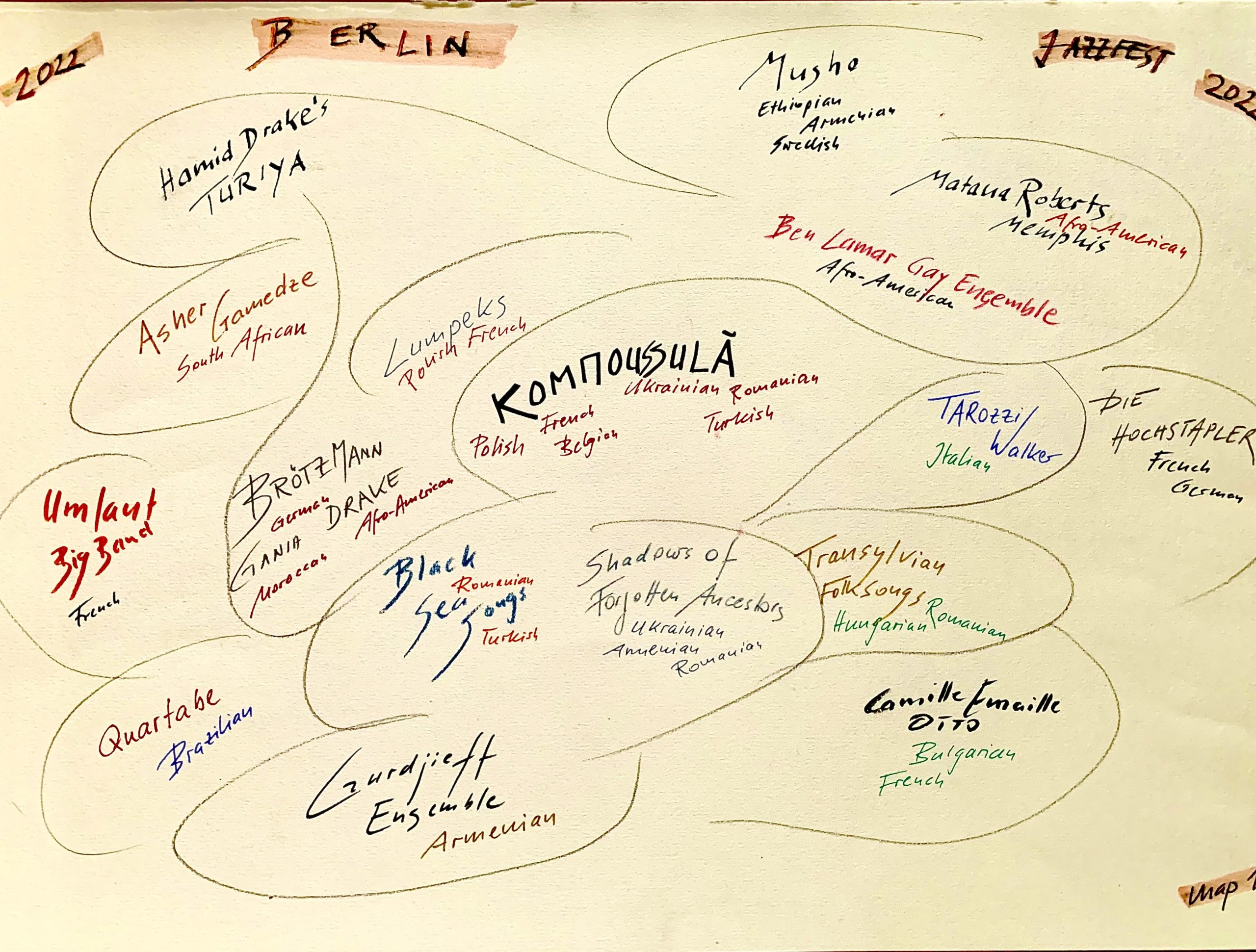
Diese Ausgabe blickt auch zurück auf die wilden Zeiten der Herausbildung eigenständiger europäischer Spielarten und Linien, die sich von da aus in die Gegenwart ziehen. An bestimmten Knotenpunkten laufen beide Linien zusammen, etwa in der jüngeren offenen Improvisationsgruppe Die Hochstapler oder dem Veteranentrio von Peter Brötzmann, Hamid Drake und dem marokkanischen Guimbrispieler Majid Bekkas. Hamid Drake ist eine wichtige Verbindungsfigur zwischen US-amerikanischem Jazz, orientalischerMusik und Free Jazz.


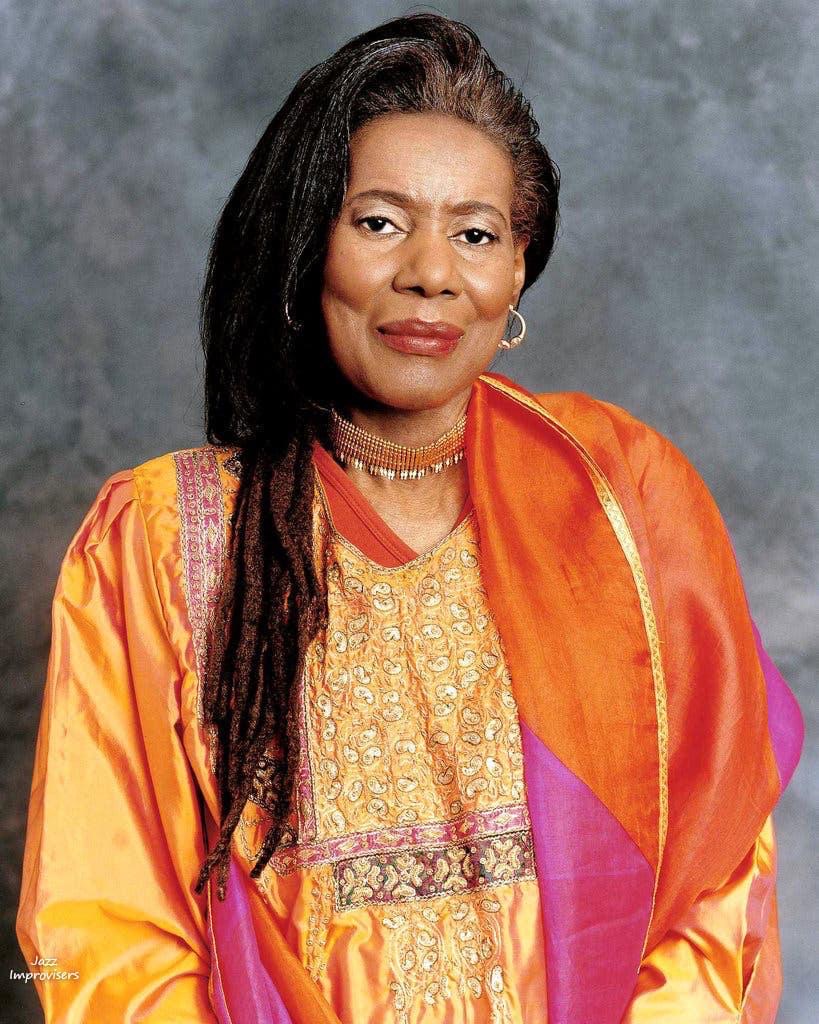
Solche Mehrseitigkeit findet sich bei einer ganzen Reihe von teilnehmenden Musikern. Sie spielen in unterschiedlichen Feldern, nehmen aber auch immer etwas aus dem jeweils anderen Feld (bei)m Spielen mit. Hamid Drake steht mit seiner eigenen Gruppe TURIYA am ersten Abend auf der Hauptbühne, die sich dem musikalischen Erbe von Alice Coltrane widmet. Hier wirken musikalische Kräfte wie Punkt-Oberhaupt Jan Bang oder die französisch-syrische Flötistin Naïsam Jalal mit. 


Kompussula 


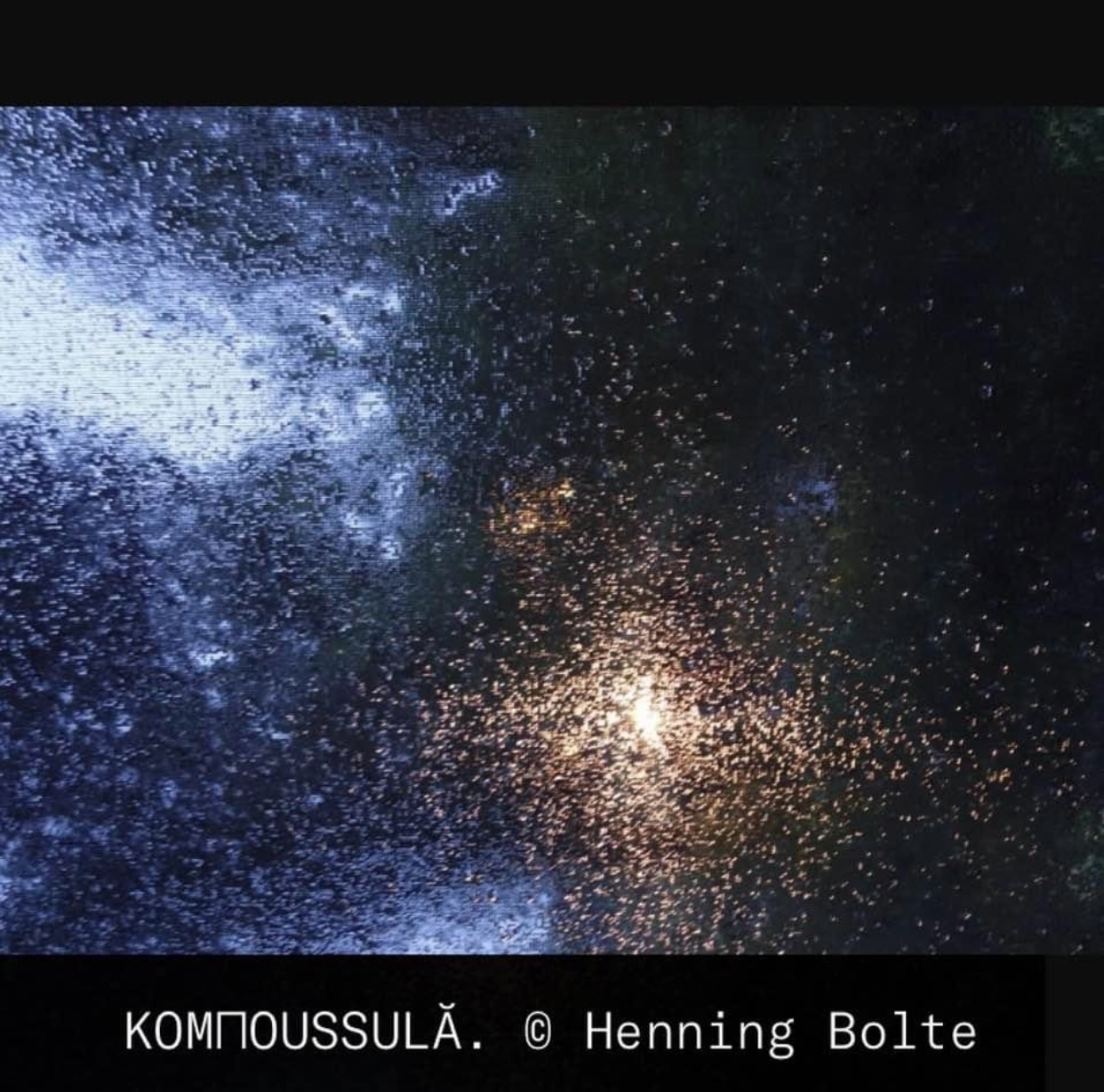
Eine Keimzelle bildet das KOMПOUSSULĂ-Projekt, in dem MusikerInnen mit ukrainischem, polnischen, rumänischem, türkischem, französischem und  belgischem Hintergrund mitwirken und von wo aus es weiter ausstrahlt in den Schwarzmeerraum, nach Armenien, Transsylvanien, Bulgarien und Italien.


Kateryna Ziabliuk piano, prepared piano, vocals
Samuel Hall drums, electronic, percussions
Maryana Golovchenko vocals
Louis Laurain trumpet, cornet
Pierre Borel alto saxophone
Olga Kozieł vocals, traditional polish percussions
Sébastien Beliah double bass
Sanem Kalfa vocals
Joachim Badenhorst clarinet, live electronics
George Dumitriu acoustic & electric guitars, viola, effects


Hier ist die Perspektive teilweise eine andere als oft in Jazz, der östliche Elemente inkorporiert. Musiker ‘östlicher Herkunft’, die in westlichen Metropolen durch die Kreativschule von Jazz gegangen sind, greifen von dort aus ihr indigenes musikalisches Erbe auf.  
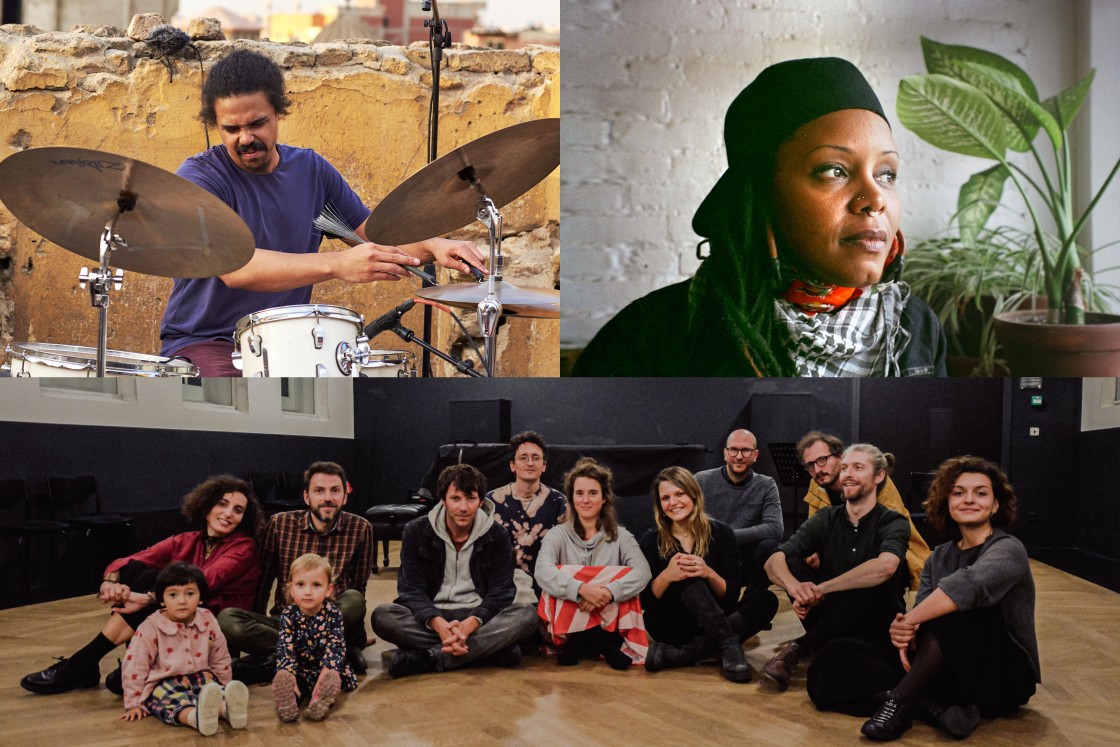


Das KOMПOUSSULĂ-Projekt ist am Samstagabend (5.November) zudem eingebettet, gesandwiched, in einem südafrikanischem Teil “Dialectic Soul” von Schlagzeuger Asher Gamedze und einem neuen Teil “Memphis” von Matana Roberts’ afro-amerikanischem Epos “Coin Coin”. Dies ist eben mehr als die Aufeinanderfolge verschiedener interessanter Gruppen. 


KOMПOUSSULĂ ist ein Beispiel für die Kooperation mit Musikern, zu denen aus früheren Jahren etwa das Berliner KIM Collective, das T(R)OPIC Projekt von Julien Desprez’ CoCo/Rob Mazurek’s São Paulo Underground, die sechsstündige Totalmusik von Anthony Braxton’s SONIC GENOME, das CAIRO Projekt und einige mehr gehörten. Man muss wohl lange suchen, um ein Jazzfestival von dieser inszenatorischen Macht zu finden.


Reiche Wechselbeziehungen freilegen 


Dabei ergeben sich auch innerhalb dieses Raumes interessante Wechselbeziehungen. Etwa in dem Teil SHADOWS OF FORGOTTEN ANCESTORS, in dem Maryana Golovchenko, Kateryna Ziabliuk und Anna Antypova Musik zu diesem Schlüssel-/Meisterwerk ukrainischer Filmkunst von 1964 bringen, ein Film von Sergej Parajanov (1924-1990), einem in Georgien geborenem Armenier, der in Sowjetzeiten wegen ukrainischem Nationalismus im Gefängnis landete. Es war der einzige Film in Sowjetzeiten, der nicht russisch synchronisiert wurde, sondern in der indigenen ukrainischen Sprachvariante lief (und läuft). 


Parajanov, der lange in der Ukraine lebte und wirkte,  ist auch der Regisseur von THE COLORS OF POMMEGRANATES (1968), einem der zehn wichtigsten Werke der Filmkunst, das bis heute vielfach ausstrahlt (ua bis in Lady Gaga Videos). THE COLORS OF POMMEGRANATES  (Musik von Tigran Mansurian) bezieht sich auf Leben und Werk des armenischen Dichters und Musikers Sayat-Nova (1712-1795), das auch Eingang in das Konzert des Gurdjieff Ensembles findet.


Vom Gurdjieff Ensemble weist auch wieder eine Linie zu Bela Bartók, der in Nachfolge von Komitas und Gurdjieff in Armenien, bodenständige indigene Musik in Transsylvanien und anderen Balkanregionen bis hin  Ägypten sammelte, Feldaufnahmen machte und Elemente in seinen eigenen zeitgenössischen Werken verarbeitete. Pianist Lucian Ban, Bratschist Mat Maneri und Saxophonist John Surman reimaginieren Bartóks Feldaufnahmen in ihrem Konzert in der Gedächtniskirche. Und so kann man noch mehr Linien ziehen und ihnen im Konzertbesuch folgen. Mehr dazu für Interessierte in meinem Essay im Digital Guide des Festivals.


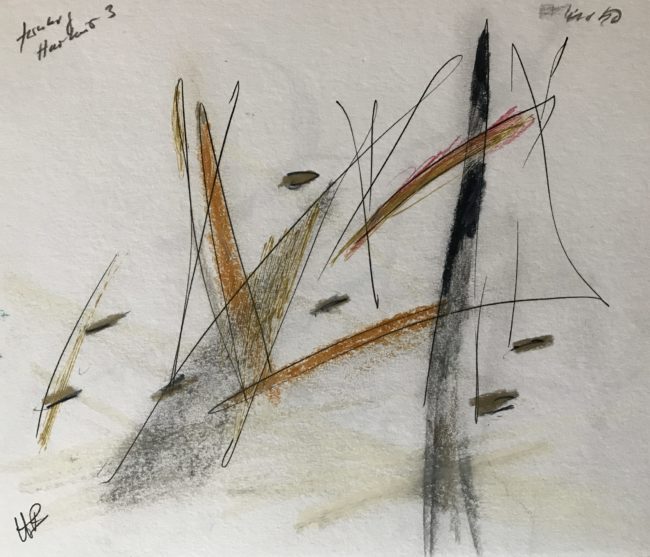
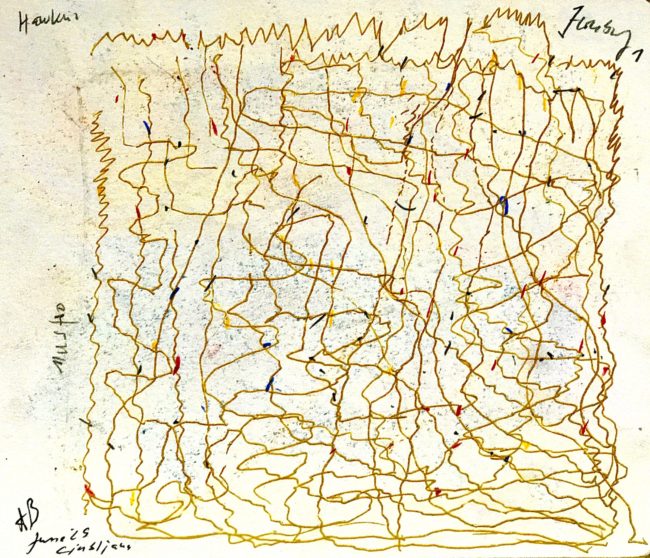
Als Orientierung zu den Feldern und Linien siehe auch die MAP 1 oben


2022 26 Okt.

canção do dia

| Filed under: Blog | RSS 2.0 | TB | Tags: , | Comments off

2022 26 Okt.

Rouge

| Filed under: Blog | RSS 2.0 | TB | Comments off


On par with some of the bleakest works of music, like Gustav Mahler’s „Das Lied von der Erde“, George Crumb’s „Black Angels“, David Bowie’s „Blackstar“ or Leonard Cohen’s „You Want It Darker“, this is music for listening in the dark (maybe with candles lit), or mellow daylight floating through curtains – at best alone, or with a friend or lover at your side. A quiet state of mind is recommended. When I received one the first vinyl pressings of Foreverandevernomore, it was clear I would write another review, and this time not ask for an interview. I wrote some sentences here and there, but nothing added up to a complete text. How come? I was hesitant to write a conventional review, but also didn‘t succed in making am experimental thing instead. Or a short story like the one I did with Ian McCartney on The Ship. DGG sent me the lyrics of the new album (very helpful, Mr. Goldwyn!), so I really dived into all those lines, but again, they didn‘t fuel a quick, clever or knowing response. They seemed more to be a trigger for meditation (or thinking twice), the best thing to do with lyrics. Apart from singing them. The more I listened to the ten compositions, the more I felt to be „there“ – more or less speechless. You cannot spotify this song cycle, you have to be drawn in and let it all happen until the final decay. So, in the end I had a lot of fragmented phrases, and an email from Dr. Leah Kardos. On the day of release, everything fell together. Mosaique-style. I added a phrase here, I cut something out there. I was thinking English, writing English. Then I found the result quite okay, with its mix of observational and slightly poetic passages. Days later, I translated it carefully into my home language with small things added. Here, with kind permission, the WIRED interview from Sophie Charara. Another way of going deeper in regards to the making of the album. And some backgrounds. That this late masterpiece has elements of elevation, and consolation, in spite of all its bleakness, may add to its power, and the rewards of repeated listening.    (m.e.)


Sophie  Charara: Can you tell me about the birds we hear on the album?


Brian Eno: The British Library’s National Sound Archive has a huge collection of bird recordings, some of which are now extinct. We settled on the Yellowhammer, an increasingly rare bird. I also like trying to make deepfake birds, so several of the birds you hear on the album are not real.


How do you go about making deepfake birds?


Oh, I just listen to bird sounds a lot and then try to emulate the kinds of things they do. Synthesizers are quite good at that because some of the new software has what’s called physical modeling. This enables you to construct a physical model of something and then stretch the parameters. You can create a piano with 32-foot strings, for instance, or a piano made of glass. It’s a very interesting way to try to study the world, to try to model it. In the natural world there are discrete entities like clarinets, saxophones, drums. With physical modeling, you can make hybrids like a drummy piano or a saxophone-y violin. There’s a continuum, most of which has never been explored.


Why did you choose to perform vocals?


Really I wanted to try writing some songs. I make instrumental music like diarrhea, it just flows out of me. I thought, what would happen if you left out some of the ingredients of songs—strong rhythms, chord changes by and large—but still treated it like a song? I wanted to keep the landscape sensibility I’ve been developing, the sense of music being a place rather than an event. Another thing that’s happened is that over the 50 years I’ve been recording it, my voice has dropped quite a lot in register. It’s a different personality that I can sing from. It can be melancholy, regretful even.


How did you work with generative music this time?


Most of the music originated like that. When I make a record, I’m taking a tiny excerpt of one of those infinite, generative pieces and saying “that bit is fixed, that bit is going to repeat.” Here it’s recomposed in the way I would work on a pop song. Sometimes certain elements lock together in a way that is interesting. So now there’s a little chunk. Chunking up is my version of evolution in generative music. It occurred to me, after many years, that a creature always evolves in respect to its surroundings. So I thought, “What are the surroundings of a piece of music?” Well it’s human ears. That’s the landscape, my ears in particular.


What’s going on in your brain in this compositional mode?


This is critical. I’m always in one of three modes. I’m in “Let’s try an experiment” mode, which is quite undirected. The next stage is a flow state where I’m just fiddling with things. I’m in a mood of some kind. I can be in that stage for hours, and I only notice when I have to pee. The third stage, which I probably spend a lot more time in than most other artists, is a questioning stage: “OK, I’ve made that thing. What does it mean? Why did it interest me?” This is something I’ve always done, but it’s a stronger feeling in me now than ever before. If something catches my attention, I ask why. Those are your antennae responding to something that nobody told you to respond to. We’re absolutely drowning in shit. So you have to be very careful to try to protect the times when that comes from you rather than Nike or Google.


In what way does paying attention feed back into the music?


If I’m the landscape, I want to be a responsive landscape. I want to be noticing what’s going on. I don’t take drugs, but I have to think of other ways of hearing my music in ways as though I hadn’t made it. In my computer I have a huge archive of eight thousand or more pieces. With my friend Peter [Chilvers], we decided that the archive was a key creative part of my life. If I go to “shuffler,” it’s a way of saying to the computer: Take between two and five pieces randomly from these 8,000 pieces and play them all together. It’s usually a complete mess, but sometimes something amazing happens. This is very good way of generating film soundtracks. In fact, two of the tracks on the album, including “We Let It In,” came out of this. Another trick is we can shuffle, play sound bites at various lengths, and start at some random point. It’s really nice when it pops from one to another.


One transition I liked on the album was “Garden of Stars” to “Inclusion,” which comes as a relief. It made me think of the fire lily growing after wildfires.


That’s always a dialog, the possibility that something good might come out of it. In “We Let It In,” that line “the whole of it in gorgeous flames” is an attempt to say that the destruction is a part of the process. Nature is always changing. What we’re worried about is that we won’t be part of the picture.


Can we mix innovation and preservation?


You want some kind of play between those two. Obviously we can’t fix the world in aspic. My friend who is a farmer says, “There’s new species all the bloody time, some of them will look after themselves.”


And what can follow a “fix it” techno-utopianism?


We all thought politics wasn’t important anymore, that technology would become the politics and create the future itself. It’s related to that horrible individualism of Ayn Rand—Nietzsche for teenagers—and the idea that the power of will is the strongest power on the planet. I would like to tell her that it turns out not to be true.


If community is the alternative, do we need a shared climate culture?


What I see happening now is the biggest social movement in human history. There are billions of people involved in environmental care of some kind, but the media aren’t looking. There’s a huge amount of creative intelligence around, that’s what makes me hopeful. There’s a book I often mention by Alexei Yurchak called Everything Was Forever, Until It Was No More.


Your album title.


Yes. It’s about the end of the Soviet Union, how it just disappeared overnight. One day everyone was communist, the next day they weren’t. I always think of that as an illustration of how quickly things can change. I think the idea came from this book that revolutions always happen in two stages. The first stage is when everyone realizes something is wrong. So that’s where we’ve been now for a while, with the exception of a few ostrich holdouts. The second stage is when everyone realizes that everyone else realizes it as well. That’s the moment I think we’re heading towards. When the thing goes from being a liquid to a solid. Suddenly it’s a phase change. Within three years it will be impossible for a politician to run for office without climate change being the primary issue.


How do you avoid a climate change album being didactic?


Propaganda is unpleasant and relatively ineffective. What art is mostly doing is testing where we are by how we feel about things. Feelings are the beginning of thinking. The other thing the artist is saying is there are other realities possible. It’s offering you a little world with its own terms and values.


Do you still watch ASMR?


When I mention ASMR, most people don’t know what it means. It’s a real underground movement, one involving millions of people. Quite a good metaphor for the climate change movement. I’m slightly touching on it in some of this record, it’s not declarative: “I’m here, you can listen if you like.” The commercial answer to attention has always been bright, loud, fast, shocking. ASMR is saying no, this is quiet, slow, uneventful, nothing much goes on, and it lasts a long time. Well, that’s what I’ve been doing for bloody years.

It’s one of those things that to me hints at a change in the world. Marie Kondo is another. The lesson of minimalism has finally penetrated at a general level. It’s a profound message because it’s anti-capitalist. The impact of what she’s saying is: What’s your life about if it requires all that stuff? This is how people change their feelings. They might never have heard the word minimalism—or capitalism—but they start to live a bit differently.


Are these signals of the phase change you were talking about?


That’s right. In the Yurchak book, when the Soviet Union disappears overnight, everybody’s ready. Everybody had been working around the system anyway, in its stagnant era, doing all the things you need to do to keep life going. When the system disappeared, they just carried on. There was very little chaos.


2022 23 Okt.

Live in Cuxhaven

| Filed under: Blog | RSS 2.0 | TB | Tags:  | 3 Comments


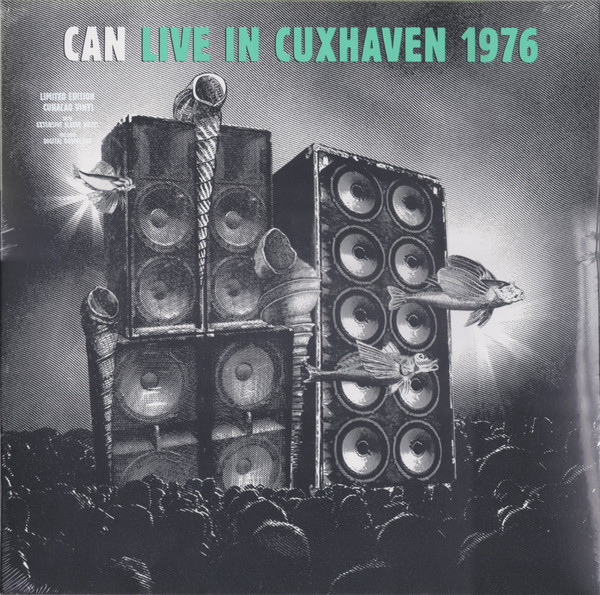
Nach Live in Stuttgart 1975 und Live in Brighton 1975 nun also Live in Cuxhaven 1976. Es ist das dritte Can-Album, das mit dem Recorder aus dem Publikum heraus aufgenommen und nun im Studio etwas klangpoliert wurde. Für ein Bootleg wäre die Qualität sehr gut, für eine offizielle Veröffentlichung ist sie eher bescheiden — eine Ansichtskarte für Fans, so muss man sie wohl hören. Die Vinylversion kommt diesmal in einem „Curacao“ genannten Blauton.

Während Stuttgart und Brighton jeweils Doppelalben mit den kompletten Konzerten waren, ist Cuxhaven eine Einzel-LP, noch dazu mit einer sehr dürftigen Spieldauer von gerade mal 29 Minuten, beendet mit Irmins Ansage, man mache nun eine Pause von 20 Minuten, danach werde man weiterspielen. Aus Fankreisen ist zu vernehmen, der zweite Teil sei der weitaus bessere gewesen, aber das ist nun leider nicht überprüfbar.

Can spielt in Viererbesetzung (Irmin, Michael, Holger, Jaki) und liefert in den vier titellosen Tracks die mehr oder weniger gewohnte improvisierte Qualität, wobei Jakis Schlagzeugspiel gelegentlich ins Hektische kippt und eher an Schnellpolka als an Rockmusik erinnert, auch Michael scheint nicht seinen besten Tag erwischt zu haben.

Teile der Auflage enthielten anscheinend keinen Download-Code, andere Teile enthielten die Linernotes zum Stuttgart-Konzert. Das scheint nun in Ordnung gebracht worden zu sein. Ein viertes Live-Album soll noch kommen; für mich ist derzeit das Stuttgart-Album das beste der Reihe.


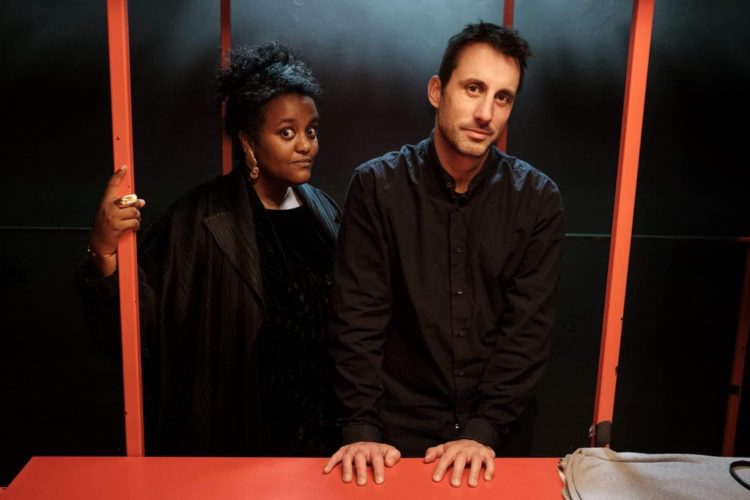
JAZZFEST BERLIN 2022 will have an Auftakt next Sunday, October 30, by connecting to Berlin’s excellent Pierre Boulez Saal series that will present at the Saal exceptional musician ALEXANDER HAWKINS from Oxford, England.


In this festival prelude he will perform in the duo MUSHO with vocalist extraordinaire SOFIA JERNBERG plus in a larger unit with cellist TOMEKA READ, flautist NICOLE MITCHELL, drummer GERRY HEMINGWAY and MATTHEW WRIGHT (electr, sound design).


Tomeka Reid just received the MacArthur “Genius Grant” (of $800,000). She will also play in two other concerts of the festival: in THE HEMPHILL STRINGTET and in a new, eagerly awaited quartet of pianist CRAIG TABORN with MAT MANERI (viola), NICK DUNSTON (b) and SOFIA BORGES (percussion) on the main stage on November 3. The stringtet is named after Julius Hemphill (1938-1995), of course, a.o. member of World Saxophon Quartet and still quite influential through works as „Dogon A.D.“ and others.


Nicole Mitchell is a musician and University teacher with a long prominent career. She was the first female president of Chicago’s legendary Association for the Advancement of Creative Musicians (AACM)


Gerry Hemingway is a well-known US-American musician with a long strong bound to European groups and now teaching in Switzerland.


About MUSHO I wrote earlier this:

“British pianist Alexander Hawkins is leaving a strong trace through today’s jazz landscape. It seems everything he touches, turns into gold. Even if you already know this, every new combination turns out as surprising, beyond expectation. The duo with Swedish vocalist emerged from the October Meeting in 2015 at Amsterdam Bimhuis where it performed for the first time under the name ‚Musho.‘ Their duo performance appeared to be a broadly agreed highlight of the meeting. The Ljubljana concert surpassed that by far. In Amsterdam they performed several pieces based on Ethiopian traditional music in carefully balanced and well-timed transcendence into present day musical areas. In Ljubljana they performed in one fabulous continuing stream of consciousness with strong references to Ethiopian music. Seamlessly fading in and out of musical areas they interconnected different musical spheres and domains in unprecedented, subtle and credible ways. Both drew from rich sources and in real time composed a fabulous, naturally flowing stream of captivating music, a rare and almost unbelievable thing. Jernberg is an amazing performer, who can do almost everything vocally with great inner concentration in a non-agitated, mildly smiling way. It was an outstanding, memorable performance.

I saw Hawkins earlier, in January of this year (at the festival in Münster, Germany), doing a thrilling concert with his trio and fabulous British vocalist Elaine Mitchener. Although Mitchener is a musician of a different temperament and approach, the performance had the same general qualities and brilliance. This brilliant duo of Hawkins/Jernberg has played at Nasjonal Jazzscene venue in Oslo recently and is in urgent need of further circulation.”

(Henning Bolte, All About Jazz 2017)

2022 23 Okt.

Geschichten, die das Meer erzählt (3)

| Filed under: Blog | RSS 2.0 | TB | Comments off

Es ging das aktuelle Gerücht im Dorf um, das mich staunend aufhorchen ließ: Eine Italienerin sei angereist, um Unterwasser zu malen. In meinem kleinen Fischerdorf gibt es 9 Tauchschulen, die Meerestiefen vor der Küste sollen eins der besten und schönsten Aquarien von Europa sein. Ich machte mich auf die Suche nach der aussergewöhnlichen Unterwasserdame und fand sie am Hafen, wo sie mit der Hängung ihrer Werke zugange war. Unter zwei Gemälden klebte schon ein blauer Punkt, which means: sold. Gut für die Künstlerin, die auf Lanzarote lebt. Natürlich interessierte mich am meisten, wie sie Farben und Pigmente so mischt, dass sie Unterwasser malen kann und die Meerestiere ihre Farbutensilien samt Leinwand nicht anknabbern. Erstaunlich, wie sie es meistert, mit der Gesamtausrüstung in immerhin 18 Meter Tiefe einzutauchen. Ely Phenix (1969) ist Profi. Sie erzählte, dass die eigentliche Schwierigkeit, in den Tiefen des Ozeans zu malen, die Bewegung des Wassers ist und das Anpassen an die Lichtverhältnisse. Das Blau des Meeres, das wir sehen, ist im Grunde eine Lichtmenge in Bewegung.


Ely Phenix – „Pintura Submarina“ (video)


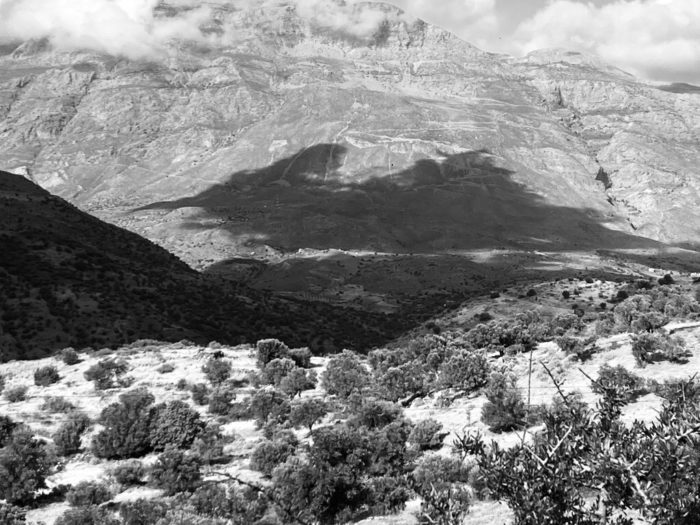
Für mich ist Fotografieren das Fangen und Gestalten von Licht. Es ist die spannendste und gleichzeitig entspannendste meiner täglichen Tätigkeiten. Das Licht wechselt unglaublich dynamisch. Ich brauche mich nur umzudrehen und das, was ich gerade gesehen habe, erscheint in ganz anderem Licht.


Licht ist noch variierter und vielgestaltiger als Töne und Klänge. Beides hat aber auch viele Gemeinsamkeiten. Licht kann musikalisch wirken, sich musikalisch anfühlen. Musik kann flieBen, sich ergießen wie Licht. Schoenberg hat dazu Sinniges gesagt. Dazu viellicht später nochmal.


Fotografieren gibt mir die Möglichkeit, meine Umgebung in “mein Licht” zu setzen, sie nach meiner Dramaturgie zu gestalten. Dabei entdecke ich unbemerkte und ungeahnte Vielfältigkeit und Schönheit. Ich bin immer wieder erstaunt, wie viele Lichtsichten ‘Dasselbe’ eröffnet. Manches fotografiere ich wieder und wieder. Es ist nie Dasselbe in einem nichttrivialen Sinn. Fotografieren lässt mich im Tag und meiner Umgebung ankommen, macht den Tag und meine Umgebung real für mich. Und die Fotos, die ich heute mache, sind immer die schönsten und besten. Was natürlich total nicht stimmt.


Fotografieren ist für mich in und mit dem Licht wandern, streunen, flanieren. Das Licht kann dann zum Freund, zur Freundin werden, der/die zum Spielen verführt. In die Luft gucken gehört dazu.


Fotografieren macht vertraut mit Lichtfall und Kontrast. Manchmal schaue ich aus dem Fenster und denke: nö, kein interessantes Licht, gehe dann aber immer wieder trotzdem nach drauBen und bin jedesmal erstaunt, was das auf den ersten Blick nicht so spannende Licht tatsächlich macht, wie es wirkt, wie es sich zeigt.


Beim Fotografieren muss ich mich auf das Licht einlassen, ihm folgen und bekomme dann ein Foto, das mit der Erinnerung an diese Aktivität verbunden ist. Für den fremden Betrachter ist das natürlich anders. Dazu aber ein andermal.


Eins meiner unterschwelligen Ziele beim Fotografieren ist es, Fotos mit einer starken Form zu machen, auf denen man Objekthaftes nicht (gleich) erkennt.

2022 22 Okt.

Sublime Sehnsucht

| Filed under: Blog | RSS 2.0 | TB | Comments off


„Die Kamera ist ein Medium, das etwas zum Vorschein bringt, was sich dem bloßen Auge entzieht, nämlich das Optisch-Unbewusste.“

Byung-Chul Han, Im Schwarm – Ansichten des Digitalen


Es gab eine Zeit, da habe ich kaum fotografiert, tat mich immer schwer damit. Es war ja auch umständlich, weil man den Film damals in der vor-digitalen Epoche noch für teures Geld zum Entwickeln bringen musste, falls man nicht zu den Glücklichen gehörte, die hier do-it-yourself-know-how besassen. Auf einem Sommercamp der Sufis wunderte ich mich einst wenig, dass dort bei einem Großteil der internationalen Pilgerschaft das stille Einverständnis herrschte: Fotos sind I-Pfui! Vielleicht hat das mit einer Erfahrung der Allgegenwart des Göttlichen zu tun und einem Flow, der nicht unterbrochen werden möchte. Noch heute ist mir dieser auf Ekstase ausgerichtete, lebensbejahende Lebensstil der islamischen Mystik zutiefst sympathisch, wenn er auch niemals ganz mein Ding war. Worum es mir aber eigentlich geht: zunehmend scheint unsereins einer regelrechten Fotografie-Manie verfallen zu sein, durch die Gegend wandernd stets darauf erpicht, Motive einzufangen. Vielleicht ist dies aber auch nur ein mildes, harmloses Abend-Zubrot in Rentneralter-Nähe, das den Verfall der Sinne, die zunehmende Erschöpfbarkeit und den damit einhergehenden Verlust der Gegenwart durch Photo-Shopping kompensieren will. Die betörenden Klänge einer Ney-Flöte allerdings treffen zuweilen weiterhin vital ins Mark, erinnern dabei an eine sublime Sehnsucht. Zuletzt geschehen beim Schauen der wunderbaren Mini-Serie Teheran.


2022 22 Okt.

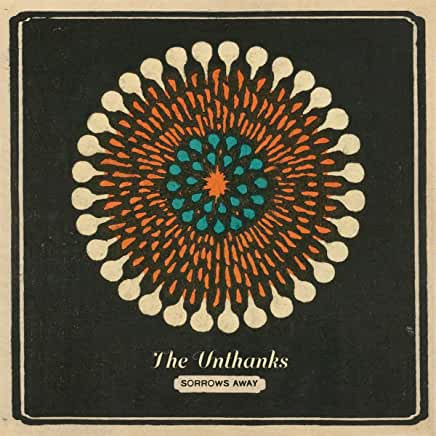
Sorrows Away

| Filed under: Blog | RSS 2.0 | TB | 3 Comments


In dem Jahr, als Julie Tippetts’ lang verschollenes Meisterwerk „Sunset Glow“ erschien (siehe „From The Archives“), 1975, schrieb der amerikanische Komponist Gordon Bok einen Song, The Bay Of Fundy, über die wilden Gezeiten  und tiefen Nebel einer geschichts- und geschichtenträchtigen Bucht. In der ausführlichen Besprechung von „Sorrows Away“ beschreibt der kundige Rezensent von „folk radio“, wie die Musiker „nach dem Refrain in einen Ambient-Breakdown stranden, bei dem die Bläsermelodie von einem minimalistischen Synthesizer, schimmernden Streichern und einem eingängigen Schlagzeug-Fill unterstützt wird“. Das Wort „Ambient-Breakdown“ hatte ich auch noch nicht gelesen. There is no replacement for listening.


Sie sind wieder da, die Liedergutsammlerinnen aus Northumberland. Die Geschwister Unthank wuchsen in einem Teil Schottlands auf, der stark mit der alten Folklore verbunden ist; die Zwei studierten lokale Liederbücher, historisches Liedgut – von klein auf etwa die Songs von  Graeme Miles, meist vorgetragen von der Wilson Family. Da schlug die  Zeit langsamer, aber nicht weniger gnadenlos. Eine urwüchsige Natur war des öfteren Schauplatz für Liebesgeschichten, die, wenns schlecht lief, auch in Mordgeschichten umkippen konnten.


Ganz zu Anfang nannten sie sich  „Rachel Unthank and the Winterset“, und mit „The Bairns“ nahmen sie gleich mal einen instant classic auf. Ob sie Traditionelles interpretieren, oder bei Robert Wyatt oder Emily Dickinson  fündig werden: immer bewegen sie sich durch eine eigene Sphäre: Folk in allerlei Gewändern, betörende Harmoniegesänge sowieso, auch Post-Rock und der Neoromantiker Vaughn Williams haben mal Spuren hinterlassen. „Sorrows Away“ zeichnet Vogelflüge und weite Küstenzonen nach, altes Grauen, grosse Freuden, zerschlissene und gelebte Träume. Und der Multiinstrumentalist und Arrangeur Adrian McNally verfeinert einmal mehr seine Kunst, zwischen dem Minimalen und Orchestralen zu changieren, ohne auch nur ein einziges Mal dick aufzutragen oder bewährte Muster griffig zu recyceln. Zeitgenössische Musik, die auch ohne Meerschaumpfeifen und Wollpullover im anstehenden Dunkelwinter verlässliche Begleitung sein könnte. Und hier noch ein Wort, das ich sehr oft gelesen habe in Musikkritiken, und das manchmal sogar stimmt: atemraubend! Find out for yourself.


Manafonistas | Impressum | Kontakt | Datenschutz