Manafonistas

on life, music etc beyond mainstream

Author Archive:

2023 3 Jan.

335 Langspielplattengedichte

| Filed under: Blog | RSS 2.0 | TB | Comments off


Als Enrico Ruaz 2014 in Madrid seine „335 Langspielplattengedichte“ – genau das war der simple spanische Titel – veröffentlichte, bekam er einen der höchsten spanischen Lyrikpreise dafür und grosse Anerkennung. Bis heute der bestverkaufte Lyrikband des 21. Jahrhunderts in Spanien mit rund 50,000 Exemplaren. Er hatte selbst zuvor über Jahre für „El Pais“ Woche für Woche Plattenrezensionen geschrieben (nur Vinyl wurde von ihm besprochen) und war es leid, immer wieder über eigene, mitunter stereotype Formulierungen zu stolpern. Die Titel der Gedichte trugen allein den Namen des jeweils gewählten Albums, dahinter in Klammern der Name des Künstlers und das Erscheinungsjahr. Eine tolle Idee und einige tolle Gedichte, die eine und andere Übersetzung habe ich mit Freude gelesen. Nicht nur erlaubte ihm diese Form eine andere sprachliche Anmutung – er trieb seine Freiheit so weit, dass er etwa auf Muito von Caetano Veloso, einen Songtext des Albums hernahm und damit, singend, die Eingangshalle des Prado „erfreute“ – die mitgeschnittenen Reaktionen einiger Passanten wurden Teil des Poems. So entfernt sich manches Gedicht von dem Objekt einer „Besprechung“, aber Ruaz stellte in einem Interview mit einem On-Line-Magazin dar, dass es sich allein um Lieblingsplatten handelte, um „Objekte des täglichen Gebrauchs“ – von Joao Bosco bis Codona, von 13th Floor Elevator bis Klaus Schulze. Ich habe die Gedichtform auch immer wieder mal gewählt für ein Album, aber daraus gleich so ein literarisches „opus magnum“ zu machen, auf diese Idee kam ich nicht. Und jetzt wäre es nur, wie sagen es die Engländer so schön, ein „rip-off“! Einmal sprach ich mit Konrad Heidkamp über eine anstehende Rezension (war es ein Album von Labradford?) und er sagte mir sinngemäss: „Wenn ich nichts über die Band finde, ausser Plattitüden, bleibt nur die pure Lyrik.“ Enrico Ruaz hat von 2000 bis 2012 an diesem opulenten Band gearbeitet, und viele der Texte haben Eingang in moderne Formen des Kunst- und Musikunterrichts gefunden.


Now, believe me, THIS is happening (for real) on a rainy night in 1972. Some record stores seemed to have open all night long in that era. On one side, this is gritty realism, bathed in pale colours, on the other side, it is an example of magic timing. Just think, you‘re walking into that store by yourself, you see Joni Mitchell‘s „Clouds“, you see the new album by psychedelic matadors of Quicksilver Messenger Service, and you realize that guy besides you is Neil Young, bloody young Neil Young. The guy behind the counter makes a decent job – kudos. Neil is a bit pissed off finding a bootleg, and takes it out. And that‘s not the end of the story. It belongs to the little magic factor X of this historic footage that, at some point, the employee puts on the right record, let’s say for (unconsciously) soundtracking Neil‘s detective work. „Your mother should know“ – brilliant. Didn‘t it ever appear to you that every minor everyday blues that is not really brimming with potential can turn into a touch of „Strawberry Fields“?! Jim Jarmusch could have made a shining  indie movie out of this small scene. 


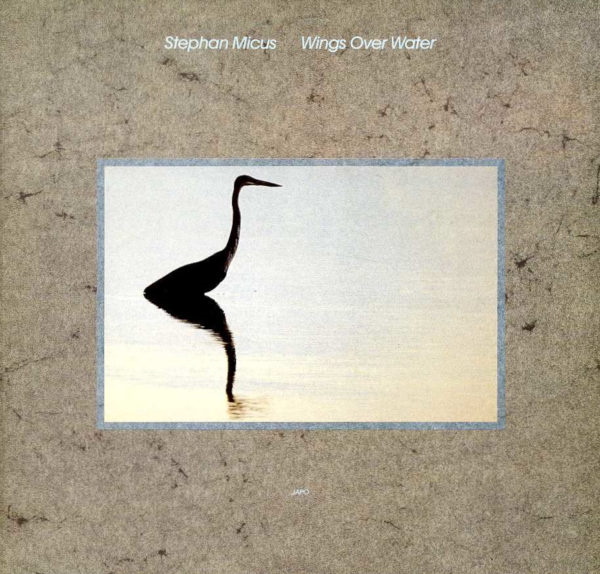
Zu meinen ganz frühen Stephan Micus-Platten zählt „Wings Over Water“. Und er spielt da, ernsthaft, neben allem anderen, auch auf einer Schar von Blumentöpfen. Das Album ist einer meiner Favoriten aus seiner Diskographie geblieben. Es beamt mich so schnell in meine Studentenjahre wie Brian Enos „Discreet Music“.  Der Globetrotter war von früh an darauf aus, Instrumente aus nah und fern zu sammeln,  und dann nach seinen Vorstellungen umzubauen.

Er stand von Anfang an für eine Art von Mediationsmusik, die nichts mit dem Lifestylenirvana von 80 % der New Age-Klangteppiche zu tun hatte. Es gab natürlich auch im New Age sog. „Visionäre“ (denken wir an Laraaji), aber das war eine überschaubare Minderheit. Wer den Micus-Sound schätzt, darf stets aufs Neue gespannt sein, welchen Klangkörpern er beim nächsten Mal zu Leibe rücken wird. Einmal machte ich mit ihm ein langes Interview, das sicher noch in den Archiven des DLF schlummert, und was er mir da über heisse Tage und Nächte bei einem Instrumenenbauer in Delhi erzählte,  hatte schon einen Hauch von „Indiana Jones“ (rein atmosphärisch zumindest).

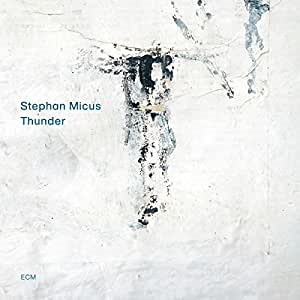
Am 20. Januar 2023 erscheint nun sein 25. Album, und hätte man mich im Blindversuch getestet, ich wäre anfangs kaum auf seinen Namen gekommen, und hätte eher auf einen nachwachsenden Seelenverwandten von Don Cherry getippt, so exotisch trompetenhaft geht  es da im ersten Stück zu. Fast verwildert, und an „Jazz“ selbst im fernsten Sinne war bei Herrn Micus nie wirklich zu denken. Nicht die einziger Überraschung hier. Gleichsam über Nacht hat sich diese Hymne an die Götter des Donners zu meinen „Micus-Meilensteinen“ gesellt, neben „The Music of Stones“, „East Of The Night“, „Ocean“ (mhmm, oder „Darkness and Light, oder doch „Twilight Fields“?) – und sowieso  „Wings Over Water“.


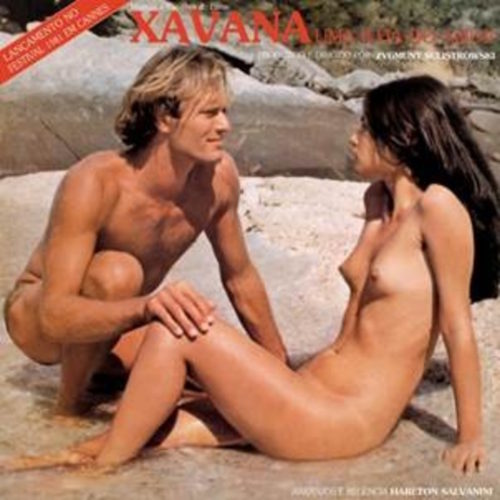
Xavana, mon amor“Some low brow excellence! 😂 Es war das Jahr 1981, da erschien der originale Soundtrack des Soft Porno-Klassikers „Xavana, Uma Ilha do Amor“ mit einer verdammt gut aufgenommenen Mischung aus Jazz, Bossa Nova und Psych. Kinder der Sonne, Teil 2. Hareton Salvanini kreierte eine Platte voller grooviger Gitarren, feiner Streicher und delikater orchestraler Klänge. Der polnische Filmemacher Zygmunt Sulistrowski leistete damals Pionierarbeit, indem er Low-Budget-Softpornos an exotischen Orten drehte. Am 27. Juli ist Hochsommer, und meine nächste Ausgabe der Klanghorizonte. Das wäre doch ein Auftakt nach Mass, oder!? Und danach: „Last Tango In Paris“, von Gato Barbieri.


fade-out with Gavin Bolton: „My dad had this album when I was 12 years old, I used to listen to Salvanini’s albums in the lounge after school the late afternoon sun streaming through the windows, my mind drifting off to exotic destinations, sun dappled, palm fringed beautiful beaches, smell of the ocean and coconut suntan lotions, bronzed bodies, gentle laughter and ocean breezes, drinking iced fresh fruit drinks, distant laughter of people. Years later I made it my life to seek out these locations. Today I live on a beautiful island in the Gulf of Thailand. My dreams became my reality.“


2022 31 Dez.

2018 / 1977 – „nostalgic heartbreaker“

| Filed under: Blog | RSS 2.0 | TB | Comments off

2022 31 Dez.

Meine Lieblingsplatten der Jahre 2011 bis 2023

| Filed under: Blog | RSS 2.0 | TB | Comments off

1) Brian Eno: The Ship
2) David Bowie: Blackstar
3) Leonard Cohen: You Want It Darker
4) Thomas Köner: Novaya Zemlya
5) Damon Albarn: Everyday Robots
6) Floating Points /  Pharoah Sanders: Promises
7) Dysnomia: Dawn Of Midi
8) Fire! Orchestra: Echoes
9) Bill Callahan: Apocalypse
10) Anouar Brahem: Souvenance
11) Kate Bush: 50 Words for Snow
12) Jon Balke: Warp


Not forgetting all things lost
in the fire of our lives
(as far as we can remember).
Sometimes, from a distance, everything
(losses first, and hands still to hold)
falls into place. No catchy songs,
no singalongs, no fairytale parallel worlds,
no hooks, no future evergreens, oh,
hold on, in their own peculiar way
Brian Eno’s modern day lamentations are
a collection of future „everblues“,
haunting, uncanny, anti-
grandiose, epic, enigmatic &
beautiful in a dark way.


And how then could it be
That we appear at all?
In all this rock and fire
In all this gas and dust
Are we not each a flame?
All born to live in light
All born to give our light 


1) Brian Eno: Foreverandevernomore
2) Lambchop: The Bible
3) Oded Tzur: Isabela
4) Alabaster dePlume: Gold
5) Neil Young: Toast
6) Moor Mother: Jazz Codes
7) Daniel Lanois: Player, Piano
8) Bill Callahan: YTILAER
9) Weyes Blood: And In The Darkness, Hearts Aglow 
10) Evgueni Galperine: The Theory of Becoming
11) The Smile: A Light For Attracting Attention
12) Midori Takada: Cutting Branches For A Temporary Shelter
13) Father John Misty: Chloe and the  Next 20th  Century
14) Toechter: Zephyr
15) Jon Balke / Siwan: Hafla
16) Avishai Cohen: Naked Truth
17) Klaus Schulze: Deus Arrakis
18) Wolfert Brederode: Ruins And Remains
19) Geir Sundstol: The Studio Intim Sessions Vol. 1
20) JD Allen: Americana Vol. 2
21) Keith Jarrett: Bordeaux Concert
22) Roger Eno: The Turning Year
23) Uusi Aika: Uusi Aika
24) Daj Fujikira & Jan Bang: The Bow Maker
25) The Unthanks: Sorrows Away
26) Group Thinking: Clarinet and Piano (Selected Works Vol. 2)
27) Horace Andy: Midnight Rockers
28) Wilco: Cruel Country
29)  Makaya McCraven: In These Times
30) Kevin Morby: This is a photograph


Another little story about one of these beloved albums of mine


A propos Midori Takada. Old story, new turn: Maybe half a dozen times I played „Cutting Branches For A Temporary Shelter“ by the Penguin Cafe Orchestra in my radio nights running three decades, and only now found out (
what has been half-conscious vagueness first place) that it was the irresistible adaptation of an African template.

With the old mbira and other shiny sounds it is now  brought to new life, on the first new work by Midori Takada in decades. Very early she discovered the multiverse of a single drum, and like Cage, she had no doubts imagining that a single perfect note on a shakuhachi could exude more magic than some of the high-flying, form-obsessed Western orchestral music of past centuries. The spellbinding art of elementary textures.

Funny, at the beginning, alone with a streaming device, I thought it would just consist of one long piece. But there are in fact two long pieces. Perfect  for vinyl. We are seduced by a female magician leading us deeper and deeper into an ancient African folk tune. „Cutting Branches For A Temporary Shelter“ is such a terrific perfomance that starts with strangeness and moves forward to the dance of life that life can be. (m.e.)

2022 31 Dez.

Vinyl Choices

| Filed under: Blog | RSS 2.0 | TB | Comments off


You are a whole year on the island of Maurizius, you inhabit a little house near a wonderful white beach, no people around. But you own a nice record-player with great speakers. Over the year you can only play three albums. And there is no lover, no friend around. Which albums do you choose, your perfect partner in a year of solitude?

Imagine, after that one year of this solitude, you have to stay for another year, and send back your three „island discs“. In return, you can order three albums by female singers. Keep in mind, you‘re alone there, just kind people who care food and drinks, no partner, no soulmate, no internet. What are the the three female singer albums that will join your life over there for another year?


2022 31 Dez.

From Lankum to Paul St. Hilaire

| Filed under: Blog | RSS 2.0 | TB | Comments off


Lankum FALSE LANKUM 
THUNDER Stephan Micus
SUSS SUSS 
PSYCHOGEOGRAPHY Jon Hassell THE LIVING CITY
Brian Eno FOREVER VOICELESS

RARITIES Roger Eno
The Necks TRAVEL
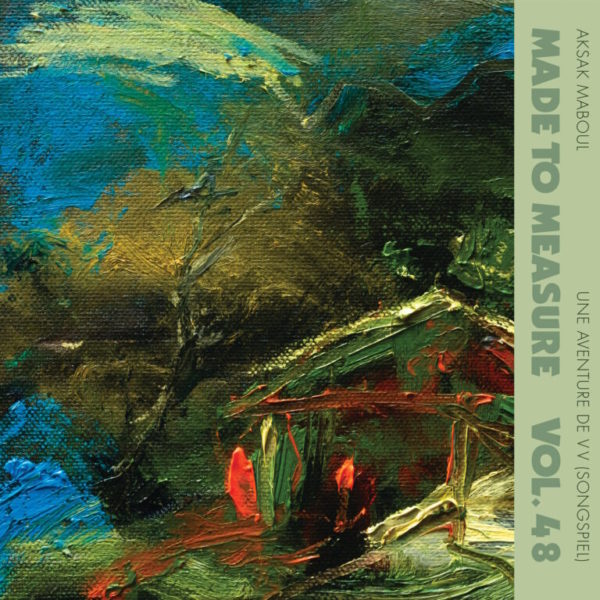
UNE AVENTURE DE VV Aksak Maboul
Benjamin Lew / Steven Brown: LA DOUXIÈME JOURNÉE (1982)

THEORY OF BECOMING Evgueni Alperine (2022)
Paul St. Hilaire  TIKIMAN VOL. 1 


including interview excerpts with Lankum,
Marc Hollander (Aksak Maboul), and
a passage from my 1990 Jon Hassell talk on
City: Works of Fiction


Manafonistas | Impressum | Kontakt | Datenschutz