Manafonistas

on life, music etc beyond mainstream

You are currently browsing the blog archives for the month November 2011.

Archives: November 2011

2011 5 Nov.

Gary Thomas: Found On Sordid Streets

| Filed under: Blog,Musik vor 2011 | RSS 2.0 | TB | Tags:  | Comments off

Was ist das Gegenteil von Musik? – Anti-Musik? Stille? Lärm? 

Wahrscheinlich gibt es kein Entkommen, denn seit John Cage ein paar Minuten Stille zu einem Musikstück vertonte und zudem regressive Reminiszenzen an früheste, pränatale Sound-Prägungen uns ein Lebelang begleiten, bilden der Hörsinn, die Sehnsucht und das Verlangen nach Heimat eine Verbindung, der ebensowenig beizukommen ist wie etwa dem ödipalen Dreieck in bürgerlichen Kleinfamilien.

Immer, wenn unsereins das romantisch Sentimentale; das allzu gefühlig Fragile; das bemüht Avantgardistische in der Musik nervt, dann greift er gerne mal auf Nüchternes, Bodenständiges und Griffiges zurück – aber keine Sorge: es gibt noch Alternativen zur spirituellen Bombastik eines John McLaughlin.

Gary Thomas, von dem überliefert ist, dass er es bei Miles Davis nicht allzu lange aushielt, („tired of always playing funky licks“), bietet einen Ausweg, der nachhaltig befriedet. Die Musik dieses unterschätzten Saxophonisten und Flötisten bewegt sich in Bereichen, die durch intelligente Virtuosität; vibrierende Kinetik und konstruktive Coolness bestimmt sind – mit einem subversiven, leicht zornigen und sperrigen Tonfall.

Geerdete Hochspannung erwartet einen auf diesem erstmals 1997 erschienenen Album. Es weht hier auch ein wenig der Geist von Weather Report – wie ein frischer Wind von „Gibraltar“ her. George Colligan ist es, der auf seiner Hammond-Orgel zawinuleske Linien zaubert. Und die CD bekommt man nicht auf dem Black Market, sondern ganz legal vom kleinen, feinen Winter&Winter Label.


Gary Thomas - Found On Sordid streets


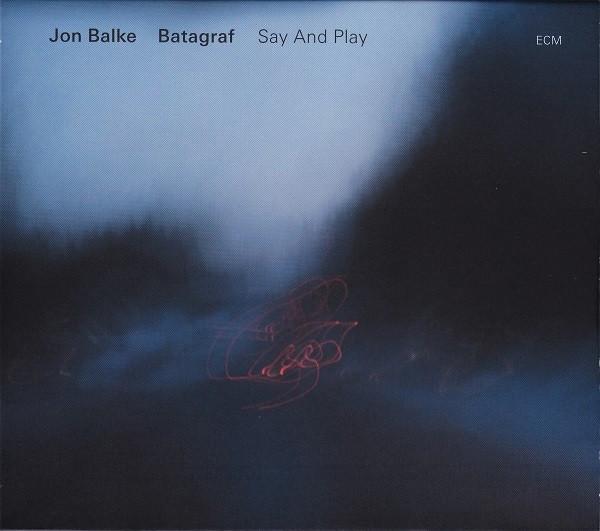
ME: Jon, in a rather strange way, your new album, „Say and Play“ (ECM 2245), brings together a kind of „easy listening“, easy in a very thrilling way, and some avantgarde principles. The music is highly accessible, but not in a well-known way. It is groovy, but without ethno-cliches … so, one could call it, with a smile, „easy-avant-music“…


JB: The departure point in developing this music is 100% rythm, as it appears in spoken language, poems, drumming, AND in melodic playing. I think the melodic „friendliness“ is a consequence of this approach: the melodies are rythmic tools to propel the music onwards, more than sculptural elements in themselves. We also tried to record and mix everything from this point of view: the melodic phrases as background for the solistic drumming and language. This was the dogma that producer Olav Torget and me reminded ourselves of again and again: rythm and language  is king. 


Brian Eno did publish so-called “speech songs“ on „Drums Between the Bells“, his cooperation with Rick Holland. You are also presenting four  spoken-word pieces from a Norwegian poet. Why did you use his original language (your language) – and what was so special to work with the  energy of spoken words? 


JB:  If you listen to „Statements“ (the first Jon Balke/ Batagraf album on ECM records; Anm. V. M.E.)  there is a track with a long speech by Miki N´Doye in Wolof. This is a monologue of Miki speaking to someone imaginary that  he meets. As I know very few who speak Wolof, but very many who like the melodics in the voice and language of this track enormously, I felt it right to follow this approach and use the poems and voice of Torgeir in the same manner: his sound, melody and the way he floats over the percussion in a kind of counter-rythm makes musical sense to me. As I hope it does to others … The poems in themselves are a kind of bonus, he is a very playful, subtle writer.


Is there, in the way you´re treating these poems, a parallel to African music? 


JB: Not in the poems as such, but In all the tracks, as well as in all the music I have made, there is an influence and a parallel to and from Africa, especially West-Africa. But I have painstakingly tried to avoid copying the great music from there. I hope I have not unconciously patched in elements from things I have heard. If I found such things, I would have removed them, as it would feel like stealing … And I don´t like to be a musical thief :-)


You are working on several pieces  with Jon Chistensen´s daughter,  using  a very different type of lyrics: riddles, surreal imageries, daydreams … how do they relate to the powerful drum patterns? The record sounds fantastic, by the way.


JB: This is actually the main building block in Batagrafs music : original Bakas. The Baka is a term from Wolof meaning short poem-like phrases that say something about life or a person, and these phrases can also be played by percussion groups. So the Wolof drum groups build up a complex system of these bakas that are mixed with grooves and patterns, and bakas serve as breaks to change energy or tempo in the music. I think it is a fantastically interesting way to organize music, so I have started to construct my own universe of Bakas, which is what you hear Emilie speaking or singing, and the percussion choir responding. I hope the listener can be rewarded  by repeated listening to this album, I hope it constitutes a musical universe that you can „travel“ in by using your ear to focus around in  different layers.


On some pieces your keyboards/synths are reminiscent (and I´m sure this was intended!) of Joe Zawinul and Weather Report. Nevertheless it sounds totally fresh.  Can you illuminate this element of „hommage“ „or „nordic way“ of  playing with some stylings a la  Zawinul … Is the „Birdland“ now a music club in “Oslo 13”, the non-existent area of Oslo?  (“Oslo 13” the name of an early Jon Balke album; Anm. v. M.E.)


JB: I owe enormously to Joe Zawinul, especially from the Weather Report era, but as with the Bakas, I feel like stealing if I go for his sounds. So I try to squeeze other stuff out of what I have, mostly just developing by ear. But in Say and Play the overall use of synths is there to make depth: drums/voice up front, and layers of keyboard sounds floating inwards in the soundscape, from solo lines inwards all the way to „melodic“ reverb layers. Melodically Zawinul is a European, with strong echoes of romantic music and harmonizations. Olivier Messiaen is another important voice, when you speak of sustained keyboard sounds. The vague notion of „Nordic sound“ is an echo of both these voices, as well as  the melodic traditions of the north.


Are you making use of some of the old, famous keyboards/synths, some sounds ring a bell … 


JB: I accidentally ended up with a DX7 in a theatre performance in 1982, so this has been with me since then. I feel familiar with the inner structure of that instrument. And somehow I have been continuing using Yamahas from different times: AN1x, FS1r, and now the Motif XS. Maybe this also has to do with keeping a distance to old Joe, all the Moogs and Prophets in the world tend to pull towards his sound. I also have an ambivalent relation to synth music: I get easily tired by an overall synthetic soundscape, and feel the need to mix with acoustic sounds that are richer in timbre. There is no ideology in this, I just go for the sounds i like by research and discover.


You are making, on this new album, a very careful and thoughtful use of jazz piano playing. But this also adds to the  different textures of the compositions …


JB: The piano here is used as a single line solo instrument, in order not to  fill up the soundscape but keep it transparent. So I play very economically and rather add electronic shadows to the lines that blend with the electronics … that is the idea … again depths of melodic and rythmic polyphony punctured by powerful drums phrases and voices …

2011 3 Nov.

1982

| Filed under: Blog | RSS 2.0 | TB | Comments off


Nils Økland – Hardanger fiddle, violin
Sigbjørn Apeland – Harmonium, Wurlitzer
Øyvind Skarbø – Drums
 
Pintura is the second album by the original trio 1982. Their eponymous debut LP, released by NORCD in 2008, was one of our absolute favorites that year. On their new album, Pintura, they lift their interaction and experimentation to a new level.
 1982 must be designated as a supergroup within the genre of modern, improvised chamber music. The group’s instrumentation is unusual. As far as we know there is no other ensemble playing improvised music using the combination of harmonium, drums and Hardanger fiddle. This gives 1982 a distinctive sound, but in a purely musical sense, too, the group follows its own path. “We aren’t afraid of moving into a sensitive, harmonic and melancholic landscape. That space is not closed to us,” drummer Øyvind Skarbø says in an interview with the magazine Natt og Dag. Nils Økland says, “I’ve been playing a lot of Balkan music, while Øyvind and Sigbjørn have been travelling around and working with musicians from all over the world. So maybe we have a sense of curiosity and openness as a backdrop when we play.”

(Veröffentlichung in Deutschland: 2. Dezember 2012)

https://vimeo.com/31020290


2011 3 Nov.

I Do Nothing

| Filed under: Blog | RSS 2.0 | TB | Tags: , | Comments off

Eines meiner Lieblingsbücher ist Roger Willemsen´s „Der Knacks“. Daran musste ich denken, als ich gestern bei einer Radtour lange an einer Stelle verweilte, weil sie zu meinen Lieblingsplätzen gehört (a healing place of magic). Dort beobachtete ich lange und genau das geschäftige Treiben ringsum. Rehe waren zwar nicht zu sichten, aber ich fühlte mich sichtbar wohl – fühlte die subtilen Energien fliessen, die aus dem Stillsein erwachsen. Doch ein leichtes Hintergrundgrummeln des internalisierten Geschäftigkeitszwanges wollte nicht ganz weichen. Hier die betreffende Textstelle aus Willemsen´s Buch, an die ich dachte:


Ein Mann stellt sich in einen Winkel zwischen zwei Wohnblocks. Er steht regungslos. Niemand sieht, wohin er blickt, aber er ist anwesend. Wo vorher Bewußtlosigkeit war, ist jetzt eine Situation, weil er da ist. Er ist Zeuge, bevor es etwas zu bezeugen gibt. Das stört. Zieht der Zeuge Geschehnisse an? Eine Frau nähert sich …

„Warten Sie?“
„Nein.“
„Was wollen Sie dann?“
„Nichts.“
„Muss das hier sein?“

Als er nichts erwidert, überlegt sie, ob das erlaubt ist: Nichts zu wollen.


2011 3 Nov.

Don Winslow und die „Zeit des Zorns“

| Filed under: Blog | RSS 2.0 | TB | Tags:  | Comments off

 
Zeit des Zorns: Roman (suhrkamp taschenbuch)


„Jetzt laufen die Republikaner rum wie weiße Verbindungsstudenten in Bedford-Stuyvesant, die auf harte Macker machen, um zu beweisen, dass sie keine Angst haben, obwohl ihnen gleichzeitig schon der Urin aus den Chinohosen in die Ziegenlederschuhe läuft. Obama hat diesen trüben Tassen derart eins vor den Bug geknallt, dass sie sich jetzt nur noch hinter einem fetten Junkie-DJ, einer unverständliches Zeug brabbelnden Psycho-Tante aus dem hohen Norden und einem Fernsehdeppen verstecken können, der wie ein Gesundheitsberater auf der Sexualstraftäterstation vom Adrenalin beflügelt „Lehrreiches“ im Stil der fünfziger Jahre verbreitet.“

Solche politischen Abrechnungen finden sich in dem neuen Roman „Zeit des Zorns“ von Don Winslow. Zwei Freunde mit eigenwillig justierten Moralvorstellungen – zwischen Buddhimus und „Baddhismus“ haben lange Zeit beste Kundenkreise mit allerbestem Dope versorgt, und sollen nun die Früchte ihrer Arbeit an das mexikanische Drogenkartell abtreten. Don Winslow findet in diesem Roman zu einem speziellen „Sound“. Die düstere Spannung seines Meisterwerkes „Tage der Toten“ wird  abgelöst durch einen burlesken, irrwitzigen Tarantino-esken Liebes- und Totentanz voller schwarzem Humor – und politisch angenehm unkorrekter Scharfzüngigkeit!


A River Ain T Too Much to Love
 

„My language came from watching Humphrey Bogart movies as a kid and wondering, Who is this Raymond Chandler guy? A lot of it just has to do with the metre, the way the sentences are put together. I outgrew Chandler once I discovered (US-hard boiled authors) Cain, Hammett and Woolrich. Some of the Hammett short stories are almost like Beckett, and Woolrich was kind of like Poe. Those writers speak to me in a way Shakespeare doesn´t.“ (Mojo)

Wer durch das Blog-Tagebuch der Manafonistas stöbert, wird regelmässig auf Schreiber von Detektivromanen und -erzählungen  treffen, auf Hakan Nesser, Michael Connelly (und wie dieser auf Lanzarote zur Verrohung meiner Sitten beitrug) ,  Edgar Allen Poe (auch der gehört in diese Reihe, hat er doch Wesentliches für den modernen Detektivroman geleistet) , RJ Ellory –  und Norbert Horst. Exzellente Kritiken erhielt er für seinen jüngsten, zu grossen Teilen in Dortmund spielenden,  Roman „Splitter im Auge“ (wir berichteten darüber). Bei der Lektüre  stiess ich auf eine Erinnerung der Hauptfigur; Steiger bedauerte es zutiefst, einst ein Konzert von Kate Bush versäumt zu haben. Lesen Sie, was Norbert Horst mir dazu schrieb, anschliessend folgen seine „Desert Island Discs“… (übrigens, in Kürze wird es ein neues Album von Kate Bush geben, „50 Words For Snow“) …


 The Kick Inside


„Ich vermeide vor allem bei den Figuren eigene Eigenschaften und Ansichten bewusst zu verwenden, aber diese Geschichte mit Kate Bush habe ich genau so erlebt. Ich war damals in Düsseldorf im Streifendienst, habe wirklich vom ersten Mal, als ich „Wuthering Heights“ hörte, diese Faszination gespürt und es gab den Morgen, als ich aus dem Nachtdienst kam und das Plakat sah. Das Konzert sollte tatsächlich in der Mercatorhalle in Duisburg stattfinden. Weil ich aber nach Hause zu meinen Eltern musste, konnte ich es nicht besuchen und dachte mir: Die kommt eh nächstes Jahr wieder, was aber nicht geschah. Tja. Ich habe damals noch selbst ein wenig Musik gemacht und mindestens wöchentlich ein Konzert besucht, was eben in D’dor sehr leicht möglich war, denn im Umkreis von 30 Kilometern trat eigentlich jede Band auf, die Deutschland besuchte. Jetzt war ich schon lang nicht mehr in einem Pop- oder Rockkonzert. Würde vielleicht mal wieder Zeit.“

1. Bach – Goldberg Variationen  –  Bei der Wahnsinnsauswahl an wunderbarer klassischer Musik ist es ungeheuer schwer, sich zu entscheiden. Bach muss dabei sein und die Goldberg-Variationen sind Musik, die sowohl große Faszination ausübt und die man unendlich oft hören kann und immer noch etwas entdeckt.

2. Beethoven – Sinfonien – Der taube Grandler muss auch dabei sein. Wenn auf eine CD zwei Sinfonien passen, möchte ich gern die sechste dabei haben. Bei der anderen werfe ich eine Münze.

3. Mozart – Klavierkonzerte – Na, und das Wolferl natürlich auch. Wenn auch hier zwei Konzerte auf eine CD passen, dann nehm ich das 23. (A-Dur) und das 24. (C-moll) Ich könnt nichts Kluges mehr zu seiner Musik sagen, das nicht schon von klugen, wissenden Leuten gesagt worden wäre. Kaum ein anderer berührt mich so.

 4. Kate Bush – The Kick Inside –  Irgendwann 1978 hörte ich auf dem Weg nach Neuss zum ersten mal “Wuthering Heights” im Autoradio. Seitdem bin ich ein großer Fan. Sie ist einfach eine komplette Musikerin. Ihr Konzert in Duisburg auf ihrer einzigen internationalen Tournee 1979 habe ich verpasst und bedaure es bis heute. Eines der besten Debüt-Alben, das ich kenne.

5. Genesis – Lamb lies down on Broadway – Vielleicht gibt es im Leben eines jeden eine Band, für die er in einer Art geschwärmt hat, die mit der frühen Liebe zu einer Frau vergleichbar ist. Bei mir waren das Genesis, mit dem wichtigen Hinweis, bis 1976 (allenfalls 1978), bevor Phil Collins Pop-Tanzbären aus ihnen machte. „The Lamb“ ist das letzte Album mit Peter Gabriel, von dessen Weggang sich die Band nach meiner Einschätzung künstlerisch nie erholt hat. Die späten Genesis waren einfach eine völlig andere Band, die völlig andere Musik spielte. Das wird am deutlichsten im Vergleich zu dieser Platte, einem Konzeptalbum voller musikalischer Ideen und Kraft.

6. Jethro Tull – Thick as a Brick – Es gab schon Revivals und Cover-Bands von vielen Gruppen. Dass das bei „Tull“ noch nicht so ist, liegt möglicherweise daran, dass der alte Ian immer noch in beeindruckender Manier auf der Bühne steht. An der Musik liegt es mit Sicherheit nicht. Die Wahl des Albums fiel schwer. Ich hab mich nach zähem Ringen für dieses entschieden. Einfach so. Aqualung wäre auch möglich gewesen.

 7. John Williams – Gesammelte Filmmusiken – Als Kinofan muss natürlich ein Filmkomponist dabei sein. Es wären auch andere von den Großen möglich gewesen (Mancini, Morricone und, und …), aber Williams hat einfach in jeder Phase meines Lebens Filme vertont, an die ich ganz wunderbare Erinnerungen habe.

8. Beatles – Das weiße Album –  Ohne die Vier geht es nicht und wenn, dann muss es das weiße Album sein. Eigentlich sind sie ein wenig vor meiner Zeit, denn bewusst in den Charts habe ich  nur noch „Let it be“ erlebt, ich glaube 1970. Aber ich kann sehr viel mit ihnen anfangen.

9. Led Zeppelin – Physical Graffiti – Led Zeppelin gehörte neben den Hardrock-Bands der frühen 70er, mit denen das spätere Heavy-Metal-Gewabere nichts mehr gemein hatte. Kraftvoll, mit einem unglaublichen Biss, innovativ, experimentierfreudig, transparent. Physical Graffiti ist vielleicht ihr ausgereiftetes Album.

10. Adele – 21 – Damit  es nicht eine totale 70er-Liste wird, diese Platte. Ich kann mit heutiger Popmusik oft nichts anfangen, Adele ist eine der Ausnahmen. Wunderbare Kompositionen voller unglaublicher Energie, Wahnsinnsstimme, sehr schöne Texte. Großartig.


.


.
..
The instruments used on this recording are Norwegian suction bellow operated harmoniums produced in Bergen by Henrik Eide and Einar Kaland.

The European/North American harmonium has usually been used in churches (and other venues devoted to Christian religious practice), schools and private homes. Occasionally it has also been used in classical and modern concert music. But after its golden age (roughly between 1880 and 1960), it has been considered a nostalgic or exotic element in contemporary musical life.

I grew up with this instrument, but changed to piano and church organ, until I re-discovered the harmonium as a useful instrument in collaborations with Norwegian folk musicians (mostly Hardanger fiddlers and singers). Gradually I discovered the instrument’s possibilities in a variety of improvised and „experimental“ musical settings.

The music on this album is a mixture of elements that have developed through my interplay with folk musicians improvisers/computer musicians and my attempts to make my own kind of acoustic ambient music.

The harmonium produces many sounds in addition to the intended ones that come from the reeds. There is a lot of noise that comes from the keys, the bellows, the pedals, the knee-operated swells, and other mechanical devices. On this recording we have not tried to reduce or hide these sounds. Instead they are considered as an integral part of the instrument. Or, in other words: friends rather than enemies. The instrument has its technical limitations and is averse to all kind of virtuosity. Furthermore, most harmoniums are old, badly maintained, more or less out of tune, or – sometimes – more or less defect. For most trained musicians this is a problem, but I have instead tried to face these weaknesses and discover their potential for creating a kind of music that has not been heard before.

Sigbjørn Apeland

2011 2 Nov.

Crazy Clown Time

| Filed under: Blog | RSS 2.0 | TB | Comments off


Nein, kein neuer Film, eine CD von Meisterregisseur David Lynch, wird am Freitag hierzulande erscheinen. Bleibt zu hoffen, dass er die Erlöse nicht in seinen Lieblingsclub  „Transzendentale Meditation“ (TM) steckt, deren finanz- und seelenausbeuterische Geschäftsgebahren hinlänglich bekannt sein dürften. Da hat sich Mr. Lynch vor den falschen Karren spannen lassen (wer es nicht glaubt, sehe sich die DVD „David Wants To Fly“ an).  Hoffen wir, dass er in seiner Musik keine subliminalen TM-Suggestionen einschleust und sich auf seine musikalischen Stärken besinnt (dark mood jazz, dark electronica, dark rockabilly),  die er an der Seite von Angelo Badalamenti schon vielfach bewiesen hat, von „Twin Peaks“ bis „Mulholland Drive“. Hier erwarten uns eigenständige Kompositionen, keine gesammelten Soundtracks.

John Gardner schreibt dazu: This record is a very pleasant surprise. It’s uncategorizable, and infused with same sort of subconscious exploration you might expect from Lynch’s films. At times his voice is remarkably like Neil Young’s – or rather, like Neil Young if he had been kidnapped and stuffed in the trunk of Yello’s synthmobile. A number of the songs are disturbingly dark, and the darkness is compounded by the incongruously clean and retro intrumentation. Never constrained by ego, he uses his voice and lyrics to make an end-run around the usual expectations, and goes straight for the listeners‘ emotional core. This makes for uncomfortable listening at times, but it also makes for decent art. (als live stream zu hören bei npr.org)

„I´ve just read a few parts from your blog, and I must admit that your interpretations of my solo harmonium playing corresponds very well with my own thoughts of it. Even if I play completely acoustically, my sound aesthetics is deeply inspired by electronic music and analogue synthesizers.“ (Sigbjorn Apeland, Email from Nov.2)

Hello Guy

Here in Dortmund we have a clear blue sky on November, 1, „Allerheiligen“,  not the ideal weather (at the moment) for people who love to listen to melodramatic Cure songs on their Ipods on  burial grounds. By the way, I´ve only loved one Cure album, “Seventeen Seconds”, an early one.

I didn´t hear any “Witch House” music until you told me about it. So I ordered Balam Acab and his cd “Wander / Wonder”. I like the richness of the textures, especially the aquatic atmospheres. It reminds me a bit of early trip-hop (a new recipe?) … The music is a bit too interesting to end up in New Age territory.

GS: Balam Acab’s new album is a conscious departure from Witch House. Witch House tunes usually feature lots of 808 drum machine. They’re like indie music with southern crunk beats. I think this is probably more to your taste than Salem or the other Witch House bands.

Yes, the synthesizer is an old-fashioned instrument now. And one has to be careful using it. It now carries along so much history: every new sound seems easily to be an “old sound”. Creativity is required to avoid the „retro stamp“…

GS: To be fair, I still think there are bold new ways to use synthesizers. Dubstep synth, as popularised by Rusko and Skrillex, really is new. They’re flaunting the brash digital wavetables and clocking filters of modern software synthsizers like Native Instruments‘ „Massive“ and Rob Papen’s „Albino“. You can’t make those kinds of sounds on a 1970s Moog or 1980s Prophet V. But in general, you’re right. The synth is now a historical instrument.

English synth player Benge has a vast collection of old synthesizers, and he has put out (you will know this) a record that works as a time journey: nearly every ancient synth gets a composition (synth only!), and listening to the tracks makes you think – in moments – of Vangelis, Kraftwerk, Eno (just by the colour of the sound, not by the themes)

GS: Actually I didn’t know his music. I’ll give it a listen.

I have a great idea for a double concert (at least I think this is a great idea): imagine Benge bringing  three or four old synths on stage, and he plays his little solo pieces. But he has to share the stage with Norwegian harmonium player Sigbjorn Apeland (who has put out a brilliant solo record of harmonium music on HUBRO, called “Glossolalia”, full of acoustic ambient music with old harmoniums, all on the verge of falling apart). Benge plays a piece, Apeland the next, and so on, till, in the end they play duos:

I mean, a duo of harmonium and synth sounds rather weird in the first place. But if you close your eyes and listen to Sigbjorn´s playing with drones and overtones and so-called false tones and irregularities, the harmonium sometimes sounds, well, like a strange electronic instrument. Being far away from perfection, gives an old synth the same human quality. So, what once seemed to come out of totally different worlds, now reveals interesting affinities (all linked to the fact that synths are no longer state of art, but are having a good time in museums.)

GS: That sounds like a wonderful idea :)

The best Giorgio Moroder (my memory may have holes) is the one who produced the classics with Donna Summer.

GS: Moroder had one simple idea – that aggressive, endless, hypnotic, motorised sequencer „chug“. I suspect he heard it in the middle bits of Tangerine Dream records like „Rubicon“, but he may have discovered it independently. Any way, he isolated it, and made it the basis of his style – a powerful musical meme which changed pop forever. I am not a real expert on Moroder, but my friends who are always urge me to get to know his album with Sparks, „No. 1 In Heaven“. One day I will.

Did you know that Moroder worked with Japan on „Life In Tokyo“? They refined his motoric sequencer approach into something more band-friendly on „Quiet Life“, donated it to Duran Duran, then abandoned it altogether. I’m kind of glad they did – it freed them to cultivate a completely opposite approach to synthesis. The synths on „Tin Drum“ sometimes suggest Stockhausen, sometimes Delia Derbyshire, sometimes imaginary ethnic instruments, and consciously avoid the motoric groove approach. I wish more synth bands had followed their lead.

Yes, you´re right, in the Ryan Gosling-movie, Cliff Martinez references the “decadent” Californian Moroder, and it works fine for the soundtrack – fluid and dense at the same time. A memory comes to mind: I liked  the way moviemaker John Carpenter performed (along with Gareth Williams?!) ) his own rather primitive electronic music on his early films like “Assault on Precinct 13”, “Dark Star” or “The Fog”.
.
Dark Star“ (1974) – Trailer
.
GS: I’m also very fond of Carpenter’s primitive synth scores. Back then, when people made records with only synths – especially when they were just monophonic synths – it was almost impossible to make normal sounding music. Even if you wanted to sound like Abba or the Bee Gees, two mono synths and a microphone wouldn’t let you. Weirdness wasn’t optional, it was inevitable. The first two Human League albums show that.

When I listen to 80s synth pop now, I notice how the arrival of the big fat polyphonic synth normalised things again, and made the arrangements less interesting. I think the Pet Shop Boys are great, great songwriters. But their arrangements – usually with one huge 10-finger synth pad in the middle – have far fewer interesting counter-melodies than, say, Vince Clarke’s Yazoo songs.

It is very interesting what you´re writing about M83 aka Anthony Gonzales. A guy who seems to re-interpret the 80s American-pop by adding a sad and yearning quality, as you say. I really can hear this in some of the (nearly) spoken pieces, but for me the music is a too much bombast. But, Guy, you really “tricked” me into listening to this double-album at breakfast time two days ago. I don´t like the colour and the sounds of the synths/keyboards, it makes me think of one of my “enemies” of old times: Trevor Horn and like-minded spirits of pathetic overkill.

And why did I listen to this M83 music? First of all, I was looking for this element of yearning, and then, even more (as I could not find too much of it) for, what you called “the ghost of Molly Ringwald”. That rang a bell: two years ago, I saw that famous film with Molly for the first, time, “The Breakfast Club”, and liked this coming-of-age-film, and the performance of Molly! But I have no idea what Mr. M83 found here: maybe a nostalgic angle for his music?

GS: I’m sorry if M83 is not for you. It’s definitely bombastic – that’s a design feature, not a mistake. I could develop a whole argument about the recurring ways French artists discover depth in American trash. Baudelaire loved Poe where highbrow Anglophones thought him a cheap shocker; Godard found something inspiring in American genre movies; arguably the French took American jazz more seriously than Americans ever did, etc. Maybe another time, when we have some French wine to hand :)

I have to defend Trevor Horn a little, at least for personal reasons. He was the first record producer I ever worked with. I really learned how to „comp“ (compile) a vocal performance watching him do it. And „Slave To The Rhythm“ is astonishing for the sheer number of musical parts he manages to cram into one song. It’s the Mahler 8 of pop!
.

.
Speaking of sadness/yearning/melancholia: yesterday I received an interesting record with a very special mood: “If Grief Could Wait” by Giovana Pessi (baroque harp) and Susanna Wallumrod (voice; a neatly constant presence at our Punktfestival). The tow other instruments are a viola da gamba and a nyckelharpa. On ECM Records, a few seconds, and you realize, this is a Manfred Eicher production.

Now, a lot of the music is dedicated to Henry Purcell´s songs (centuries and centuries ago), and then there are three cover versions of Nick Drake and Leonard Cohen songs. The famous shiver was running down my spine when I listened to Susanne Wallumrod performing Cohen´s “Who by Fire”. And isn’t that, too, “old music”, coming from the Seventies?! A Quote from the background informations: “This record is neither a project that adheres rigorously to ideals of historical performance practice, nor one that strives self-consciously to “cross over”.”

I like the way this music moves between eras. I would not say I´m very keen on Henry Purcell´s music and his deeply religious lyrics. But I´m drawn into this music because of the “restrained” passion of the performance – as if the musicians made a clear rule before playing this utterly sad music: „no matter how heartwrenching this all is, we will never break out in tears“, (but, when listening, you get the impression, that zone of losing control is quite near…)

GS: Purcell’s Viol Fantasias are incredible. They still sound modern today. Which is odd, because they’re intentionally nostalgic. Purcell is re-imagining an old England of Gloriana, rejecting the flashy speed-metal innovations of the Italian violin style then arriving in England. The Fantasia for Three Viols in F major is a personal favourite, as is the Fantasia Upon One Note.

I think, sometimes, looking back turns out to be the most effective way of looking forward. Late Bach, late Beethoven both show that. The „Heiliger Dankgesang“ in Beethoven’s A minor string quartet is – for me – the most radical and most conservative piece he ever wrote. It looks back to Palestrina, and forward to Bartok and Pärt. I love it. Especially when it’s played very slowly but the players don’t try too hard to milk it. Again, achingly sad.

I sympathise completely with that aesthetic of restraint, BTW. Histrionic surface sentimentality is no proof of inner depth. Quite the contrary. Dry deadpan can be more compelling than melodrama. So I understand completely your reaction to M83. For me, Ralf Hütter half-singing „Computer Love“ – Kraftwerk’s saddest song – that’s infinitely more emotional than Celine Dion singing „My Heart Will Go On“.

I think I’m actually very drawn to under-powered, almost broken „weedy“ voices if they have that honesty. Robert Wyatt, Stina Nordenstam … I will definitely seek out this recording, BTW. Thank you for the recommendation.

Good sadness is uplifting, isn´t it?

GS: It’s the best.

Best,
Michael

GS: Best,
Guy


Manafonistas | Impressum | Kontakt | Datenschutz