Manafonistas

on life, music etc beyond mainstream

You are currently browsing the blog archives for the month Oktober 2016.

Archives: Oktober 2016


Shopping bag, unit „A“, parabolic, unit „B“, City of Paris, unit „C“

[distortion, applause]

[Ann] It´s my secret.

[indistinct]

[Mark] Later in the week. Sunday maybe.

[Ann] Sunday definitely.

[muffled voices, rewind]

[Ann] Sunday definitely.

[Mark] Jack Tar Hotel. 3:00. Room 773.

[wind]

[Ann] A lot of fun you are.

[Mark] Does ist bother you?

[Ann] What?

[Mark] Walking around in circles.

[Bongos playing, tape rewinds, bongos filtered, distorted speech]

[Ann] The man with the shopping bag and the hearing aid, like Charles. He´s been following us.

[conversation continues indistinct]

[Ann] Pretend like I told you a joke.

[Mark laughing]


Francis Ford Coppola: The Conversation, 1974


With an audio commentary by the filmmaker himself spoken several decades after the film´s release (another time-shift). The possibilities of audio-surveillance in its early days – the script was written in the mid 60s – examined by the method of repetition, filtering disturbing sounds, winding and rewinding tapes of three recordings. Coppola´s connecting factors were not only Antonioni´s movie Blow up, but also Hermann Hesse´s novel Steppenwolf. Harry, the eavesdropper, wears a transparent rain coat (plastic becomes a motive) and, as kind of freelance musician, the stub for his saxophone is hanging around his neck all the time. So, you can expect some good old jazz music, too. In the Close-up, Coppola says, the film was a struggle, and they all were trying to tame it. „A struggle, always on the brink of failure. I have learned in the past, that these struggles usually bring about the best results.“


[crew chattering, cut]


2016 3 Okt.

Anfängergeist

| Filed under: Blog | RSS 2.0 | TB | 1 Comment

„Der Strom meines Zur-Welt-Kommens fließt stetig nach vorn, so wie der Zeitpfeil gelingender Therapien unbeirrt nach vorne weisen muß. In diesen Fluß steigen die glücklichen Naturen – William James nannte sie einst die once born – nur einmal, die problematischen Naturen zweimal und öfter. Je öfter man neu beginnen muß, desto besser weiß man Bescheid über Gründe, am Dasein Anstoß zu nehmen. Je mehr ein neuer Anfang gelingt, desto eher wird ein früheres Scheitern zum Anstoß einer anderen Geschichte.“

Peter Sloterdijk, Weltfremdheit

2016 2 Okt.

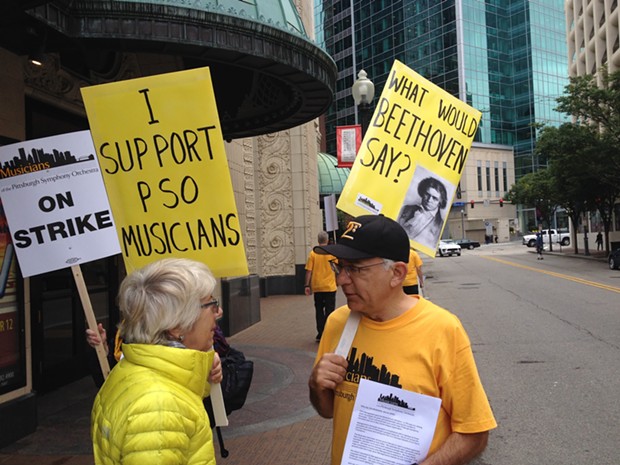
PSO on Strike

| Filed under: Blog | RSS 2.0 | TB | 1 Comment


Das Pittsburgh Symphony Orchestra streikt. Hoffentlich muss es nicht die bittere Erfahrung machen, dass das kaum jemandem überhaupt auffällt.

2016 1 Okt.

Thom and Neil

| Filed under: Blog | RSS 2.0 | TB | Comments off

When Thom Yorke was 16, he sent a demo of one of his earliest recordings into a music magazine. „They said, ‚This guy sounds like Neil Young,'“ Yorke told the BBC in 2008. „I was like, ‚Who is Neil Young?'“ He went out to a record store and picked up After The Gold Rush. „I immediately fell in love with his music,“ said Yorke. „He has that soft vibrato that nobody else has. More than that, it was his attitude toward the way he laid songs down. It’s always about laying down whatever is in your head at the time and staying completely true to that, no matter what it is.“

Yorke has remained a big fan in the three decades since he picked up his first Neil Young record, and Radiohead has covered „Tell Me Why,“ „Cinnamon Girl“ and „After the Gold Rush“ in concert. In December of 2003, Yorke and Radiohead guitarist Johnny Greenwood performed the title track to 1974’s On the Beach on the BBC’s Gideon Coe show.


thanks to I. J. Biermann who found this text about two artists with a vision


Manafonistas | Impressum | Kontakt | Datenschutz