Archives: Oktober 2016
2016 8 Okt.
Bon Iver – „666 ʇ“
Manafonistas | Filed under: Blog | RSS 2.0 | TB | Tags: Bon Iver | 5 Comments
2016 7 Okt.
Musings on Raymond Scott, synchonicities, and the nature of genius
Brian Whistler | Filed under: Blog | RSS 2.0 | TB | 9 Comments
About 20 years ago, I was driving aimlessly along a stretch of Northern California coast highway, watching the sea and dreaming of possible destinies, while listening to a Berkeley public radio station. A program came on that was devoted to the life and music of one Raymond Scott, a name I was not familiar with at the time. The music, however, was very familiar; in fact, I knew some of the themes as if they were encoded in my very DNA! How could I know this strange, kinetic music that was like jazz and somehow not, and yet not have heard of this composer? The answer, of course, was simple: Carl Stalling, the composer for the old Warner Brothers Looney Tunes cartoons such as Bugs Bunny, Daffy Duck, etc. had borrowed liberally from Scott. In fact, the main themes of those cartoons were Scott’s.
I listened to music from Scott’s early days as a band leader, frenetic and humorous pieces with titles such as „Dinner Music for 100 Hungry Cannibals,“ „Reckless Night Aboard an Ocean Liner,“ and the ubiquitous „Powerhouse“ from the aforementioned cartoons. Having grown up in the first television generation, these pieces had unconsciously informed my earliest musical impressions. For better or worse, they were a part of me.
I learned a lot about Scott from the program. Not only was he a jazz composer and band leader in the 1930s, he was also a pioneer of early electronic music. He eventually gave up his focus on music to become a full-time inventor. He built some of the first sequencers—heavy duty, impressive-looking machinery that filled rooms with laboratory equipment. Scott was evidently a futurist. He was hired to do sound design for 1950s sci-fi films. He made three electronic lullabies albums that may very well be the first examples of ambient electronic music ever recorded. (They’re still in print and available on CD.) Bob Moog came to his laboratory to view his creations in awe. In the 1960s, he still found time to record a kind of bachelor pad/lounge jazz album called The Unexpected with the „Secret Seven,“ whose lineup included jazz heavyweights Harry „Sweets“ Edison (tp), Sam „The Man“ Taylor (ts), Toots Thielemans (hca), Eddie Costa (p,vib), Kenny Burrell (g), Milt Hinton (b), and Elvin Jones (d).
Although fascinated by the program, I didn’t give it much thought after the show ended and went about my business. My „business“ that evening included a visit to a local convenience store to play a certain pinball machine which I was sort of obsessed with at the time. As I walked to the temple of my current addiction, with its seductive flashing lights and gaudy graphics beckoning, something odd caught my eye on an adjacent magazine rack. It was a single CD without a jewel box, naked, its shiny rainbow playing surface facing out. Curious, I instinctively picked it off the shelf and turned it over. The label said, „The Music of Raymond Scott.“
Now I’m not one to look for omens and signs everywhere, but when a synchronicity of this magnitude occurs, I do pause and pay attention. What significance did this Twilight Zone dream-like occurrence have for me? Scott was an eccentric maverick who went his own way. Perhaps that’s why the universe had so pointedly made me aware of him. Was this an indication of the direction I should take on my own artistic path?
Ever since I was a kid, I’ve been attracted to music that was obscure, eccentric, and above all, original. Even before my ears matured and I knew I wanted to be a player/composer, I sought out the strange, exotic, and rare. Back in the 1960s, I was a kid in New York City with a transistor radio tuned into WBAI public radio. They had this free-form radio format late at night. I tuned in religiously, listening for the weird and wonderful. It was there I discovered, among others, the Incredible String Band; world jazz pioneers Oregon; player piano composer Conlon Nancarrow; Terry Riley, the father of minimalism; Lou Harrison, an important West Coast composer and proponent of world music; the outrageous poet/ band The Fugs; and iconoclastic composer Edgar Varese.
Once at a Singer Sewing machine store that inexplicably had a record rack, I was attracted to a strange looking album called Freak Out by the Mothers of Invention. I bought it on the spot. Thus I was introduced to yet another icon of individuality, Frank Zappa. My dad had an album of the music of Eric Satie whose naive but soulful piano miniatures spoke to me, and another record called Monk’s Music by a guy with the improbable name Thelonius Monk. I looked at the photo of that man sitting in a child’s wagon and listened to his music for the first time, thinking that it sounded as if the musicians were talking to each other when they played their solos. Also thinking, Hey, maybe I could do that someday!
What do all these seemingly unrelated artists have in common? It’s obvious, isn’t it? They were all mavericks who went their own way. I’m not saying everyone I listed was a „genius.“ But I will say they all exhibited characteristics I associate with the word.
I believe it was Miles Davis who once said, „It takes a long time to sound like yourself.“ Monk said almost the same thing when he scribbled his advice to players on a napkin: „A genius is the one who is most like himself.“ We all know instantly when an artist—whether it be a John Coltrane, Brian Eno, Billie Holiday, Kenny Wheeler, Ralph Towner, Bill Frisell, Hendrix, Dhafer Youseff, Nguyen Le, Sufjan Stevens, Tigran Hamayasan, Joni Mitchell, or Bjork—sounds like him/herself. You can often tell from just a single note. Personally, this is the number one prerequisite that must be present if I am to be interested in an artist, regardless of genre.
So what is this elusive thing, this sounding like yourself, and how can one achieve it? I don’t have an answer. Sometimes I think this is a thing you’re just born with, but then again, perhaps it’s latent in all of us but all too often ignored, remaining undeveloped in most people.
For me at least, part of the equation of sounding like yourself is honesty. Young multi-instrumentalist/singer/composer Jacob Collier (check out his amazing videos on YouTube or his self- produced debut album, In My Room) identifies another piece of the puzzle: He says there has to be a feeling component in order for music to touch us at the deepest level:
„For me, the greatest musicians are those who reach you at an emotional level – those who have so deep an understanding of sound on their instrument that they can use it to pull at your imagination and lift your emotions.
There are a lot of young musicians today, who are incredibly accomplished technicians, but who maybe lack a strong emotional connection with the music.
For me, the latter has always been the more important thing, and I think it’s the most universal.“
I remember once playing one of my tunes for a doctor-friend who was always brutally honest. He told me it sounded „as if I were trying to sound like something.“ He was right: Most of us mortals are unconsciously trying to sound like our heroes. It’s only when we stop and begin to listen to our inner voice that we can begin the journey towards having an authentic voice. Personally I think it’s always possible to develop one’s own voice no matter how old one is, despite the fact that many of the artists I love „sounded like themselves“ almost from the get-go.
Paradoxically, truly original work often comes from imitation, borrowing or even out and out stealing from one’s predecessors. I heard this recently on a Chris Potter piece for orchestra from the album, Gratitude. There it was, a fragment lifted from Paul McCandless’s „All the Mornings Bring,“ the same voicings and harmonic movement, even a similar woodwind orchestration. But somehow Potter transformed it and incorporated it into something of his own. Stravinsky once said, „Good composers borrow, great composers steal.“ This is not unlike Donald Fagen’s response to the accusation that he stole from Keith Jarrett’s „Just as Long as You’re Living Yours“ for the intro to his song“Gaucho.“ Fagen replied unapologetically, „Hey, we’re the robber barons of rock ’n roll!“
The other piece of sounding like yourself is that in order for an artist to connect to a larger audience, there needs to be a kind of universality in what they express, something of the artist’s humanity that speaks to the collective human experience. A quote by Emerson (not Keith, Ralph Waldo!) comes to mind: „To believe your own thought, to believe that what is true for you in your private heart is true for all men – that is genius.“ So believing in the intrinsic value of one’s work would seem to be part of the equation as well.
Thomas Edison supposedly said, „genius is one percent inspiration and 99 percent perspiration.“ Which turns out to be true. Any innate abilities one may be gifted with have to be cultivated or will lay fallow, never destined to come to fruition. Stravinsky comes to mind, a man who viewed composing music much the same one does any other job. He clocked in with his coffee in the morning and continued until lunch. Then he headed back to his „closet“ (a small room with a piano), glass of red wine in hand, and continued until dinner. And he did this daily, year in, year out.
We occasionally hear stories about masters who don’t seem to need to sweat in order to create. Mozart supposedly could just compose in his head and then write it all down without a single edit. Same with Joe Zawinul, who constantly improvised to tape. According to Zawinul, when he needed tunes for a new album, he simply went through his tapes until he found things he liked, claiming he transcribed them without changing a single note. These stories are apocryphal, and I suspect they originate with the artists themselves, who perhaps enjoyed propagating the myth that they were superhuman. Well they were anyway, even if they had to edit their compositions! There are rumors that Mozart asked his wife to burn his sketches when he died, and I suspect Zawinul altered a few things when he committed his spontaneous compositions to paper. I mean, really, how could he not be tempted to do so? And would knowing that diminish either artist’s work or make it less beautiful?
In writing this article I’ve had time to reflect on my own personal artistic journey and how difficult it is to „sound like yourself.“ After some four decades of trying, I’m still figuring it out. And I plan to keep working on it.
By the way, there is an addendum to my Raymond Scott story: A few days after my synchronous adventure with Mr. Scott, I did a web search and found a really cool website (www.raymondscott.net) where one can learn everything one ever wanted to know about the iconoclastic hipster musician/inventor. I wrote the webmaster and told him my story. The next day I received an email that said, „Thanks for your story. We hear many such stories regarding Mr. Scott. By the way, you wrote that email on his birthday.“
2016 7 Okt.
20 utterly brilliant, weird, dark, seducing song albums of 2016 – my personal selection
Michael Engelbrecht | Filed under: Blog | RSS 2.0 | TB | 1 Comment
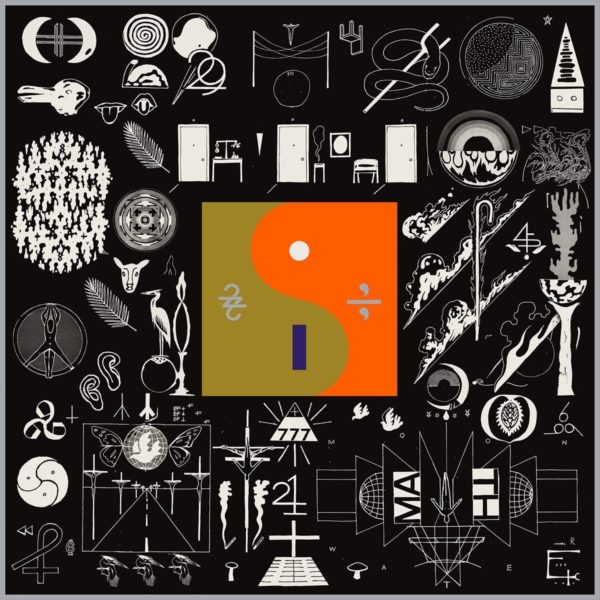
1 Brian Eno 2 David Bowie 3 Bon Iver 4 Nick Cave 5 Leonard Cohen 6 Lambchop 7 Ian William Craig 8 Radiohead 9 Okkervil River 10 P.J. Harvey 11 Darren Haymen 12 Paul Simon 13 Jenny Hval 14 Sinikka Langeland 15 Frank Ocean 16 Tindersticks 17 Anohni 18 Michael Kiwanuka 19 Lucinda Williams 20 Wilco
2016 7 Okt.
Lennon ’74, walls and bridges all around
Manafonistas | Filed under: Blog | RSS 2.0 | TB | 1 Comment
2016 6 Okt.
Gregor öffnet seinen Plattenschrank (122)
Gregor Mundt | Filed under: Blog | RSS 2.0 | TB | 4 Comments
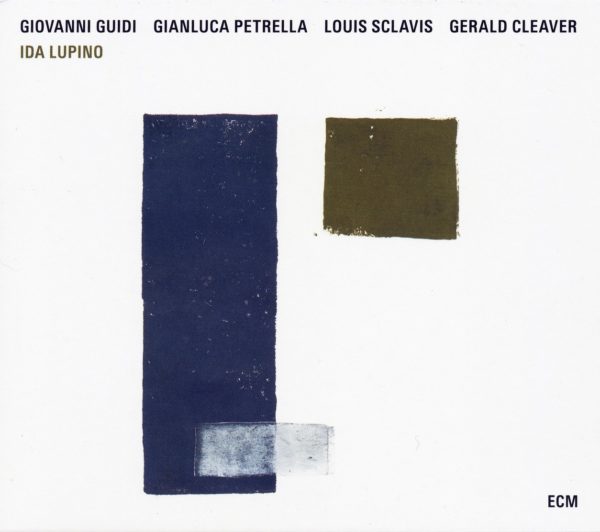
Neu in meinem Plattenschrank: Giovanni Guidi – Ida Lupino, mit Giovanni Guidi am Klavier, Guianluca Petrella Posaune, Louis Sclavis Klarinette, Gerald Cleaver Schlagzeug: Das Titelstück hat mich ohne jeden Zeifel dazu bewegt, die CD unbesehen zu kaufen. Diese wunderschöne Carla-Bley-Komposition als Titel einer Schallplatte, das gab es bislang nur äußerst selten. Vielleicht hat ECM diese Scheibe just in diesem Jahr und unter diesem Titel erscheinen lassen, weil Carla Bley im Frühjahr 80 Jahre alt geworden ist und Paul Bley, der eben dieses Stück auf einer der ersten Schallplatten der Firma ECM, auf Open To Love (1972) nämlich, veröffentlicht hat, dieses Jahr gestorben ist?! Anyway, das Stück selbst wurde so oft und von so vielen Musikern nachgespielt und ganz unterschiedlich interpretiert, dass man schnell den Überblick verliert. Paul Bley hat das Stück seiner ehemaligen Frau wohl am häufigsten eingespielt. Eine kleine Auswahl der unterschiedlichsten Einspielungen folgt sogleich. Doch zunächst: wer war eigentlich Ida Lupino? Geboren am 4. Februar 1918 in England, gestorben am 3.August 1995, sie war Schauspielerin, Regisseurin, Produzentin, Autorin und eine der ersten weiblichen Regisseurinnen in der Filmindustrie. Ein interessanter Artikel findet sich in Der Tagesspiegel vom 3. Juli 2016: Hommage an Ida Lupino.
In der TAZ las ich folgendes Zitat von Ida Lupino: „Ich behalte alle weiblichen Eigenschaften. Die Männer mögen das lieber. Sie sind kooperativer, wenn sie denken, du seist vom schwächeren Geschlecht, selbst wenn du in einer Position bist, Befehle zu erteilen, was normalerweise das Vorrecht der Männer ist. Oder zumindest glauben sie das.“ William Donati veröffentlichte 2009 eine Biographie über sie: Ida Lupino: A Biograph.
Ida Lupino gehört zu den ersten Kompositionen, die Carla Bley geschrieben hat. Damals noch als Carla Borg, kam sie Mitte der fünfziger Jahre nach New York, verdiente sich mit dem Verkauf von Zigaretten und anderem in Jazz-Clubs Geld und konnte nebenbei fast alle Jazzgrößen sehen, die sie unbedingt einmal hören wollte, Hier lernte sie auch Paul Bley kennen, ihren späteren Ehemann, der Ida Lupino, wie viele andere Kompositionen von ihr sehr häufig gespielt und aufgenommen hat.
Hier nun eine kleine Auswahl der Einspielungen von Ida Lupino … das wäre ein Mixtape!
Zunächst seien einige Einspielungen von Paul Bley erwähnt, die natürlich alle sehr, sehr hörenswert sind: Es beginnt schon 1965 mit der LP Closer, mit Barry Altschul und Steve Swallow; es folgt 1966 Ramblin´, dabei sind wieder Barry Altschul und Mark Levinson (im April 2016 wieder veröffentlicht). Ein Highlight nun, eine Platte, die einen besonderen Platz in meinem Plattenschrank einnimmt: Paul Bley: Open To Love (1972), auch hier findet sich Ida Lupino; 1975 veröffentlicht Paul Bley mit Paul Motion, Gary Peacock und John Gilmore: Turning Point; 1976 dann: Paul Bley & Jesper Lundgaard: Montmartre und 1984: Paul Bley & Jesper Lungaard: Live; nach langer Pause spielt Paul Bley dann eine ganze Platte ausschließlich mit Carla-Bley-Kompositionen ein: Paul Bley: Paul plays Carla (1991); auch auf Gary Burton & Paul Bley: Right Time – Right Place (1990) kann man eine sehr schöne Version von Ida Lupino finden; über elf Minuten hören wir dieses Stück in einer Interpretation von Charlie Haden, Paul Bley und Paul Motian: The Montreal Tapes (1994); Carla Bley selbst spielt das Stück auf Dinner Music (1977). Und hier noch einige weitere hörenswerte Interpretationen Steve Kuhn: Three Waves (1966); John Scofield: John Scofield (1978); Michel Portal, Steve Swallow, Joey Baron u.a.: Dockings (1998); Joe Thompson: Littlefoot (2001); Dave Palmer: Romance (2006); Roberto Ottaviano: Live in Israel (2007); Helge Lien: To The Little Radio (2006); Michael Gibbs & NDR Big Band: In My View (Juni 2015); Aki Takase: The first years in Europe (Juni 2015); Mary Halvorson: Meltframe (April 2016); Andy Trio Browne: Orangutans (Nov. 2007); Susanne Abbuehl: April (2009); Rüdiger Krause: A Guitar named Carla (Mai 2015); Laia Genc: Strandgut (2008); Jay Epstein & Bill Carrothers: Easy Company (2009); Irene Schweizer: To Whom It May Concern (Januar 2011)
Fast alle genannten CDs oder LPs sind noch im Handel erhältlich (z.T. eben als Wiederveröffentlichung). Ein kleiner Tipp noch zum Schluss: auf Youtube kann man die Carla Bley Combo 1972 in Hamburg sehen und hören, mit Michael Mantler und Karin Krog, sie spielen Ida Lupino und zuvor gibt es noch eine Ansage: von Michael Naura.

2016 6 Okt.
How Steely Dan Composes A Song
Manafonistas | Filed under: Blog | RSS 2.0 | TB | Comments off
A video from the „nerdwriter“ – very inspiring. Delicious chord progressions. Steely Dan forever! Where is my bloody guitar? Have to learn that fcking song immediatly …
All together now (in german „Alle mitsingen!“):
„Learn to work the saxophone –
I play just what I feel.
Drink Scotch whiskey all night long
and die behind the wheel.
They got a name for the winners in the world –
I want a name when I lose.
They call Alabama the Crimson Tide –
call me Deacon Blues.“
-JS ;)
2016 4 Okt.
A Landscape for Lajla and Ian
Manafonistas | Filed under: Blog | RSS 2.0 | TB | 2 Comments

A man washes ashore in the Outer Hebrides, the pages of his memory completely blank, while in Edinburgh a troubled teen suspects her father did not, as she was told, commit suicide. Peter May. Coffin Road. The many threads of the story play out against a landscape that May, a native Scot, renders vividly. His images capture the capricious play of light and weather across the sea and the moors, matching the surprises in his tale. Yes, the Highlands are part of the setting, too.
2016 4 Okt.
Zwei alte Herren, der Himmel, und die Ruinen von Daniel Lanois
Michael Engelbrecht | Filed under: Blog | RSS 2.0 | TB | Comments off
Zu dem Foto von Jan, hier direkt unter diesem Text, fiel mir auf (und ein), was für ein gutes Bild diese beiden Herren abgeben – sie halten beispielsweise das Leben nach dem Tod für eine echte Option, und Herr Roedelius war schon immer geneigt, seinen Stücken schlicht romantische Namen zu geben, die schnell unter Idyllenverdacht geraten. „Himmelspforte“: da würde der Gute Hajo nicht zurückschrecken. Wie der Lama ja auch nicht unterband, recht schlicht wirkende Verlautbarungen seiner Weisheiten in Buchform erscheinen zu lassen, die auch altkluge Kinder von sich geben könnten. Das eine wie das andere spricht nun gegen keinen von beiden.
Aber sei’s drum, für die „Klanghorizonte“ am 30. Dezember (!) 2016, habe ich daran gedacht, etwas aus Roedelius‘ blumenfreundlichen „Selbstportraits“ zu spielen. Und das ist eine „Kette“, eine „Kombi“, ein „Mixtapehimmel“, meine Damen und Herren: Roedelius, Hans Otte mit seinem „Buch der Klänge“ (ich ahne, Rosato könnte hierzu einiges zum Besten geben) dann noch jener Pfarrer, dessen Musik Roger Eno unter seine Fittiche nahm, und dazu die nächste keyboardige Klangfarbe, Kompositionen jener Nonne aus Äthiopien, die so „undefinierbar einfache Musik“ machte.
Und auch das ist Jan gedankt (als Auslöser), sowie dem Kommentar von Gregor zur manafonistischen Besprechung von GODDBYE TO LANGUAGE: in der „Nahaufnahme“, kurz vor Jahresschluss, wird eine Stunde lang Daniel Lanois‘ Pedal-Steel-Gitarre zu hören sein, rein instrumental, wie es so schön heisst. Manche würden das „himmlisch“ nennen, dabei sind seine letzten beiden Platten, gelinde gesagt, ein bisschen unheimlich. Aber das ist noch eine Weile hin. Zuerst kommen ja noch die „Klanghorizonte“ am 15. Oktober.

Hans-Joachim Roedelius, Dalai Lama
2016 3 Okt.
Steve Reich (* 3. Oktober 1936)
Hans-Dieter Klinger | Filed under: Blog | RSS 2.0 | TB | 6 Comments
Music as a Gradual Process
1968
I do not mean the process of composition, but rather pieces of music that are, literally, processes.
The distinctive thing about musical processes is that they determine all the note-to-note (sound-to-sound) details and the over all form simultaneously. (Think of a round or infinite canon.)
I am interested in perceptible processes. I want to be able to hear the process happening throughout the sounding music.
To facilitate closely detailed listening a musical process should happen extremely gradually.
Performing and listening to a gradual musical process resembles: pulling back a swing, releasing it, and observing it gradually come to rest; turning over an hour glass and watching the sand slowly run through to the bottom; placing your feet in the sand by the ocean’s edge and watching, feeling, and listening to the waves gradually bury them.
Though I may have the pleasure of discovering musical processes and composing the musical material to run through them, once the process is set up and loaded it runs by itself.
Material may suggest what sort of process it should be run through (content suggests form), and processes may suggest what sort of material should be run through them (form suggests content). If the shoe fits, wear it.
As to whether a musical process is realized through live human performance or through some electro-mechanical means is not finally the main issue. One of the most beautiful concerts I ever heard consisted of four composers playing their tapes in a dark hall. (A tape is interesting when it’s an interesting tape.)
It is quite natural to think about musical processes if one is frequently working with electro-mechanical sound equipment. All music turns out to be ethnic music.
Musical processes can give one a direct contact with the impersonal and also a kind of complete control, and one doesn’t always think of the impersonal and complete control as going together. By „a kind“ of complete control I mean that by running this material through this process I completely control all that results, but also that I accept all that results without changes.
John Cage has used processes and has certainly accepted their results, but the processes he used were compositional ones that could not be heard when the piece was performed. The process of using the I Ching or imperfections in a sheet of paper to determine musical parameters can’t be heard when listening to music composed that way. The compositional processes and the sounding music have no audible connection. Similarly in serial music, the series itself is seldom audible. (This is a basic difference between serial (basically European) music and serial (basically American) art, where the perceived series is usually the focal point of the work.)
What I’m interested in is a compositional process and a sounding music that are one and the same thing.
James Tenney said in conversation, „then the composer isn’t privy to anything“. I don’t know any secrets of structure that you can’t hear. We all listen to the process together since it’s quite audible, and one of the reasons it’s quite audible is, because it’s happening extremely gradually.
The use of hidden structural devices in music never appealed to me. Even when all the cards are on the table and everyone hears what is gradually happening in a musical process, there are still enough mysteries to satisfy all. These mysteries are the impersonal, unintended, psycho-acoustic by-products of the intended process. These might include sub-melodies heard within repeated melodic patterns, stereophonic effects due to listener location, slight irregularities in performance, harmonics, difference tones, etc.
Listening to an extremely gradual musical process opens my ears to it, but it always extends farther than I can hear, and that makes it interesting to listen to that musical process again. That area of every gradual (completely controlled) musical process, where one hears the details of the sound moving out away from intentions, occuring for their own acoustic reasons, is it.
I begin to perceive these minute details when I can sustain close attention and a gradual process invites my sustained attention. By „gradual“ I mean extremely gradual; a process happening so slowly and gradually that listening to it resembles watching a minute hand on a watch — you can perceive it moving after you stay with it a little while.
Several currently popular modal musics like Indian classical and drug oriented rock and roll may make us aware of minute sound details because in being modal (constant key center, hypnotically droning and repetitious) they naturally focus on these details rather than on key modulation, counterpoint and other peculiarly Western devices. Nevertheless, these modal musics remain more or less strict frameworks for improvisation. They are not processes.
The distinctive thing about musical processes is that they determine all the note-to-note details and the over all form simultaneously. One can’t improvise in a musical process — the concepts are mutually exclusive.
While performing and listening to gradual musical processes one can participate in a particular liberating and impersonal kind of ritual. Focusing in on the musical process makes possible that shift of attention away from he and she and you and me outwards towards it.

Once again, but now in full length – DLF Studiozeit, 12. Juni 1992