Manafonistas

on life, music etc beyond mainstream

Natürlich hat Fussball viel mit Musik zu tun. Wie sich die abgezockten Italiener die Nationalhymnen aus dem Leib sangen, war wesentlich überzeugender als die braven Gesichtsausdrücke der deutschen Chorknaben. Dagegen sah Buffon (der tatsächlich noch beklopptere Interviews gibt als Balotelli) mit einer leicht irrsinnigen Mimik aus, als wollte er allein durch Gedankenkraft den Ereignissen einen großartigen Verlauf bescheren, und so waren es die Heldentaten von Buffon, Balotelli und Pirlo, die bei diesem Sieg des Tollkühnen über das Biedere entscheidend waren.

Herr Löw aber versagte mit seinen Umstellungen komplett, und ließ zähem Sicherheitsdenken den Vortritt vor fantasievollen Angriffsfussball. So nämlich hätte es ein grosses Spiel werden können, in dem auch eine Niederlage akzeptiert worden wäre. Aber was will man von einem Team erwarten, in dem die Führung schon mal Begriffe wie „Stahlhelm“ in den Mund nimmt, um teutonische Qualität ins billige rechte Licht zu rücken.

In einer seltsamen Nibelungentreue schleppte Löw seinen „emotionalen Leader“ Schweinsteiger sowie Podolski durch das Turnier. Das Experiment mit Kroos ging gründlich daneben, Signore Pirlo wurden keineswegs die Wege zugestellt. Schweinsteiger wurde wieder Schweini, nur ohne die alte Unbekümmertheit und Klasse. Schon nach dem Desaster gegen die Dortmunder Borussen im Pokalfinale flüsterte er einem Reporter in modulationsarmen Sätzen zu: „Auch wenn es komisch klingt, wir waren insgesamt die bessere Mannschaft“. Solche Wahrnehmungsverzerrungen führen dann gewiss auch dazu, sich vor dem Italienspiel als 100 Prozent fit zu bezeichnen. Sein Einsatz war Löws größter Fehler.

Der Bundesjogi wird als Bauernopfer vielleicht Podolski den Stammplatz nehmen, an seinem Bayernblock wird er nicht rütteln, höchstens auf öffentlichen Druck. Dazu passt, wie er Hummels als die Wurzel der Niederlage ausmachte: gewiss agierte der Dortmunder in dieser Szene unglücklich, aber genauso beteiligt war Özil, der dem alten Pirlo leider nicht die paar Meter am Mittelkreis hinterher lief, um dessen Flanke an die Aussenlinie zu unterbinden. Und Badstuber hätte gegen Balotelli nach der Flanke von Cassano ins faire Tackling gehen müssen, Neuer durchaus mal seine Strafraumbeherrschung demonstrieren können.

Der wahre Held aber war Pirlo, der mit scheinbarer Teilnahmslosigkeit seine geheimen Regiefäden knüpft. Sein Gesicht ist eine wahre Charakterlandschaft, und sollte der Italo-Western einmal wiederbelebt werden, wird sich der Nachfolger Sergio Leones in einer Nahaufnahme Zeit nehmen, dieses langmähnige Konterfei, Typ: Pferd, in Superzeitlupe von oben bis unten abzufilmen. Und Altmeister Ennio Morricone wird dazu einen Ohrwurm komponieren.

Der Held im Hintergrund ist Signore Prandelli, ein liberaler Geist, der ein neues Italien nach Berlusconi verkörpern könnte. Einer, der die Tradition des großen argentinischen Fussballdenkers César Luis Menotti fortsetzt, gelingt es ihm doch spielend, ein Team aus Arbeitern, Schurken und Verrückten zu einer Einheit zu formen. The Good, The Bad, & The Ugly. Spanien ist gewarnt. Und wir Deutschen sind in diesem Spiel die Doofen.


2012 30 Juni

My favourite records of 2012 (First Half)

von | Kategorie: Blog | | Comments off

1) Thomas Köner: Novaya Zemlya
2) Sidsel Endresen and Stian Westerhus: Didimoy Dreams
3) Lambchop: Mr. M
4) Burnt Friedman: Bokoboko
5) Astrid: High Blues
6) Mirroring: Foreign Bodies
7) Paul Buchanan: Mid Air
8) Diagrams: Black Light
9) Fiona Apple: The Idler Wheel …
10) John Surman: Saltash Bells
11) Heiner Goebbels: Stifters Dinge
12) Can: The Lost Tapes
13) Dan Michaelson: Breaking Falls
14) The Flaming Lips: The Flaming Lips and Heady Fwiends
15) M. Ward: A Wasteland Companion
16) Ballrogg: Cabin Music
17) Moritz von Oswald Trio: Fetch
18) Motorpsycho and Stale Storlokken present: The Death Defying Unicorn
19) Louis Sclavis Atlas Trio: Sources
20) Alabama Shakes: Boys and Girls


21) Leonard Cohen: Old Ideas
22) Geoff  Barrow & Ben Salisbury: Drokk
23) Arianna Savall / Petter Udland Johansen: Hirundo Maris
24) Sweet Billy Pilgrim: Crown and Treaty
25) Gerry Diver: Speech Project
26) Garth Knox: Saltarello
27) Lost in the Trees: A Church That Fits Our Needs
28) E.S.T.: 301
29) Adele & Glenn: Carrington Street
30) Marco Union: Different Colours
31) Zammuto: Zammuto
32) Peter Broderick: https://itstartshear.com
33) Michael Wollny’s (em): Wasted and Wanted
34) Tim Berne: Snakeoil
35) Tindersticks: The Something Rain
36) Masabumi Kikuchi Trio: Sunrise
37) Teho Teardo: Music, Film. Music
38) Trapist: The Golden Years
39) Patti Smith: Banga
40) Simone White: Silver, Silver

Hopefully we are not trapped in that fucking hotel of dying hippie dreams. Nevertheless the 70s may have been the most interesting and creative ten years in music history since the days of Perotin.

We’re digging and we’re digging and we’re digging …

Jürgen Müller, Conrad Schnitzler, Bill Connors, the young Rypdal, the young Garbarek, the first Go-Betweens album, legendary Van Dyke Parks, Eno’s Music for Films … The 70s still are an endless route of milestones and buried treasures. By pure chance and syncronicity, the Manafonistas keep looking back (for some days now) discovering music they have never heared before, or loved from day one.

And, me oh my, what’s the name of the Cd playing in these days and nights in my time-travel experienced Toyota? Well, Pink Floyd’s MEDDLE.
 
 
„Backward and homebound, a pigeon, a dove
gone with the wind, the rain on an airplane
owning a home with no silver spoon
I’m drinking champagne like a good tycoon
sooner than wait for a break in the weather
I’ll gather my far-clung thoughts together
speeding away on the wind to a new day“


P.S. Gregs may just listen to Robert Wyatt’s ROCK BOTTOM, Joey may spend some time with the guitar dreams of SWIMMING WITH A HOLE IN MY BODY, and Ian may dive into other well-hidden zones of Krautrock experimentalism …


Ohne großes Tamtam sind jüngst zwei kleine weiße Kisten erschienen, die einige Klassiker der Jazzgeschichte enthalten, aus der ersten Hälfte der 70er Jahre, und aus dem Hause ECM. DANSERE enthält die Werke 2, 4 und 5, die Jan Garbarek für das Münchner Label produzierte, Aufnahmen, mit denen er zum Pionier eines neuen aufregenden, asketischen, lyrischen, grenzoffenen Tons avancierte. SART (kühl und ekstatisch zugleich, inspiriert vom Besuch mehrerer Miles Davis-Konzerte im New York des Jahres 1970), WITCHI-TAI-TO (die Ursession des sog. „Garbarek-Sounds“), und DANSERE (da kam die Folklore des Nordens hinzu, und der Down-Beat-Kritiker staunte nicht schlecht, vermisste aber, ein Opfer der eigenen Gewohnheiten, den guten und natürlich amerikanischen Swing). Die andere Kiste enthält neben einer raren Orchesteraufnahme, die Sammlerwert hat, sonst aber eher etwas bieder geraten ist, eine der besten Produktionen des Gitarristen Terje Rypdal, das Doppelalbum ODYSSEY in voller Länge – mit dabei die einst eine ganze Plattenseite füllende Komposition ROLLING STONE, die mit ihrem archaischen Duktus, wie John Kelman in dem ausführlichen Begleittext schildert, so etwas wie den heiligen Gral des Rypdal-Opus verkörperte, zumindest bei seinen Fans in Italien und Deutschland. Wunderbar das Zusammenspiel von Posaune und E-Gitarre in dieser aufregenden Fusion-Welt!

2012 27 Juni

An Afrodisiac for One

von | Kategorie: Blog | | Comments off


If you like the music of Fela Kuti and miss the album called AFRODISIAC in your collection that had once been produced at the Abbey Road Studios, with the Africa 70 & master drummer Tony Allen, here you go: 


www.knittingfactorydownloads.com/afrodisiac


the code is:  DIS604775426


2012 27 Juni

Steps Across The Border

von | Kategorie: Blog | | 2 Comments

Zu den wichtigsten Fragen – nicht philosophisch, sondern lebenspraktisch gesehen – gehört jene: „Was behalte ich und was schmeisse ich weg?“ Jedesmal, wenn unsereins am Aufräumen ist, kommt er in eine ganz besondere Form von Stress und die besagt: „Nein, halt, das kann man immer noch mal gebrauchen!“ Hier hilft nur ein radikaler Schnitt: es gilt, der wachsenden Entropie im eigenen Haushalt Einhalt zu gebieten, indem man sich tendenziell häufiger der Dinge entledigt als das man sich Neues anschafft. Nur so leitet man einen Paradigmenwechsel ein, der die Prioritäten neu setzt: Vor dem Konsumieren kommt das Separieren (auch das Reparieren). Weiterführende Literatur zu diesem Thema sind das Buch Feng-Shui gegen das Gerümpel des Alltags und die Romantrilogie Abschaffel von Wilhelm Genazino. Und der passende Song dazu ist „Same Old Me“ von Fred Frith aus dem Film Steps Across The Border. Gottseidank muss man nicht niesanfällig in alten Kisten kramen, um dieses Lied wieder zu hören, denn es gibt Datenbänke und … YouTube. Fazit: erstmal was in die Tonne treten, nur so gelangt man sicher über die Grenze.


Yes, the Band. From Brisbane, Australia. Once upon a time. You remember? „Cattle and Cane“. Grant dying so young, Robert finishing Grant’s last three songs for THE EVANGELIST. Heartbreaking. They had never been interested in noise or feedback drones. They were looking for pure songs and melodies. With a twist. With undercurrents. Melancolia, sunbathed. Or rain. They wrote the best song about rain since Creedence Clearwater Revival. SPRING RAIN. Passion and understatement. Great lyrics all over the place. A good record to start with: SPRING HILL FAIR.

In a few days Ex-Go-Be’s Adele Pickvance and Glenn Thompson will release an album: CARRINGTON STREET. Glenn’s voice sometimes sounds a bit like Grant’s. In this case these are good news. They are looking for pure songs and melodies. A small delight for at least some people. With twists. With undercurrents. Okay, it is a more lighthearted affair. With some good humour inside. My favourite song: „Grey Suits“. Low key, never going for the grand scale. I’m a man with a very limited taste: I would always prefer the Go-Betweens or CARRINGTON STREET when having the choice to listen to Beethoven instead.

2012 26 Juni

Gregor öffnet seinen Plattenschrank (20)

von | Kategorie: Blog | | Comments off

Das Klavierduo Andreas Grau und Götz Schumacher ist für mich das beste, das ich kenne. Seit 1982, also seit 30 Jahren spielen sie nun zusammen. In der letzten Woche waren die beiden wieder einmal in Stuttgart zu sehen und zu hören, sie spielten Peter Eötvös´Konzert für zwei Klaviere und Orchester von 2007. Das war ein Fest für die Ohren, ein unglaubliches Stück, das Eötvös im Stuttgarter Beethovensaal sogar selbst dirigierte.

Ein Anlass natürlich, meinen Plattenschrank nach herausragenden CDs der beiden zu durchforsten und das eine oder andere Stück einmal wieder anzuhören. Wer sich genauer über die Diskographie der beiden informieren möchte, möge die Internetseite www.grau-schumacher.de besuchen.


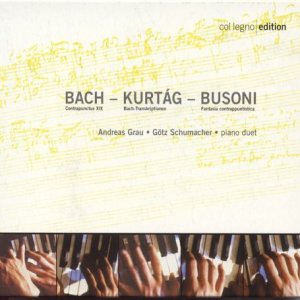
Für heute wähle ich meine Lieblings-CD der beiden aus: Bach – Kurtág – Busoni
György Kurtág: Bach Transcriptions / J.S. Bach: from „The art of fugue“, Contrapunctus 18 Ferruccio Busoni: Fantasia contrappuntistica . An Kurtàgs Bach Transcriptionen kann ich mich nicht satt hören, wunderbare Musik.

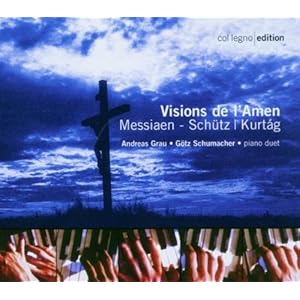
Das Klavierduo hat auch Olivier Messiaen eingespielt und zwar auf der CD Visions de l’Amen Schütz/Kurtág: The seven last words / Olivier Messiaen: Visions de l’Amen.


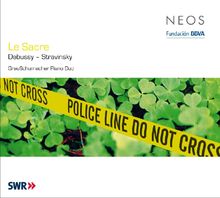
Schließlich wähle ich noch die CD Le Sacre aus, auf der Debussy: En blanc et noir; Six épigraphes antiques und Stravinsky: Sonata for two pianos; Le Sacre du Printemps zu finden sind. Und natürlich höre ich einmal mehr mit Hochgenuss Debussy: En blanc et noir;6 Epigraphes antiques


2012 26 Juni

Buried Treasure: Swimming With A Hole In My Body

von | Kategorie: Blog | | Comments off

Gestern stöberte ich durch iTunes, auf der Suche nach Musik, die ich auf diversen Umzügen verloren habe, die ich zugleich sehr, sehr mochte, doch aus irgendwelchen Gründen in schwer erreichbaren Schubladen meines Langzeitgedächtnisses verkramt habe. Ich wurde fündig. Eine Aufnahme aus den späten 70er Jahren,  mit  einem meiner Lieblingscover und Lieblingstitel von ECM: Swimming With A Hole In My Body, von Bill Connors. Nur akustische Gitarren, und in ihrer Spannbreite zwischen impressionistischem Kammerjazz, Klassischen Schwingungen und mediterranem Flair entpuppt sich diese großartige Platte auch nach über 30 Jahren als Juwel. Bill Connors tat damals gut daran, Chick Coreas jüngst wiederbelebte Formation Return To Forever zügig zu verlassen, nachdem Corea den Fehler mancher Fusionisten beging und großspurig, pathetisch und penetrant wurde. Unter der siebten Galaxie ging nichts mehr. Corea hatte wohl zuviel Sci-Fi-Müll vom Gründer seiner elenden und menschenverachtenden Scientology-Sekte verinnerlicht. Connors fand rasch den Weg aus diesen klangkichen Entgleisungen heraus, in eine Gegenwelt voller zarter Augenblickserkundungen. Solche Musik an der Grenze zur Selbstauflösung spiegelt der Titel des Albums auf spezielle Weise.


Van Dyke Parks ist einer der interessantesten Hintergrundarbeiter in amerikanischen Musiklandschaften. Unvergessen seine Zusammenarbeit mit Brian Wilson, das mit dem Song „Surf’s Up“ seinen Höhepunkt fand – und seine Streichistrumentenarrangements für Joanna Newsoms Meisterstück „Ys“. Nun sind drei frühe Soloalben, voller seltsamer Wunder und herrlichem Plunder, neu veröffentlicht worden. Und das erzählt uns der weise und witzige alte Mann dazu:
 
Van Dyke Parks on his career, his musical beginnings and singing with Albert Einstein

Well, a career is a very big word. It suggests almost a plan, and I never had a plan. But I found myself just going from one job in music to another: as a record producer or as an arranger, a studio musician and occasionally a recording artist. When I was a child, I showed signs of prodigy. I was always first share when I played an instrument, whether it was clarinette or cello or anything. I always worked very hard. I was very well schooled as a musician. I waited school to be a musician – a boy choir school outside Princeton/New Jersey when Albert Einstein walked the streets and we sang carols to his violin in 1953. So I can honestly say: I’ve had a great life and it’s all been about the music!

Van Dyke Parks on why he puts these three records out now

Begin at the beginning! And basically that’s what that does. And so it shows everything I revealed in my work. I used those opportunities to do what I hoped would be durable work – work that would live WITH me. So years go by and there is kind of like a new interest in artifacts of the 60’s and so forth that aren’t even collectable. To look into the era itself and associate it with music, is a really great source. It is central to the politics of the time.

Van Dyke Parks about how mistakes become your beauty marks

I made all the mistakes I could make in my first album. It wasn’t fashionable and it wasn’t even classifiable. So a lot of people got angry about it and I took a lot of insults for doing it. And it sank without a trace. But to me all the mistakes I made in Song Cycle were worth it. So if your scars are your beauty marks, if they are what determined who you are – that’s a good thing! So I take that publicly that record!

Van Dyke Parks on the timeless relevance of his debut „song cycle“ and being compared to Rufus Wainwright

Years went by and somebody would call up and say „Will you do an arrangement?“ I remember, it was Joanna Newsom, I went up to her hotel room. She said: „I’ve got a hotel room and a harp, I want to play you some tunes“. So I went up to the hotel and she played the harp and I thought it was fantastic. But I couldn’t understand why is this young girl calling me on the phone and wants me to work with her. I said: „By the way, why did you call me, what had I done that indicated me to you?“ And she said: „That would be Song Cycle, because I was thinking maybe Rufus Wainwright or something!“ Music takes you places!

Van Dyke Parks on being highly individual

I wanted to do something that was beyond a music fascionistas progress of profit. I think that it did inspire other people. And thats good, thats good! It’s a German word that I just heard fort he first time that would be okay to look at it as an ideal quality – and that is „Alleinstellungsmerkmal“. And THAT’S what I think I ended up with Song Cycle: a highly individual thing!

Van Dyke Parks on his calypso sound in these records of the 60’s and 70’s

These three albums were in the time span of my romanic dream escape of tropicality, the calypso obsession that I had at the time. You see this collection of songs in my first three records that are highly inhabited by Trinidadians. I know a lot of Trinidadians. I ate a lot of chicken in backyards, I loved the music and I got to spend time with them. And my work shows that that was a love affair on a personal regard, you know. Calypso was a big deal to me and you see THAT and discover America!

Van Dyke Parks about the early 1960’s and music as a political cultural good

Something was coming that was entirely different. That was the Rolling Stones’ first record and Bob Dylan’s first record. And then The Beach Boys came along with their right wing republican contentment, you know „the good life“. So you have some artist who are coming up talking about hunger and the subculture and then there is the other part that’s celebrating America. I was interested in ALL of it. I realised that there is a political strength in songwriting that’s not to be compared with anything else. People can THINK: „We shall overcome!“. You take that with you! So to me the song is the most portable piece of cultural goods and I’m still pursuing it, and I am in my 70th year, and I love it and it’s exciting. And just by being interested in this, it’s been my calling card to a new generation of singer-songerwriters.

Van Dyke Parks „I never wanted to be famous“

You see, I never wanted a tour, I never wanted to BE somebody. I didn’t need to be noticed. I was doing this to discover something and then learn from it, learn by being in the recording studio and then serve with the blessing of anonymity. So I got that. I got what I wanted as a kid, as a brunette. My mother said to me, bless her heart, she said when I was like in my 40’s, she said: „Van Dyke, we really think it’s marvellous how you’ve put your retirement before your career!“. She was so funny, my mother! But the thing is, I DID stay away from the public eye – and had a very productive life.


Manafonistas | Impressum | Kontakt | Datenschutz